

Lighting has moved from the last thing chosen in a room to the first: fixtures are now expected to be sculptural, dimmable, warm, and long-lived, and to carry a room's finish and style. This guide covers the trends defining home lighting in 2026 and into 2027, how they play out room by room, what buyers now look for in a fixture, and which styles are on their way out.
Key Takeaways
| Question | Answer |
|---|---|
| What is the biggest lighting trend? | Statement fixtures as the room's focal point — sculptural, geometric, often oversized — with the rest of the light layered around them. |
| What chandeliers are in style? | Ring, linear, sputnik, branch, and bubble or sphere clusters; crystal in modern frames; matte black, brushed brass, and mixed metals. |
| What is new in LED lighting? | Warm-dim and tunable white, integrated LEDs rated 25,000–50,000 hours, CRI 90+, flicker-free dimmable drivers. |
| What is the smart lighting trend? | Control built into fixtures and switches — remote, app, scenes, sensors — rather than smart bulbs alone. |
| What finishes are trending? | Matte black and brushed brass, often mixed; polished gold and chrome have faded. |
| What's out? | Single overhead lights, matching sets, cool white in living rooms, small-room crystal tiers, Edison-only industrial. |
Quick Facts
- Layered lighting — ceiling fixture + lamps + accent, each on its own dimmer — is the base every current trend sits on.
- Warm white (2700–3000K) is the living-space standard; warm-dim LEDs shift toward 2200K as they dim.
- Integrated LED fixtures are rated 25,000–50,000 hours; check that the driver is dimmable and matches your dimmer.
- Oversized fixtures are sized by the room: length + width in feet = diameter in inches; add 2–3 in per foot of ceiling over 8 ft.
- Matte black and brushed brass lead finishes; mixing the two is the current move.
- Outdoor: low-voltage LED landscape systems, dark-sky fixtures, solar path lights, motion sensing.
The Lighting Trends Defining 2026–2027
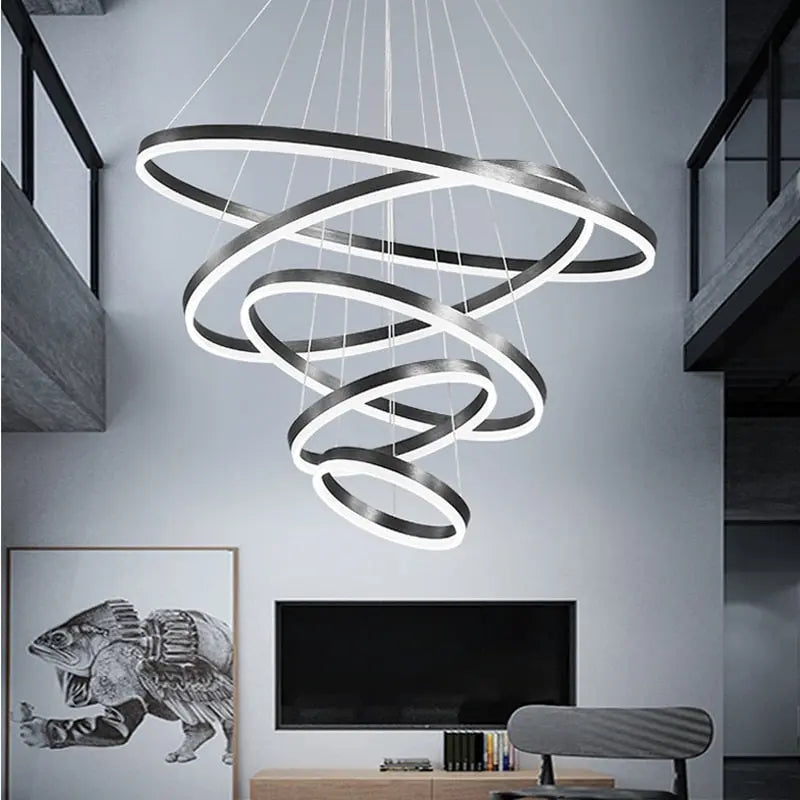
Most of these lighting trends share one cause: the LED. Once the light source became small, cool-running, and long-lived, the fixture no longer had to be built around a bulb, and designers were free to make the form the point. The trends below follow that logic — first the forms, then the light itself, then the materials.
1. Sculptural statement fixtures
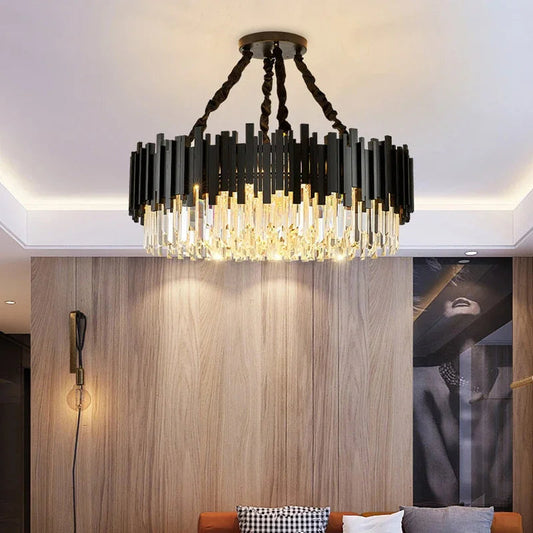
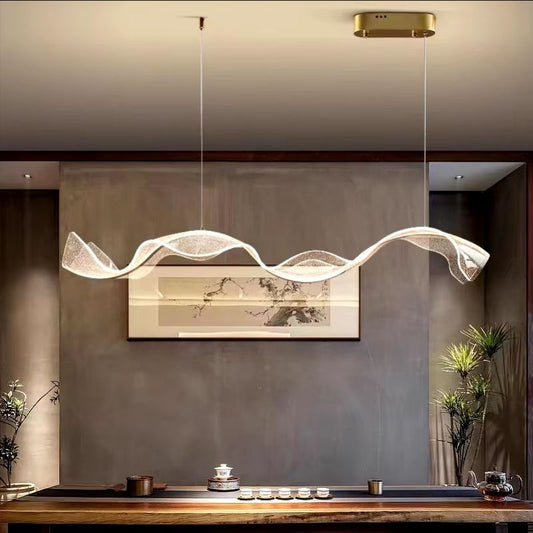
The strongest lighting trend of the moment is the fixture as the room's art. A statement piece is chosen for how it looks switched off as much as on, and the rest of the lighting is planned around it. The Zen Modern Round Black and Gold Crystal Chandelier is the type: a black ring carrying crystal, mixing two current finishes in one geometric form. The Modern Ocean Wave Pendant Chandelier takes the idea further — a linear form shaped like a wave, meant to be read as an object over an island or table. The statement chandelier guide covers the traits that make one work, and the statement chandeliers collection gathers the range.
2. Sputnik and branch chandeliers


Mid-century forms have become the default modern chandelier. The sputnik — arms radiating from a center, a globe or bare LED at each tip — and its organic cousin, the branch chandelier, are the two shapes showing up most in living rooms, dining rooms, and foyers. The Orgi Statement Linear Branch Chandelier runs the branch idea along a line for a rectangular table, and the Alba Tree Branch Chandelier spreads it in the round. Both put the light at the arm tips, so they light the ceiling and the room at once. See the sputnik chandelier guide and the sputnik and branch chandelier collections.
3. Bubble and globe clusters

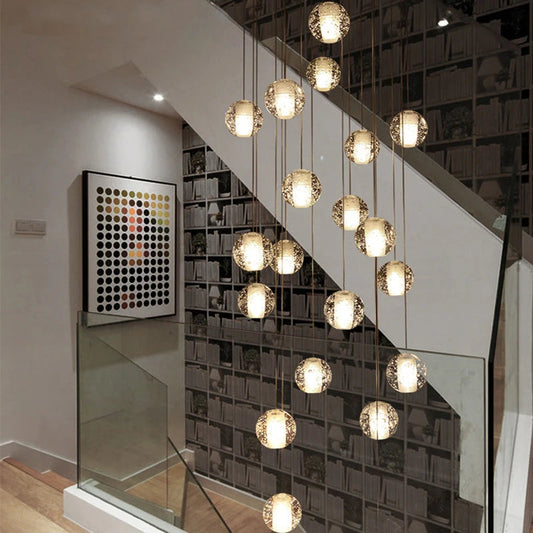
Glass globes — clear, frosted, or smoked — clustered on a frame or cascading on cords are the softest of the sculptural trends and the most adaptable: a cluster can be round for a foyer, linear for a table, or vertical for a stairwell. The Cleo Bubble Staircase Chandelier is the vertical version, sized to fill a two-story drop, and the Modern Crystal Glass Bubble Chandelier replaces the drops of a traditional crystal chandelier with smooth glass spheres. The bubble chandelier styles guide sorts them by layout; the bubble chandeliers collection has the full range.
4. Oversized fixtures for high ceilings

New homes are built with two-story foyers and great rooms, and the fixtures have grown to match. The fastest-growing category is the oversized chandelier — 36 inches and up, or a long vertical cascade — sized to a tall space rather than a table. The rule that drives it: add the room's length and width in feet for the diameter in inches, then add 2 to 3 inches per foot of ceiling height above 8 feet. A raindrop or crystal cascade in a foyer, a wide sputnik in a vaulted living room, and a long linear over a big island are the three common uses. The oversized chandelier guide covers going big without overwhelming the room; browse the oversized chandeliers and two-story foyer chandeliers collections.
5. Integrated LED with dimming as the default
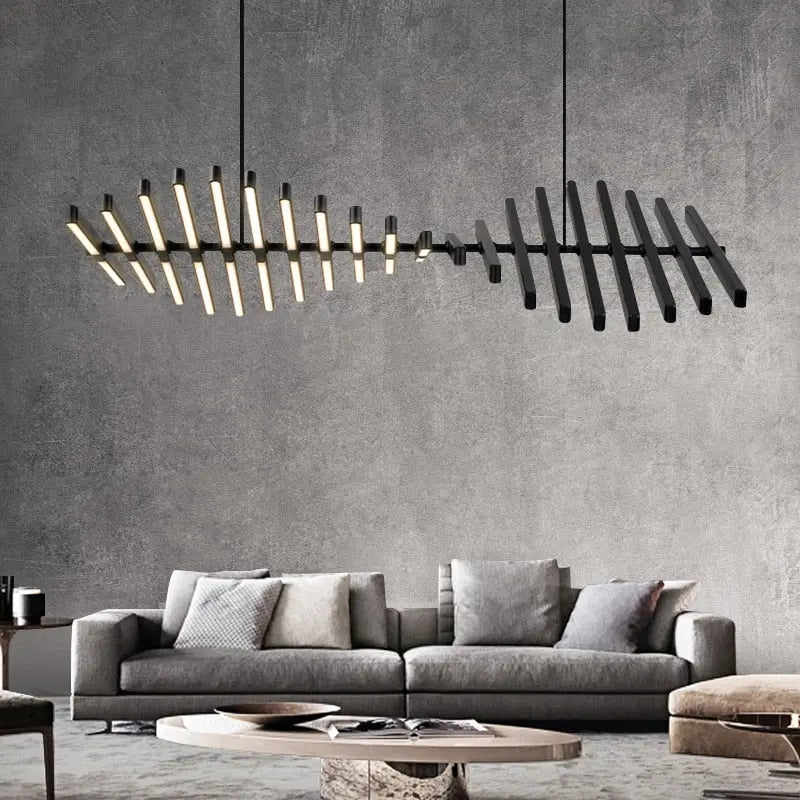
The bulb is disappearing from the design. Fixtures like the Radiel Modern LED Chandelier carry LED arrays inside rings and lines that no bulb could produce, rated for tens of thousands of hours, with dimming built into the driver. Three things to check on any integrated-LED fixture: that it is dimmable and lists a compatible dimmer type (most need a trailing-edge or 0–10V dimmer, not an old incandescent one); the color temperature (2700–3000K for living spaces); and whether the LED module is replaceable or the fixture is sealed. The energy-efficient lighting guide covers the specifications in depth.
6. Warm-dim and tunable white light
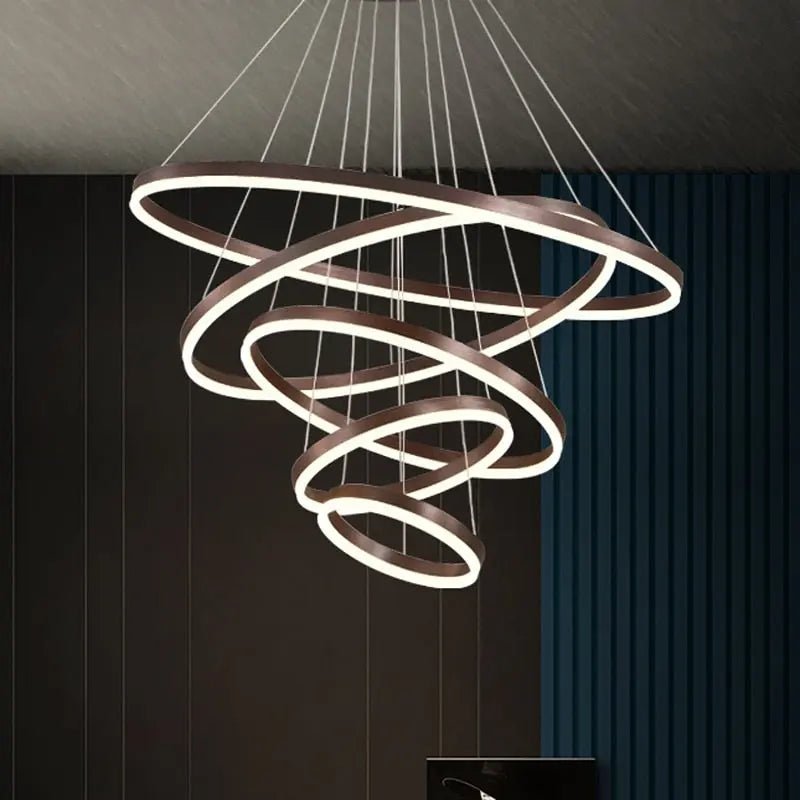
Early LEDs dimmed to a flat gray; the fix has become a trend of its own. Warm-dim LEDs shift from about 3000K toward 2200K as they dim, the way an incandescent does, so an evening setting looks like candlelight rather than a dimmed office. Tunable white goes the other way too — cooler by day, warmer at night — from one fixture. The Aysan Modern Ring Chandeliers are the type: multi-ring LED fixtures with selectable light color, so the same chandelier can run brighter and cooler for a task and warm and low in the evening. This is human-centric lighting arriving in homes — a term from office and healthcare lighting for light that follows the day. The color temperature guide explains the Kelvin scale.
7. Intelligent lighting: control built into fixtures and switches
Smart lighting trends have moved past the smart bulb. The current trend is control in the fixture (a remote or app that handles dimming, color temperature, and scenes) and in the switch (a smart dimmer that makes any fixture schedulable without replacing it). Typical uses are a wake-up ramp in the bedroom, a low evening scene for the living room, motion sensing in hallways and closets, and outdoor lights on a dusk-to-dawn schedule. Two buying notes: a fixture's remote and a wall smart dimmer can conflict, so pick one control path; and Matter-compatible switches and hubs work across Apple, Google, and Amazon systems, which matters if the house isn't committed to one. For fixtures that don't need rewiring at all, the lighting without wiring guide covers the options.
8. Layered lighting on separate dimmers
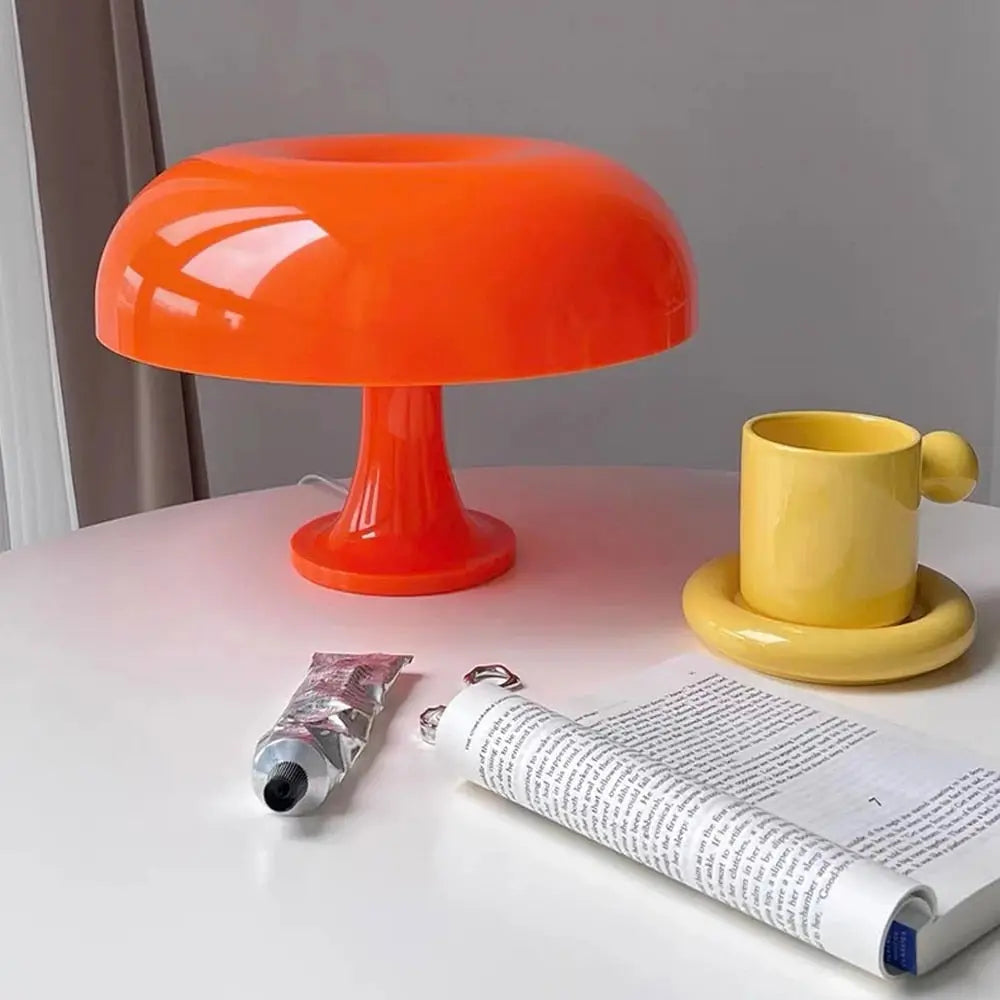
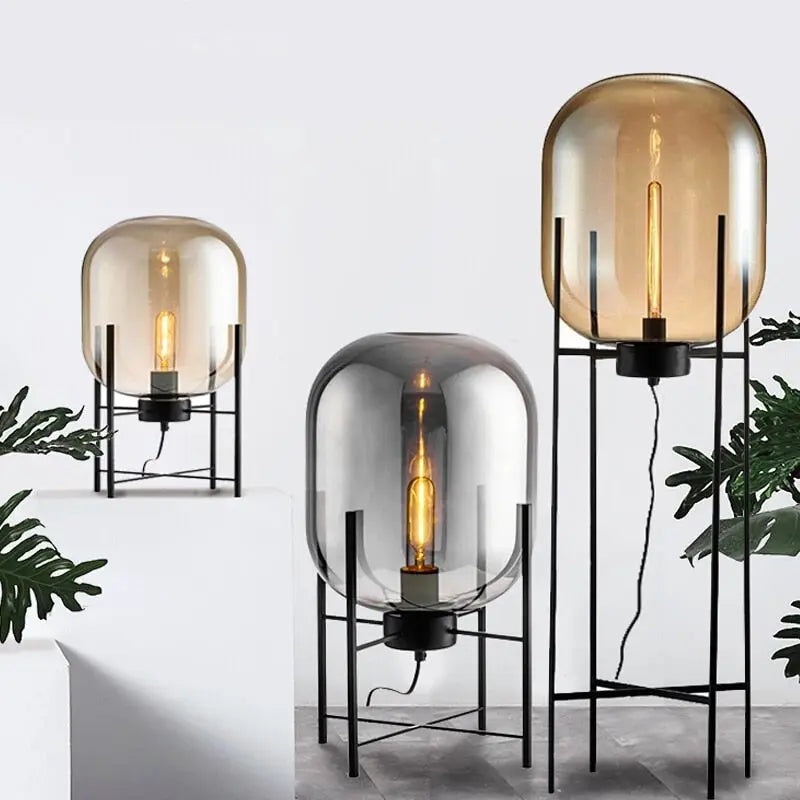
The quietest of the current lighting trends is the one that makes the others work. The single overhead light that lit a whole room is gone; in its place is a ceiling fixture for ambient light, lamps and pendants for task light, and sconces or picture lights for accent — each on its own dimmer. Lamps have become design objects in the process: the Modern Mushroom Table Lamp and the Glowlia Glass Shade Floor Lamp are chosen for their shapes as much as their light, and both give the soft, low-level layer that a chandelier on a dimmer can't reach. The layered lighting guide shows how to plan the three layers.
9. Matte black and brushed brass, mixed
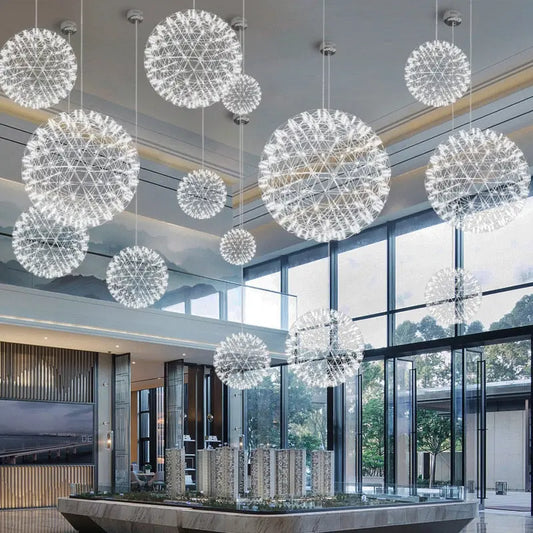
Two finishes lead: matte black, which reads as a line against any wall, and brushed or satin brass, which reads as warm metal without the shine of polished gold. The move now is to mix them — a brass fixture in a room with black hardware, or a single fixture in both, like the Zen chandelier above. Polished chrome and high-gloss gold have faded; brushed nickel holds on in kitchens and baths. Steel and stainless appear in modern pendants such as the Spark Ball Stainless Steel Pendant Light, whose reflective sphere works as a small statement over an island or in a hallway. The gold, black, or brass finish guide compares the three; the black chandeliers collection covers the black side.
10. Natural forms and materials
Biophilic design — bringing outdoor forms in — shows up in lighting as branch and tree shapes, mushroom and pebble lamps, rattan and woven shades, and finishes like aged brass and unglazed ceramic. The branch chandeliers and mushroom lamp above are the fixture side; the material side is wood, linen, paper, and blown glass replacing plated plastic. The light itself follows: warm, diffused through a shade, dimmed low in the evening. The biophilic lighting guide collects ten forms.
11. Crystal in modern frames
Crystal hasn't left; the frame around it has changed. Instead of tiered drops on a brass cage, crystal now hangs in squares, rectangles, rings, and cascades, or sits inside a flush mount for a standard ceiling. It's the way to keep sparkle in a home that isn't traditional, and the pairing of crystal with matte black is a trend inside the trend. The modern vs traditional crystal chandeliers guide draws the line; the crystal chandeliers collection has both.
12. Classic shapes reissued

The counter-trend to sculpture is the reissue: a candle chandelier, a lantern, a schoolhouse pendant, or a crystal flush mount remade with LED, a current finish, and a cleaner profile. The Lyla Crystal Flush Mount Ceiling Light is the type — a traditional crystal form scaled for an 8- or 9-foot ceiling and run on LED. Reissued classics are the safe pick for older homes and for anyone who wants a fixture to outlast a redecoration. The lighting styles guide sorts modern, transitional, and traditional.
Lighting Trends by Room: What's In Style Where
| Room | What's trending | Finish & light | Read more |
|---|---|---|---|
| Living room | Sputnik, branch, or ring chandelier centered on the seating group; sculptural floor and table lamps; oversized fixture in high-ceiling rooms | Black or brass; 2700K warm-dim on separate dimmers | Living room lighting ideas |
| Dining room | Linear or rectangular chandelier over rectangular tables; ring or sphere cluster over round; buffet lamps as the second layer | Mixed metals; crystal in linear frames; always dimmable | How to choose dining room lighting |
| Kitchen | One linear fixture replacing a row of pendants over the island; oversized single globes; under-cabinet LED strip | Black or brass; 3000K, CRI 90+ | Kitchen island pendant guide |
| Bedroom | Short-drop or semi-flush chandelier over the bed; sconces replacing bedside lamps; wake-up and wind-down scenes | Warm-dim 2700K; fabric or frosted shades | Bedroom chandelier size guide |
| Foyer & stairwell | Vertical cascades and raindrop crystal in two-story entries; crystal flush mounts in standard entries | Finish matched to stair rail and door hardware | Entryway chandelier trends |
| Bathroom | Damp-rated small chandeliers and crystal flush mounts; vertical vanity sconces; backlit mirrors | Black or brushed nickel; 3000–3500K | Bathroom lighting guide |
| Ceiling lights generally | Designed flush and semi-flush fixtures replacing builder-grade domes; slim LED rings and discs | Black, brass, and glass; dimmable integrated LED | Ceiling light trends |
| Outdoor | Low-voltage LED landscape systems, dark-sky wall lanterns, solar path lights, motion and schedule control | Black or brass; 2700K | See the outdoor section below |
Outdoor Lighting Trends
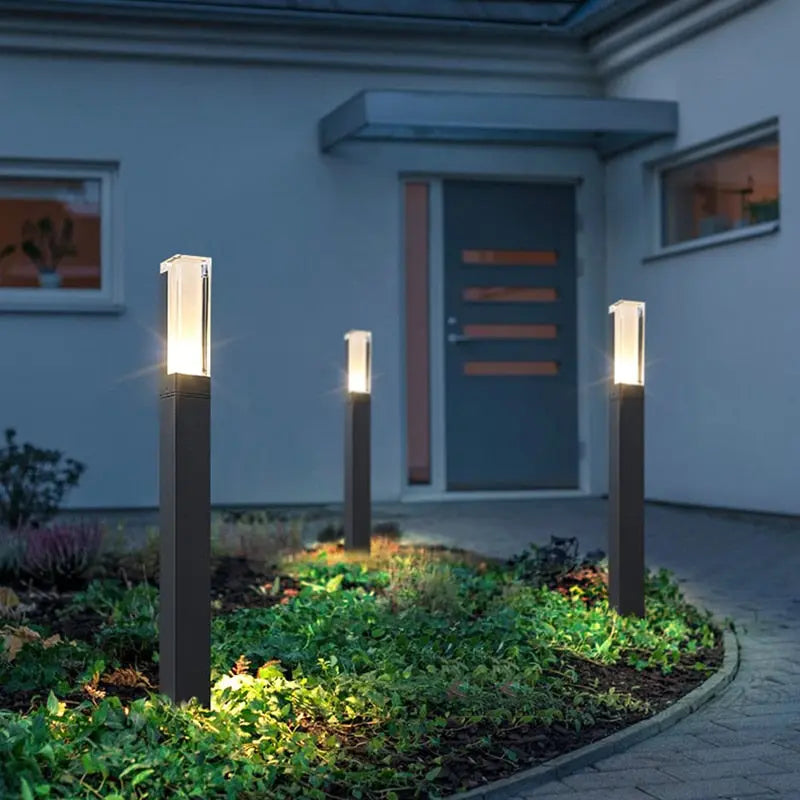
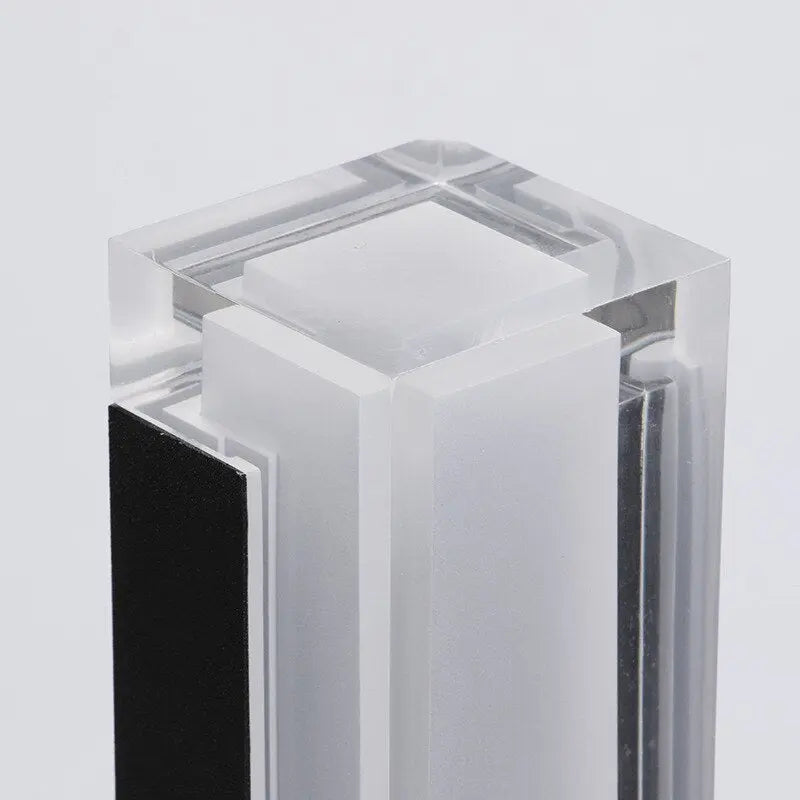
Outdoor lighting trends have followed the interior: warmer, lower, and controlled. The trends are low-voltage LED landscape systems that light paths, steps, and plantings from below rather than flooding the yard; dark-sky-friendly fixtures that point light down and keep it out of neighbors' windows; solar path and garden lights for spots with no wiring; and control — dusk-to-dawn schedules, motion sensing at doors and driveways, and scenes for a patio evening. Wall lanterns have gone modern, in black or brass to match the interior finish, and color-changing outdoor LEDs are used for occasions rather than every night. The Zenlum LED Landscape Lights are the landscape type: warm LED path and accent lights built to sit in weather year-round. The outdoor lighting ideas guide and solar lights guide go deeper; the outdoor lights collection has the range.
Sustainable Lighting Design Trends
Sustainable lighting design trends used to mean an LED bulb; now they cover the whole fixture. Four things define the current standard. Longevity: integrated LEDs rated 25,000 to 50,000 hours, so a fixture is not replaced for a decade or more. Repairability: replaceable LED modules or standard E12/E26 sockets rather than sealed units that become waste when a driver fails. Materials: solid brass, steel, glass, ceramic, and wood over plated plastic, because a fixture that still looks good in ten years is the most sustainable one. And use: dimmers, sensors, and schedules that cut the energy a fixture draws in practice — a chandelier run at 40 percent most evenings uses far less than its rating. Solar and low-voltage landscape systems cover the outdoor side. The sustainable lighting guide covers rebates and certifications.
What Buyers Look for in a Chandelier Now
The questions people ask before buying a chandelier have shifted from style to specification. This is the checklist the current market has settled on.
| Priority | What to look for | Why it matters now |
|---|---|---|
| Energy efficient | Integrated LED, or sockets that take LED bulbs; total draw under ~60 W for a large fixture | A 9-arm chandelier on LED candelabra bulbs draws about 45 W versus 540 W on incandescents |
| Long lasting | LED rated 25,000–50,000 hours; replaceable module or standard sockets; solid metal frame | Sealed fixtures with unreplaceable drivers are the main failure point |
| Programmable / automatic | Dimmable driver; remote or app with scenes and timers; or pair with a smart dimmer switch | Scenes and schedules are how most people use smart lighting day to day |
| Healthy light | 2700–3000K warm white, warm-dim if possible; CRI 90+; flicker-free driver | Cool light in the evening and visible flicker are the two common complaints |
| Waterproof / damp-rated | Damp rating for bathrooms and covered porches; wet rating for open exposure | Chandeliers over tubs and on porches are a growing use; standard fixtures aren't rated for it |
| Lightweight / easy install | Weight under 50 lb for a standard box; adjustable drop; clear wiring instructions | Heavier fixtures need a braced box and an electrician |
| Quiet | Driver rated for the dimmer used (buzz comes from mismatched dimmers) | Dimmer hum is the most common post-install complaint on LED fixtures |
| Safe / certified | UL or ETL listing; a child-safe cord and shade design where a lamp is within reach | Required for insurance and inspection in most US jurisdictions |
Quick spec check before you buy a chandelier
Light: 2700–3000K, CRI 90+, dimmable, flicker-free • Life: 25,000+ hr LED or standard sockets • Control: remote/app or smart-dimmer compatible — pick one path • Rating: UL/ETL; damp or wet if it's going near water • Fit: length + width in feet = inches of diameter; 7 ft clearance; box rated for the weight.
Lighting Trends That Are Fading
Knowing which lighting trends are leaving is as useful as knowing which are arriving, especially when comparing a house's current fixtures to what's in style. On the way out: the single central flush dome ("boob light") and the builder-grade brushed-nickel set that matches through the whole house; heavy tiered crystal chandeliers in rooms too small for them; cool white (4000K and up) in living spaces; oil-rubbed bronze as a default finish; Edison-bulb-only industrial fixtures and cage pendants; and rooms lit entirely by a grid of recessed cans with no fixture or lamp. Recessed lighting itself isn't gone — it's the background layer under a statement fixture. If you're searching lighting trends from 2018, 2021, or 2022, most of what those years called new (black finishes, sputniks, integrated LED) has become standard rather than gone out; what changed is scale, control, and warmth. The guide to updating old light fixtures covers replacing the dated ones.
Where the Lighting Industry Is Heading
Four lighting industry trends are visible from the product side. The LED has become the default light source, so design effort goes into form, finish, and control rather than the bulb — which is why fixtures keep getting more sculptural. Controls are moving into fixtures and switches, with Matter making cross-brand smart lighting practical. Efficiency and sustainability rules are pushing longer-rated LEDs and repairable modules over sealed units. And human-centric lighting — warm-dim, tunable white, light that follows the day — is moving from offices and hospitals into homes. For the buyer, the practical reading is that a fixture bought now should be dimmable, warm, long-rated, and either controllable or easy to put on a smart switch; the form is a matter of taste, and the trends above show where taste is.
Sputnik and branch chandeliers, bubble clusters, oversized statement pieces, and modern lamps.
Modern Chandeliers Statement Sputnik Bubble New Arrivals
Frequently Asked Questions
What are the lighting trends right now?
Eight trends define home lighting in 2026 and into 2027: sculptural statement fixtures that read as art; sputnik and branch chandeliers; glass bubble and globe clusters; integrated LED with dimming and app or remote control as the default; warm-dim and tunable white light for evenings; natural forms and materials; mixed finishes led by matte black and brushed brass; and oversized fixtures for high ceilings. Underneath all of them, layered lighting — a ceiling fixture plus lamps or sconces on separate dimmers — has replaced the single overhead light.
What chandeliers are in style in 2026?
Sculptural and geometric chandeliers — ring, linear, sputnik, branch, and cascading sphere or bubble designs — in matte black, brushed brass, or mixed metals. Crystal is still in style but in modern frames: square or linear crystal chandeliers and crystal flush mounts rather than heavy tiered crystal. Integrated LED with dimming is now expected. Oversized chandeliers for two-story foyers and high-ceiling living rooms are the fastest-growing category.
What is the newest trend in LED lighting?
Warm-dim and tunable white. Warm-dim LEDs shift from about 3000K toward 2200K as they dim, mimicking incandescent light, which solves the flat, gray look of early dimmed LEDs. Tunable white lets one fixture run cooler by day and warmer by evening. Alongside those, integrated LED arrays with 25,000–50,000-hour ratings, high CRI (90+), and flicker-free drivers have become standard specifications rather than premium ones.
What are the intelligent and smart lighting trends?
Smart control has moved from smart bulbs to whole fixtures and switches. Current trends are fixtures with built-in dimmable, color-adjustable LEDs controlled by remote or app; smart dimmer switches that make any fixture controllable without changing the fixture; scenes and schedules (a bright daytime setting, a dim evening setting, a wake-up ramp); motion and occupancy sensors in hallways, closets, and outdoors; and Matter-compatible devices that work across Apple, Google, and Amazon ecosystems.
What are the sustainable lighting design trends?
Sustainability in lighting now means four things: LED fixtures rated for 25,000 hours or more so they aren't replaced; replaceable LED modules or standard bulb sockets rather than sealed units; durable materials — solid brass, steel, glass, ceramic — over plated plastic; and dimmers and sensors that cut energy use in practice. Solar path and garden lights and low-voltage LED landscape systems cover the outdoor side.
What lighting is out of style?
The single central boob light and builder-grade flush mount; matching lighting sets where every fixture in the house is the same finish and style; heavy tiered crystal chandeliers in small rooms; cool 4000K+ white light in living spaces; oil-rubbed bronze as a default finish; and Edison-bulb-only industrial fixtures. Recessed lighting isn't out, but rooms lit only by a grid of recessed cans are.
Are gold and brass light fixtures still in style?
Yes. Brushed and satin brass are the leading warm finishes, and gold appears mainly in modern forms — ring, bubble, and sputnik chandeliers — rather than ornate ones. The trend is mixing: brass with matte black, or a brass fixture against black hardware. Polished gold and high-shine chrome are the finishes that have faded.
What is the trend for living room lighting?
Layered light on separate dimmers: a sculptural ceiling fixture — a sputnik, branch, or ring chandelier — centered on the seating group, plus floor and table lamps with fabric or glass shades, plus a sconce or picture light for accent. Warm-dim LEDs at 2700K, and in high-ceiling living rooms, an oversized chandelier sized to the room's length plus width in inches.
What is the trend for dining room lighting?
Linear and rectangular chandeliers over rectangular tables, ring or sphere clusters over round tables, hung 30 to 36 inches above the tabletop and always on a dimmer. Mixed-metal and black-and-brass finishes lead, crystal appears in linear frames, and buffet lamps or sconces supply the second layer.
What are the outdoor lighting trends?
Low-voltage LED landscape systems that light paths, steps, and plantings with warm 2700K light; dark-sky-friendly downward fixtures; motion-sensing and scheduled outdoor lights on smart controls; solar path and garden lights for zero-wiring installs; and modern wall lanterns in black or brass that match the interior finish. Color-changing outdoor LEDs are used for occasions, not as everyday lighting.
What should I look for in a chandelier today?
Integrated LED rated 25,000 hours or more, or standard sockets that take LED bulbs; dimmable, with a driver compatible with your dimmer; 2700–3000K color temperature and CRI 90 or higher; flicker-free operation; a UL or ETL listing, and a damp rating if it goes in a bathroom or covered porch; a weight your ceiling box can hold (50 pounds standard); and a size that follows the room's length plus width in inches. Remote or app control is a bonus, not a requirement.
Where is the lighting industry heading?
Toward integrated LED as the default light source, with the design effort going into form and finish rather than the bulb; toward controls — dimmers, sensors, app and voice — built into fixtures and switches; toward longer product life and repairable modules under efficiency and sustainability rules; and toward oversized and sculptural pieces as fixtures take over the decorative role once held by furniture. Human-centric lighting — warm-dim, tunable white — is moving from offices into homes.
Choosing a Fixture That Stays Current
The lighting trends above share a direction — toward fixtures that look like objects, light that feels like evening, and control that follows the day — and a fixture that meets those three will still look current when the specific shapes rotate. Check the specification first (warm, dimmable, long-rated, listed), then pick the form that fits the room and the finish that matches what's already there. Statement pieces earn their place in rooms seen from many angles; reissued classics are the safe choice where the architecture is older.
Browse the modern chandeliers collection for the sculptural and geometric fixtures above, the new arrivals for the latest designs, and the lamps collection for the layered light around them. For room-specific trends, see entryway chandelier trends and ceiling light trends.


