

A dimmable chandelier lets one fixture do two jobs — bright for cleaning and homework, low for dinner and evenings — but only when the light source and the control match. This guide explains the three dimming setups (bulb sockets, integrated LED, remote and app), how to choose bulbs and a dimmer, when remote dimming is the better route, dimming levels by room, how to fix flicker and buzz, and seven chandeliers that dim well.
Key Takeaways
| Question | Answer |
|---|---|
| What makes a chandelier dimmable? | A dimmable light source plus a matching control. |
| Socket chandelier? | Dimmable LED bulbs + LED-rated trailing-edge or universal dimmer. |
| Integrated LED? | The dimmer type on the driver, or remote-only with an on/off switch. |
| Remote or wall dimmer? | Either, but never both on one fixture; remote suits high ceilings. |
| Why flicker? | Old incandescent dimmer, low load, non-dimmable or mixed bulbs, or remote + dimmer conflict. |
| How low for dinner? | About 30–50% of a 30–40 lm/sq ft dining setting. |
Quick Facts
- Three setups: socket + wall dimmer, integrated LED + matching dimmer, integrated LED + remote.
- Trailing-edge (ELV) dimmers are the usual first choice for LED.
- 0–10V dimming needs two extra low-voltage control wires.
- Warm-dim bulbs shift from ~3000K toward 2200K as they dim.
- Use bulbs of one brand and batch so they dim evenly.
- Dimming LED cuts power roughly in step with light output.
How Chandelier Dimming Works
A dimmable chandelier is really a pairing: a light source that can dim and a control that matches it. Get the pairing right and the fixture fades smoothly from full brightness for cleaning to a low glow for dinner; get it wrong and it flickers, hums, or simply refuses to dim. There are three common setups, and the first decision is which one your chandelier uses.
| Setup | Light source | Control | Check before buying |
|---|---|---|---|
| Bulb-socket chandelier | Candelabra (E12), medium (E26), or G9 sockets with dimmable LED bulbs | LED-rated wall dimmer (trailing-edge or universal) | Socket type, max wattage per socket, bulbs say "dimmable" |
| Integrated-LED, wall dimmable | Built-in LED with a dimmable driver | Dimmer type stated on the driver (trailing-edge, leading-edge, 0–10V) | Driver dimmer type; 0–10V needs extra wires |
| Integrated-LED, remote dimmable | Built-in LED with a receiver | Included remote or app; plain on/off wall switch | Whether wall dimming is supported at all; color temperature options |
Choosing Bulbs for a Dimmable Socket Chandelier
For a socket chandelier, the bulbs decide most of the dimming quality. Buy bulbs marked dimmable, all the same brand and batch so they dim evenly, in the socket size the fixture takes. Choose 2700K for living, dining, and bedrooms (3000K for kitchens), CRI 90 or higher, and consider warm-dim bulbs that shift toward 2200K as they dim — they give candle-like light at the low end, which suits candle-arm and wagon-wheel chandeliers in particular. Size output for the bright setting: about 300 to 450 lumens per candelabra socket in a dining chandelier, then dim down. The light bulb types guide covers bases and shapes.
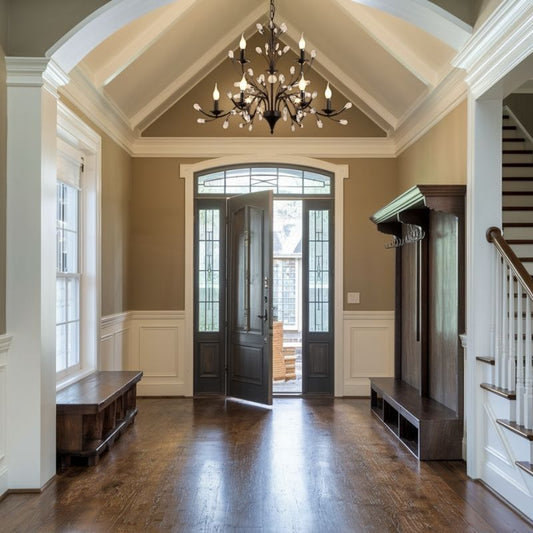
A candle-arm fixture such as the Wrought Iron Chandelier, 6–9 Lights takes candelabra LED bulbs, so its dimming is whatever bulb and dimmer you pair it with — warm-dim filament bulbs on an LED-rated dimmer make it behave like the candle chandelier it imitates.
Choosing a Dimmer
| Dimmer type | Works with | Notes |
|---|---|---|
| Trailing-edge (ELV / reverse-phase) | Most dimmable LED bulbs and many LED drivers | Smoothest, quietest LED dimming; the usual first choice |
| Leading-edge (incandescent / MLV) | Incandescent, some LED drivers that specify it | Old incandescent dimmers cause most LED flicker |
| Universal LED/CFL | Dimmable LED bulbs | Look for adjustable low-end trim |
| 0–10V | Integrated-LED drivers that specify 0–10V | Needs two extra low-voltage control wires |
| Smart dimmer | Bulbs or drivers its spec supports | Scenes and schedules; check the compatibility list |
Check the dimmer's LED load rating against the total wattage on the circuit — a nine-bulb chandelier at 5 watts per LED is 45 watts, which some dimmers treat as below their minimum load and flicker at. A dimmer with low-end trim lets you set how dim the fixture goes before it cuts out.
Remote and App Dimming
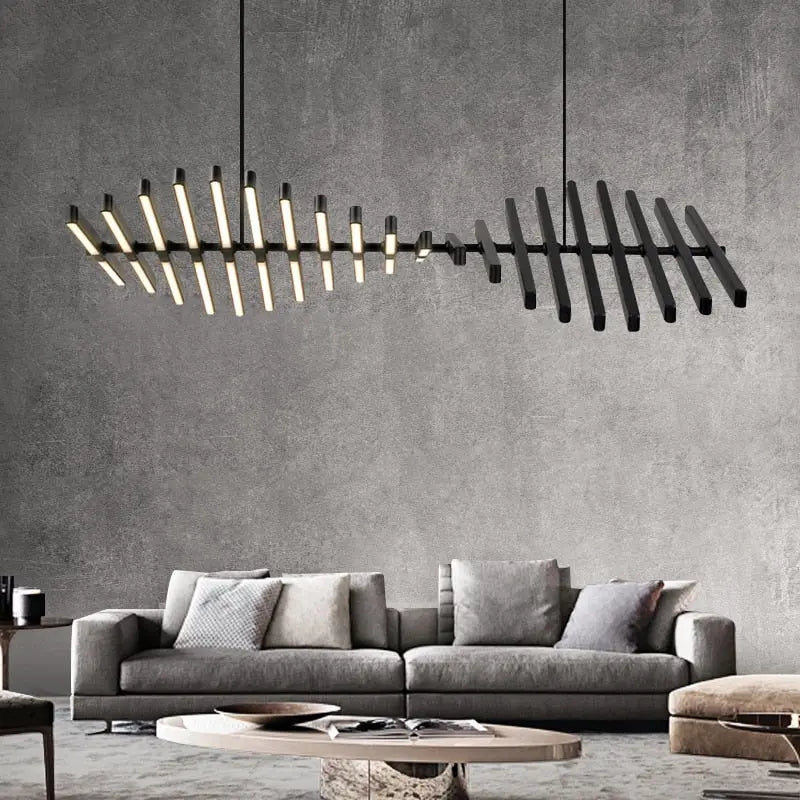
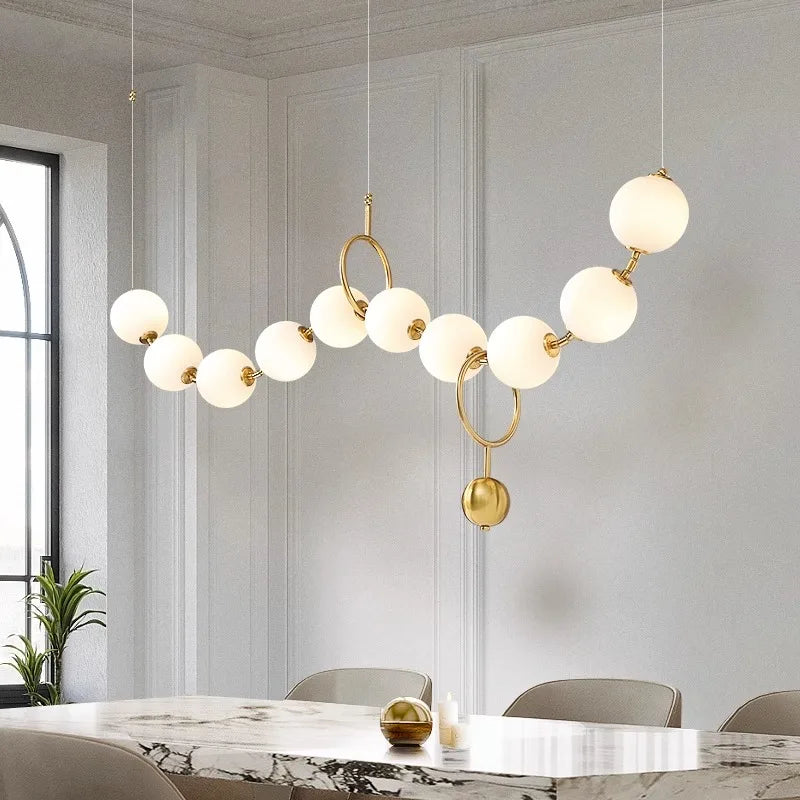
Many integrated-LED chandeliers ship with their own remote, and often a color-temperature button, which removes dimmer compatibility from the equation: wire the fixture to a plain on/off switch, leave the switch on, and dim with the remote. The Radiel Modern LED Chandelier adds adjustable color temperature and a memory function that recalls your last setting; the Modern Minimalist Bubble Glass Orb Chandelier dims by remote in a clean orb layout. The trade-off is the remote itself — keep it in a fixed spot, or pair the fixture with a smart switch for scheduling.
Dimmable Chandeliers for High Ceilings and Stairwells

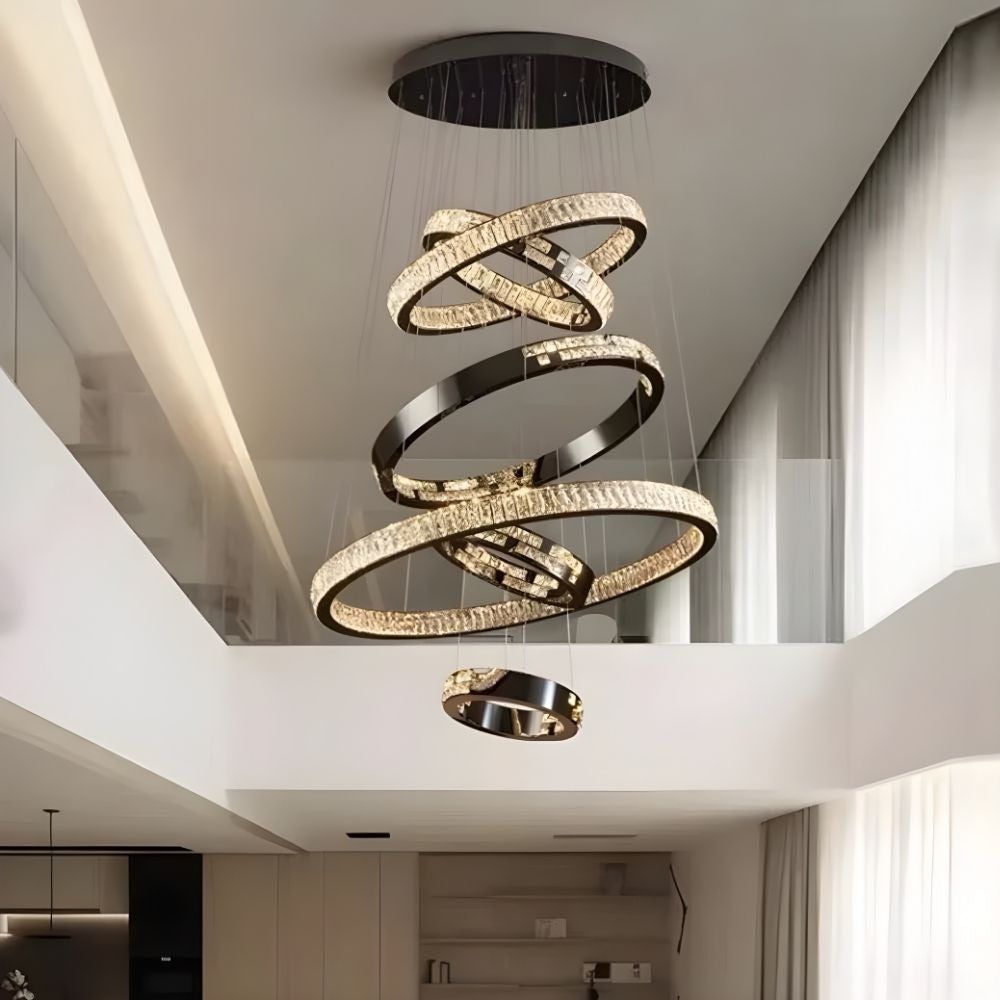
Remote dimming matters most where the fixture is out of reach and the wall switch is far from where you stand. In a two-story foyer or stairwell, a remote-dimmable fixture lets you set the level from the landing or the door. The Aten Crystal Staircase Chandelier comes in remote-dimmable configurations — crystal sparkles most at a low setting at night — and the Malen Multi Ring Pendant Light dims its rings by remote. The grand foyer and staircase guide covers placement and layering.
Dimming Levels by Room
| Room | Full brightness for | Dimmed level for | Color |
|---|---|---|---|
| Dining room | Homework, cleaning, serving (30–40 lm/sq ft) | Dinner at 30–50% | 2700K, warm-dim ideal |
| Living room | Reading with lamps off, cleaning | Evening at 20–40% with lamps on | 2700K |
| Bedroom | Dressing, cleaning | Wind-down at 10–30% | 2700K warm-dim |
| Kitchen / island | Prep and cooking | Late-night glow at 20–30% | 3000K |
| Foyer / stairwell | Arrivals, cleaning | Night path light at 10–20% | 2700–3000K |
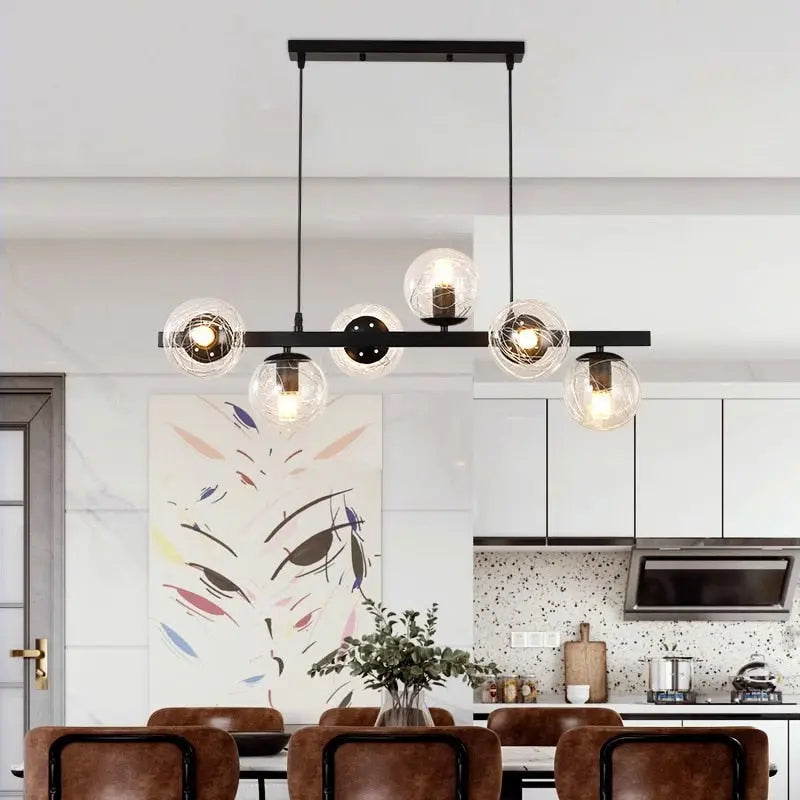
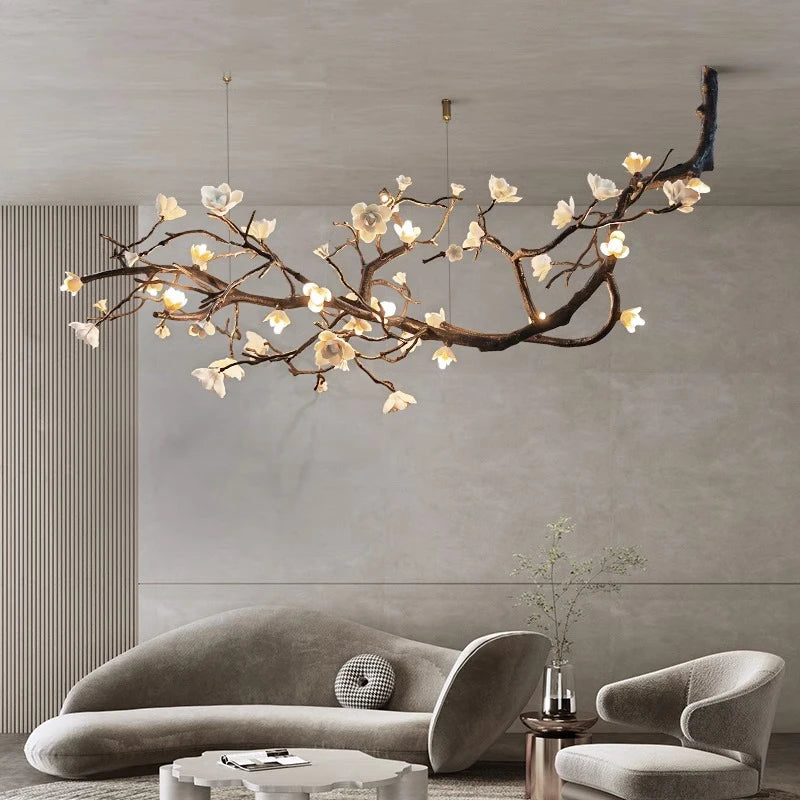
Dining rooms gain most from dimming. The Modern Bubble Chandelier for Dining Rooms includes LED bulbs and remote dimming; the Minas Dimmable Rustic Tree Branch Chandelier brings dimming to a rustic branch form. The chandelier mood lighting guide covers the design side of setting levels and scenes.
Troubleshooting Flicker, Buzz, and Dropout
| Symptom | Likely cause | Fix |
|---|---|---|
| Flicker at low levels | Dimmer minimum load above LED wattage; low-end trim too low | Raise low-end trim; use a dimmer rated for low LED loads |
| Flicker at all levels | Leading-edge incandescent dimmer on LED; non-dimmable bulbs | Trailing-edge LED dimmer; dimmable bulbs |
| Buzzing | Dimmer/driver mismatch; mixed bulb brands | Matching dimmer type; one brand and batch of bulbs |
| Cuts out before dim | Low-end trim set too high | Adjust trim on the dimmer |
| Remote fixture acts up | Wall dimmer and remote both in the circuit | Replace wall dimmer with on/off switch; dim by remote |
| Uneven brightness between bulbs | Mixed bulb models or batches | Replace the set with one model |
If the fixture still misbehaves, the home lighting troubleshooting guide and flicker causes guide go further, and a licensed electrician can check the circuit.
Quick decision: dimmable chandelier setup
Socket chandelier: dimmable LED bulbs (one brand, 2700K, warm-dim if possible) + trailing-edge LED dimmer with trim • Integrated LED, wall dimmable: the dimmer type on the driver (check for 0–10V wiring) • Integrated LED, remote: plain on/off switch + remote, or a compatible smart switch • High ceiling or stairwell: remote-dimmable fixture • Never: a wall dimmer and a remote on the same fixture.
Remote-dimmable LED and socket chandeliers for every room.
All Chandeliers Modern Staircase Dining Room
Frequently Asked Questions
What makes a chandelier dimmable?
Two things together: a light source that can dim and a control that matches it. For a chandelier with bulb sockets, that means dimmable bulbs (the package says 'dimmable') on a dimmer rated for those bulbs. For an integrated-LED chandelier, it means a dimmable driver built into the fixture, controlled either by its own remote or app or by a wall dimmer of the type the driver supports. A chandelier listed as 'dimmable' with non-dimmable bulbs, or an LED driver on the wrong dimmer, will flicker, buzz, or not dim at all.
Can I put any chandelier on a dimmer?
A chandelier with standard sockets can go on a dimmer as long as you use dimmable bulbs and an LED-compatible dimmer rated for the total wattage. An integrated-LED chandelier can only go on a wall dimmer if its driver is dimmable and the dimmer type matches (often trailing-edge/ELV or 0–10V); if the listing says 'remote dimming' only, wire it to a plain on/off switch and dim with the remote. Check the listing or manual before installing a dimmer.
Why does my LED chandelier flicker on a dimmer?
Usually a mismatch: an old incandescent (leading-edge) dimmer on LED bulbs, a dimmer whose minimum load is higher than the LED wattage, non-dimmable bulbs, or a remote-dimming fixture wired to a wall dimmer as well. Fixes are an LED-rated trailing-edge dimmer, adjusting the dimmer's low-end trim, dimmable bulbs from one brand and batch, or switching to on/off plus the fixture's remote.
Remote dimming or a wall dimmer — which is better?
Remote or app dimming is simplest for integrated-LED fixtures that ship with it, needs no special wiring, and often adds color temperature control; the downside is a remote that can go missing. A wall dimmer is permanent, always where you expect it, and works with smart-home switches, but must match the fixture's driver or bulbs. Pick one path per fixture; running a remote-dimming fixture on a wall dimmer as well causes conflicts.
What dimmer do I need for an LED chandelier?
For bulb-socket chandeliers with dimmable LED bulbs, an LED-rated dimmer — most often a trailing-edge (ELV/reverse-phase) or a universal LED/CFL dimmer — whose rated LED load covers the total bulb wattage. For integrated-LED chandeliers, the dimmer type stated on the driver: trailing-edge, leading-edge, 0–10V (which needs extra low-voltage wires), or none if the fixture is remote-only.
What is warm dimming, and do chandeliers have it?
Warm dimming means the light gets warmer in color as it dims — from about 3000K at full brightness toward 2200K at the low end — the way an incandescent bulb behaves. Standard LEDs stay the same color as they dim, which can look gray at low levels. Warm-dim LED bulbs are available for candelabra and medium sockets, and some integrated-LED chandeliers offer selectable or tunable color temperature by remote.
How dim should a dining room chandelier go?
Plan the chandelier for full brightness at about 30 to 40 lumens per square foot over the table for homework, cleaning, and serving, then dim to roughly 30 to 50 percent for dinner. A dimmer with a smooth low end matters more than maximum output; check the dimmer's trim adjustment if the fixture cuts out before it gets low enough.
Do dimmable chandeliers save energy?
Yes — dimming an LED chandelier reduces its power draw roughly in proportion to the light output, and LED itself uses a fraction of incandescent power. A chandelier run at half brightness most evenings uses well under its rated wattage. The bigger win is usually the switch to LED; dimming adds comfort and some further savings.
Smooth From Bright to Low
Dimming is what turns a chandelier from one setting into a range, and it works when the bulb or driver and the control are chosen together. Check the listing for the dimming method before you buy, match the dimmer or keep the remote, and the fixture will fade cleanly every evening.
Browse the chandeliers collection and check each listing's dimming line, or start with the online chandelier buying checklist.


