

In a grand foyer with a staircase, the main fixture isn't an accessory. It is an architectural element that sets proportion and sightlines and ties the front door, the stair, and the upper landing into one composition. This guide covers how to read the space first — stair-connected or not — then the scale rules for diameter, body height, and drop, the three-viewpoint method for placement, seven statement chandelier families, layered stair lighting, and the mistakes tall entries make obvious.
Key Takeaways
| Question | Short answer |
|---|---|
| What lighting works best for grand foyers? | Large-scale fixtures chosen for both diameter and drop — presence without blocking circulation. |
| What suits a staircase in the same volume? | Vertical chandeliers and cascades that stay readable from the door, the stair turn, and the landing. |
| How do I estimate diameter? | Foyer length + width in feet = starting diameter in inches; adjust for visual weight. |
| How do I estimate body height? | 2.5–3 in per foot of ceiling height — 45–72 in for 18- to 24-ft entries. |
| How high should the bottom sit? | At least 7 ft above the floor and every tread; usually at or slightly above the second-floor line. |
| Do stairs need more than the chandelier? | Yes — step or wall lights for safety, on their own dimmer. |
Quick Facts
- Typical two-story entry: 18–24 ft ceiling; fixture body 45–72 in tall.
- Diameter: L + W (ft) = in — 14×16 ft → ~30 in; 16×18 → ~34 in; 18×20 → ~38 in.
- Bottom: ≥ 7 ft over floor and treads; typically at or just above the second-floor line.
- Three viewpoints: front door, stair turn, upper landing — the fixture must read from all three.
- Layers: chandelier for presence, step/wall lights for navigation, entry sconces for evenness — all 2700–3000K.
- Mounting: over 50 lb needs a brace or structural mount; plan lift or lowering access for cleaning.
Read the Space First: Stair-Connected or Not?
A grand foyer is a vertical room that links the entrance, the staircase, and the upper landing, and the single biggest factor in choosing its fixture is whether the stair rises inside that volume.
| If the foyer is stair-connected | If the foyer is not stair-connected |
|---|---|
| Prioritize vertical readability from three viewpoints: front door, stair turn, landing. Cascades, long multi-light drops, tall branches, and diagonal-aligned linear forms work best. | Prioritize centered balance and diameter. Open clusters, wide branches, and round silhouettes fill the footprint without a long vertical run. |
| Let step and wall lights handle safety on the stair so the chandelier can focus on presence. | Add perimeter sconces or wall lights so the light isn't overhead-only and harsh. |
| Expect an off-center or diagonal placement aligned with the stair run. | Expect a centered placement on the floor and the front door. |
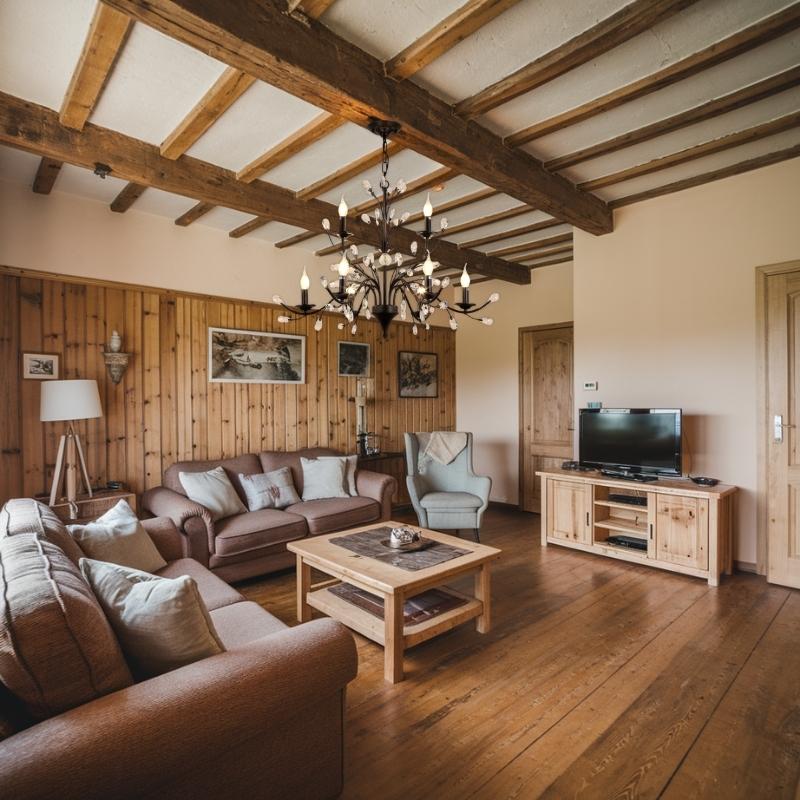
Designers treat the foyer fixture as part of the floor plan: ceiling height, stair direction, landing position, and the view from the front door all come before style. The goal isn't brightness alone; it is a focal point that makes the volume read as structured. In a foyer that isn't stair-connected, a wide, centered form — even a classic candle-arm piece like the Wrought Iron Chandelier, 6–9 Lights in a rustic or traditional entry — can do the job; once the stair rises through the space, the fixture has to go vertical.
Scale Rules for a Two-Story Volume
Scale is where tall entries go wrong most often. A fixture that's too small disappears into the height; one that's too large feels top-heavy and crowds the landing. Two rules prevent most mistakes. Diameter: add the foyer's length and width in feet and read the sum as inches. Body height: about 2.5 to 3 inches of fixture height per foot of ceiling height. Then the bottom: at least 7 feet above the floor and above every stair tread the fixture overhangs, and in most two-story entries at or slightly above the second-floor line.
| Ceiling height | Fixture body height | Bottom of fixture | Typical form |
|---|---|---|---|
| 12–14 ft | 30–42 in | 8–9 ft above the floor | Large cluster, wide branch, tall lantern |
| 16–18 ft | 40–54 in | At the second-floor line or 9–10 ft | Cascade, vertical rectangle, tall branch |
| 20–22 ft | 50–66 in | At or just above the second-floor line | Long cascade, multi-tier, stacked rings |
| 24 ft and up | 60–72 in+ | Above the second-floor line; check landing eye level | Long cascade, oversized vertical, custom |
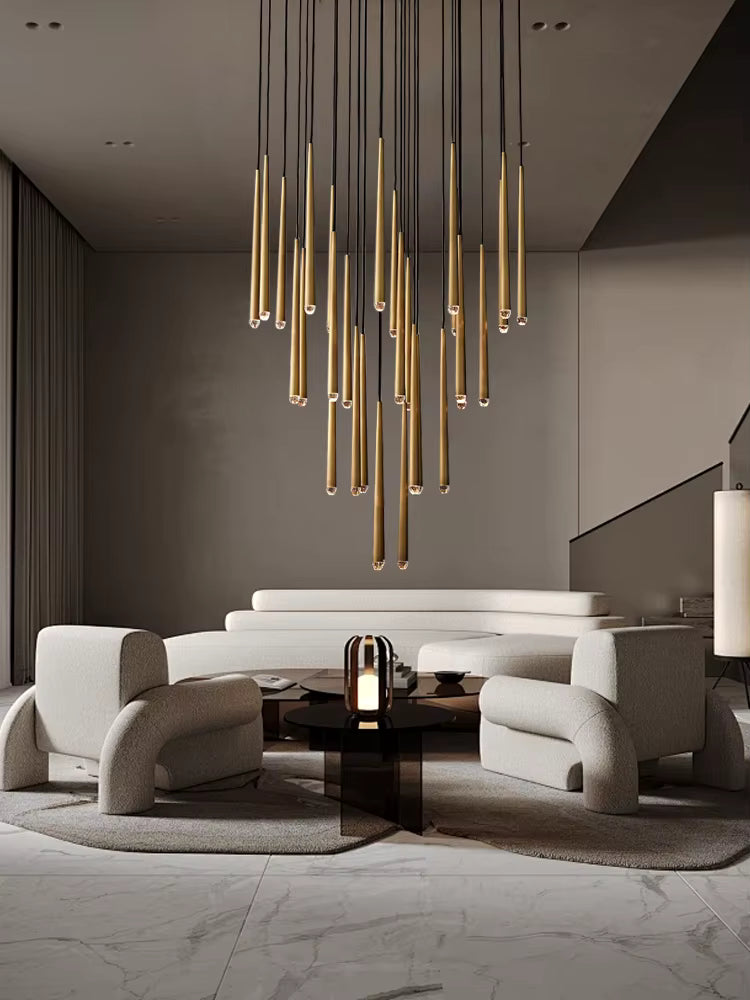
These rules don't replace judgment — open glass forms can run larger than dense crystal, and a stair-connected foyer should favor height over width — but they keep the fixture visible from both levels and the floor clear beneath it. The modern foyer chandeliers for high ceilings guide covers drop and visual weight in more depth, and the two-story foyer chandelier guide works the size and height math for two-story entries generally.
Place It by Three Viewpoints
A chandelier that looks balanced from only one spot looks wrong once you move through a stair-connected foyer. Before fixing the drop and position, check the fixture from three viewpoints: the front door (and from outside, through any glazed door or upper window), the stair turn mid-flight, and the upper landing or hallway.
- Align with the stair run. A slight diagonal alignment with the stair usually looks more natural than forcing the fixture to the exact center of the floor.
- Protect the landing view. Keep the densest part of the fixture out of eye level from the landing — raise it or choose a form that thins out at the top.
- Center it in the window. If the foyer has an upper window or a glazed front door, check the fixture from outside at night; it should sit centered in the opening.
- Clear the paths. Keep 7 feet over every tread the fixture overhangs, clear of the handrail line, the landing walkway, and the arc of the front door.
- Control glare. Aim exposed bulbs or points away from the ascent line so climbing the stair at night isn't harsh.
Seven Statement Fixture Families for Grand Foyers and Staircases

1. Vertical cascades
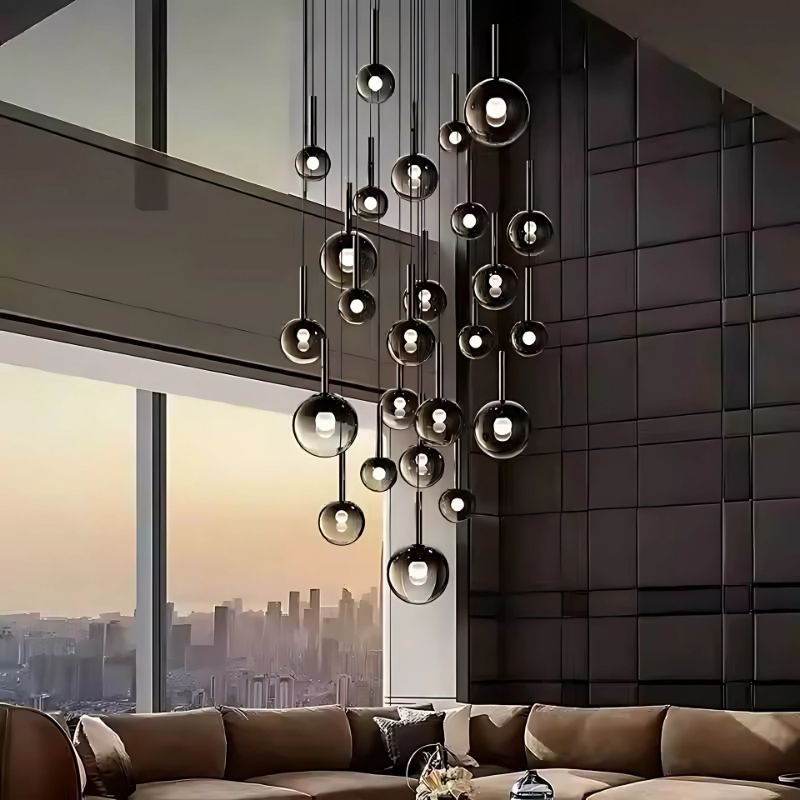
Stair-connected foyers rarely look right with compact fixtures. A cascade — globes, crystals, or pendants on cords at staggered heights — mirrors the upward movement of the stair and links the entry to the landing in one gesture. The Cleo Bubble Staircase Chandelier is the glass version, sized to a full-story drop; set its lowest globe at or just above the second-floor line and it reads from all three viewpoints. The stairwell chandelier size guide works the drop math.
2. Geometric and architectural forms
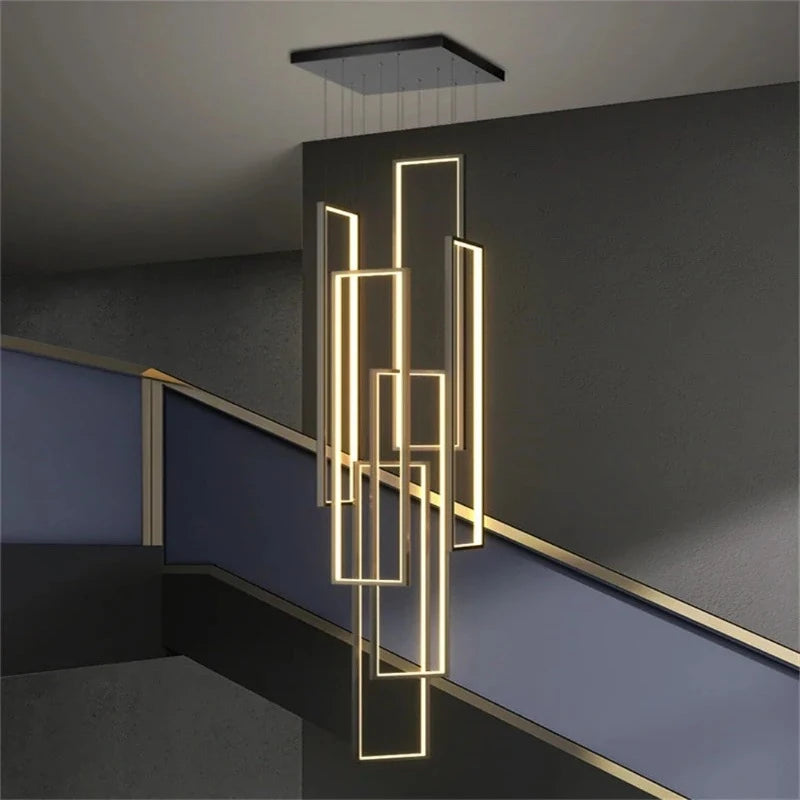
Contemporary homes often want clean geometry rather than ornament. A vertical rectangle, a stack of rings, or an open grid of LED bars reads as architecture rather than decoration and keeps visual weight lighter than a dense crystal body of the same size. The Modern Large Vertical Rectangle Chandelier for Staircase (shown above) is the type — a tall frame that fills a two-story void with a single clear outline; the Contemporary Chandelier for High Ceiling Living Room & Foyer covers the multi-head version for a wider entry. Geometric forms usually run integrated LED, so check the driver's dimmer compatibility.
3. Organic branch statements
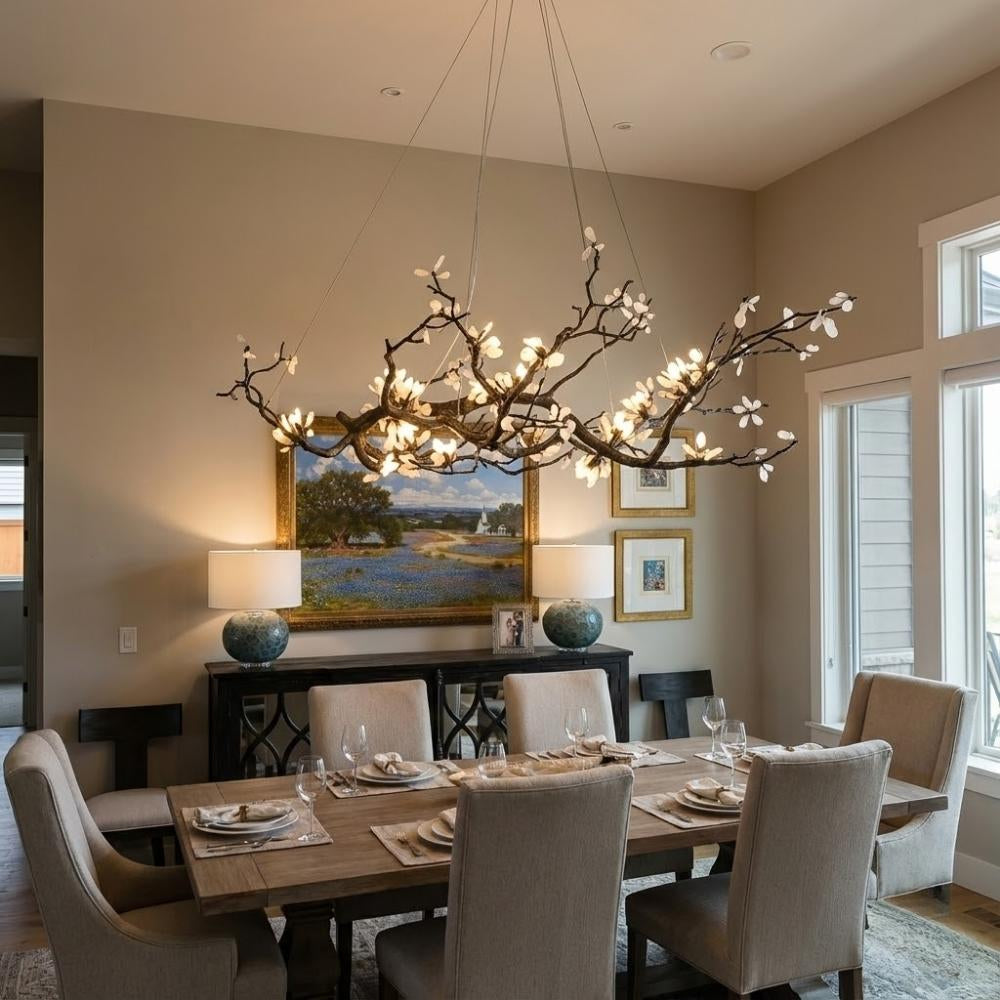
Branch chandeliers spread outward like a canopy instead of hanging in rigid symmetry, which fills a wide foyer without a heavy lantern-style body and throws light across walls and stair surfaces from many points. The Alba Tree Branch Chandelier is the large-centerpiece type, a layered glow that gives a wide entry a sculptural focal point. Branch forms suit foyers with open railings and many viewing angles; the tree branch chandelier guide covers sizing.
4. Linear fixtures on the stair diagonal

Where a straight stair runs diagonally across an open volume, a linear chandelier can echo the stair's direction instead of fighting it. Hung on two or three cables so it tilts with the run, or set parallel to the landing, it reads as part of the stair from both levels. The Orgi Statement Linear Branch Chandelier brings an organic branch form to that linear role, suiting modern homes that want warmth rather than a hard bar.
5. Decorative glass and crystal for classic architecture
Traditional homes with curved stairs, turned balusters, and classic railings want fixtures that share their language: crystal, glass flowers, and detailed metalwork, scaled correctly and with the drop controlled. The Zenth Vintage Flower Chandelier combines sculptural glass petals with a vertical drop — the kind of fixture that sits naturally in a two-story foyer with a curved stair where a modern bar would look out of place. For crystal options, see the crystal foyer chandeliers collection and the raindrop crystal guide.
6. Warm copper and metal


Finish sets the tone of a tall entry. Copper warms a big volume that can otherwise feel cold, and its reflective surface amplifies light without a more crowded fixture body. The Copper Staircase Lighting Indoor comes in 6- or 10-head configurations with adjustable hanging heights, so the heads can step down with the stair angle. Brass does the same job in a more traditional key; black reads graphic against pale walls. Repeat the finish in the stair rail or door hardware so the fixture belongs to the house.
7. Wrought iron and rustic statements
Mountain, lodge, and farmhouse homes with two-story stone or timber entries take wrought iron at scale — candle-arm forms, wheels, and large iron rings — hung from a beam clamp, with candle-style LED bulbs at 2700K. In a stair-connected rustic foyer, pair a tall iron or branch fixture with iron sconces at the landing; the farmhouse staircase chandelier guide covers the style.
| Family | Best in | Stair-connected? | Example |
|---|---|---|---|
| Vertical cascade | Modern and transitional two-story entries | Best choice | Cleo Bubble Staircase |
| Geometric / architectural | Contemporary homes | Yes (vertical) or no (wide) | Modern Large Vertical Rectangle; Contemporary High Ceiling |
| Organic branch | Wide foyers, open railings | Either | Alba Tree Branch |
| Linear on the diagonal | Straight stairs crossing open space | Yes | Orgi Linear Branch |
| Decorative glass / crystal | Traditional homes, curved stairs | Either | Zenth Vintage Flower |
| Warm copper / metal | Large, cool-feeling volumes | Yes — heads step with the stair | Copper Staircase Lighting |
| Wrought iron / rustic | Mountain, lodge, farmhouse entries | Either | Wrought Iron 6–9 Lights |
Layer the Stair for Safety and Night Comfort
A chandelier gives presence and general light from above, but it throws shadows across risers and treads — exactly where people misstep. A grand staircase needs its own layer: step lights in the wall beside the treads, or wall sconces at the landing and at the bottom of the run, evenly spaced and at consistent output so the stair reads as one clear line. Let the chandelier carry atmosphere and the stair lights carry navigation, each on its own dimmer, and expect code to require a switch at both the top and the bottom of the stair.
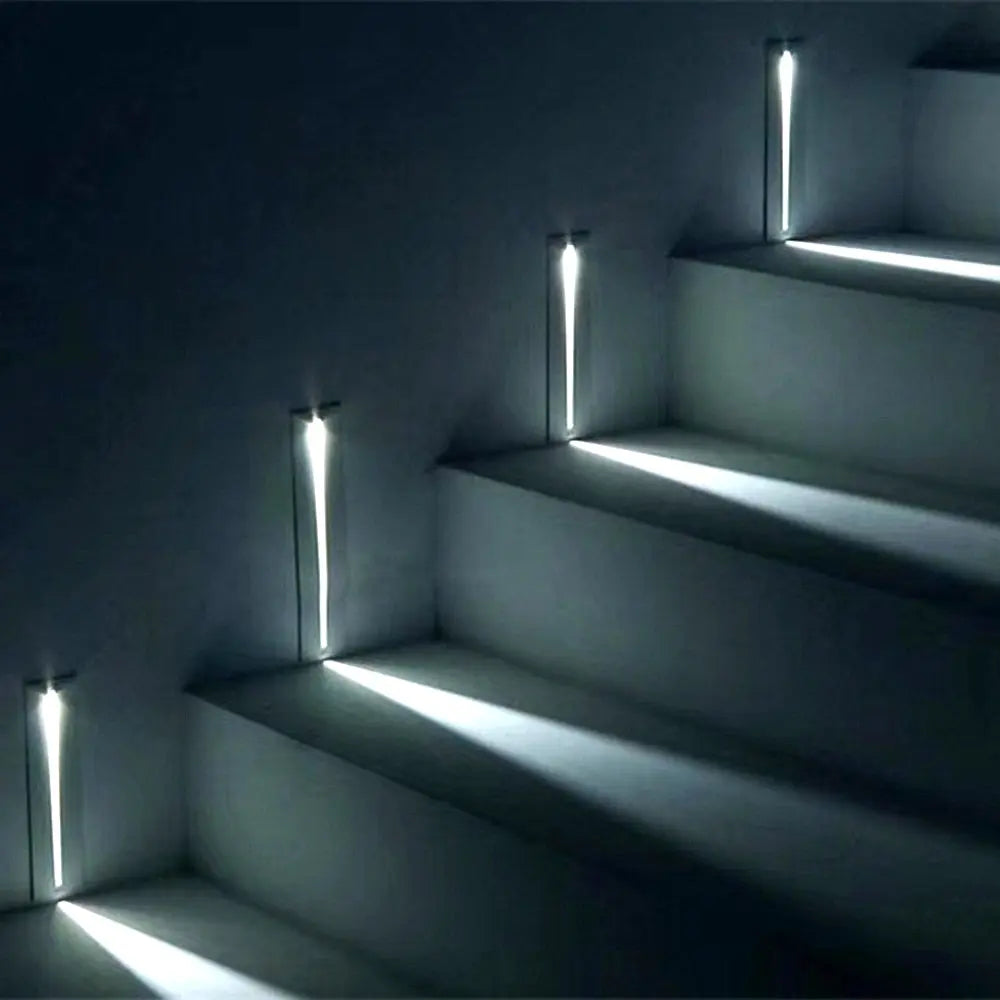
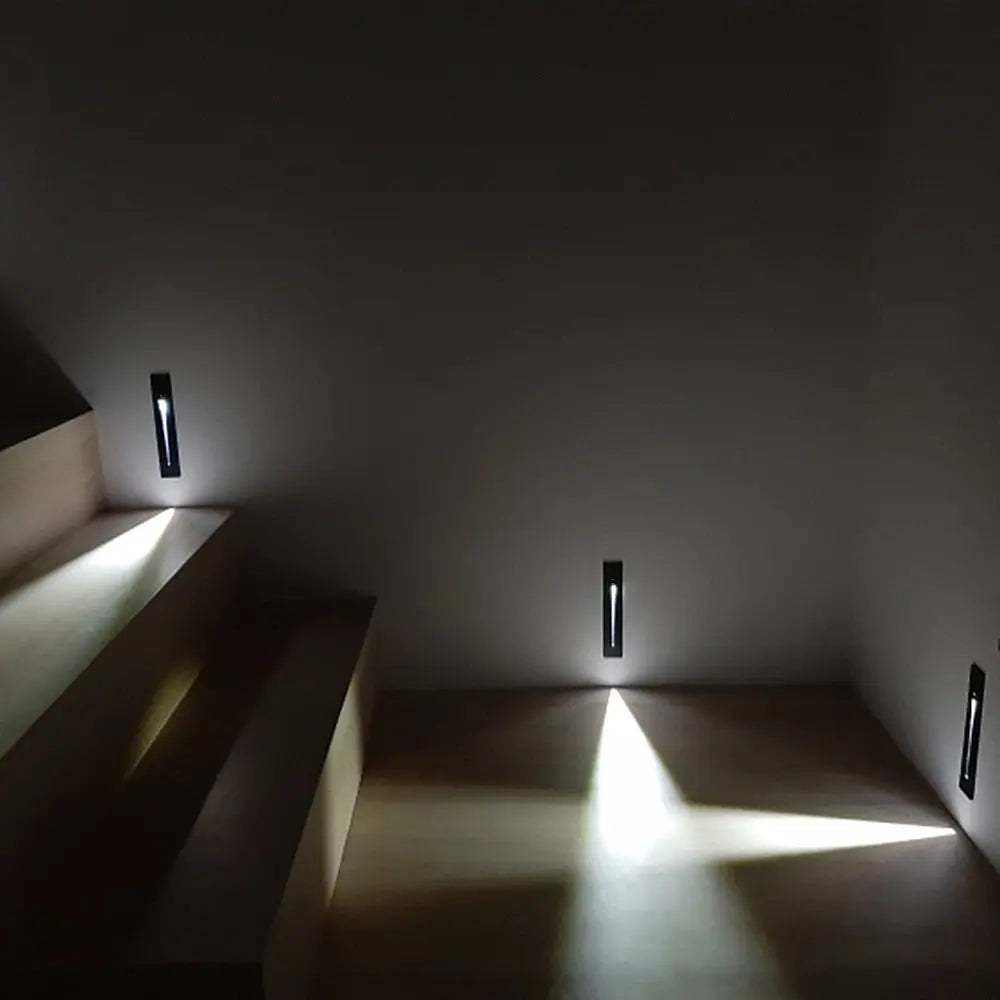
The LED Lights for Staircase Wall are the step-light type, in black, white, or silver to disappear into the wall finish; place one every second or third tread at a consistent height. Keep the color the same as the chandelier — 2700 to 3000K — so the composition reads as one, and consider a motion or schedule setting on the stair circuit. The staircase lighting guide and stair lumens guide cover spacing and output.
Mounting, Weight, and Cleaning Access
Statement fixtures for two-story volumes are often heavy — multi-tier crystal, long cascades, large metal frames — and frequently exceed the 50-pound rating of a standard ceiling box. Hang them from a fan-rated brace or a structural mount on a joist or beam, installed by an electrician, with steel cable or rated chain carrying the load and height-adjustable suspension so the drop is set on site. Because the fixture sits 15 to 20 feet up, plan cleaning at purchase: a motorized lift or lowering system is worth it for crystal and dense glass; simpler forms can be serviced from a scaffold on a level landing. The huge chandelier guide covers heavy-duty mounting, and the foyer installation cost guide covers what the labor runs.
Mistakes Tall Entries Make Obvious
- Too small for the volume. A 24-inch fixture in a 20-foot foyer disappears. Use both rules — diameter and body height — and lean larger when in doubt.
- Mounted tight to the ceiling. A fixture pressed against a 20-foot ceiling has no presence from the entry; bring it down toward the second-floor line.
- Centered on the floor, wrong from the stair. Ignoring the stair turn and landing sightlines is the most common placement error.
- Recessed lights only. A grid of cans in a tall volume lights the floor and leaves the space without a focal point.
- No stair layer, no dimmers. Overhead-only light shadows the treads and is harsh at night.
- Under-rated mounting. A heavy fixture on a standard box is a safety problem, not a style one.
Plan the Fixture With the Floor Plan
Designers choose the foyer chandelier after reading the architecture, not before. Four factors set it, and the rest of the lighting supports it.
| Design factor | Why it matters |
|---|---|
| Ceiling height | Sets body height (2.5–3 in per foot) and the drop to the second-floor line |
| Stair direction | Decides vertical, diagonal, or centered placement and form |
| Entry width | Sets diameter (L + W in inches) and whether horizontal spread is needed |
| Lighting layers | Balance the statement fixture with step lights and sconces for safety and comfort |
| Views from outside | Upper windows and glazed doors make the fixture part of the facade at night |
Quick decision: grand foyer and staircase fixture
Stair-connected, modern: vertical cascade or vertical rectangle • Stair-connected, straight diagonal stair: linear on the diagonal • Wide foyer, open railings: branch canopy • Traditional, curved stair: decorative glass or crystal with controlled drop • Cool, large volume: copper or brass • Rustic or mountain: wrought iron on a beam clamp • Every case: L + W for diameter, 2.5–3 in per ft for height, bottom ≥ 7 ft and near the second-floor line, step lights on the stair, 2700–3000K on dimmers.
Cascades, vertical and geometric forms, branch canopies, and step lights for tall entries.
Two-Story Foyer Staircase Chandeliers Staircase Lights Foyer Lighting
Frequently Asked Questions
What is the best lighting for a grand foyer with a staircase?
A vertical statement chandelier — a cascade, a long multi-light drop, a tall branch, or a vertical rectangle — sized to the foyer's volume and placed so it reads from three viewpoints: the front door, the stair turn, and the upper landing. Support it with step or wall lights on the stair for safety and with sconces at the entry for even light, each on its own dimmer. The chandelier carries presence; the layers carry navigation.
What size chandelier for a grand foyer?
Diameter: add the foyer's length and width in feet and read the sum as inches — a 16 by 18 foot foyer suggests about 34 inches. Body height: about 2.5 to 3 inches per foot of ceiling height — 45 to 54 inches for an 18-foot ceiling, 60 to 72 inches for 24 feet. Then adjust for visual weight: open and glass forms can go larger, dense crystal and heavy metal smaller. In a stair-connected foyer, favor height over width so the fixture reads from the landing.
How high should a chandelier hang in a two-story foyer with stairs?
Keep the bottom at least 7 feet above the floor and above every stair tread the fixture overhangs, and in most two-story foyers set it at or slightly above the second-floor line so it is centered in the upper window or landing opening when seen from outside and from the landing. In very tall or very dense fixtures, raise it further so the densest part isn't at eye level from the landing.
Where should a chandelier go in a foyer with a staircase?
Not automatically in the center of the floor. Check three sightlines — from the front door, from the stair turn mid-flight, and from the upper landing — and place the fixture where it looks balanced from all three, which often means slightly offset toward the stair or aligned on a diagonal with the stair run. Keep it clear of the stair's handrail line and the landing walkway, and away from the arc of the front door.
What ceiling light works for stairs and a foyer together?
One vertical fixture that serves both: a cascade or long multi-light pendant hung in the stair void so its lower part lights the entry and its upper part lights the landing, or a tall branch or vertical rectangle that fills the two-story volume. On standard-height stairs off a low foyer, use a flush or semi-flush fixture at the top and bottom of the stair plus step lights, and a pendant or flush fixture in the entry.
Do staircases need lighting besides the chandelier?
Yes. A chandelier gives presence and general light from above, but it casts shadows on risers and treads, which is where people trip. Add step lights in the wall beside the treads or wall sconces at the landing, evenly spaced and at consistent output, and code generally requires a switch at both the top and bottom of a stair. Put the chandelier and the stair lights on separate dimmers.
What chandelier style suits a grand foyer?
Follow the architecture. Modern homes take vertical glass cascades, geometric rectangles, rings, and linear forms; transitional homes take branch and organic forms or crystal in modern frames; traditional homes with curved stairs and classic railings take decorative glass, crystal, and detailed metalwork; mountain and rustic homes take wrought iron, wood, and warm copper. Scale matters more than style — a correctly sized fixture in any style beats a perfect style at the wrong size.
How do I avoid a chandelier looking too small in a tall foyer?
Use both sizing rules — diameter from length plus width, body height from 2.5 to 3 inches per foot of ceiling — and don't mount it tight to the ceiling. In a 20-foot foyer, a 30-inch-tall fixture at the ceiling disappears; a 50- to 60-inch-tall fixture hung so its bottom is near the second-floor line reads from every level. When in doubt between two sizes in a tall volume, the larger is usually right.
How is a heavy foyer chandelier mounted and cleaned?
Large foyer chandeliers often exceed the 50-pound rating of a standard ceiling box, so they hang from a fan-rated brace or a structural mount on a joist or beam, installed by an electrician, with steel cable or rated chain carrying the load. Because the fixture is 15 to 20 feet up, plan cleaning access at purchase: a motorized lift or lowering system, or a scaffold or tall ladder on a level landing for occasional service.
What color light for a grand foyer and staircase?
Warm white, 2700K to 3000K, on dimmers, so the entry matches the rooms beyond and wood, stone, and metal read warm. Use the same color temperature on the chandelier, the stair lights, and the entry sconces so the composition reads as one. Bright for arrivals and cleaning, low at night; a motion or schedule setting on the stair lights is a practical addition.
Clear From the Front Door to the Landing
Grand foyer and staircase lighting works when the fixture matches the architecture and the way the space is used: it connects the floors, follows or anchors the stair, reads from every viewpoint, and leaves the floor and treads clear beneath it, with layered light finishing the job after dark. When scale, drop, and sightlines line up, the foyer stops being a tall empty volume and becomes the visual anchor of the house.
Start with the two-story foyer chandelier collection for fixtures built for tall volumes, the staircase chandelier collection for vertical designs, and the foyer lighting collection for the supporting fixtures. For a foyer chandelier roundup, see best entryway chandeliers; for the type decision in a two-story entry, what kind of chandelier to place in a two-story foyer; for pendant forms in smaller entries, foyer pendant lights.


