

A staircase asks something of a chandelier that no other room does: it has to work at two heights at once, stay clear of anyone climbing, and look right from the floor below and the landing above. Farmhouse fixtures handle this well when they're chosen with the stairwell's measurements in mind rather than a living room's.
What a Stairwell Demands That a Room Doesn't
Most chandelier guidance starts with the room-diameter formula — add length and width in feet, read the total as inches. That works for a living room. In a stairwell it's close to useless, because the space is typically narrow, tall, and shaped by the staircase rather than by four walls.
The dimension that actually decides the fixture is drop: how far the chandelier hangs from the ceiling. Get that wrong and you either have a fixture that floats uselessly near the ceiling, or worse, one that someone walks into. Everything else — style, finish, light count — comes after that measurement is settled.
Measuring the Drop Your Stairwell Allows
Here is the measurement most people get wrong. Clearance is not measured to the floor — it's measured to the highest stair tread the fixture hangs above. Since the stairs rise, that surface can be several feet higher than the floor, and it eats into your drop accordingly.
1. Stand at the point where the fixture will hang. Identify the highest tread directly beneath it.
2. Measure vertically from the ceiling down to that tread.
3. Subtract 7 feet. What remains is the maximum overall height of the fixture, including chain or rod.
A stairwell with a 20-foot ceiling might sound like it takes an enormous fixture, but if the tread below sits 6 feet up, you have 14 feet to the tread and only 7 feet of usable drop. Measure before you fall for anything.
Positioning It Over the Right Part of the Stairwell
Where the fixture hangs matters as much as how far it drops. A few principles:
- Hang over the opening, not the treads. If your stairwell has a void beside the stairs, centring the fixture there keeps it away from anyone climbing and gives it room to be seen.
- Consider the landing view. In a two-storey stairwell, the fixture is seen from above as well as below. Position it so it reads well from both, rather than level with the landing rail where it does neither.
- Align with a window if there is one. Many stairwells have a tall window; centring the fixture on it creates a deliberate composition from outside as well as in.
- Watch the swing on turns. On a curved or switchback staircase, walk the route mentally at each level and confirm nothing comes within reach.
What Makes a Chandelier Read as Farmhouse
Farmhouse style in lighting comes from a handful of recognisable material and form cues, and knowing them helps you judge whether a fixture will sit right with the rest of your home.
- Matte black and aged iron. The most common farmhouse signal — unpolished metal that reads as forged rather than manufactured.
- Wagon wheel and cage forms. Circular frames with visible spokes or bars, borrowing from agricultural hardware.
- Reclaimed and weathered wood. Timber elements, often paired with black metal, that carry visible grain and age.
- Lantern silhouettes. Enclosed or partly enclosed shapes descended from outdoor and barn lighting.
- Exposed filament lamps. Visible bulbs referencing early electric fixtures, usually in a warm colour.
- Restrained crystal. Modern farmhouse readily takes some sparkle, provided the frame stays dark and simple.
Modern farmhouse — the direction most people are actually after — keeps these cues but cleans up the execution: simpler frames, less ornament, more geometry. That's why crystal and glass appear in fixtures that still read farmhouse, as long as the metal underneath stays honest.
Fixtures Suited to a Stairwell
A wagon wheel form with real vertical presence

The Binna Double Wagon Wheel Chandelier takes the most recognisable farmhouse form and doubles it, which gives the fixture height as well as width — the quality a stairwell needs. At 36 inches tall by 24 wide, it suits stairwells with moderate available drop, and the adjustable hanging length lets you tune it to the measurement you took rather than accepting a fixed drop.
Crystal against black, for modern farmhouse rooms

Crystal and farmhouse aren't opposites — the combination is what modern farmhouse means in practice. The 12-light farmhouse staircase chandelier sets crystal against a black frame, so the sparkle sits within a form that stays grounded. Twelve lamps also matter practically: they spread the source rather than concentrating it, which suits a stairwell where light needs to reach several levels.
Vertical geometry for tall, narrow stairwells
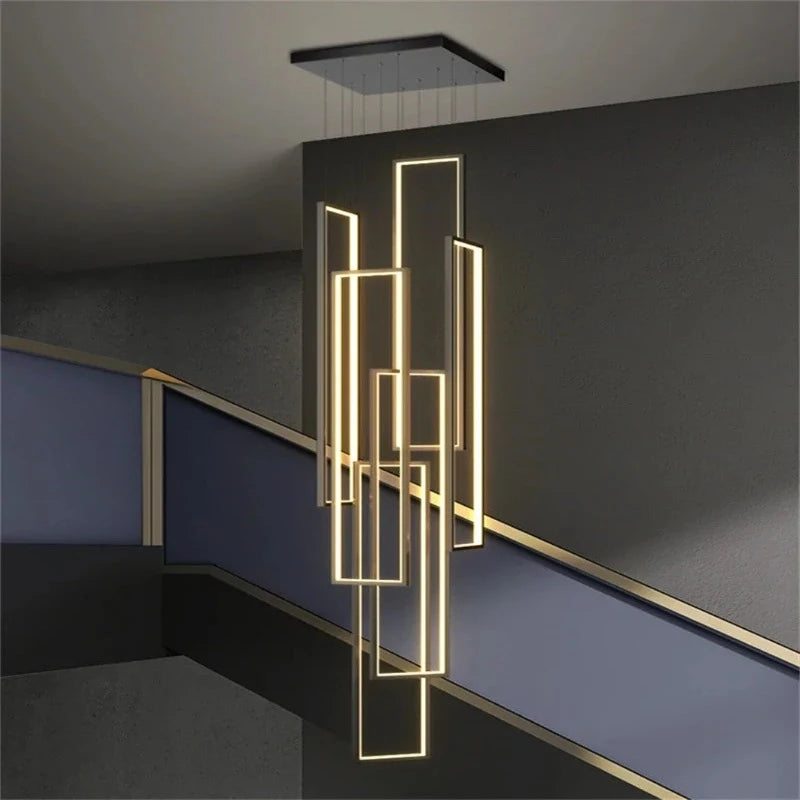
Narrow stairwells rule out wide fixtures but reward tall ones. The modern vertical rectangle chandelier is 30 inches tall in a 10-inch footprint, which is exactly the proportion a confined stairwell wants — presence without intruding on the width. Metal and crystal keep it transitional enough to read modern farmhouse alongside industrial elements.
A softer, ceramic alternative
The Yina White Ceramic Tulip Chandelier takes farmhouse in a gentler direction — ceramic tulip forms in white, producing diffused light rather than sparkle. At 28 inches square by 40 tall it needs reasonable drop, and the white finish suits lighter, more cottage-leaning interiors where black iron would feel heavy. Ceramic also diffuses more evenly than crystal, which is useful when a stairwell already gets harsh daylight from a tall window.
Getting the Light Right on Stairs
Stair lighting carries a safety requirement no other room shares — people need to see tread edges clearly, including on the way down, when depth perception is least reliable.
- Aim for roughly 10 to 20 lumens per square foot across the stairwell, weighted toward the treads rather than the walls.
- Keep the colour warm — 2700K to 3000K suits farmhouse interiors and avoids the clinical feel cooler light gives a home.
- Watch for shadows on tread noses. A single overhead source can throw the edge of each step into shadow, which is precisely the information a foot needs. Wall lights or step lighting fix this where the chandelier can't reach.
- Fit a dimmer. Bright for use, low for night — and dimming extends lamp life in a fixture you'd rather not re-lamp often.
- Consider a switch at both ends. Two-way switching at the top and bottom of the stairs is a small job that changes daily use.
For sconce placement alongside a stairwell, the wall sconce height guide covers spacing and mounting heights on stairs specifically.
Installation and Long-Term Access
Stairwell installation is the case where professional help genuinely earns its cost. You're working at height, over a staircase, often without a stable surface for a ladder — the three conditions that make electrical work risky. Beyond safety, an electrician will confirm the ceiling box is rated and braced for the fixture's weight, which matters more with the metal-heavy designs farmhouse style favours.
Think about the years after installation too. A fixture 15 feet above a staircase is awkward to reach for cleaning and re-lamping. Two things make that easier: integrated LED, which removes lamp changes almost entirely, and an aerial lift system, which lowers the fixture by winch for maintenance. Either is worth specifying at purchase rather than discovering the need later.
Keeping It Looking Right
Farmhouse finishes are forgiving, which is part of their appeal — aged metal hides dust better than polished chrome. Still, a stairwell fixture collects more than most, since dust rises and the space is rarely disturbed.
- Dust every two to three months with a soft cloth or extendable duster, focusing on the horizontal surfaces where it settles.
- Clean crystal separately. One part isopropyl alcohol to three parts distilled water, applied to a cloth rather than sprayed, then dried at once to prevent spotting. Distilled water matters — tap water leaves mineral marks.
- Leave black metal alone. Aged and matte finishes are meant to look worn; aggressive cleaning strips them. Dry dusting is usually enough.
- Check fixings annually. Vibration from foot traffic on stairs can loosen connections over time. A yearly look at screws and terminals is sensible.
- Cut the power first, every time, and let lamps cool before touching them.
Fixtures with the drop length and rustic character a stairwell needs.
Staircase Chandeliers Rustic Black Stair Lights Size Calculator
Questions About Lighting a Stairwell
How long should a chandelier hang over a staircase?
Measure vertically from the ceiling to the highest stair tread the fixture will hang above, then subtract 7 feet. What remains is the maximum overall height of the fixture including its chain or rod. The critical detail is measuring to the tread rather than the floor — the stairs rise beneath the fixture, so someone standing on that step is much closer to it than someone on the ground floor. A stairwell with a 20-foot ceiling may allow only 7 feet of drop once a 6-foot tread height is accounted for.
Where exactly should the chandelier hang in a stairwell?
Over the stairwell opening or void rather than directly above the treads where the layout allows, since that keeps the fixture clear of anyone climbing and gives it space to be seen. In a two-storey stairwell, position it so it reads well from both the floor and the landing rather than sitting level with the rail, where it works from neither. If there's a tall stairwell window, centring the fixture on it creates a composition that works from outside the house as well as in.
What makes a chandelier farmhouse style?
A handful of material and form cues: matte black or aged iron rather than polished metal, wagon wheel and cage frames, reclaimed or weathered wood, lantern silhouettes borrowed from barn and outdoor lighting, and exposed filament lamps. Modern farmhouse keeps these cues but simplifies the execution — cleaner frames, less ornament, more geometry. This is why crystal and glass can appear in a fixture that still reads farmhouse: as long as the frame stays dark and honest, the sparkle sits within the style rather than against it.
Can a crystal chandelier work in a farmhouse home?
Yes, and the combination is central to what modern farmhouse means. The trick is contrast: crystal set against a matte black or aged iron frame reads as considered rather than formal, because the metal grounds the sparkle. A crystal fixture on an ornate polished brass frame would fight a farmhouse interior; the same crystal on a simple dark frame belongs. In a stairwell, crystal has a practical benefit too — faceting scatters light outward and downward, helping illumination reach multiple levels.
How much light does a staircase need?
Roughly 10 to 20 lumens per square foot, weighted toward the treads rather than the walls, since seeing step edges clearly is the safety requirement. Warm light around 2700K to 3000K suits farmhouse interiors. The subtler issue is shadow: a single overhead fixture can throw the nose of each tread into shadow, hiding exactly the edge a descending foot needs to find. Wall lights or step lighting solve this where the chandelier's angle can't. Fit a dimmer, and switches at both the top and bottom of the stairs.
What size chandelier suits a narrow stairwell?
Favour height over width. A narrow stairwell rules out wide fixtures but rewards tall ones, so look for vertical designs — linear, rectangular, or cascading forms with a small footprint and real drop. Something 30 inches tall in a 10-inch footprint gives presence without intruding on the width people need to pass. The room-diameter formula used for living rooms doesn't transfer to stairwells, since the space is defined by the staircase rather than by four walls; drop length is the measurement that matters.
Should I install a stairwell chandelier myself?
This is the case where professional installation genuinely earns its cost. You're working at height over a staircase, often without a stable ladder position — the conditions that make electrical work risky. An electrician will also confirm the ceiling box is rated and braced for the weight, which matters with the metal-heavy fixtures farmhouse style favours. If you do proceed yourself, cut power at the consumer unit, use proper scaffolding rather than a ladder on stairs, work with a second person, and check every connection before restoring power.
How do I clean a chandelier hanging over stairs?
Access is the real problem, so plan for it at purchase. Integrated LED removes lamp changes almost entirely, and an aerial lift system lowers the fixture by winch for maintenance — worth specifying upfront rather than discovering the need later. For routine care, dust every two to three months with an extendable duster. Clean crystal with one part isopropyl alcohol to three parts distilled water applied to a cloth, dried immediately; distilled water avoids the mineral spotting tap water leaves. Leave aged black metal to dry dusting, since aggressive cleaning strips the finish.
Does a two-storey stairwell need a different fixture?
It needs one with interest along its whole length, because it will be seen from the landing as well as the floor. Tiered, cascading, and multi-level designs suit this, since something with detail only at the bottom looks unfinished from above. Drop calculation matters more too, as the greater ceiling height tempts people toward fixtures longer than their tread clearance actually permits. Lighting the upper level separately also helps, preventing the landing from feeling like a dim shelf above a well-lit hall.
What finish works best on a farmhouse staircase fixture?
Matte black and aged iron are the safest choices, reading as farmhouse without qualification and hiding dust better than polished finishes — useful for something you'll rarely reach. Weathered wood paired with black metal warms the effect for interiors leaning cottage rather than industrial. White or cream ceramic suits lighter, softer rooms where black iron would feel heavy. Choose the one that relates to the metals already in your hallway and stairwell hardware; sharing a tone matters more than matching exactly.
Bringing the Stairwell Together
Measure the drop to the tread before anything else, then choose a farmhouse fixture whose height fits inside it. Favour vertical designs in narrow spaces, dark honest metal for the style, and enough light on the treads to make the stairs safe after dark. Get those right and a staircase stops being circulation and becomes one of the more memorable parts of the house.
For related reading, our modern staircase chandelier guide covers contemporary alternatives, and the size calculator handles the arithmetic once you have your measurements.


