

Wall sconce height changes how a room feels more than most homeowners expect. Place a wall light too high and it throws light onto the ceiling instead of into the room. Place it too low and it creates glare at exactly the wrong eye level. That is why wall light placement should be planned by room use, furniture height, and ceiling height, not by guesswork alone.
This guide is built specifically around mounting height and placement logic. It is not a general style roundup and it is not a wiring tutorial. The goal here is simple: help you place wall sconces at heights that feel balanced, useful, and intentional in real rooms. If you are comparing fixture types first, start with our wall lights and sconces collection, then use the room-by-room rules below to place the fixture correctly.
Wall Sconce Height Rules at a Glance
- General rule: center most wall sconces 60 to 72 inches above the finished floor
- Best all-purpose starting point: 66 inches to the center of the fixture in a standard 8-foot room
- Bedside sconces: usually 35 to 43 inches from the floor, or about 12 to 18 inches above the mattress top
- Bathroom vanity sconces: usually 60 to 70 inches high when side-mounted beside a mirror
- Hallway sconces: often around 60 inches high and spaced 8 to 10 feet apart
- Staircase sconces: typically measured 6 to 7 feet above each tread or landing level
- Higher ceilings: raise the mounting height proportionally so the sconces do not look visually stranded too low on the wall
Why Wall Sconce Height Matters More Than Most Rooms Suggest
Wall sconces do more than add decorative light. They shape the vertical reading of a room. Because they sit between floor level and ceiling level, they can either create balance or disrupt it. In living rooms, they can soften a wall and support layered ambient light. In bedrooms, they often become task lighting for reading. In bathrooms, they affect how clearly the face is lit. In hallways and staircases, they influence safety, rhythm, and visual flow.
That is why there is no single number that works everywhere. The right wall sconce height depends on what the fixture needs to do in the room. Ambient sconces, bedside reading sconces, vanity sconces, staircase sconces, and decorative entry sconces all behave differently because the people using them relate to them from different positions and distances.
The Universal Rule for Most Wall Sconces
The most widely used starting rule is to center the wall sconce between 60 and 72 inches from the floor. For standard rooms with 8-foot ceilings, 66 inches to the center of the fixture is often the safest visual midpoint. It keeps the light above seated eye level while still low enough to illuminate the wall and the room rather than only the ceiling.
“Most wall sconces look best when the center of the fixture lands around eye level for a standing adult, unless the room function clearly calls for a lower or higher task-specific placement.”
This is a starting point, not a rigid rule. A tall branch-style sconce, a very compact globe sconce, and an adjustable arm light do not read the same way even if their centers are mounted at the same height. Always measure to the center of the fixture body, then check the visual top and bottom edges before finalizing the electrical box location.
Bedroom Wall Sconce Heights for Reading and Bedside Use
Bedrooms are one of the clearest examples of why general sconce rules are not enough. Bedside wall lights usually function as reading lights, so their placement should follow the position of a person sitting up in bed, not the standing eye level used in hallways or living rooms.
For most bedrooms, the working range is 35 to 43 inches from the floor, or roughly 12 to 18 inches above the top of the mattress. This usually places the light just above shoulder height when sitting up, which keeps the beam useful for reading without shining directly into the eyes.
- Lower end of the range: better for compact beds, lower headboards, or more focused reading light
- Higher end of the range: better when the headboard is tall or the fixture has a deeper body
- Horizontal placement: usually 6 to 12 inches outside the nightstand, or centered above it
The mistake most homeowners make here is using the same 60- to 66-inch rule they would use in a hallway. That leaves the reading light too high to be comfortable in bed. If the bedroom project is still at the planning stage, the mood-and-comfort guidance in how to choose calm and tranquil lighting options for the bedroom is a useful companion to this placement guide.

Bathroom Vanity Wall Sconce Heights
Bathrooms are less forgiving than almost any other room because wall light height directly affects facial shadows. Overhead-only lighting creates shadow beneath the brow, nose, and chin, which is why side-mounted sconces beside a mirror are still one of the strongest vanity-lighting solutions.
The best working range for vanity sconces is usually 60 to 70 inches from the floor, depending on the height of the people using the bathroom and the size of the mirror. In many bathrooms, a center height of around 65 to 66 inches works well because it aligns closely with face level for average-height adults.
- Side-mounted sconces: best for reducing facial shadows during grooming
- Mirror spacing: usually 28 to 36 inches apart, depending on mirror width
- Top-mounted alternatives: typically 75 to 80 inches high when side-mounting is not possible
Bathroom sconces should also be checked against the mirror edge and sink backsplash so the installation feels centered and symmetrical. If you are comparing damp-rated or moisture-rated fixtures before placement, the most relevant category is our bathroom lighting collection.

Hallway and Entryway Wall Sconce Heights
Hallways need wall lights that feel intentional without turning the corridor into a runway of bright spots. Because hallways are narrow and typically viewed at close range while walking, sconces often look better mounted a little lower than the general “6 feet high” instinct people default to.
For standard hallways, a strong starting point is 60 inches from the floor to the center of the fixture. This keeps the sconces visually connected to the wall plane rather than too close to the ceiling. Spacing usually matters just as much as height. In many corridors, sconces placed 8 to 10 feet apart create a more even rhythm than fixtures that are crowded together.
Entryways are slightly different because the sconces often serve a more decorative role. In a taller foyer or entry wall, the center height can move up into the low-70-inch range if the fixture body has enough presence to justify it. The key is that the sconces should still feel related to the architecture below, not isolated in the upper wall zone. If the entry needs stronger overhead support as well, compare the room-level options in foyer lighting.
Living Room Wall Sconce Heights
Living room sconces are usually used in one of two ways: as ambient perimeter lighting or as accent lighting around artwork, architectural features, or fireplace walls. The height changes depending on which of those roles the fixture is performing.
For ambient perimeter lighting, the standard 60 to 66 inches often works well. This keeps the sconces visible at a comfortable height while creating a soft wash of light that complements ceiling fixtures and lamps. For accent lighting, especially near artwork, the sconce may need to sit in relation to the object rather than only to the floor.
- Ambient living room sconces: usually 60 to 66 inches high
- Accent near art: often 6 to 12 inches above the top edge of the piece, depending on the fixture type
- Near sofas or consoles: always check furniture height before fixing the electrical box
Living rooms are also where layered lighting matters most. A wall sconce should usually support the room, not carry the entire scheme alone. For a broader room-layout perspective, the best related article is where to place living room lighting fixtures, which goes deeper into balancing sconces with table lamps, floor lamps, and ceiling lights.

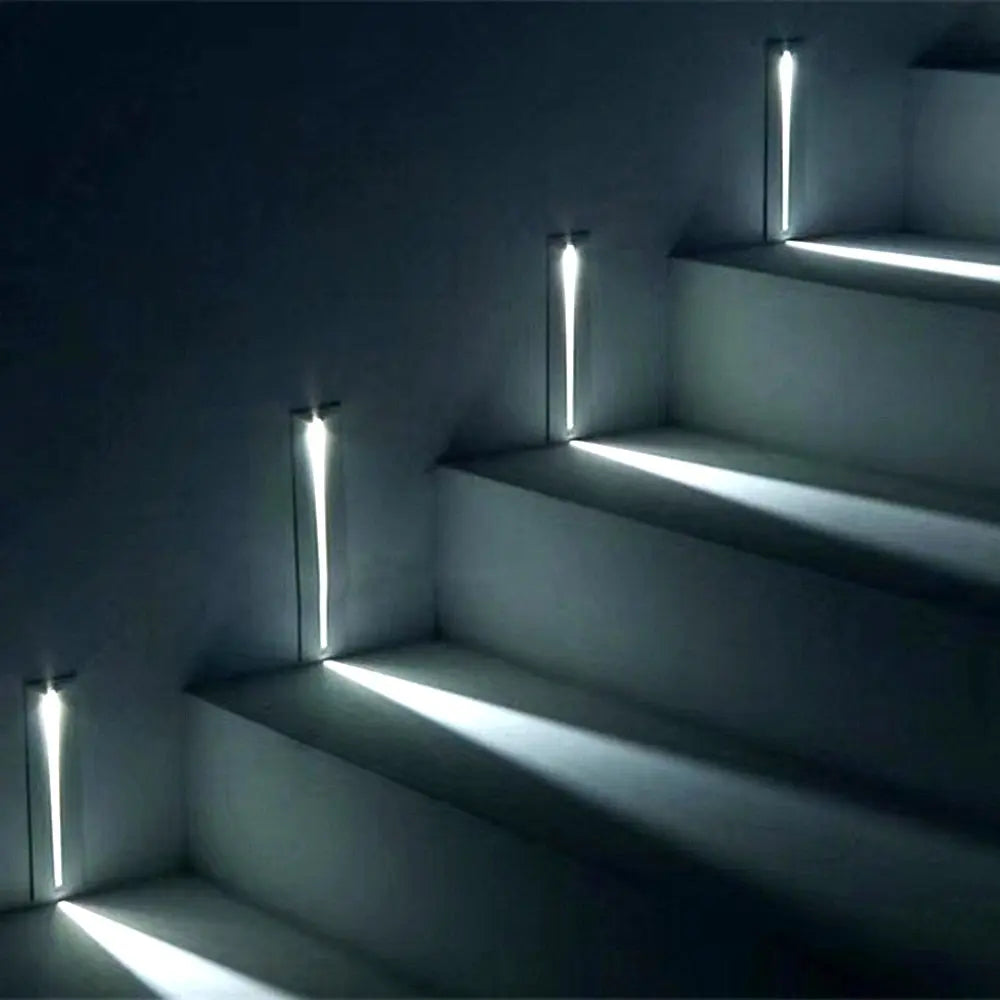
Staircase Wall Sconce Heights
Staircases are one of the most technical areas for wall light placement because the floor level changes continuously. A height that looks right from the base of the stairs can feel completely wrong halfway up the run if the placement was measured only from the ground floor.
The most reliable method is to measure the wall light height from the staircase itself. In many homes, that means placing the fixture 6 to 7 feet above each tread, or treating the center point of the sconce as aligned with the stair user’s movement rather than with the ground floor alone. On longer runs, lights do not need to appear at every tread. Many staircases work well with sconces placed every other tread or at a consistent vertical rhythm along the wall.
- Closed stair walls: usually work best with evenly repeated low-profile sconces
- Open staircases with landings: may need a decorative sconce at landing level plus smaller tread-level lights
- Tall stair voids: often benefit from combining wall sconces with a chandelier or pendant overhead
How Ceiling Height Changes Wall Sconce Placement
Most common sconce rules assume an 8-foot ceiling. Once ceiling height increases, the same 60- to 66-inch center point can look too low because there is so much more wall area above the fixture. That is why higher-ceiling rooms usually need a proportional upward adjustment.
| Ceiling Height | Suggested Sconce Center Height | General Reading |
|---|---|---|
| 8 feet | 60 to 66 inches | Standard residential rule |
| 9 feet | 66 to 70 inches | Slight upward adjustment improves proportion |
| 10 feet | 70 to 76 inches | Taller wall area usually needs more lift |
| 12+ feet | 80 to 84 inches | Best treated as accent or secondary wall layer |
In very tall rooms, wall sconces often work best as a middle layer rather than the main ambient source. That is especially true in foyers, stair halls, and great rooms, where a chandelier or central ceiling fixture usually carries the primary overhead presence while sconces soften the wall plane at human height.
How to Test Sconce Height Before Installation
One of the easiest ways to avoid mounting regret is to mock up the fixture height before any electrical work is finalized. The simplest method is still the tape test: mark the fixture size on the wall with painter’s tape, then step back and check it from seated and standing positions at different times of day.
This matters even more in rooms with furniture nearby. A sconce that seems correctly placed on an empty wall can end up hidden by a headboard, sofa back, tall mirror, or built-in cabinet once the room is finished. That is why furniture height should always be part of the placement plan before the electrical box is set.
If the room has older wiring or limited flexibility around box position, the technical guidance in how to safely install wall lights in old homes with limited wiring is the best next step before installation. If the main question is fixture style rather than height, the more general companion guide is how to choose the right wall lights for your home.
Common Wall Sconce Placement Mistakes
- Mounting too high: this is still the most common error in standard-height rooms
- Ignoring furniture and mirror height: placement should relate to what sits on the wall or below it
- Using the fixture top instead of the fixture center: this skews placement calculations, especially for tall sconces
- Mismatching paired sconces: even a small height difference reads as a clear visual mistake
- Overlooking glare: a beautiful fixture can still feel uncomfortable if the bulb line sits in the direct sightline
- Forgetting ceiling height: a correct 8-foot-room placement can look awkwardly low in a 10-foot room
Wall Sconce Height Guide FAQs
What is the standard wall sconce height from the floor?
For most rooms, a standard starting point is 60 to 72 inches from the floor, with 66 inches often working well in 8-foot spaces.
How high should bedside wall lights be mounted?
Most bedside sconces work best at 35 to 43 inches from the floor, or about 12 to 18 inches above the mattress top.
What is the best wall sconce height for bathroom vanity lighting?
Side-mounted vanity sconces usually perform best at 60 to 70 inches from the floor, centered around face level for the main users of the bathroom.
How high should wall lights be in a hallway?
In many hallways, 60 inches to the center of the fixture is a strong starting point, with about 8 to 10 feet between sconces.
How do I place wall sconces on a staircase?
Measure the height from the stair treads or landing rather than only from the ground floor. In many homes, 6 to 7 feet above each tread creates the cleanest visual rhythm.
Should wall sconces go higher in rooms with tall ceilings?
Yes. As ceiling height increases, the fixture usually needs to move upward proportionally so it still feels visually balanced on the wall.
Final Thoughts
The right wall sconce height depends on what the fixture needs to do in the room. Bedrooms need comfortable reading placement. Bathrooms need face-level light with minimal shadow. Hallways need rhythm and balance. Living rooms need ambient layering. Staircases need safe, consistent vertical guidance. Once you match the mounting height to the room’s function, the fixture starts to look intentional instead of accidental.
Use the general 60- to 72-inch rule as your starting point, then adjust for furniture, mirror size, stair geometry, and ceiling height. That one step usually makes the difference between a wall light that simply fills space and one that actually completes the room.


