

Choosing modern kitchen island lighting in an open floor plan is different from choosing a fixture for a closed kitchen. In an enclosed room, the island light mainly has to illuminate the work surface below. In an open-concept space, the same fixture also has to define the kitchen zone, maintain clear sightlines into the dining and living areas, and feel visually consistent with the rest of the ceiling plan. That wider role is exactly why island lighting becomes one of the most important design decisions in an open layout.
This is also where many otherwise beautiful fixtures fail. A pendant may look attractive on its own but still feel wrong once it hangs inside a larger open-plan composition. It may be too small to anchor the island, too visually heavy for the surrounding sightlines, or too isolated from the dining and living fixtures nearby. The best modern kitchen island lighting solves all three at once: it supports task use, strengthens the island as a visual center, and helps the whole open floor plan feel connected rather than broken into competing zones.
If you want to browse the broad category first, start with our kitchen lighting collection. If your project is specifically pendant-led, our pendant lighting category is the most direct comparison point for island-friendly shapes, sizes, and finish directions.
What Matters Most in Open-Plan Kitchen Island Lighting
- The fixture should define the island clearly without visually cutting the room in half.
- Scale should be judged against the island and the surrounding open-plan ceiling volume, not the island alone.
- Sightlines matter more in open floor plans than in enclosed kitchens.
- Finish coordination should connect the island light to nearby dining and living fixtures without forcing an exact match.
- Dimming and warm light quality are especially important because the island often shifts from task zone to social zone during the day.
- The best fixture type depends on whether you need one strong focal form, a linear layout, or a lighter rhythm of repeated pendants.
Why Open Floor Plans Need a Different Lighting Strategy
In a closed kitchen, the island light mainly responds to cabinetry, ceiling height, and counter use. In an open floor plan, that same island light becomes part of a much bigger visual field. It is seen from the sofa, the dining table, the walkway, and often the entry. That means the fixture has to behave well from many angles, not just directly underneath.
This is the main reason open-concept island lighting should not be chosen the same way as standard kitchen lighting. In a traditional kitchen, a fixture can be purely practical or slightly decorative and still work. In an open layout, the island light must do more. It has to carry enough design weight to define the kitchen zone, but it also needs enough restraint to stay compatible with the adjacent living and dining areas.
That balancing act is what separates a successful open-plan fixture from a standard island light that only looks right in isolation. If your main question is still how to choose the right fixture family over the island itself, the supporting guide on how to choose pendant lights for a kitchen island is the best next reference for the fixture-selection step. This page stays focused on how the light works in a broader open-concept room.

This visual guide is useful because it keeps the real open-plan variables together: island lighting type, visual weight, ceiling coordination, zone definition, and the role of the fixture in a shared room.
The Best Fixture Types for Open-Plan Kitchen Islands
Not every island light type performs equally well in an open floor plan. The best options usually fall into a few clear families, and each works for a slightly different reason.
Linear fixtures
Linear island lights work well because they naturally follow the rectangular shape of the island. In open layouts, that horizontal alignment helps the island read clearly as its own zone. Linear fixtures also reduce visual clutter because one body can do the work of several separated pendants.
Multi-head pendant arrangements
Grouped or coordinated pendant rows create rhythm across the island while still letting each light point stay visually distinct. This works especially well in kitchens where the island needs stronger decorative presence without relying on one large sculptural body.
Sculptural statement fixtures
In larger open-concept kitchens, a single statement chandelier can work well when the island is one of the room’s main visual anchors. This type is strongest when the island is large enough and the ceiling height generous enough to support a more artistic piece without crowding the room.
Integrated LED island lights
Integrated LED fixtures are often ideal in contemporary open-plan kitchens because they keep the silhouette clean and reduce visual interruption from exposed bulbs. They also work well when the goal is a more minimal, architectural look.
Glass and acrylic forms
Transparent and semi-transparent materials often perform especially well in open floor plans because they keep visual weight lighter. A fixture can still define the island without blocking views across the room.
Nina Contemporary LED Kitchen Island Light
The Nina Contemporary LED Kitchen Island Light is one of the clearest examples of an open-plan-ready fixture because it uses a clean linear profile and integrated LED structure to anchor the island without creating unnecessary ceiling noise. In an open floor plan, that matters. A bulky or overly segmented fixture can start to compete with dining lights, living-room ceiling features, or nearby architectural lines.


This type of fixture works especially well when the goal is clarity. The island remains distinct, the room still feels open, and the light direction stays practical for task use. It is one of the strongest options for homeowners who want a modern island fixture that feels designed for the architecture rather than simply placed into it.
Statement Fixtures for Open Kitchens That Need More Presence
Some open floor plans need the island light to do more than quietly coordinate. In larger spaces, especially where the island is the main center of activity, a stronger sculptural fixture can be the right move. In those cases, the island light becomes part of the room’s identity, not just one component in the kitchen zone.
The key difference is that a statement fixture must still respect sightlines and proportion. In open-plan kitchens, that means the chandelier should feel intentional from the living room and dining room, not just dramatic when viewed from the island below.
The Modern Ocean Wave Pendant Chandelier works in this direction because its form is expressive enough to define the island zone clearly, yet the body remains visually open enough to live inside a larger open room without overwhelming it.
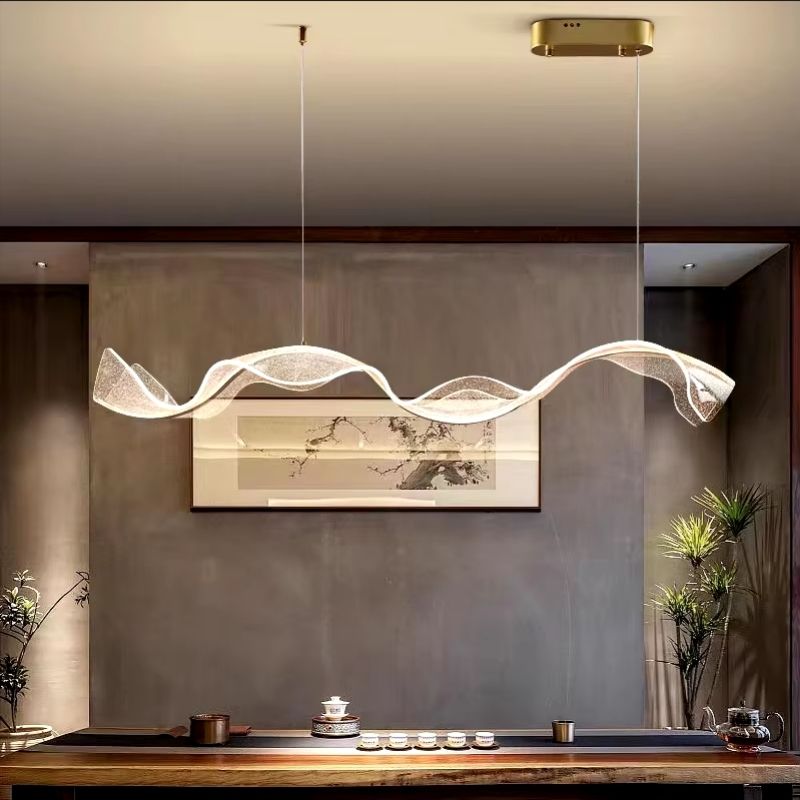
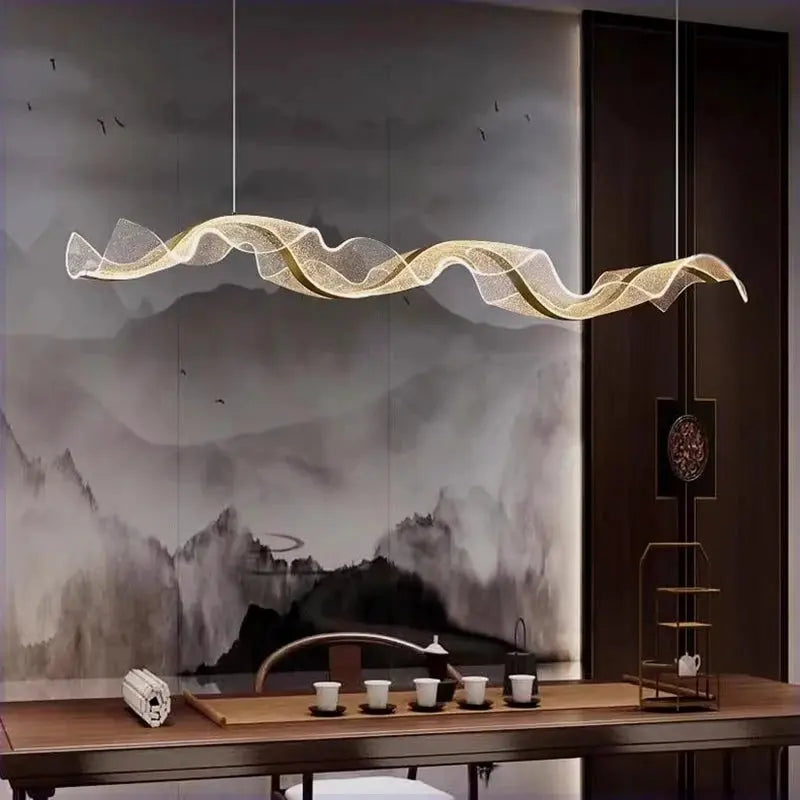

This type of chandelier is best used when the island is large enough to justify a central art-like piece and the surrounding dining or living fixtures are restrained enough not to fight for attention.
How Scale Works Differently in Open Floor Plans
Open-plan scale is not just about the island length. It is about how the fixture reads against the whole visible ceiling field. A light that feels proportionate in a closed kitchen may suddenly look too small when the room opens into a living area and dining zone. At the same time, oversizing the island light can make the kitchen feel too dominant and throw the whole room out of balance.
That is why open-plan island lighting needs to be sized in relation to two things at once: the island footprint and the surrounding visual volume. The fixture should clearly belong to the island, but it should also have enough presence to hold its own inside the larger space.
| Island Length | Typical Fixture Direction | Open-Plan Reading |
|---|---|---|
| 4 feet | 2 pendants or 1 compact linear fixture | Should stay light and avoid over-framing a small island |
| 6 feet | 3 pendants or 1 stronger linear fixture | Often the most balanced size for open-plan kitchens |
| 8 feet | 4 pendants, long linear fixture, or statement chandelier | Needs enough presence to define the kitchen zone clearly |
| 10 feet and over | Large linear body or more sculptural island chandelier | Should coordinate with the wider ceiling composition, not only the island |
Detailed pendant spacing and height formulas already belong to a separate guide, so this page does not try to repeat them in full. For measurement-specific planning, use Kitchen Island Pendant Light Spacing Rules. That keeps this page focused on open-concept coordination rather than duplicating a spacing article.
Finish Coordination in Open Kitchens Matters More Than Exact Matching
In enclosed rooms, a fixture can succeed even if its finish is a little isolated from the rest of the space. In open floor plans, that is much harder to get away with. Because the island light is visible alongside dining lights, living-room accents, cabinetry hardware, and sometimes stair or entry details, finish direction needs to be much more intentional.
That does not mean every metal needs to match. In fact, exact matching often looks too forced. What matters more is tonal compatibility. Matte black island lighting can work beautifully if nearby hardware or window framing echoes that direction. Warm brass or brushed gold can work if the kitchen already uses warmer finishes in hardware, furniture, or decorative accents. White and softer neutral finishes can help the island light stay refined without becoming visually heavy.
Belia and Radiel for Flexible Open-Plan Coordination
Some homeowners do not need a highly sculptural fixture. They need a flexible one that can coordinate easily with a modern open-plan palette and adapt through the day. That is where fixtures such as the Radiel Modern LED Chandelier with Remote Control become useful.

The Belia works well when finish choice matters because it can be aligned more precisely with surrounding metals and room tone. The Radiel is especially useful in open-concept kitchens because remote-controlled dimming and adjustable light behavior help the island shift from work zone to evening social zone more naturally. That functional adaptability is one of the most important differences between a fixture that simply lights the island and one that genuinely serves an open-plan home.
How Design Style Changes the Right Island Fixture
Open floor plans make style coordination more visible. A fixture over the island does not sit in a private kitchen box. It becomes part of the room story across multiple zones. That means the right light for one design direction may feel wrong in another, even if the island size is identical.
- Minimalist modern: cleaner linear forms, concealed LED sources, matte black or restrained metallic finishes
- Transitional modern: balanced shapes and warmer finishes that bridge kitchen and living spaces without tension
- Contemporary statement: sculptural forms that define the island as a visual center
- Modern organic: branch forms, softer material direction, and warmer room palettes
- Industrial modern: stronger metal presence, more visible framework, and darker finish direction
If your main goal is style-first inspiration after you understand the open-plan logic, the article on modern pendant lights for kitchen islands is the best supporting read because it focuses more clearly on visual direction than this room-planning guide.
Color Temperature and Dimming Matter More in Open Spaces
Light quality becomes much more important in an open floor plan because the island light affects more than one zone. A harsh kitchen color temperature can make the nearby dining or living area feel disconnected. A light that is too dim may look attractive from afar but fail at the actual work surface.
For many open-plan homes, a warm range around 2700K to 3000K creates the best transition between functional kitchen use and the softer mood expected in adjacent living spaces. Dimming is even more important. A fixed brightness level often works for only one moment of the day. An island that hosts food prep, casual meals, and evening entertaining needs a fixture that can shift with those different uses.
In open-concept kitchens, the island light should not feel like a separate utility source. It should feel like part of the same home environment as the spaces around it.
When a More Dramatic Island Chandelier Makes Sense
Not every open-plan island needs a quiet fixture. In larger kitchens with higher ceilings, a more dramatic chandelier can work if it is balanced correctly. The key is visual openness. A large fixture can succeed if it still allows the room to breathe. This is why acrylic, branch, and open-frame forms often work better than dense traditional bodies in open-concept kitchens.
The Arten Modern Acrylic Chandelier and the Minas Dimmable Rustic Tree Branch Chandelier are useful examples of two different open-plan approaches. The Arten keeps the visual weight lighter through transparency and cleaner structure. The Minas brings more organic warmth and stronger personality while still remaining open enough to live above a larger island in a shared room.
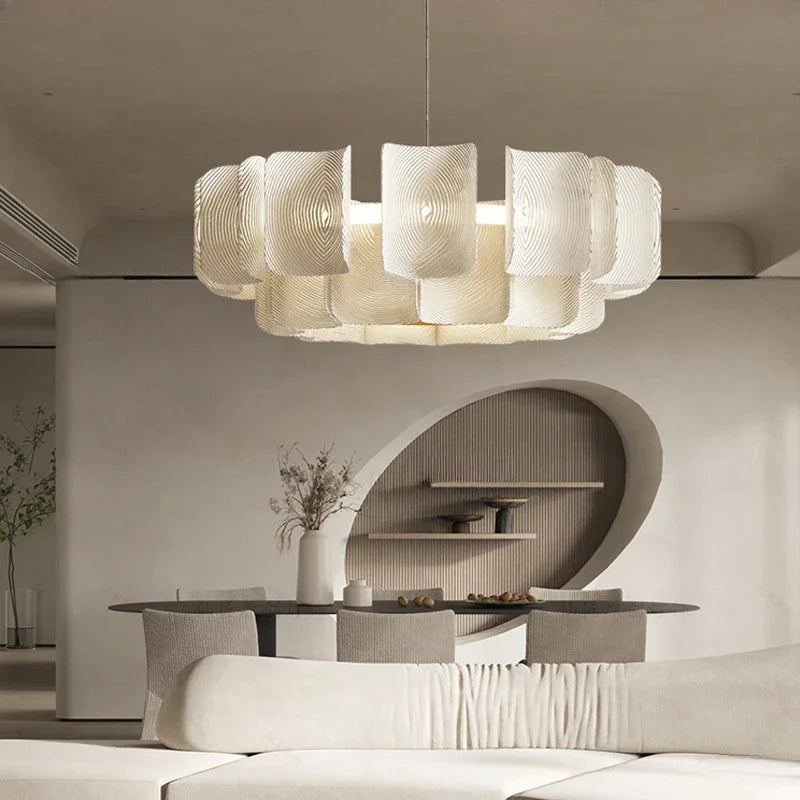
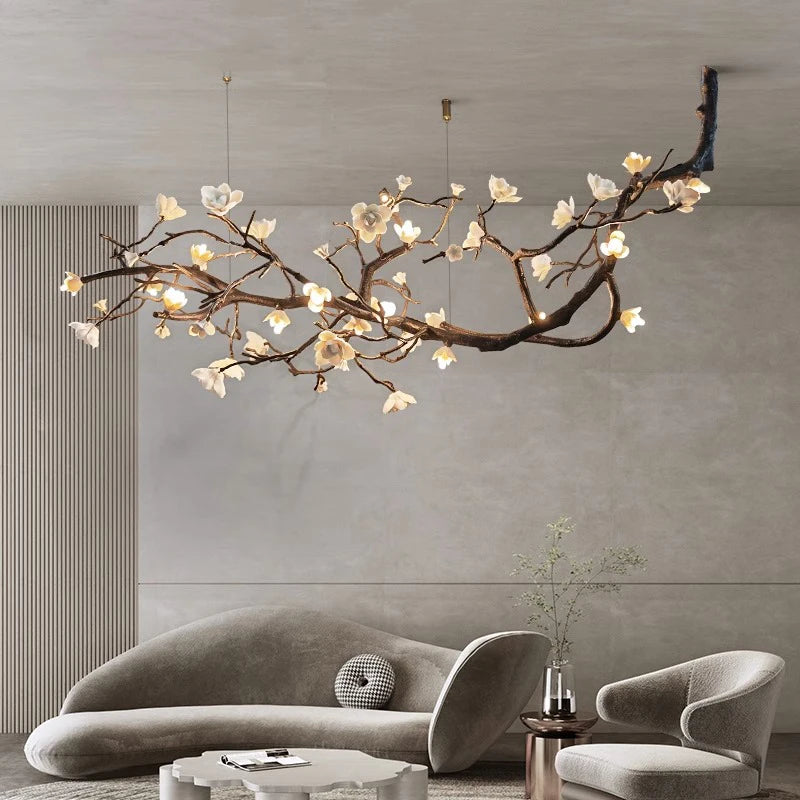
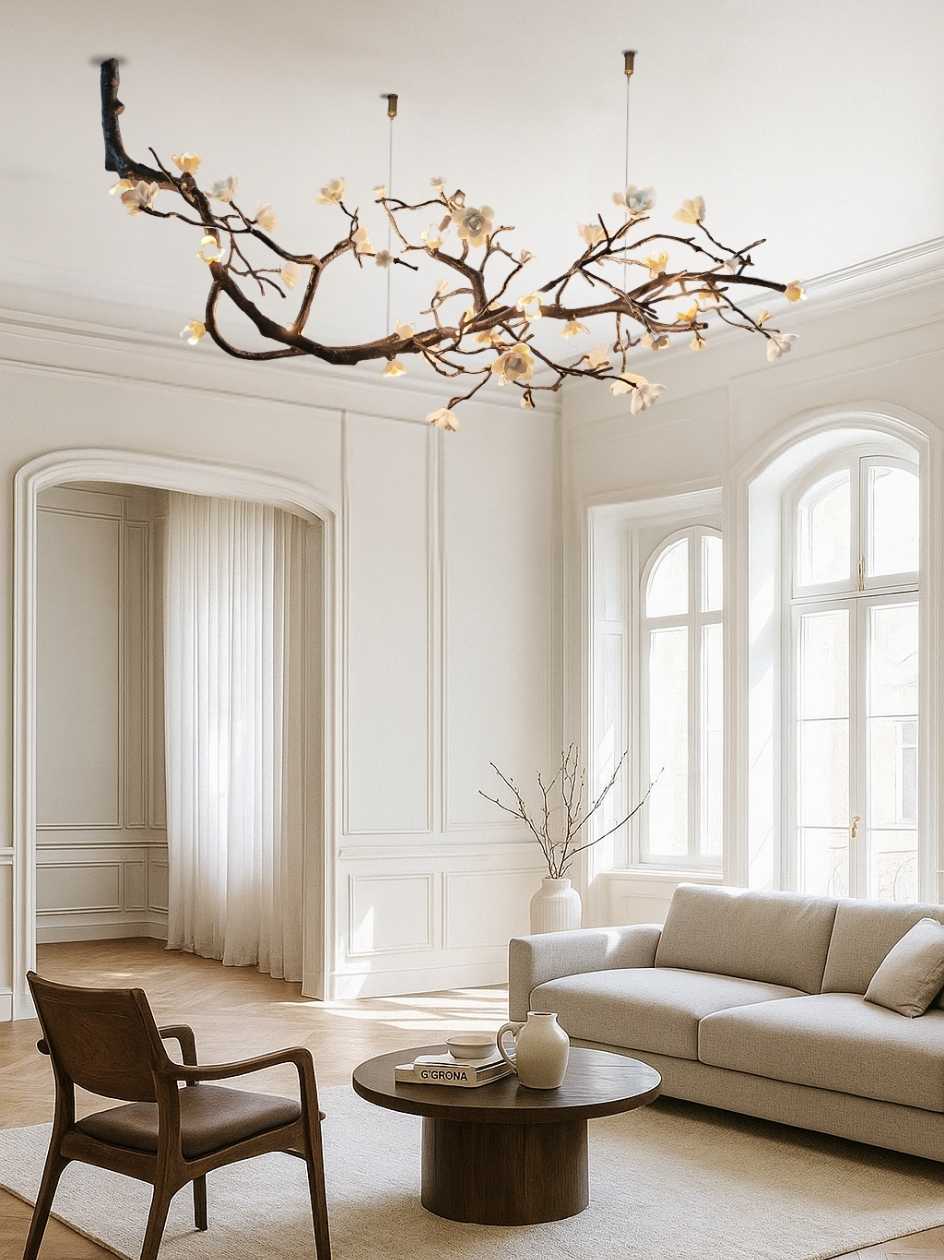
These kinds of fixtures work best when the island is substantial enough to deserve a focal-point treatment and the ceiling height can support a larger silhouette without crowding sightlines.
Common Open-Plan Island Lighting Mistakes
- Undersizing the fixture: a fixture that feels adequate in product photos can disappear inside a larger open room.
- Treating the island as a closed-kitchen problem: open layouts require coordination with nearby rooms, not just countertop lighting.
- Ignoring views from the sofa and dining table: the island light must look intentional from all major angles.
- Choosing the wrong finish direction: the fixture does not need an exact match, but it should belong to the same visual family as the surrounding space.
- Skipping dimming: this is one of the most common reasons open-plan kitchens feel too bright or too flat at night.
- Forgetting the adjacent dining zone: the island light and dining fixture should feel coordinated, even if they are not identical.
If your open layout includes a directly adjacent dining zone, the article on modern dining room table lighting ideas is a strong follow-up because it helps extend the ceiling story beyond the island instead of treating the dining area as a separate afterthought.
How to Build a More Cohesive Open-Concept Ceiling Plan
The strongest open-plan kitchens do not treat the island fixture as an isolated object. They use it as one part of a broader ceiling composition. The kitchen island light defines the kitchen zone, the dining light supports the table zone, and the living room uses its own lighting language, but all three still feel related through finish, scale, or form.
This is where many open-concept projects go wrong. The kitchen gets one lighting idea, the dining room gets another, and the living area gets a third, with no common thread between them. The result is not variety. It is fragmentation. A more successful open-plan lighting strategy keeps the fixtures distinct but connected. That is what gives the space a sense of design continuity instead of a collection of separate ceiling decisions.
If you want a broader room-level guide after solving the island itself, the most relevant next read is Mastering Kitchen Island Lighting: A Comprehensive Guide. That page works as a wider kitchen-lighting framework, while this article stays focused on how island fixtures behave specifically in open floor plans.
A Better Way to Choose Modern Kitchen Island Lighting
The best modern kitchen island lighting for open floor plans is not simply the most stylish fixture or the most dramatic chandelier. It is the one that solves the actual open-concept problem: defining the island clearly while still keeping the surrounding room visually connected.
That is why linear fixtures, coordinated pendant groups, dimmable LED forms, and visually open statement chandeliers all remain strong choices. Each can work, but only when the island size, sightlines, adjacent rooms, and finish direction are considered together. Once those pieces are aligned, the island light stops feeling like a separate kitchen decision and starts feeling like part of the architecture of the whole home.


