

Key Takeaways
| Question | Answer |
|---|---|
| Solid, plated, or tone? | Solid copper is the metal throughout; plated is a copper layer on another metal; copper-tone is a color coat. Only solid and plated copper can patina, and only if unsealed. |
| Five finishes? | Bright (polished), brushed (satin), dark or antique (oxidized), living (unsealed, ages), verdigris (green patina). |
| Will it change color? | Unsealed copper darkens from pink to brown over months and can turn green in humid air over years; lacquered or coated copper does not. |
| Copper or brass? | Copper is redder and warmer; brass is yellower. Copper pairs with deep greens, navy, walnut; brass with cream, black, and oak. |
| Light color? | 2700–3000K; 4000K and above turns copper flat and brownish. |
| Best rooms? | Dining rooms, kitchens with copper or wood, modern farmhouse and industrial living rooms, foyers and stairwells. |
Quick Facts
- Copper is a pure metal; brass is copper plus zinc; bronze is copper plus tin — all three are "copper family" finishes with different color.
- Patina sequence on unsealed copper: bright pink-orange → brown (months) → dark brown → green verdigris (years, faster in humid or coastal air).
- Indoor copper with a clear lacquer or powder coat holds its color for years; scratches through the coat will darken locally.
- Copper reflects warm wavelengths — under 2700–3000K LED it reads rich; under 4000K+ it reads muddy.
- Handmade copper frames on branch and flower chandeliers are usually finished in a choice of copper, dark copper, gold, black, or custom.
- Weight: copper branch chandeliers with glass or ceramic shades run 30–80 lb; large stairwell fixtures more — check the box rating.
Solid, Plated, or Copper-Tone: What You Are Buying
The Five Copper Finishes and How Each Ages
Bright (polished) copper
Polished to a mirror and usually lacquered so it stays that way: the pink-orange copper of a new penny. It reads glamorous and reflects the most light, which suits a transitional dining room, a dressing room, or a foyer with a lot of white. It shows fingerprints, so it belongs on fixtures that hang out of reach.
Brushed copper
A satin surface brushed in one direction, softer and less reflective, hiding marks better. It is the copper for modern farmhouse kitchens and dining rooms, where it sits beside wood and white without shouting, and the most forgiving finish to live with.
Dark or antique copper
Copper oxidized on purpose to a deep brown, sometimes with highlights rubbed back on the edges. It reads aged and industrial, pairs with black iron, leather, and brick, and suits tall entries and stairwells where a bright finish would glare. Several handmade branch designs offer it as "dark copper."
Living (unsealed) copper
Raw copper left without a coat, so it ages in place: bright when new, brown within months, darker over years. It is for people who want a fixture that records time — cabins, lofts, wabi-sabi rooms — and it is the only finish that develops a true, uneven patina indoors.
Verdigris
The blue-green patina that forms when copper or brass oxidizes over years, especially in humid or coastal air, or applied deliberately as a finish. Designers have been bringing verdigris back as a muted pop of color against white-box modern rooms, and it suits garden rooms, coastal houses, and anywhere green already appears in tile or textiles.
How Copper Patina Forms — and How to Control It
Copper reacts with oxygen and moisture in the air. On unsealed copper, the first change is a dulling from bright to a warm brown oxide layer, visible within weeks to months indoors; over years, and faster in humid kitchens, bathrooms, or near the sea, carbonates and chlorides form the green verdigris layer. The process is uneven by nature — darker where hands touch, lighter where air moves — which is the point for people who choose living copper. To stop it, the copper has to be sealed: a clear lacquer or wax holds the current color, and a fixture bought lacquered will stay its original shade for years unless the coat is scratched through. To restore a darkened unsealed fixture, a copper polish or a paste of lemon juice and salt takes it back to bright, after which it starts aging again. Never polish a lacquered fixture; the abrasive removes the coat and leaves blotches that then age at a different rate from the rest.
| Finish | Changes over time? | Care | Look at 5 years (indoor, dry) |
|---|---|---|---|
| Bright, lacquered | No, until the coat wears | Dry or barely damp microfiber; no polish | As bought; slight dulling where touched |
| Brushed, lacquered | No | Dry or barely damp cloth | As bought |
| Dark / antique, coated | No | Dry cloth | As bought |
| Living (unsealed) | Yes — darkens | Dust only, or polish to reset | Even mid-to-dark brown, lighter at edges |
| Verdigris (applied) | Slowly deepens | Dust only; never polish | Similar, slightly richer green |
| Copper-tone powder coat | No | Damp cloth, mild soap | As bought |
Copper vs Brass vs Gold vs Bronze
The warm metals look interchangeable in a catalog thumbnail and very different on a ceiling. Brass is copper alloyed with zinc, which pushes the color toward yellow; bronze is copper with tin, browner and heavier-looking; "gold" on a fixture is a gold-tone plating or coat, the yellowest and brightest of the group. Copper itself is the reddest. After several years of matte black dominating fixtures, warm metals are back as designers look for balance and softness — which makes the choice between them a real decision rather than a default. The rule is to pick one dominant warm metal per room and let the others appear only as small accents; copper and yellow brass side by side tend to look like a mismatch rather than a mix.
| Copper | Brass | Gold tone | Bronze / oil-rubbed | |
|---|---|---|---|---|
| Color | Red-orange to brown | Yellow, warm | Bright yellow | Dark brown, near black |
| Ages? | Unsealed: brown → green | Unsealed: darker, can go green | No (plated/coated) | Slow wear at edges |
| Pairs with | Walnut, cream, terracotta, deep green, navy | Cream, black, oak, white marble | White, black, crystal, glam rooms | Stone, iron, leather, beams |
| Styles | Modern farmhouse, industrial, rustic, MCM, coastal (verdigris) | Transitional, MCM, traditional | Glam, contemporary crystal | Tuscan, Spanish, rustic |
| Under 2700–3000K | Rich, deep | Warm, golden | Bright, sparkling | Muted, grounded |
For brass in a dining room specifically, see how to choose a brass dining room chandelier; for gold paired with black, black and gold chandeliers.
Light Color and Bulbs
Copper's color comes from what it reflects, so the light on it decides how it looks. Under 2700–3000K warm white, copper reads rich and deep; at 3500K it is still pleasant; at 4000K and above it turns flat, brownish, and slightly dirty-looking, and the glass or ceramic shades around it go cold. Many handmade branch fixtures use dimmable G9 LED bulbs — set them at 2700–3000K — and integrated-LED fixtures with switchable color should be moved off the 6000K setting most ship on. CRI of 90 or higher keeps the red in the metal from going gray. The Kelvin scale is explained in the lighting color temperature guide.
Copper by Room and Palette
| Room | Finish that works | Palette partners | Form |
|---|---|---|---|
| Dining room | Brushed or bright copper | Walnut table, cream or deep green walls | Linear branch over a rectangular table; round flower cluster over a round one |
| Kitchen with copper cookware | Brushed or dark copper | White or navy cabinets, butcher block | Linear fixture over the island at 60–70% of its length |
| Modern farmhouse living room | Brushed or dark copper | White walls, oak, black window frames | Branch or flower chandelier at room L + W in inches |
| Industrial loft | Dark or living copper | Brick, concrete, black iron, leather | Cage, raindrop, or exposed-bulb form |
| Foyer or stairwell | Dark copper or gold-copper | White walls, wood treads | Vertical cascade; 7 ft clearance over treads |
| Coastal or garden room | Verdigris | White, sand, sage, blue | Simple pendant or small chandelier |
Copper goes with more wall colors than people expect. Deep green and navy are its strongest partners — the complementary contrast makes the metal glow — and cream, terracotta, and warm white are safe. It is weakest against gray and stark blue-white, which make it look orange. One black element nearby — a window frame, a table base — keeps a copper fixture from reading costume-like. For using copper in a vertical entry, the clearance and sizing rules are in long chandeliers for staircases and high ceilings.
Sizing and Mounting
Size a copper chandelier like any other: the room's length plus width in feet, as inches, over open floor; half to two-thirds of the table width over a dining table, or two-thirds to three-quarters of the length for a linear form; 30 to 36 inches above a tabletop and 7 feet over any walkway. Handmade copper branch and flower fixtures with glass or ceramic shades usually weigh 30 to 80 pounds — anything over 50 pounds needs a ceiling box rated for the load on a joist or brace bar — and most hang on adjustable wire, which also makes them easy to fit on a sloped ceiling with an adapter. The method in full is in the chandelier sizing guide.
Quick decision: which copper
Want it to stay as bought: lacquered bright or brushed copper, or copper-tone coat • Want it to age: living (unsealed) copper • Glam dining room: bright copper with glass or crystal • Modern farmhouse kitchen or dining: brushed copper • Industrial or tall entry: dark copper • Coastal, garden, white-box modern: verdigris • Every copper: 2700–3000K, CRI 90+, one dominant warm metal per room.
Copper Chandeliers by Form
Six fixtures with copper frames or copper finish options, from handmade branch designs to vertical cascades. Most handmade pieces are offered in several finishes — choose copper or dark copper at checkout.
Handmade copper branch and flower chandeliers
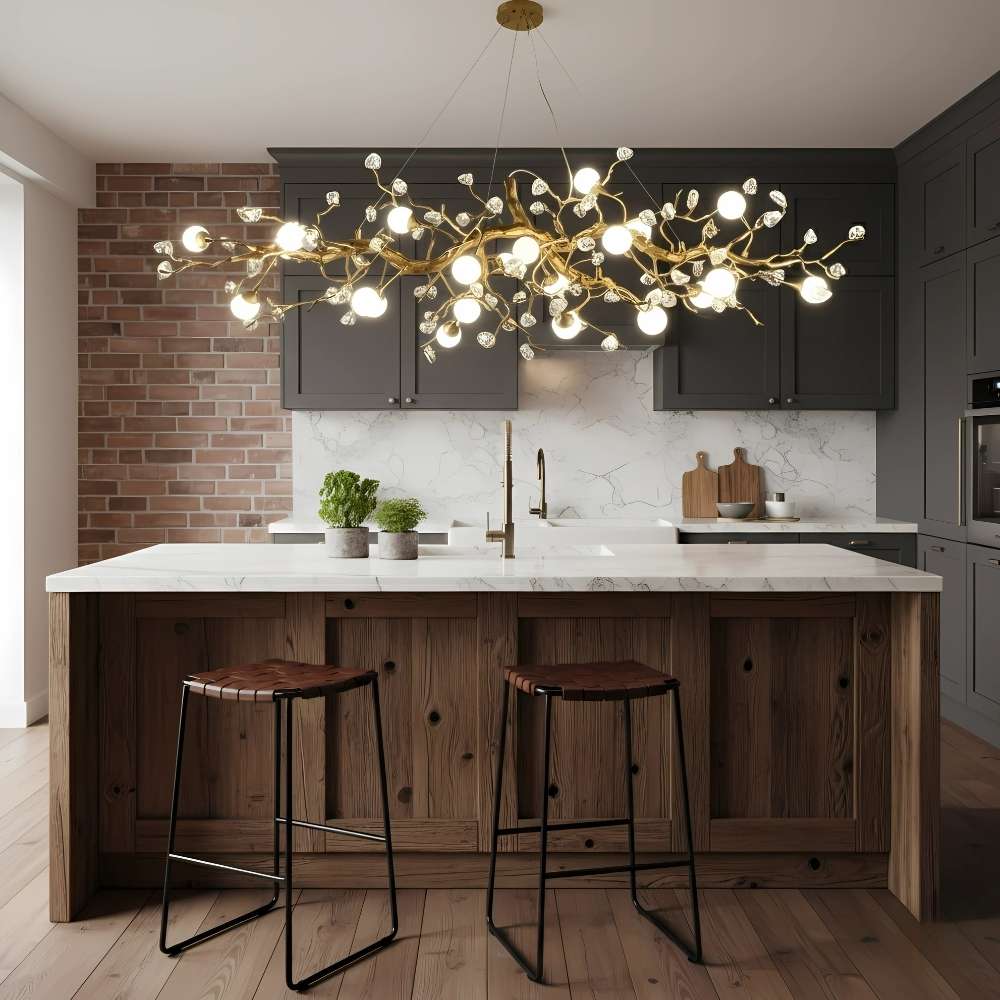
The Orgi Statement Linear Branch Chandelier is offered in copper and dark copper as well as gold, black, and silver: handmade limbs stretched into a linear form with crystal accents and dimmable G9 LED. In copper it is the dining-room and kitchen-island fixture for a walnut table or butcher-block counter, sized at two-thirds to three-quarters of the surface length.
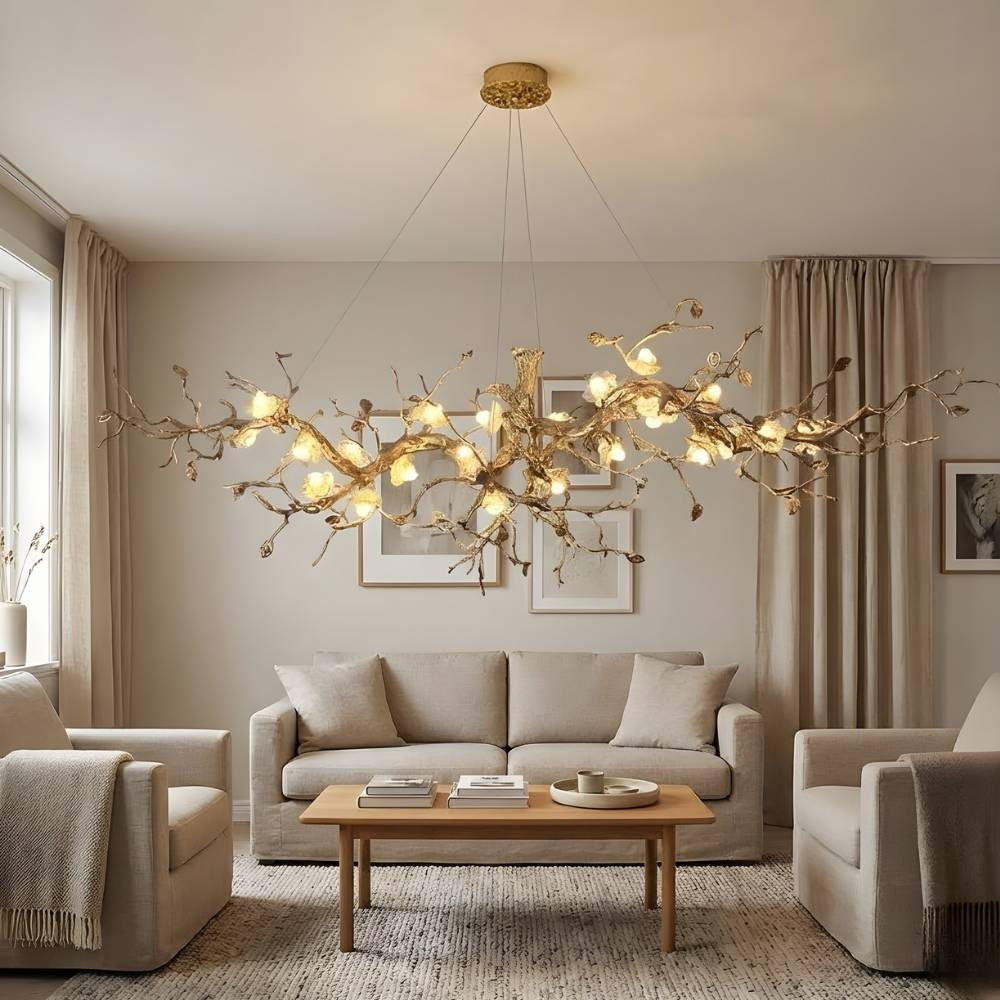
The Noa Flower Branch Chandelier sets white ceramic flowers on handmade brass-and-copper limbs, available in copper, gold, black, silver, or custom. The matte white against warm metal is the modern farmhouse version of copper — soft, handmade, and calm over a dining table or island.

The Zenth Vintage Flower Chandelier is built on a handmade copper framework with white ceramic or brown glass flowers, height-adjustable suspension, and sloped-ceiling mounting. The brown glass version reads closest to dark copper and suits a rustic or industrial kitchen; the ceramic version a lighter farmhouse room.

The Auric Antique Vintage Brass Crystal Chandelier pairs handmade brass-copper limbs with faceted crystal flowers in an open, airy branch — the antique register of copper, for a formal dining room, a tall foyer, or a stairwell seen from several levels. Finish customization is available.
Vertical copper for foyers and stairwells

The Modern Raindrop Chandelier for Foyer & Staircase, in copper or black, is the vertical copper fixture: a cascade of drops through a two-story foyer or stairwell. In copper it warms a white entry and reads from the landing as well as the door; keep 7 feet of clearance over the highest tread.
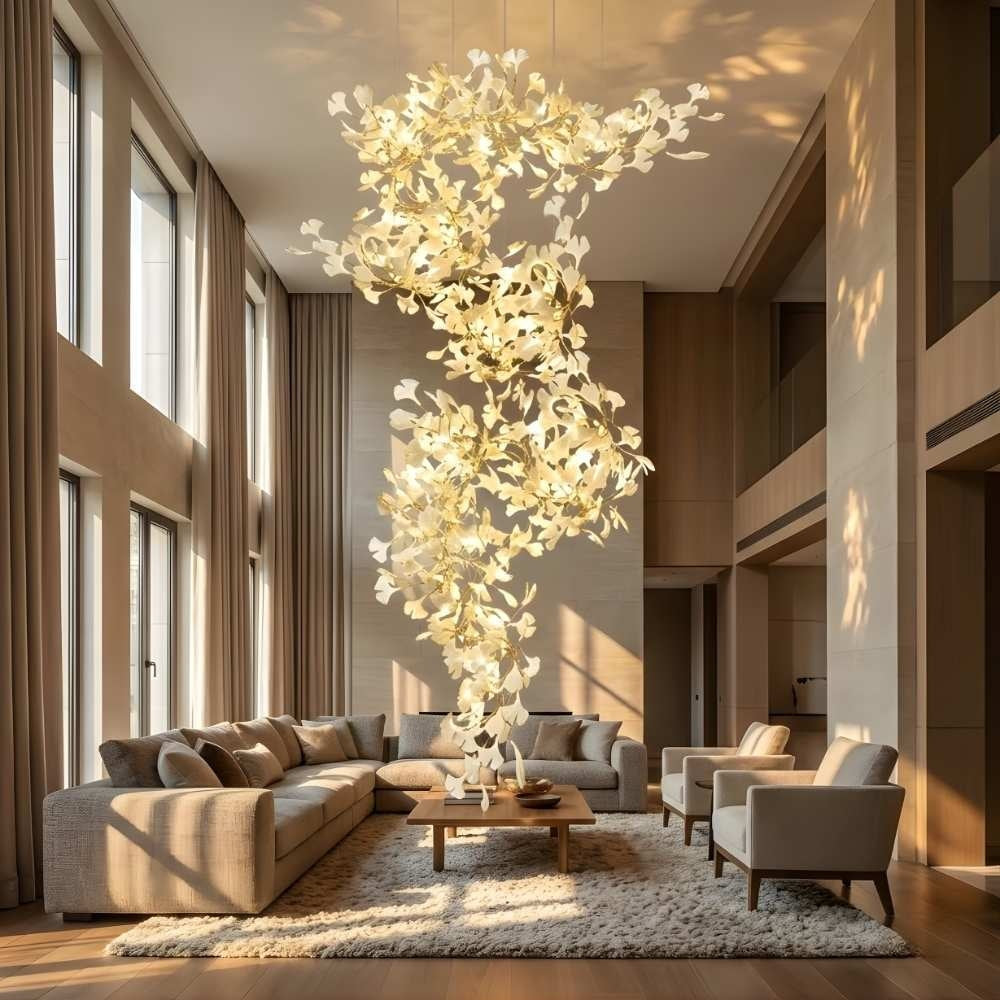
The Calla Staircase Chandelier uses a gold-finished copper frame with white ceramic petals in a cascading profile for double-height spaces, with remote-dimmed LED. It is the gold-copper option — warmer than brass, lighter than raw copper — for a modern entry with organic detail.
Handmade copper branch, flower, and vertical cascade fixtures in copper, dark copper, and gold-copper.
Chandeliers Branch Chandeliers Staircase Dining Room
Also worth a look: the Yelis Modern Copper Glass Flower Chandelier, a copper frame with glass flower shades for a dining room or bedroom that wants copper in a smaller, softer form.
Frequently Asked Questions
Is a copper chandelier solid copper?
Not always. Handmade branch and flower chandeliers often use solid copper limbs; other fixtures are copper-plated over steel or brass, and some are steel or aluminum with a copper-colored coat. Solid and plated copper can patina if unsealed; a copper-tone coat never changes. The product page should state the construction.
Will my copper chandelier turn green?
Only if the copper is unsealed and the air is humid. Raw copper darkens from bright to brown within months indoors and can develop green verdigris over years, faster in kitchens, bathrooms, and coastal homes. A lacquered or coated copper fixture keeps its original color unless the coating is scratched through.
How do I clean a copper chandelier?
Turn off the power and dust with a dry microfiber cloth. Lacquered and coated finishes take a barely damp cloth, dried at once — no polish, no abrasives. Unsealed copper can be polished back to bright with a copper cleaner, after which it starts aging again; a verdigris finish is dusted only.
What is the difference between copper and brass lighting?
Brass is copper alloyed with zinc, so it is yellower; copper is redder and warmer. Copper pairs best with deep green, navy, walnut, and terracotta; brass with cream, black, oak, and white marble. Choose one as the room's dominant warm metal.
Does copper go with black hardware?
Yes. A black window frame, table base, or cabinet pull next to a copper chandelier grounds the warm metal and keeps it from looking costume-like. Copper and black is a standard pairing in modern farmhouse and industrial rooms.
What color walls go with a copper chandelier?
Deep green and navy make copper glow; cream, warm white, and terracotta are safe. Gray and stark blue-white make copper look orange. Wood walls and beams work if the copper is darker or brighter than the wood, not the same tone.
What color temperature suits copper?
2700K to 3000K warm white with CRI 90 or higher. At 4000K and above copper turns flat and brownish. Fixtures with switchable LEDs often ship on 6000K — reset them on first use.
Is copper good for a kitchen?
Yes, especially with copper cookware, butcher block, or white and navy cabinets. Use brushed or dark copper, which hides fingerprints and grease film, keep the fixture away from the cooktop, and wipe it regularly; unsealed copper will darken faster in kitchen humidity.
Can I mix copper with brass or gold in one room?
Sparingly. Pick one dominant warm metal and use the others only as small accents. A copper chandelier with brass cabinet pulls a few feet away usually looks like a mismatch; copper with black, or copper with a single small brass accent, reads intentional.
How heavy is a copper chandelier?
Handmade copper branch and flower fixtures with glass or ceramic shades usually weigh 30 to 80 pounds, and large stairwell pieces more. Anything over 50 pounds needs a ceiling box rated for the load fastened to a joist or brace bar, and a two-person installation.
Choosing a Copper Chandelier
Decide first whether you want copper that stays or copper that ages, then choose the finish by the room's palette and the form by the surface below. A copper fixture chosen that way looks like it belongs to the house from the day it goes up — and, if it is living copper, looks more so every year.
Browse copper finish options across the chandeliers collection (filter by copper) and the handmade branch designs in branch chandeliers. For branch forms in every finish, read 10 tree branch chandeliers; for iron against wood in rustic rooms, rustic wood vs wrought iron chandeliers.


