

Choosing dining room lighting is a sequence of decisions, and the order matters: fixture type follows the table's shape and the ceiling's height, size follows the table, hanging height follows the ceiling, and only then do style, light quality, and layering come in. Get the sequence right and the fixture works for weeknight dinners and holiday tables alike. This guide walks the seven steps in order, with the numbers to use at each one.
Key Takeaways
| Question | Answer |
|---|---|
| How do you choose dining room lighting? | In seven steps: fixture type by table shape and ceiling height, size at ½–⅔ of the table, hanging height 30–36 inches above it, style to match the room, warm dimmable light, a second layer, and a checked installation. |
| Chandelier or pendant? | Chandelier for round or square tables under 9-foot-plus ceilings; pendants for small spaces, low ceilings, modern rooms, or a row over a rectangular table; linear fixtures for rectangular tables. |
| What size should the fixture be? | One-half to two-thirds of the table's width for a round fixture, or of its length for a linear one — and take the larger of two sizes. |
| How high should it hang? | The bottom 30 to 36 inches above the tabletop; at least 7 feet above the floor over a walkway. |
| What color light is best? | Warm white 2700–3000K at CRI 90 or higher, on a dimmer. |
| How bright should it be? | 20 to 30 lumens per square foot across all sources (up to 40 with dark finishes), with 2,000–3,000 lumens from the table fixture. |
Quick Facts
- Dining fixture size: ½–⅔ of the table's width (round) or length (linear); a 60-inch round table takes a 30–40-inch fixture.
- Hanging height: bottom of fixture 30–36 inches above the tabletop; 30 inches on an 8 ft ceiling, up to 36 on 9 ft+.
- Ceilings under 8 feet call for a flush or semi-flush mount; 9 feet and above allow a full hanging chandelier.
- Dining room light: warm white 2700–3000K, CRI 90+, on a dimmer set to 30–40% for meals.
- Brightness target: 20–30 lumens per square foot, up to 40 in rooms with dark walls or furniture.
- Multiple pendants: two for tables up to 72 inches, three for 84–96 inches, spaced 24–30 inches apart.
Why Dining Room Lighting Deserves the Effort
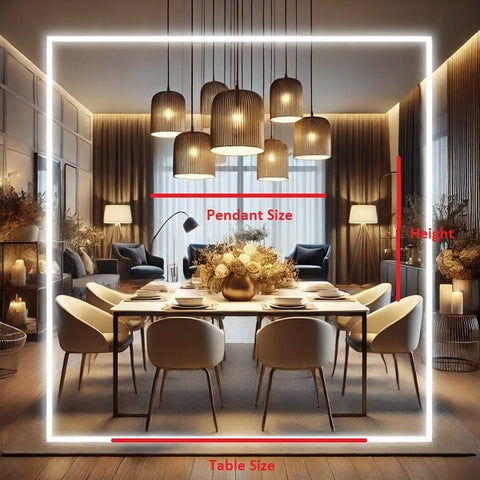
The dining fixture is usually the most visible light in the home and the one that sets the mood for the room's main purpose. It makes the room feel welcoming for family meals and guests, sets the tone from a casual breakfast to a formal dinner, renders food and faces well when the light quality is right, shows off the table and furniture, and serves as the room's focal point. It also has to work for everything else the table does — homework, bills, games — which is why the choice includes control as much as style. Browse the full dining room lighting collection to see the range before working through the steps.
Step 1: Choose the Fixture Type by Table Shape and Ceiling Height
Two facts about the room decide the type before style enters. The table's shape says whether the fixture should be centered or linear: round and square tables take one fixture with a single center — a chandelier, a pendant, a ring, a cluster; rectangular and oval tables take a fixture that follows their length — a linear chandelier or a row of two or three pendants. The ceiling's height says how much fixture fits: under 8 feet, a flush or semi-flush mount; 8 to 9 feet, a short-drop or ceiling-mounted fixture; 9 feet and above, a full hanging chandelier or pendant.
| Table shape | Ceiling | Fixture type |
|---|---|---|
| Round / square | 9 ft + | Chandelier, large pendant, ring, or cluster — centered |
| Round / square | 8–9 ft | Semi-flush, short-drop pendant, or ceiling-mounted chandelier |
| Rectangular / oval | 9 ft + | Linear chandelier or 2–3 matched pendants |
| Rectangular / oval | 8–9 ft | Short-drop linear or low-profile pendant row |
| Any shape | Under 8 ft | Flush or semi-flush mount |
| Small nook table | Any | Single compact pendant or flush mount |
Chandeliers
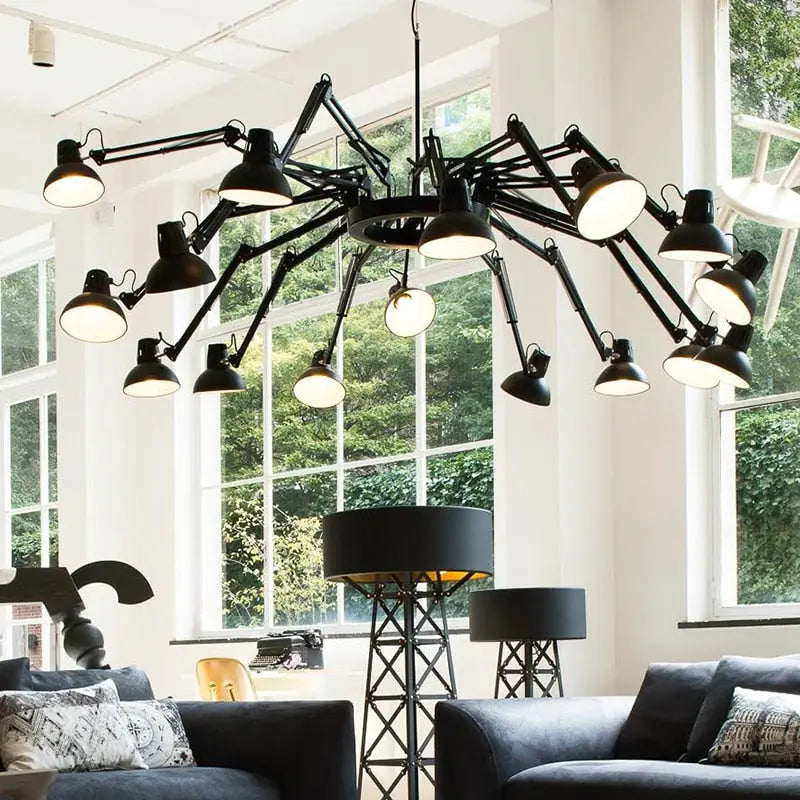
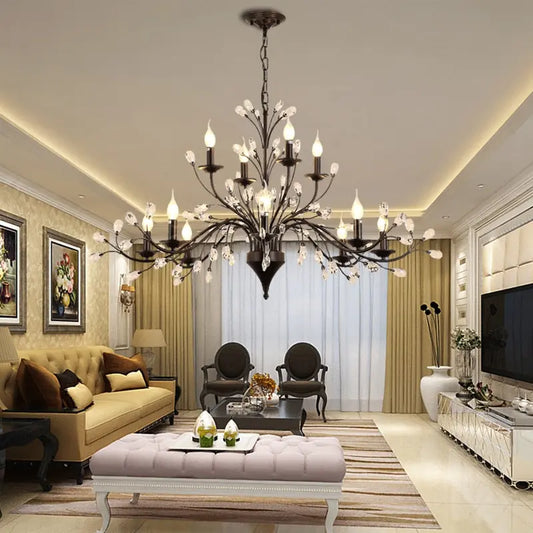
Chandeliers are the standard choice for round and square tables in rooms with 9-foot ceilings or more — a multi-light fixture that gives the room a focal point and lights the whole table from one center. Black chandeliers give a clean, current look for contemporary and industrial dining rooms and contrast well with light walls; rustic wrought iron chandeliers give a warm, traditional feel for farmhouse and Mediterranean rooms, with metalwork that adds character.
Pendant Lights
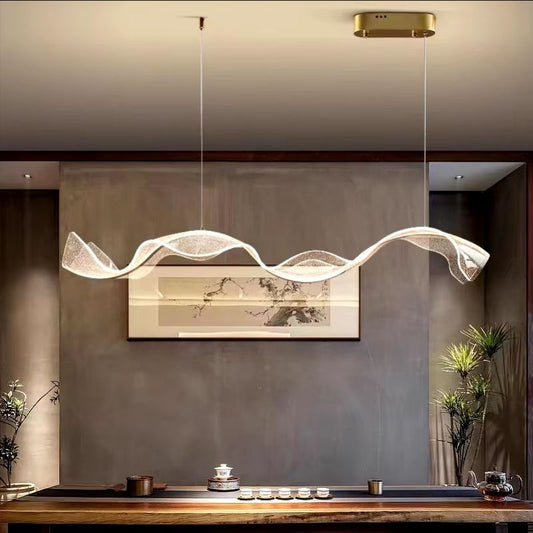
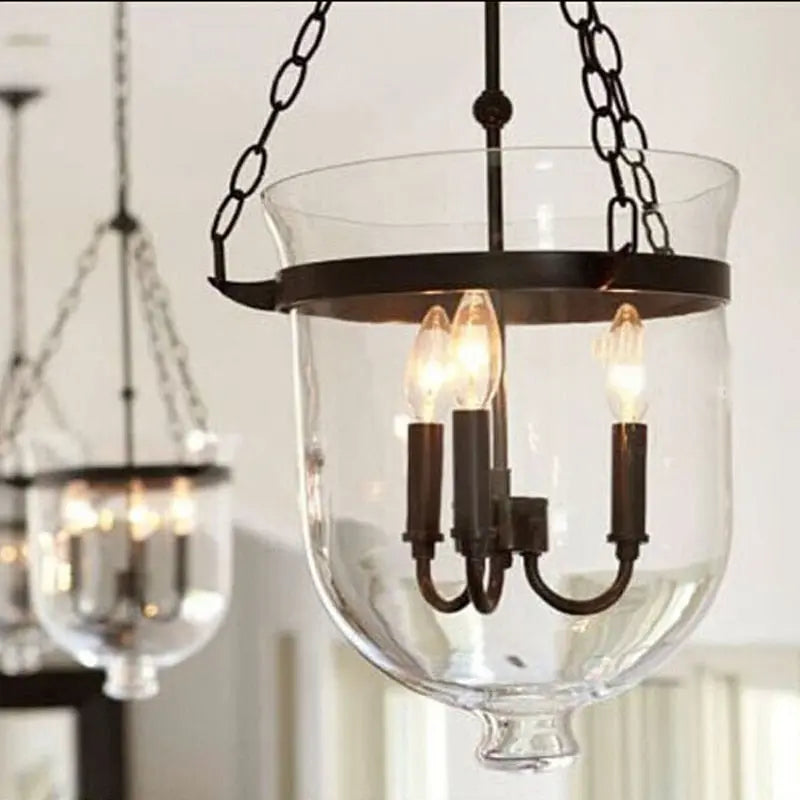
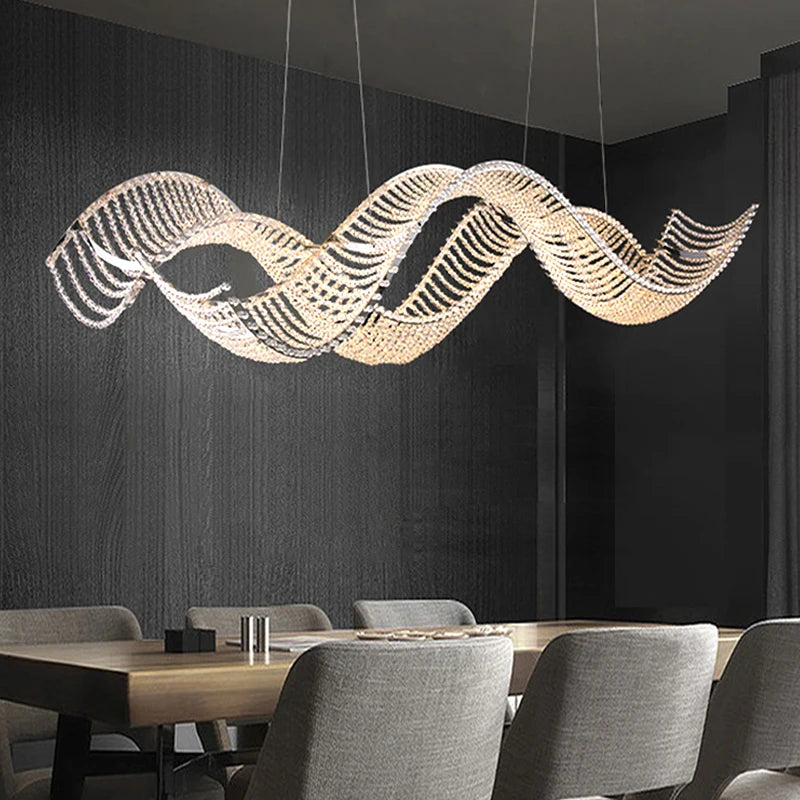
Pendants are the flexible option: one large pendant centered over a small round table, or two or three matched pendants spaced along a rectangular one. They suit smaller dining spaces, breakfast nooks, modern rooms, and limited ceiling heights. A modern pendant chandelier like the ocean wave design combines the presence of a chandelier with the simplicity of a pendant for contemporary rooms; a rustic bell jar pendant light suits farmhouse, coastal, and traditional rooms. The dining room pendant lighting guide covers spacing a row.
Linear Suspensions
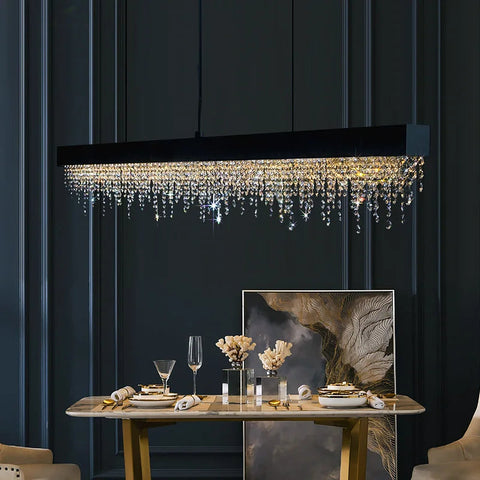
A linear fixture over a rectangular table spreads light evenly to every seat, mirrors the table's proportions, comes in styles from minimalist to ornate, and suits narrow rooms and open-plan spaces where a round chandelier would leave the ends dark. A modern crystal rectangular chandelier pairs crystal with a linear form for glam and transitional rooms. Long chandeliers for the dining room covers linear fixtures in depth.
Flush and Semi-Flush Mounts
For ceilings of 8 feet or lower, a flush or semi-flush fixture mounts at the ceiling and keeps headroom while still lighting the table. Choose one designed for the dining room — crystal, glass, or an open frame on the underside — rather than a plain dome. The dining room ceiling lights guide sorts the ceiling-close types by drop, and low ceiling dining room light ideas covers the 8-foot case.
Step 2: Size the Fixture to the Table
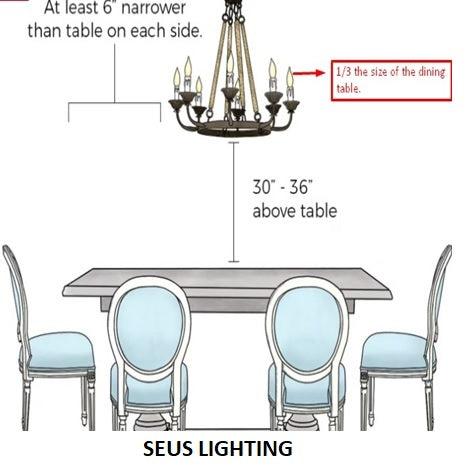
Size to the table, not the room. For a round or square fixture, measure the table's width — the shorter side of a rectangular table — and choose a fixture one-half to two-thirds of it. For a linear fixture, measure the table's length and choose one-half to two-thirds of that. Keep any fixture at least 6 inches narrower than the table on each side, and at least 2 feet from the nearest wall. Between two sizes, take the larger; an undersized fixture is the most common dining room mistake.
| Table | Size | Fixture | Hanging height | Notes |
|---|---|---|---|---|
| Round | 48" diameter | 24–32" diameter | 30–36" above table | Center on the table |
| Round | 60" diameter | 30–40" diameter | 30–36" above table | Center on the table |
| Rectangular | 72 × 36" | 36–48" linear | 30–36" above table | Or 2 pendants, 24–30" apart |
| Rectangular | 96 × 42" | 48–64" linear | 30–36" above table | Or 3 pendants, 24–30" apart |
| Small / nook | 36–42" square | 18–28" diameter | 28–32" above table | Flush mount under 8 ft |
In an open room with no table under the fixture, the room formula applies instead: add length and width in feet and read the total as inches of diameter. The dining room chandelier size guide works every case, the dining table light fixture guide maps shape to size, and the round dining table guide covers every round diameter.
Step 3: Set the Hanging Height
Hang the bottom of the fixture 30 to 36 inches above the tabletop — 30 inches on an 8-foot ceiling, rising toward 36 on 9 feet and above, adding about 3 inches for each additional foot of ceiling. That range lights the table without blocking the view across it. Where the fixture hangs over a walkway rather than the table, the rule becomes at least 7 feet above the floor. Center the fixture on the table, not the room. The hanging height guide covers the details.
Step 4: Match the Style to the Room
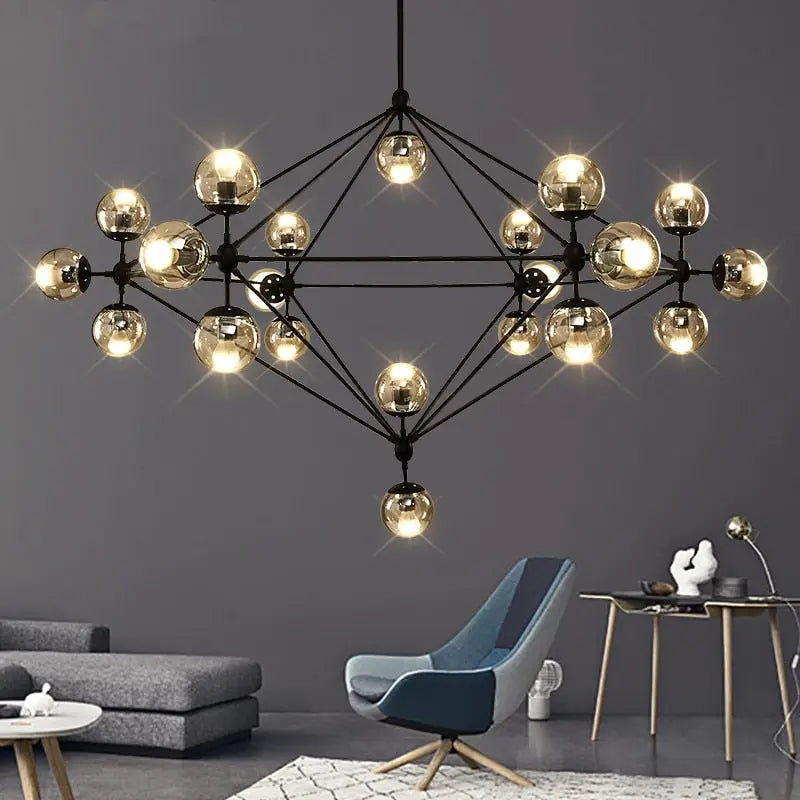
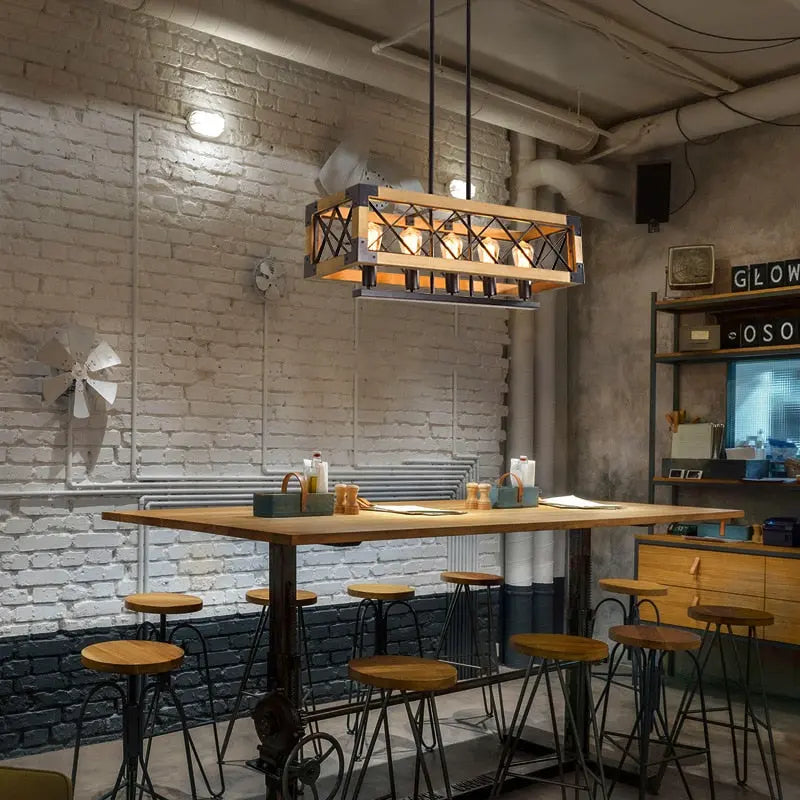
With type, size, and height fixed, style is a free choice — and the reliable rule is to match the room's furniture and the finish of its hardware. Modern and contemporary: a contemporary black chandelier with clean lines and geometric form suits minimalist and urban rooms. Rustic and traditional: a wood rustic chandelier brings warmth and natural texture to farmhouse and country rooms. Transitional mixes both — a classic form in a current finish. Industrial uses exposed bulbs and metal; glam uses crystal and metallic accents; coastal uses rattan, rope, and weathered wood. Match the fixture's metal to the room's cabinet pulls, mirror frames, and chair hardware so it looks intentional. For finish-specific guidance, see brass dining room chandeliers and black dining room lights.
| Fixture style | Best table shape | Ideal ceiling | Design aesthetic | Key benefit |
|---|---|---|---|---|
| Traditional chandelier | Round, square | 9 ft + | Traditional, formal, glam | Focal point, even light |
| Modern pendant | Round, small rectangular | 8–10 ft | Contemporary, minimalist | Clean lines, focused light |
| Multiple pendants | Long rectangular | 9 ft + | Modern, transitional | Even spacing along the table |
| Linear suspension | Rectangular, oval | 9 ft + | Contemporary, transitional | Mirrors the table, full coverage |
| Flush mount | Any | Under 8 ft | Any | Low profile, full headroom |
| Crystal chandelier | Round, square | 10 ft + | Glam, traditional | Sparkle, presence |
Step 5: Get the Light Quality Right
This is the step most guides skip, and it's where a good-looking fixture becomes a good-working one. Four settings matter.
Color temperature: warm, not bright-white
Choose warm white, 2700 to 3000K. It mimics candlelight, makes food and faces look their best, and keeps the room welcoming. Cool white (4000K and above) is brighter and more energizing but reads as a workspace; use it only if the dining room doubles as an office, and prefer an adjustable fixture that shifts between the two. Some fixtures, like the modern wave crystal chandelier, let you change the color temperature by remote, which covers both cases. The color temperature guide explains the Kelvin scale.
Brightness: how many lumens a dining room needs
Aim for 20 to 30 lumens per square foot across all sources — up to 40 in rooms with dark walls or furniture, which absorb light. A 150-square-foot dining room wants roughly 3,000 to 4,500 lumens total, with the table fixture supplying 2,000 to 3,000 of it and sconces or lamps the rest. That's the ceiling for the brightest setting; the dimmer takes it down from there. The room lumens guide sets the target for other sizes.
Color rendering: CRI 90 or higher
The Color Rendering Index measures how accurately a light source shows color. Below 80, food looks flat and skin tones go grey; at 90 and above, everything renders true. Choose bulbs or integrated LED rated CRI 90+ for the dining fixture especially.
Control: a dimmer, always
A dining fixture needs at least two settings — full for setting up, clearing, and homework; 30 to 40 percent for the meal — and a plain switch gives one. Install a dimmer with the fixture, and match it to the light source: LED bulbs need an LED-compatible dimmer, and integrated-LED fixtures either use their own remote or app or need a dimmer matched to their driver type. A mismatch causes flicker.
| Setting | Target | Why |
|---|---|---|
| Color temperature | 2700–3000K | Warm, welcoming; flatters food and faces |
| Brightness | 20–30 lm/sq ft (up to 40 with dark finishes) | Enough at full; the dimmer handles the rest |
| Table fixture share | 2,000–3,000 lumens | Lights the table; layers fill the room |
| CRI | 90+ | True color for food and decor |
| Control | Dimmer matched to bulb or driver | Two modes without flicker |
| Bulb type | LED (dimmable) | Long life, low energy, available in all temperatures |
Step 6: Layer the Light
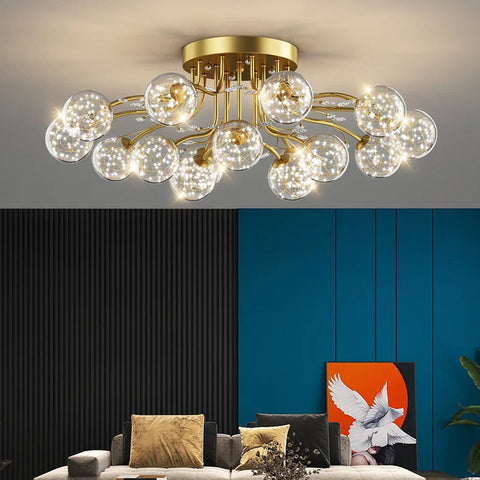
The best-lit dining rooms don't rely on the table fixture alone. Add a second and third layer so the main fixture can run low during meals while the room stays comfortable: wall sconces for soft light around the perimeter and on artwork; a pair of buffet lamps on the sideboard for warm light at seated eye level and task light for serving; recessed lights or a modern flush mount light for general brightness in a larger or low-ceiling room; picture lights for art; and candles for special dinners. Put each layer on its own control. The dining room lamps guide covers the buffet and floor layer, and the layered lighting guide the ambient-task-accent logic.
Materials and Finishes
The fixture's materials shape both its look and its upkeep. Metal finishes — brushed gold, matte black, bronze, nickel — should match the room's other hardware; gold warms, black sharpens, bronze reads classic. Glass and crystal add sparkle and reflect light, in traditional and contemporary rooms alike. Wood and natural materials bring warmth for farmhouse and organic rooms. Fabric shades soften light and add texture, though they hold odors near a kitchen. Mixed materials — metal with wood, glass with fabric — suit eclectic and transitional rooms. The crystal chandelier finish guide goes finish by finish.
Energy Efficiency and Smart Control
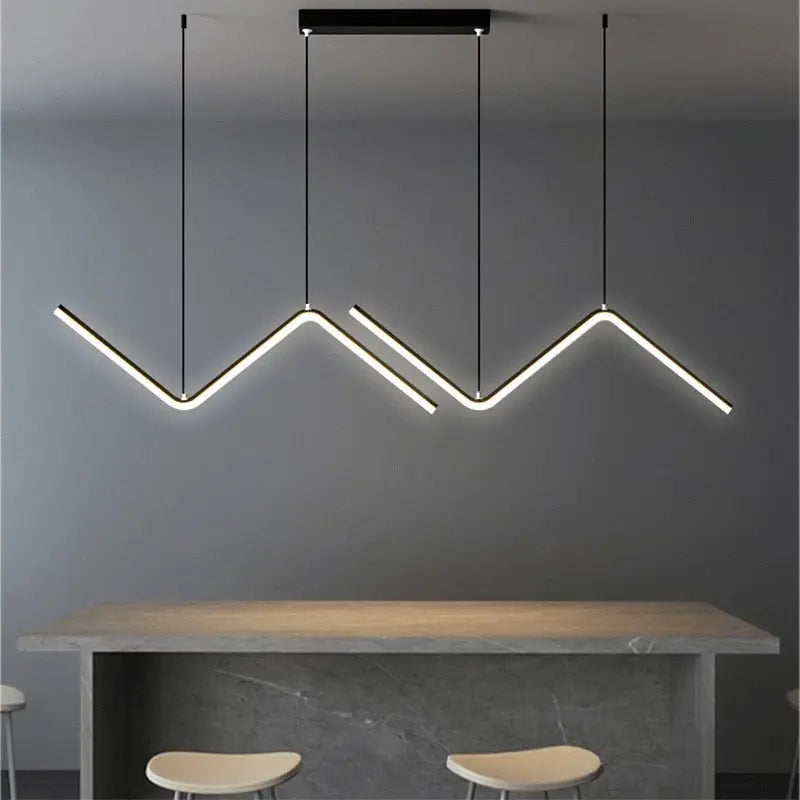
LED is the default light source now: it uses far less energy than incandescent, lasts 15 to 25 years in integrated form, and comes in every color temperature, dimmable. Modern LED chandeliers build the source into the fixture, which removes bulb changes. Smart control — app, voice, or remote — adds scheduling and scenes; a "dinner" scene at 35 percent warm and a "homework" scene at full is the practical use. Motion and daylight sensors suit dining rooms less than other spaces, since the room's light is usually set deliberately for the occasion.
Step 7: Install It Correctly
Before installation: confirm the fixture's weight against the ceiling box (standard boxes hold about 50 pounds; heavier fixtures need a brace to a joist), check that the box sits where the fixture should center over the table, and confirm the dimmer matches the bulb or driver. Turn off power at the breaker and verify with a tester before touching wires; hire an electrician for heavy fixtures, new wiring, or anything you're unsure about. The chandelier installation guide walks through the steps.
Keeping the Fixture Looking Right
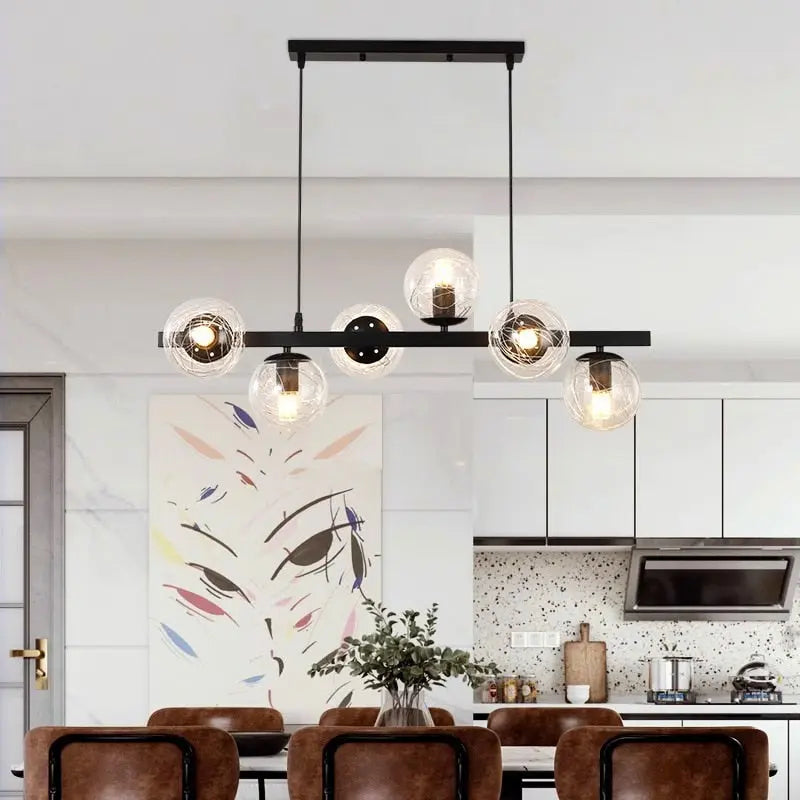
Dust regularly with a soft cloth or duster; clean glass and crystal with a lint-free cloth dampened with a mild solution, never sprayed on the fixture; replace bulbs promptly; check and tighten connections once a year; vacuum fabric shades with a brush attachment. A fixture like the modern bubble chandelier stays clear for years with that routine. The glass chandelier cleaning guide and crystal chandelier cleaning guide cover the methods.
The seven-step checklist
1. Type by table shape + ceiling • 2. Size ½–⅔ of table width/length • 3. Height 30–36" above the table • 4. Style to furniture + hardware finish • 5. Light 2700–3000K, CRI 90+, 20–30 lm/sq ft, dimmer • 6. Layers sconces + buffet lamps • 7. Install weight, box, dimmer match.
Chandeliers, pendants, linear fixtures, and flush mounts for every table and ceiling.
Dining Room Lighting Chandeliers Pendants Size Calculator
Frequently Asked Questions
How do you choose a dining room chandelier?
In order: confirm a chandelier is the right type — it suits round and square tables in rooms with 9-foot ceilings or more, while rectangular tables want a linear fixture and low ceilings want a flush mount. Size it at one-half to two-thirds of the table's width, taking the larger of two sizes. Plan to hang the bottom 30 to 36 inches above the tabletop, centered on the table. Then choose a style and finish that match the room's furniture and hardware, specify warm white 2700–3000K light at CRI 90 or higher on a dimmer, and confirm the fixture's weight against the ceiling box before installation.
What is the difference between a chandelier and a pendant for a dining room?
A chandelier is a multi-light fixture on one frame; a pendant hangs a single shade from one point. Choose a chandelier for a larger dining room with 9-foot ceilings or more, a round or square table, and a more formal or traditional look. Choose pendants for a smaller space or breakfast nook, a modern minimalist look, limited ceiling height, or a rectangular table where two or three pendants in a row spread the light evenly. Linear fixtures bridge the two — chandelier presence with pendant-style focus — and suit rectangular tables best.
How do I choose the right size pendant light for my dining room?
Size a single pendant at one-half to two-thirds of the table's width, so a 42-inch round table takes a 21-to-28-inch pendant. For a row over a rectangular table, use two pendants for tables up to 72 inches long and three for 84 to 96 inches, keep each pendant 8 to 14 inches wide, space them 24 to 30 inches apart with equal gaps at the ends, and keep the row's total span within one-half to two-thirds of the table's length. Hang every pendant at the same height, 30 to 36 inches above the tabletop.
What is the proper hanging height for dining room lighting?
Hang the fixture's bottom 30 to 36 inches above the dining table surface — 30 inches on a standard 8-foot ceiling, up to 36 on 9 feet and taller, adding about 3 inches for each additional foot of ceiling. Keep at least 2 feet between the fixture's edge and the nearest wall. If the fixture hangs over a walkway rather than the table, keep its bottom at least 7 feet above the floor. Center it on the table rather than the room, and if multiple pendants are used, hang them all at the same height.
What color light is best for a dining room?
Warm white, 2700 to 3000K. It mimics candlelight, makes food look appetizing and skin tones look natural, and keeps the room welcoming. Cool white at 4000K and above is brighter and more energizing but reads like a workspace, so use it only if the dining room doubles as an office — and prefer an adjustable fixture or bulbs that shift between warm for dining and cooler for tasks. Whatever the temperature, choose CRI 90 or higher so colors render true, and put the fixture on a dimmer.
How bright should a dining room light be?
Aim for 20 to 30 lumens per square foot across all light sources, and up to 40 in rooms with dark walls or furniture that absorb light. A 150-square-foot dining room wants roughly 3,000 to 4,500 lumens in total, with the fixture over the table supplying 2,000 to 3,000 of it and sconces or buffet lamps the rest. That's the brightest setting; a dimmer brings it down to 30 to 40 percent for meals. The right question is usually "warm or bright?" — and the answer is warm in color, adjustable in brightness.
Can I use flush mount lighting in a dining room?
Yes — for ceilings of 8 feet or lower, or small spaces where a hanging fixture would obstruct, a flush or semi-flush mount is the right choice. Choose one designed for the dining room, with crystal, glass, or an open frame on the underside so it reads as a proper fixture from the table rather than a plain dome, and size it at one-half to two-thirds of the table's width. Put it on a dimmer and add sconces or lamps as a second layer, since a ceiling-close fixture can't bounce light off the ceiling the way a hanging one does.
Choosing Your Dining Room Lighting
Dining room lighting is chosen in sequence: type from the table's shape and the ceiling's height, size from the table, height from the ceiling, then style, light quality, layers, and installation. Follow the order — type, size, and height first, because no style fixes a fixture that's wrong on those — and use the numbers: one-half to two-thirds of the table, 30 to 36 inches above it, 2700–3000K at CRI 90 or higher, 20 to 30 lumens per square foot, on a dimmer, with a second layer of light. The result is a room that's right for every meal it hosts.
Start in the dining room lighting collection, size your table with the dining room chandelier size guide, and finish the room with the dining room lamps guide.


