

Farmhouse chandeliers bring warmth to a room in a way few other fixtures manage — the mix of aged metal, natural wood, and honest, handcrafted-looking forms turns overhead lighting into part of the home's character. This guide covers the eleven best options in the style, from wrought iron classics to antler statements and modern farmhouse crossovers, along with the sizing rules, material differences, and room-by-room advice that make the difference between a fixture that fits and one that feels like an afterthought.
What Makes a Chandelier "Farmhouse"?
The style borrows from the practical, unfussy lighting of rural American homes: fixtures that look built rather than manufactured, in materials that age well. Three elements define it in practice.
Materials with visible texture. Wrought iron, distressed wood, rope, seeded glass, and resin cast to mimic natural forms. Polished chrome and mirror-finish surfaces are the giveaway that a fixture belongs to a different style family.
Honest, structural forms. Exposed candelabra arms, open cage frames, wagon-wheel silhouettes, and visible hardware. The construction is part of the design rather than hidden behind a shade.
Warm, muted finishes. Matte black, aged bronze, rusted patina, weathered gray, and natural wood tones. Warm-white bulbs (2700K–3000K) complete the effect — cool white light works against everything the style is trying to do.
Within those boundaries there's a wide spectrum, from deeply rustic (antlers, raw branches, lantern glass) to modern farmhouse (black metal, straight lines, a nod to industrial design). Knowing where your home sits on that spectrum narrows the field quickly.
The 11 Best Farmhouse Chandeliers
1. Rustic Farmhouse Branch Chandelier with Glass Orbs
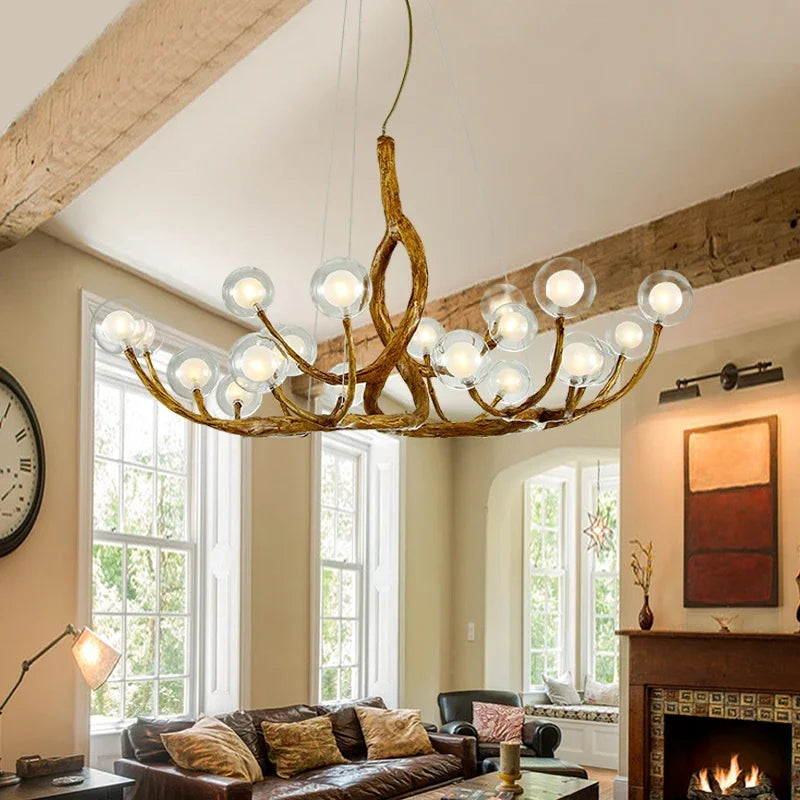
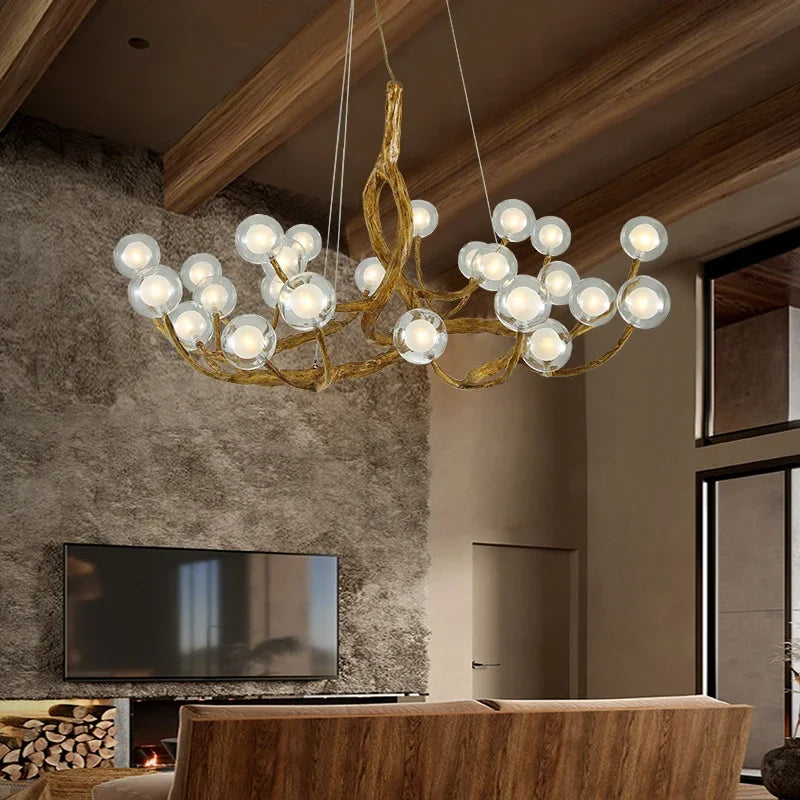
Iron branches carrying clear glass orbs, 37.40 inches long by 19.68 inches wide, available in 16, 20, or 24-light configurations with a warm or cool white choice. The orbs do real optical work here — each one softens and scatters its bulb's output, so the fixture reads as a canopy of gentle points of light rather than a row of bare bulbs. The branch structure keeps it firmly on the rustic side of the spectrum, but the glass keeps it refined enough for a formal dining room.
2. Black and White Drum Chandelier
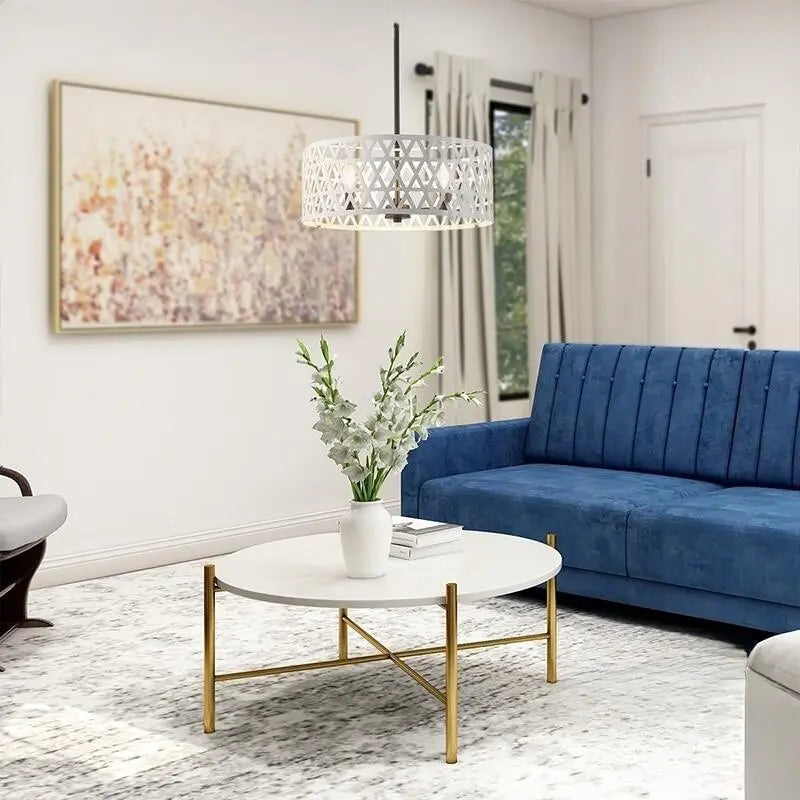
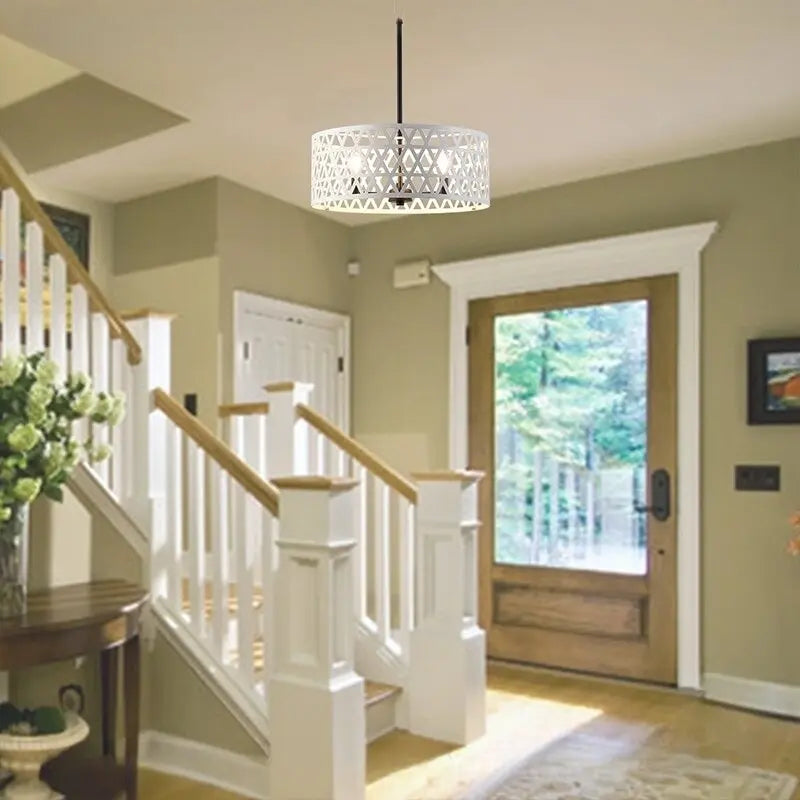
A tall metal drum — 71 inches of height, 18 inches across — in a two-tone black and white that sits at the modern end of the farmhouse range. The extended vertical form is the interesting part: most drum fixtures are wider than they are tall, and this one inverts that, which makes it one of the few farmhouse-adjacent options genuinely suited to high ceilings and stairwells. LED-compatible.
If a dining space is where it's headed, it's worth comparing against other options in the dining room lighting collection before committing, since the tall profile wants generous ceiling height.
3. Brielle Modern Antler Chandelier


Antler form, contemporary execution. Wood and resin construction at 37.72 by 28.51 inches, LED-compatible. Where traditional antler fixtures commit fully to the hunting-lodge look, the Brielle smooths the silhouette and lightens the color palette, which lets it work in homes that want a hint of lodge character without the full commitment. That restraint is exactly what makes it the most versatile of the three antler designs in this list.
4. Faux Elk Antler Chandelier
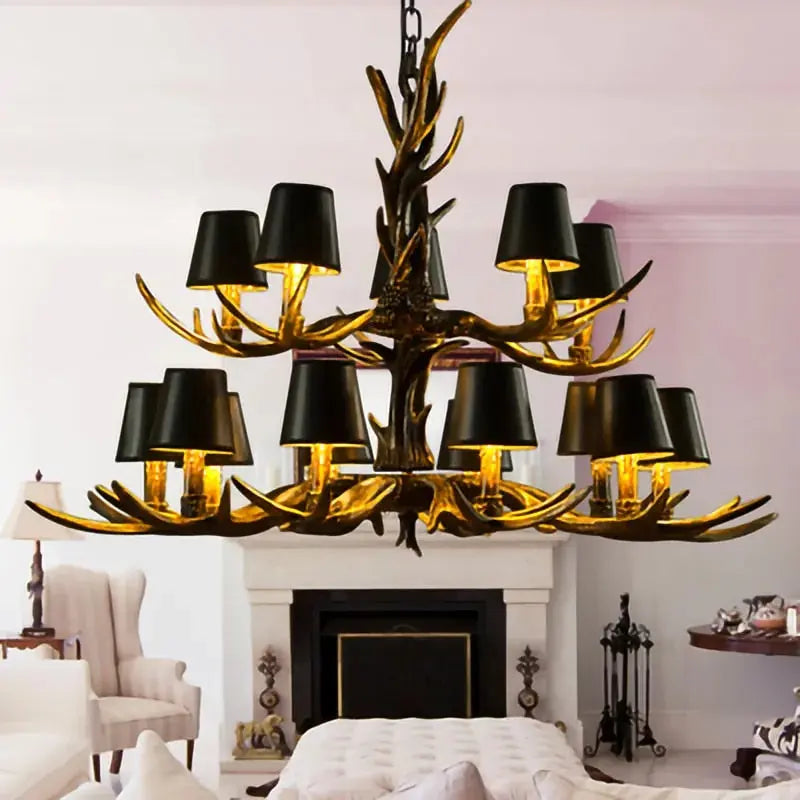
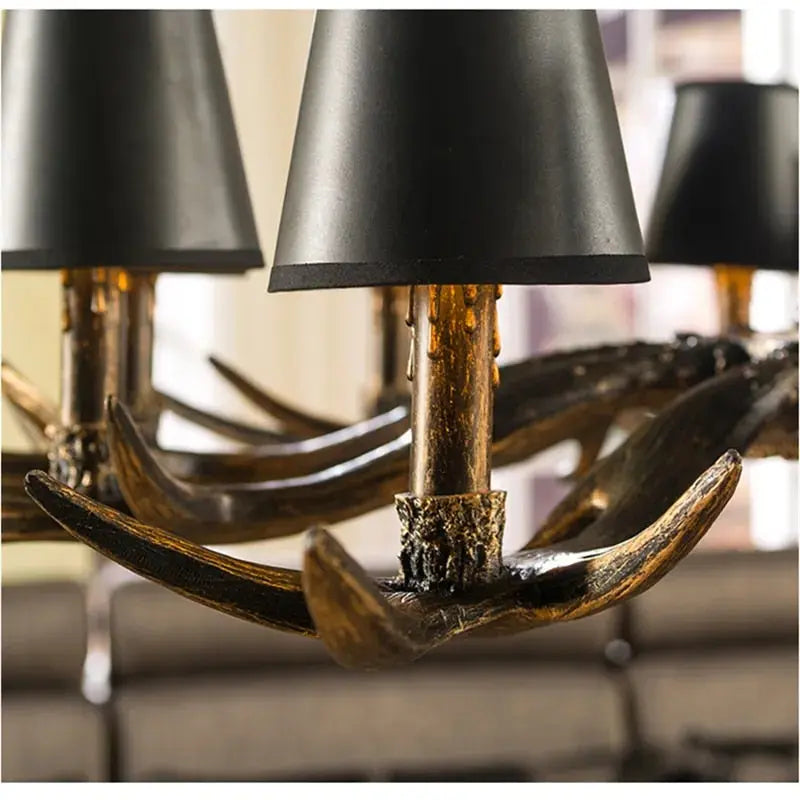
The full lodge statement: a resin recreation of layered elk antlers at 39.38 by 27.96 inches, with LED bulbs included. Resin is the right call here for reasons beyond ethics — it's dramatically lighter than real antler (easier on the junction box), perfectly repeatable in form, and unaffected by the humidity swings that crack natural material. The antique brown finish is convincing at conversation distance.
5. Zoey Resin Moose Antler Chandelier
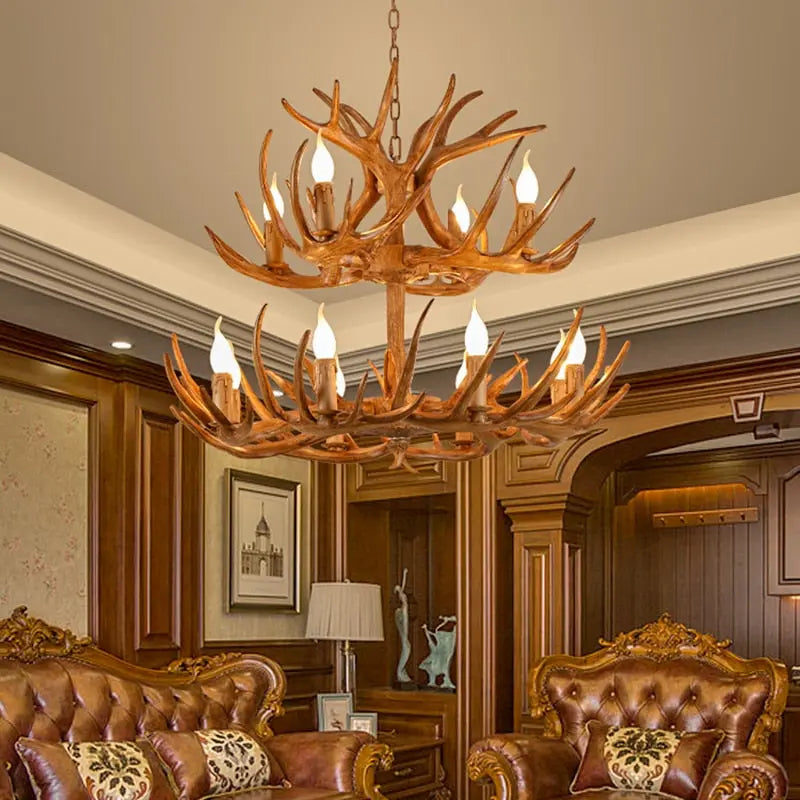

Moose antler rather than the usual deer or elk — broader, flatter paddles that give the fixture a distinctly different silhouette at 36.40 by 31.58 inches. That near-square footprint spreads light more evenly than the elongated antler designs, and the unusual species choice means it won't repeat what's hanging in every other lodge-style home. Resin construction, LED-compatible.
6. Laura 8-Head Black Industrial Chandelier
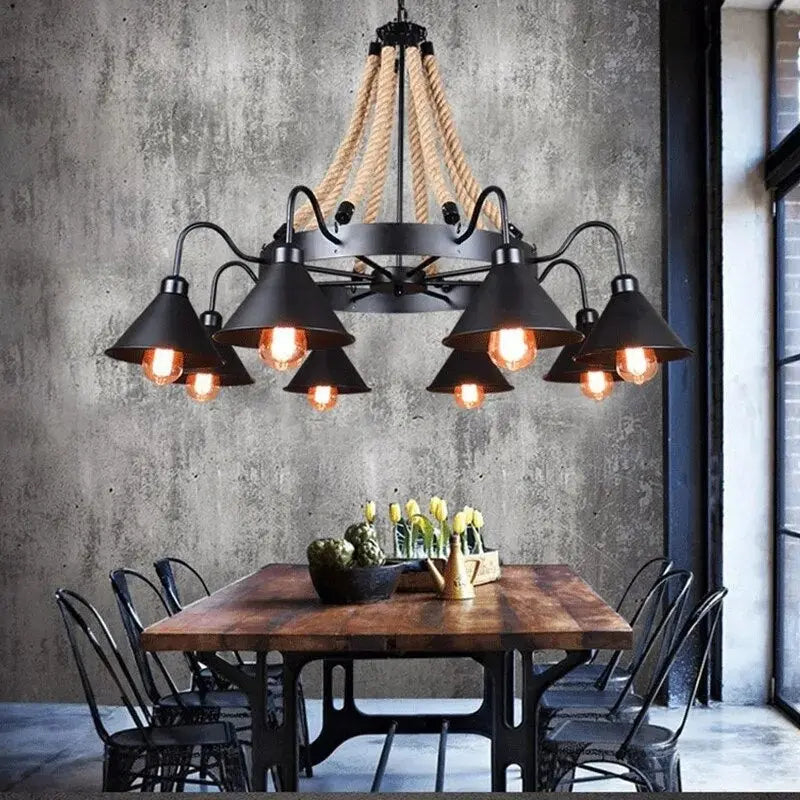

Eight independent lights on a black metal frame wrapped with cotton rope — the industrial-farmhouse crossover done with actual material contrast rather than just a black paint job. The rope softens what would otherwise be a purely urban fixture, and the eight separate heads throw light in multiple directions, which suits work surfaces better than a single diffused source. LED-compatible.
7. Modern Ocean Wave Pendant Chandelier
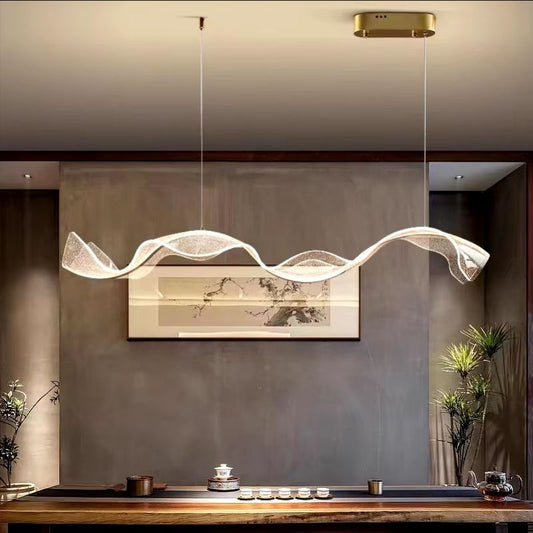
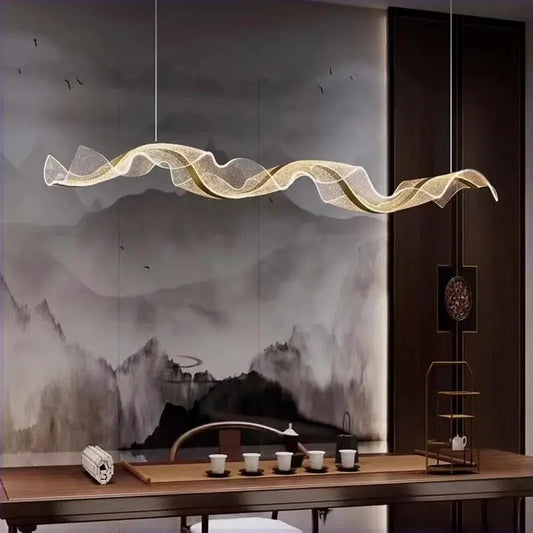
An undulating gold-finish metal wave with adjustable brightness and color temperature. This one lives at the border of coastal farmhouse and contemporary design — the organic curve keeps it in nature-inspired territory while the gold finish and dimming controls are unmistakably current. It's the pick for homes that treat farmhouse as a warm, relaxed sensibility rather than a strict material palette.
8. Lucinda Black Crystal Chandelier

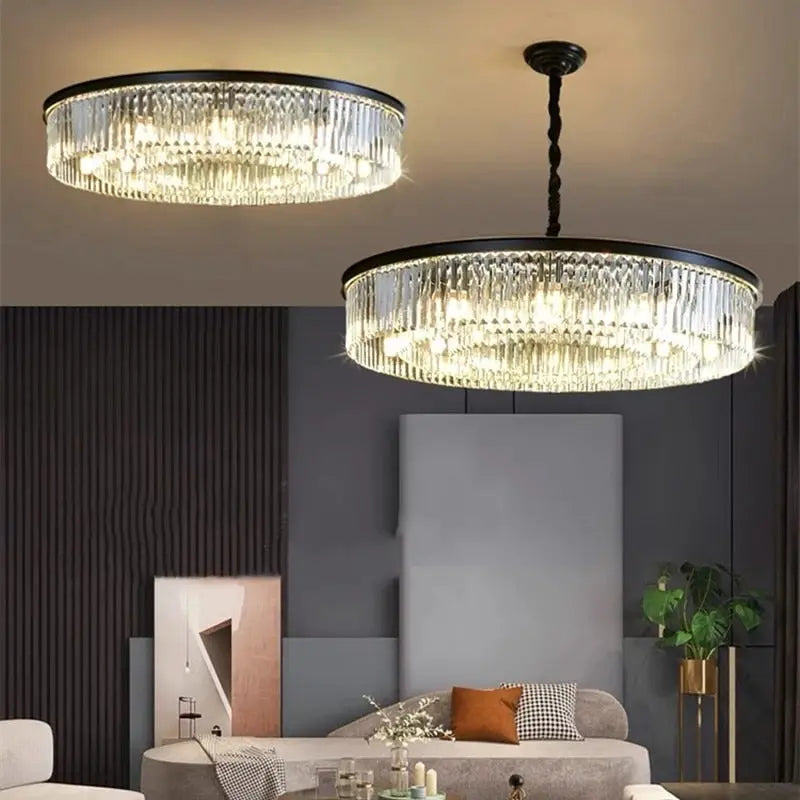
Iron frame, glass crystal accents, and a choice worth pausing on: the crystals come in amber, clear, or grey, and that decision changes the fixture's whole temperament. Amber leans warm and vintage, clear reads classic, grey turns it moody and contemporary. Two lengths — 23.62 or 31.49 inches — cover standard and taller dining rooms. This is the farthest point on the modern-farmhouse end of this list, proof the style can carry a little sparkle without losing its footing.
9. Rustic Wrought Iron Chandeliers
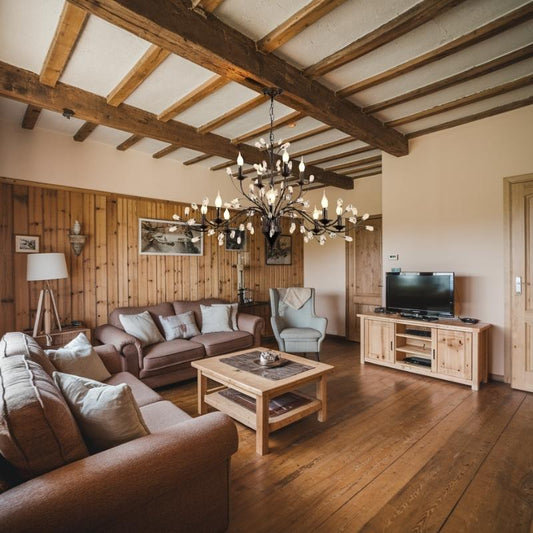

If one fixture defines the entire category, it's this: candle-style arms in hand-worked iron, shown in the 12-light version, available in multiple sizes. Wrought iron is the reference material for the style — heavy enough to feel permanent, textured enough to look made rather than molded, and neutral enough to survive every decorating phase the room passes through. When someone asks for a farmhouse chandelier without further qualification, this is the answer.
The broader rustic chandeliers collection carries the same material language across more sizes and configurations.
10. Rustic Bell Jar Pendant Light
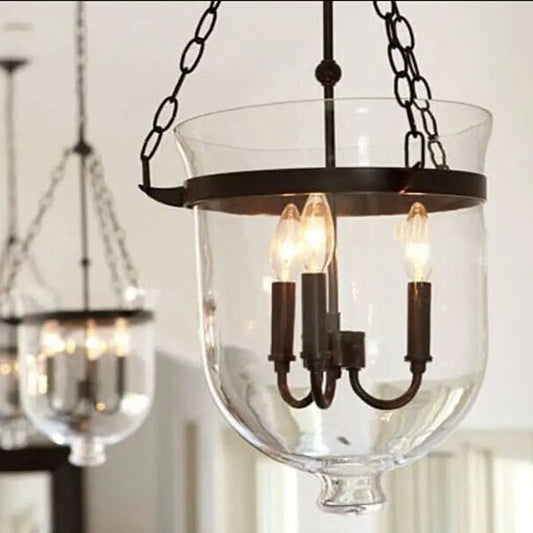
A clear glass bell over a single bulb in a metal frame — the smallest and simplest fixture here, and deliberately so. The bell jar's strength is repetition: two or three in a row over an island or breakfast bar delivers even task light and a rhythm that a single large fixture can't. Fit it with a visible-filament LED bulb and the fixture becomes its own display case.
11. Minas Dimmable Rustic Tree Branch Chandelier
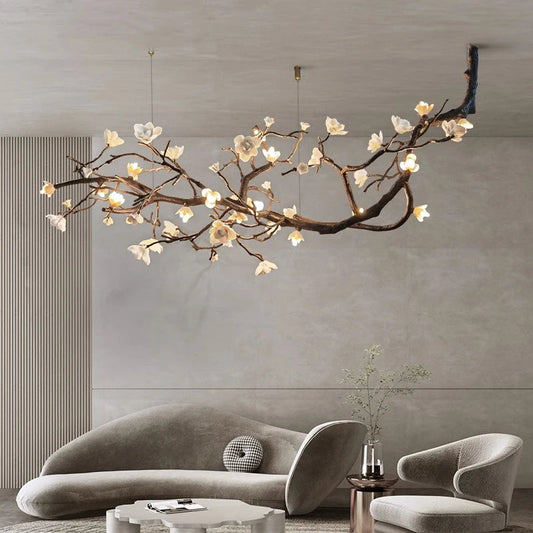
Black branch structure with the most complete control set in this list: warm white (3000K) and cool white (6000K) modes, dimming, remote, and full smartphone app control. It answers a question the style has struggled with — how to get contemporary lighting conveniences without a contemporary-looking fixture. Here the technology hides entirely inside a rustic silhouette.
Materials, Compared
The material determines how a farmhouse fixture looks, ages, and installs. A quick comparison of everything used in the fixtures above:
| Material | Character | Practical Notes | Featured In |
|---|---|---|---|
| Wrought iron | The style's foundation — handcrafted, permanent, traditional | Heavy; verify junction box rating on larger sizes | #9, frame of #8 |
| Resin (cast) | Convincing antler and organic forms | Far lighter than real antler; humidity-stable | #3, #4, #5 |
| Iron + glass orbs/jars | Rustic structure, softened light | Glass diffuses bare bulbs beautifully; clean quarterly | #1, #10 |
| Black metal | The modern farmhouse signature | Fingerprint-resistant matte finishes preferred | #2, #6, #8, #11 |
| Rope + metal | Industrial warmth, texture contrast | Dust with a dry brush, not a damp cloth | #6 |
| Crystal accents on iron | Farmhouse-glam crossover | Crystal choice (amber/clear/grey) changes the mood | #8 |
Farmhouse Chandeliers in the Dining Room
The dining room is where this style does its best work, and it has its own sizing logic — the table matters more than the room.
Width: the fixture should span one-half to two-thirds of the table's width (for a round table, its diameter). A 42-inch-wide table wants a fixture between 21 and 28 inches across. Wider and it crowds the people seated; narrower and it looks lost above the table.
Height: hang the bottom of the fixture 30 to 36 inches above the tabletop for 8-foot ceilings, adding roughly 3 inches per additional foot of ceiling height. This keeps the fixture out of sightlines across the table while keeping the light concentrated where the meal happens.
Style pairing: candle-style wrought iron (#9) suits classic farmhouse tables in oak or reclaimed wood; the branch-and-orb design (#1) elevates a formal dining room; the Lucinda (#8) fits dining rooms that mix rustic architecture with more refined furnishings. Rectangular tables longer than about 72 inches are often better served by a linear fixture or a pair of pendants than one central chandelier.
For the full height and clearance math, see the dining table chandelier height guide, and browse more options in the dining room lighting collection.
Rustic, Country, and Cabin Homes
At the deep-rustic end of the spectrum — cabins, lodges, ranch houses, mountain homes — the rules loosen and the scale grows. These interiors usually offer exposed timber, tall or vaulted ceilings, and stone or wood surfaces that can absorb a dramatic fixture without feeling overwhelmed.
The antler designs (#3, #4, #5) belong here, and so does the branch-and-orb (#1). Two practical notes for these homes: first, vaulted and beamed ceilings complicate mounting — sloped-ceiling adapters and beam-mounted boxes are common requirements, so check the fixture's canopy compatibility before ordering. Second, big rustic rooms almost always need more than the chandelier alone; wall lanterns or table lamps fill the perimeter that a single central fixture can't reach.
If tall ceilings are the defining feature of your space, the high-ceiling chandelier guide covers the sizing math for two-story and vaulted rooms in detail.
Modern Farmhouse: Where Rustic Meets Current
Modern farmhouse — the black-window-frame, shiplap-and-matte-black aesthetic — takes the warmth of the traditional style and tightens the lines. In lighting terms, that means black metal instead of aged bronze, geometric structure instead of curved candelabra arms, and a willingness to borrow from industrial design.
From this list, the drum (#2), the Laura industrial (#6), the Lucinda (#8), and the Minas (#11) all live in this territory. The reliable formula: keep the material palette rustic-adjacent (matte black, rope, wood accents) while letting the silhouette go clean and structural. What breaks the look is high shine — polished chrome or mirror finishes pull the fixture out of farmhouse entirely.
Room-by-Room Quick Guide
| Room | What Works | Sizing Anchor |
|---|---|---|
| Dining room | Wrought iron (#9), branch & orb (#1), Lucinda (#8) | ½–⅔ of table width; 30–36 in above surface |
| Kitchen island | Laura industrial (#6), bell jars in multiples (#10), ocean wave (#7) | 30–36 in above counter; multi-head or repeated pendants for long islands |
| Living room | Antler designs (#3–5), Minas (#11), branch & orb (#1) | Room length + width in feet = diameter in inches |
| Entryway / foyer | Drum (#2) for two-story spaces, Lucinda (#8) or wrought iron for standard entries | 7 ft minimum floor clearance; taller spaces suit vertical fixtures |
| Bedroom | Smaller wrought iron sizes, Lucinda 23.62-in version | Scale down one size from the formula; dimming strongly recommended |
| Cabin great room | Elk (#4) or moose (#5) antler, largest branch configuration (#1) | Size to peak height on vaulted ceilings, not average height |
Getting the Size Right
Outside the dining room, the general rule applies: add the room's length and width in feet, and use that sum in inches as the fixture's diameter. A 14 × 16-foot living room points to roughly a 30-inch fixture. Two adjustments worth making: open, airy structures like antlers and branches can run a size larger because they occupy space without visually blocking it, while solid forms like drums should stay at or slightly under the target.
Hanging height in walking areas never drops below 7 feet of floor clearance. For the complete reference tables across every room and ceiling height, use the chandelier size calculator.
Bulbs and Finishing Touches
- Warm white only (2700K–3000K). The entire style is built around warm materials; cool white light makes iron look harsh and wood look gray.
- Visible-filament LED bulbs where the bulb shows — candle-style arms, bell jars, open cages. They deliver the vintage look at LED efficiency and lifespan.
- Dimmers pay for themselves in dining rooms and living rooms; verify LED compatibility to avoid flicker.
- Check the junction box rating for anything heavy — wrought iron and multi-light branch fixtures routinely pass 50 pounds, the standard box limit.
- Dust monthly with a dry cloth; glass orbs and crystal accents want a proper clean about quarterly. Rope elements take a dry brush, never a damp cloth.
The full rustic range — wrought iron, antler, branch, and modern farmhouse designs — is in one place.
Rustic Chandeliers Dining Room Lighting Black Chandeliers Kitchen Lighting All Chandeliers Custom Service
Frequently Asked Questions
What is a farmhouse chandelier?
It's a fixture built around three things: textured natural materials (wrought iron, wood, rope, seeded glass), honest structural forms where the construction is visible rather than hidden, and warm muted finishes like matte black, aged bronze, and natural wood tones. The style descends from the practical lighting of rural homes, which is why it favors fixtures that look made rather than manufactured. Within it there's a wide range — from deeply rustic antler and branch designs to modern farmhouse pieces in clean black metal.
Which farmhouse chandelier is best for a dining room?
Candle-style wrought iron is the classic and safest answer — it pairs naturally with wood dining tables and survives decorating changes. For a more formal dining room, a branch design with glass orbs adds refinement while staying rustic; for homes mixing farmhouse architecture with polished furnishings, a black iron fixture with crystal accents bridges both worlds. Size it to one-half to two-thirds of your table's width and hang the bottom 30–36 inches above the tabletop.
What size should a farmhouse chandelier be?
Over a dining table: one-half to two-thirds of the table's width (a 42-inch table suits a 21–28 inch fixture). In other rooms: add the room's length and width in feet and use that number in inches as the diameter — a 14 × 16 ft living room points to about 30 inches. Open structures like antler and branch designs can go one size up since they don't visually block space; solid drum forms should stay at or under the target. Keep 7 feet of clearance under any fixture in a walking path.
What is modern farmhouse lighting?
It's the current evolution of the style: matte black metal replaces aged bronze, silhouettes go geometric and structural instead of curved and ornate, and industrial elements — cage frames, exposed bulbs, rope-wrapped details — get borrowed freely. The materials stay warm and textured, which is what separates it from purely industrial or contemporary lighting. The test is shine: matte and brushed finishes stay in the family; polished chrome leaves it.
Are antler chandeliers real antler?
The ones in this guide are cast resin, and that's the better material for a light fixture regardless of budget. Resin weighs a fraction of natural antler, which matters when a junction box is holding the whole assembly overhead; it holds its shape through humidity changes that crack real antler over time; and it reproduces the branching form consistently across every unit. Visually, quality cast resin is convincing at normal viewing distance.
Do farmhouse chandeliers work with LED bulbs?
Yes — every fixture in this list is LED-compatible, and several include LED technology with dimming and color-temperature control built in. The one detail to get right is bulb appearance: where the bulb is visible (candelabra arms, bell jars, open cages), choose visible-filament LED bulbs, which give the vintage glow the style expects at a fraction of the energy use and with a 15,000-hour-plus lifespan. Stick to warm white, 2700K–3000K.
What's the difference between rustic and farmhouse chandeliers?
They overlap heavily, and retailers often use the terms interchangeably, but there's a useful distinction: rustic is the deeper end of the spectrum — antlers, raw branches, lodge and cabin character — while farmhouse spans from that rustic end all the way to the clean black-metal modern farmhouse look. In other words, nearly all rustic chandeliers qualify as farmhouse, but not all farmhouse chandeliers are rustic. If your home leans cabin or lodge, shop the rustic end; if it leans shiplap-and-black-trim, shop modern farmhouse.
Can a farmhouse chandelier work in a home with high ceilings?
Yes, with the right form. Tall spaces favor fixtures with vertical presence — the 71-inch drum design in this list was effectively built for stairwells and two-story entries, and large antler or branch fixtures hold their own under vaulted cabin ceilings. On vaulted and beamed ceilings, size to the peak height rather than the average, and confirm the fixture's canopy supports sloped mounting. The high-ceiling chandelier guide covers the full sizing math for spaces above 10 feet.
What color light is best for farmhouse fixtures?
Warm white, 2700K–3000K, without exception. The style's entire material palette — iron, wood, bronze, rope — is warm-toned, and warm light is what makes those materials glow. Cool white (4000K and up) turns iron harsh and gray and drains the warmth from wood. If a fixture offers adjustable color temperature, set it warm and leave it; the adjustability is more useful for dimming than for color changes in these interiors.
Where should I put a farmhouse chandelier besides the dining room?
Kitchen islands are the second-best location — multi-head fixtures or a row of bell jar pendants deliver task light with character. Living rooms take the larger statement pieces, sized by the length-plus-width formula. Entryways suit either a compact wrought iron design or, in two-story spaces, a tall vertical fixture. Bedrooms work with the style scaled down one size and put on a dimmer. Cabin great rooms are where the biggest antler and branch designs belong, sized to the ceiling's peak.
Wrapping Up
The best farmhouse chandelier is the one whose position on the rustic-to-modern spectrum matches your home — wrought iron for the traditionalists, antler and branch for cabins and lodges, black metal and rope for the modern farmhouse crowd. Get the size right with the table-width rule in dining rooms and the length-plus-width formula everywhere else, keep the bulbs warm white, and the fixture will carry the room for decades.
Browse the complete rustic chandeliers collection to see the full range, or use the chandelier size calculator to confirm dimensions before you order.


