

The kitchen has quietly become the best room in the house for a chandelier — it's where everyone gathers, where open floor plans put the ceiling on display, and where good light genuinely earns its keep. This guide pairs ten of the best kitchen chandeliers with the practical side of the choice: which type suits which kitchen, how to size a fixture for an island versus a table, and the placement rules that make it all work.
The 10 Best Kitchen Chandeliers
1. Noa Flower Branch Chandelier — best statement for large kitchens


The Noa Flower Branch Chandelier spreads a canopy of blossom-like lights horizontally — up to 260 cm (about 8.5 feet) in its largest size — which makes it one of the few fixtures that can run the full length of a long island or a generous kitchen table without repeating units. The organic branching softens kitchens heavy on straight cabinet lines, and the adjustable output shifts it from bright prep light to dinner-party glow.
2. Luxury Crystal Chandelier — best crystal for the island or table
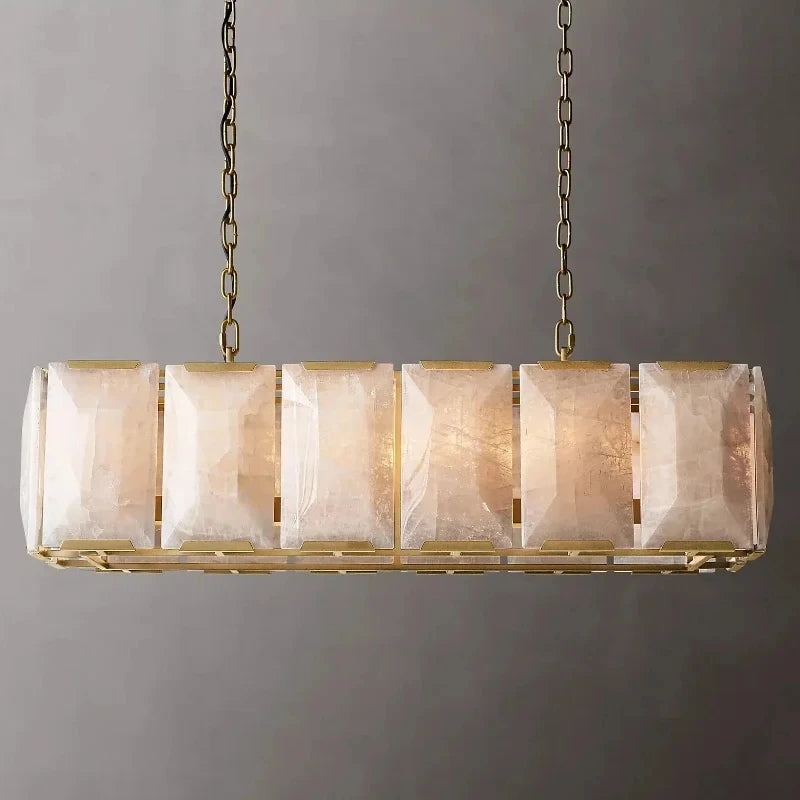
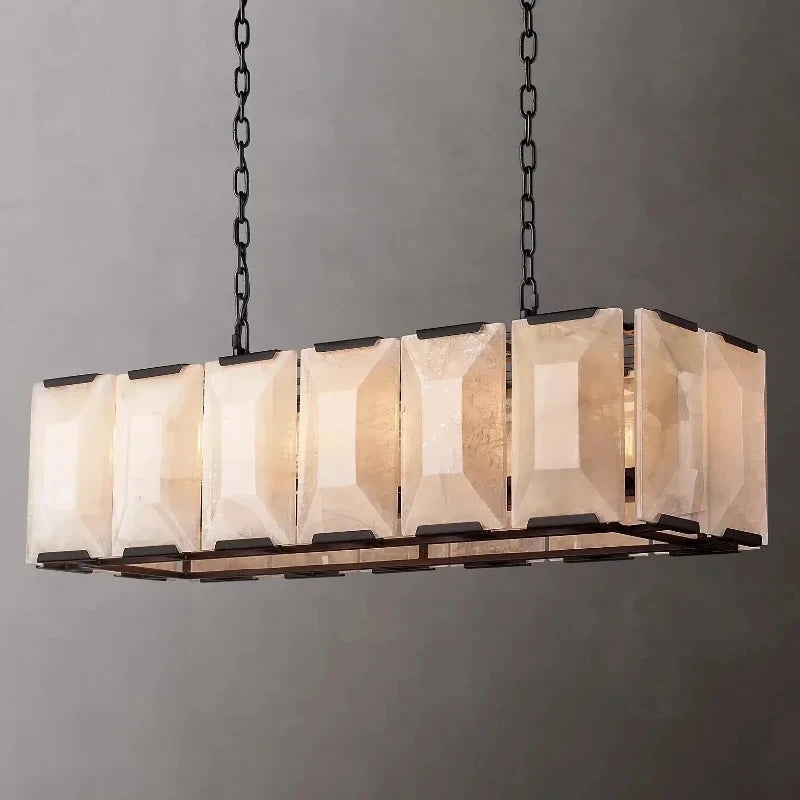
Crystal in the kitchen sounds impractical until you consider where it hangs: over the island or table, away from the range's grease plume, a crystal fixture collects ordinary household film rather than cooking residue. The Luxury Crystal Chandelier is built for exactly that spot, in multiple sizes so the fixture can match the island or table beneath it. The refraction does something no diffused fixture can — it puts moving sparkle at the center of the home's busiest room.
3. Modern Ocean Wave Chandelier — best sculptural design
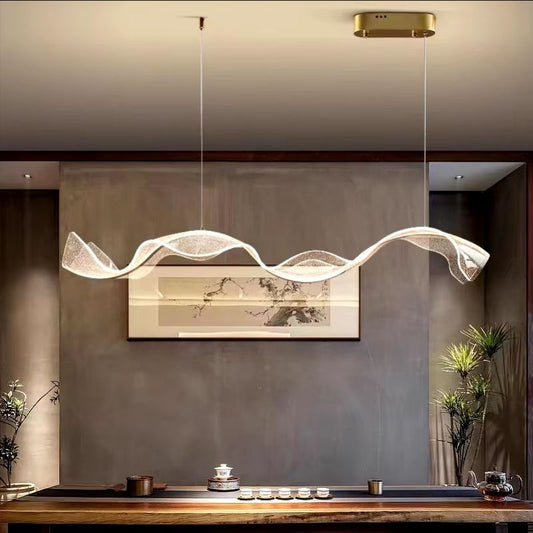
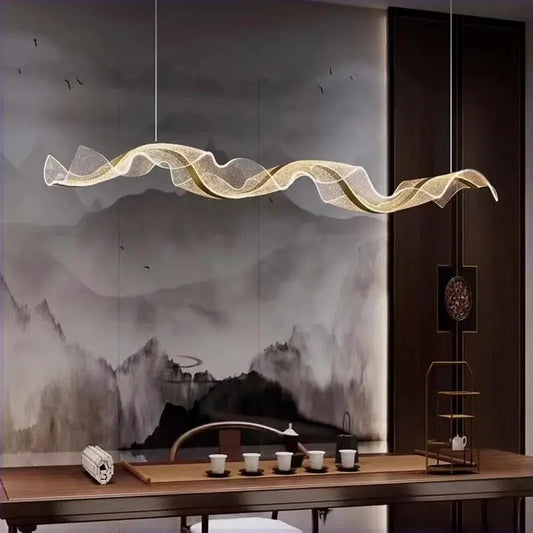
The Ocean Wave is what happens when a linear island fixture refuses to be a straight bar — an undulating gold-finish form that runs the island's length while acting as ceiling sculpture. Adjustable brightness and color temperature make it as practical as it is decorative, and it's the rare statement fixture that works in both coastal-relaxed and sharply contemporary kitchens.
4. Modern Moravian Star Chandelier — best for small kitchens and budgets
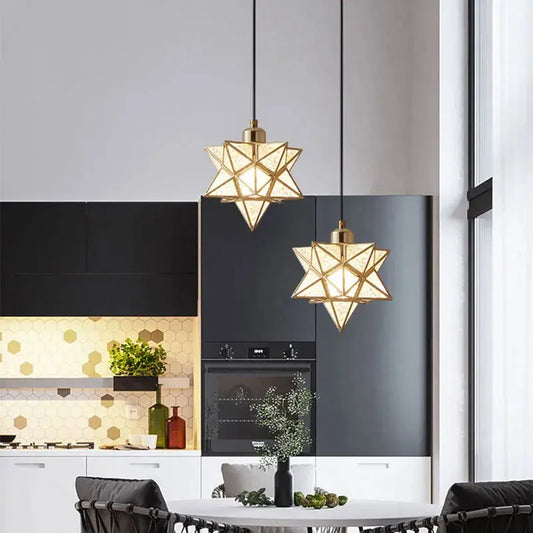
Small kitchens rarely get interesting lighting, which is exactly what makes the Moravian Star valuable: a compact geometric form with real character, scaled for breakfast nooks, galley kitchens, and the spot over a small table. The faceted star throws patterned light and shadow across walls and ceiling — a decorative effect usually reserved for much larger fixtures — while its modest size keeps it out of the way in tight quarters.
5. Lacy Contemporary Kitchen Chandelier — best artisan piece

The Lacy is built around a handcrafted wooden shade cut in an intricate, leaf-like pattern — and the pattern is the point. Lit, it casts a lacework of shadows across the ceiling that changes the whole room's texture; unlit, it reads as a warm sculptural object against cabinetry. Wood shades are also quietly practical in kitchens: no glass to spot, no crystal to detail-clean.
6. Minas Dimmable Tree Branch Chandelier — best rustic with smart control
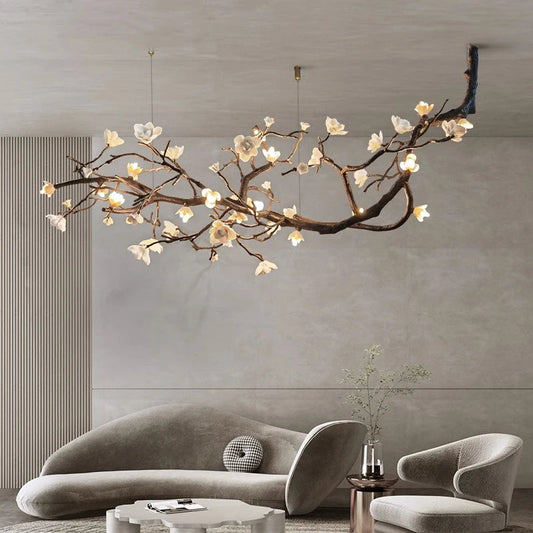
The Minas hides the most complete control set in this list — warm and cool white modes, dimming, remote, and smartphone app — inside a black branch silhouette that belongs in a farmhouse. That combination solves the rustic kitchen's usual dilemma: the look of a cabin fixture with the practical flexibility of contemporary lighting, from bright morning prep to a low evening glow. For the wider rustic field, the farmhouse chandelier guide maps the whole spectrum.
7. Modern Minimalist Bubble Glass Orb Chandelier — best for high ceilings and open plans

Glass orbs suspended at varying heights fill vertical space the way flat fixtures can't — which is why this multi-globe design belongs in kitchens with high ceilings or big open volumes where kitchen and living space share air. Each orb softens its bulb into a glowing point, so the cluster reads as a constellation rather than a bank of lights, and the airy structure keeps a large fixture from feeling heavy. More designs in this family live in the bubble chandelier collection.
8. Spark Ball Stainless Steel Pendant — best match for modern appliances
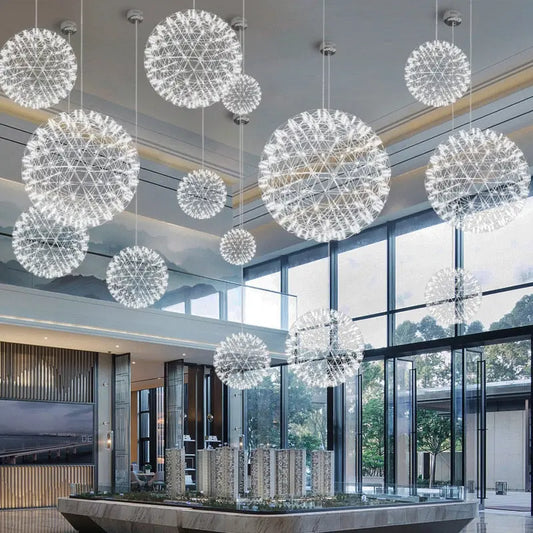
Kitchens full of stainless appliances have a coordination problem most fixtures ignore; the Spark Ball solves it by speaking the same material language. Its polished spherical form does double duty — spreading light evenly over prep areas while bouncing ambient light around the room, which visibly brightens smaller kitchens. Steel also happens to be the easiest fixture material to keep clean near cooking zones: a wipe, done.
9. Zen Round Black and Gold Crystal Chandelier — best glam contrast
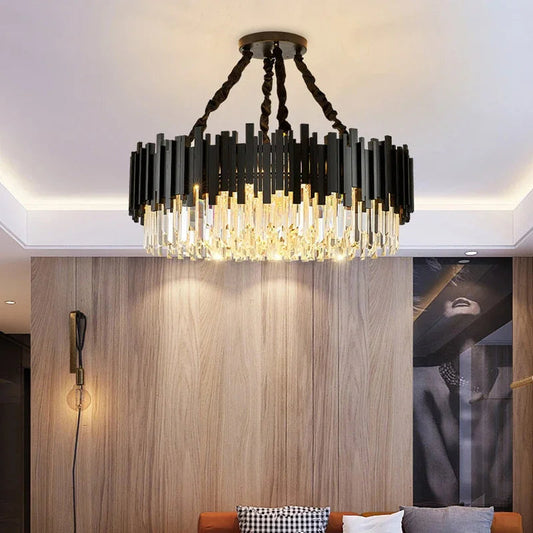
The Zen runs crystal against a black and gold frame — sparkle inside structure — which is the combination that bridges kitchens with black hardware and warm metal accents. The round form suits square islands and kitchen tables where a linear fixture would fight the proportions, and the contrast works equally over light or dark cabinetry. More in this palette lives in the black chandelier collection.
10. Glass Bubble Ceiling Light in Amber, Blue & White — best playful color

Most kitchen lighting is resolutely neutral, which is exactly the gap this fixture fills: floating glass bubbles in amber, blue, and white that bring actual color to the ceiling. In a single-tone or minimalist kitchen it works as the one deliberate note of play, and because the color lives in the glass rather than the light output, the illumination below stays clean and usable for cooking.
Types of Kitchen Chandeliers
The category is wider than most shoppers expect. A quick map of the types and where each earns its place:
| Type | Shape & Character | Best Kitchen Application |
|---|---|---|
| Linear | Lights along a horizontal bar or frame | Islands and long tables — the island-native shape |
| Round / drum | Circular frame, even spread | Square islands, round tables, kitchen centers |
| Crystal | Refractive sparkle, formal presence | Over island or table, away from the range |
| Globe / bubble | Glass orbs, often at varied heights | High ceilings, open plans, modern kitchens |
| Branch / organic | Nature-inspired spreading forms | Rustic, farmhouse, and modern-organic kitchens |
| Pendant-style / hybrid | Chandelier presence, pendant simplicity | Smaller islands and prep zones |
| Flush / semi-flush chandelier | Decorative form, minimal drop | Low-ceiling kitchens and walkway zones |
| Sculptural / statement | Wave, star, and artistic forms | Kitchens where the fixture is the design feature |
Two of these deserve their own guides: island-specific linear and rectangular fixtures are covered in depth in the kitchen island chandelier guide, and the flush/semi-flush decision for low ceilings is part of chandelier vs. ceiling light.
How to Choose: A Short Buying Guide
Four questions settle most kitchen chandelier decisions, in this order:
1. Where will it hang? Over an island, over a table, or in the open middle of the room — each location has its own sizing anchor and height rule (next section). This question comes first because it eliminates whole categories: a 6-foot linear fixture has no business over a round breakfast table, and a compact star has no business over a 10-foot island.
2. What does the kitchen look like? Match the fixture's material family to the room's: stainless and glass for contemporary kitchens with steel appliances; iron, wood, and branch forms for farmhouse; crystal and warm metals for glam and transitional; black frames for kitchens built on dark hardware. The fixture doesn't need to match the cabinet pulls — it needs to belong to the same story.
3. What work happens under it? A fixture over serious prep space needs real output (35–50 lumens per square foot of counter) and honest color rendering (CRI 90+). A fixture over a breakfast nook can prioritize atmosphere. Either way, warm white — 2700K to 3000K — is the kitchen's friend; cool blue-white light makes food and wood look wrong.
4. Who's cleaning it? Kitchens are the hardest room on fixtures. Steel and wood wipe clean; glass orbs need periodic washing; crystal wants a proper session once or twice a year. None of this should veto a fixture you love — the glass cleaning guide makes the maintenance routine — but it should inform how intricate a design you hang within range of cooking.
Placement: Island, Table, or Open Ceiling
The same chandelier follows three different rule sets depending on where it hangs — this is the detail that separates kitchens that feel professionally lit from ones that feel guessed.
Over the island: size to one-half to two-thirds of the island's length, keep the fixture's width at least 6 inches inside each counter edge, and hang the bottom 30–36 inches above the countertop. The full logic — including when two fixtures beat one, and the linear-versus-rectangular call — is in the island chandelier guide. If your island suits a row of pendants instead, the island pendant guide covers that path.
Over the kitchen table or eat-in nook: the table is the anchor — one-half to two-thirds of its width (or diameter for round tables), bottom 30–36 inches above the surface, centered on the table even if that's off the room's center. Breakfast nooks reward compact fixtures with character, since the chandelier hangs close to eye level and gets looked at more than any other fixture in the house.
In the open kitchen ceiling: anywhere people walk under the fixture, the 7-foot clearance rule applies, which at 8-foot ceilings points to flush or semi-flush chandelier designs. Size by the room: length plus width in feet, taken as inches of diameter. Full tables by room and ceiling height are in the chandelier size calculator.
Kitchen Chandelier Size at a Glance
| Situation | Fixture Size | Hanging Height |
|---|---|---|
| 6-ft island | 36–48 in linear | 30–36 in above counter |
| 8-ft island | 48–64 in linear | 30–36 in above counter |
| 42-in round table | 21–28 in diameter | 30–36 in above table |
| 60–72 in rectangular table | 30–48 in (linear or oval) | 30–36 in above table |
| Breakfast nook | 16–24 in compact fixture | 30–36 in above table |
| Open 12 × 14 ft kitchen | ~26 in by room formula | 7 ft minimum floor clearance |
| 8-ft ceiling, walkway zone | Flush / semi-flush design | Tight to ceiling |
Modern and Contemporary Kitchen Chandeliers
The modern end of the category is defined less by any single shape than by a shared discipline: clean geometry, integrated LED, and materials that read current — glass, brushed or blackened metal, warm brass and gold accents. Within that, the useful sub-families are linear bars (the island workhorse), globe and bubble clusters (vertical presence for open plans), sculptural forms like the wave (architecture from the fixture itself), and black-frame designs that tie into dark hardware.
Two practical markers separate contemporary fixtures designed for living from ones designed for photos: real dimming range rather than two brightness steps, and adjustable color temperature so the same fixture serves morning prep and evening ambience. Most of the modern picks above carry both; the broader field is in the modern chandelier collection.
Materials and Finishes: What Works Where
- Crystal brings maximum sparkle and formal presence; hang it over the island or table, away from the range, and give it a proper clean once or twice a year. The crystal collection spans compact to grand.
- Stainless steel and chrome coordinate with appliances, bounce light around the room, and are the easiest finishes to keep clean near cooking zones.
- Brass and gold warm up white and wood kitchens and pair naturally with crystal for the glam direction.
- Black metal anchors kitchens with black hardware and window frames; matte finishes hide fingerprints better than gloss.
- Wood and organic materials soften contemporary kitchens and define rustic ones — and shed the spot-and-streak maintenance of glass entirely.
- Glass — clear, frosted, or colored — diffuses bare bulbs into a glow; budget a periodic wash, and the glass cleaning routine keeps it quick.
Small Kitchen Chandeliers
Small kitchens have two constraints — floor area and, usually, ceiling height — and both have clean answers. For tight footprints, compact fixtures with real character (the Moravian Star pattern-throwers, small globe clusters, mini crystal designs) deliver presence without spread; size by the small end of the table or room formula and resist the urge to go smaller still, since a too-tiny fixture reads as an afterthought. For 8-foot ceilings, flush and semi-flush chandelier designs keep the decorative form while respecting walkway clearance — the flush mount chandelier collection exists for exactly this kitchen.
One small-kitchen advantage worth using: reflective finishes. A polished steel or mirrored-element fixture visibly brightens a compact room by bouncing its own light back into it.
Kitchen Chandelier Ideas Worth Stealing
- One statement, quiet support. Let the chandelier carry the design and back it with recessed or under-cabinet task light — the layered approach that makes both look intentional.
- Echo one finish. Tie the fixture to the kitchen with a single shared element — faucet metal, hardware color, or shade material — rather than matching everything.
- Color where nothing else has it. In a white or single-tone kitchen, a colored-glass fixture is the one playful note that doesn't require repainting anything.
- Pattern as decoration. Fixtures that throw shadow patterns — stars, laser-cut shades, branch forms — decorate the ceiling and walls for free every evening.
- Pair for long spaces. Two matched fixtures over a long island or table read more intentional than one stretched fixture or a crowd of pendants.
- Dimmer, always. The same kitchen hosts homework at 4 pm and drinks at 9; one inexpensive control makes the chandelier serve both.
Common Kitchen Chandelier Mistakes
- Sizing by the room when the island is the anchor. A fixture over an island follows the island's length, not the room formula — the most common source of "why does it look off."
- Hanging too high over the island or table. Above 36 inches, the fixture disconnects from the surface and the light stops doing task work.
- Ignoring the cleaning question. An intricate crystal fixture directly beside the range is a maintenance sentence; the same fixture over the table is an easy keep.
- Cool white bulbs. 4000K+ light makes food gray and wood lifeless; kitchens want 2700K–3000K with CRI 90+.
- Underpowering the prep zone. Atmosphere fixtures alone leave counters dim — target 35–50 lumens per square foot where knives are involved, layering with task lighting as needed.
- Forgetting walkway clearance. Anything under 7 feet in a path gets hit; over islands and tables, low hanging is not just allowed but correct.
Every style in this guide, in one place.
Kitchen Lighting All Chandeliers Modern Crystal Black Bubble Flush Mount Dining Room
Frequently Asked Questions
What is the best chandelier for a kitchen?
The best kitchen chandelier is the one matched to its hanging spot and the kitchen's style. Over an island, linear and rectangular fixtures sized to half or two-thirds of the island's length lead the field; over a kitchen table, round and compact designs sized to the table's width; in open or low-ceiling zones, flush and semi-flush chandelier forms. Style-wise, stainless and glass suit contemporary kitchens, crystal suits glam and open plans where the fixture is on display, and branch or iron designs suit farmhouse kitchens. Whatever the pick: warm white light, CRI 90+, and a dimmer.
Are chandeliers in kitchens a good idea?
Yes — arguably better than in any other room right now. Kitchens have become the home's main gathering space, open floor plans put the kitchen ceiling in every sightline, and islands and tables give a chandelier a natural anchor where it can hang low and actually work as task light. The practical cautions are simple: keep intricate fixtures away from the range's grease plume, keep 7 feet of clearance in walkways, and choose warm, high-CRI light so food looks the way it should.
What types of kitchen chandeliers are there?
Eight families cover the field: linear (lights along a bar — the island shape), round and drum (square islands and tables), crystal (sparkle over island or table), globe and bubble (glass orbs, often at varied heights, for tall or open spaces), branch and organic (rustic and modern-organic kitchens), pendant-chandelier hybrids (smaller islands), flush and semi-flush chandeliers (low ceilings and walkways), and sculptural statements like wave and star forms. Most kitchens end up choosing between two or three of these once the hanging location is settled.
What size chandelier for a kitchen?
Size by the anchor, not the room — unless the open room is the anchor. Over an island: one-half to two-thirds of the island's length (an 8-ft island suits 48–64 inches of fixture). Over a table: one-half to two-thirds of the table's width (a 42-inch round table suits 21–28 inches). In open kitchen space: room length plus width in feet, taken as inches of diameter (a 12 × 14 ft kitchen points to about 26 inches). The size calculator on the site turns these rules into per-room numbers, ceiling height included.
How high should a chandelier hang in a kitchen?
Two different rules depending on what's below. Over an island, table, or breakfast nook — surfaces nobody walks through — hang the bottom 30–36 inches above the surface; that's low enough for real task light and a connected look. Anywhere people walk beneath the fixture, keep at least 7 feet from floor to the fixture's lowest point, which at standard 8-foot ceilings usually means a flush or semi-flush design. Taller ceilings relax the walkway constraint but the island and table rule stays the same.
What are good modern kitchen chandelier ideas?
The reliable modern moves: a linear or sculptural fixture running the island's length as the room's one statement, backed by quiet recessed task light; glass globe clusters at varied heights for kitchens with tall or open ceilings; black-frame fixtures tying into black hardware and window frames; a stainless or chrome piece coordinating with appliances in compact kitchens; and warm brass or gold with crystal for the glam direction. Across all of them, integrated LED with genuine dimming range and adjustable color temperature is what makes a modern fixture live well, not just photograph well.
Can you put a crystal chandelier in a kitchen?
Yes, with one placement rule: over the island or the table, not beside the range. Away from the direct cooking plume, a crystal fixture collects ordinary household dust film rather than grease, and a proper cleaning once or twice a year keeps it brilliant — a manageable afternoon, especially for designs with accessible elements rather than dense strands. The payoff is unmatched: refractive sparkle in the room where the household actually lives. Using the range hood consistently is the single habit that most extends the time between cleanings.
What chandelier works for a small kitchen?
Compact fixtures with character beat shrunken versions of grand ones. Pattern-throwing designs like a Moravian star, small globe clusters, and mini crystal or glass fixtures deliver presence at breakfast-nook scale; polished steel and reflective finishes visibly brighten tight rooms by bouncing light back into them. If the ceiling is 8 feet, flush and semi-flush chandelier designs keep the decorative form while preserving walkway clearance. Size by the small end of the formulas rather than below them — a slightly-too-small fixture reads as an afterthought faster than a slightly-generous one reads as bold.
Chandelier or pendants over the kitchen island?
Both work; the island's length usually decides. Under about 6 feet, two or three pendants space naturally and keep costs modest. Past 6 feet, a single linear chandelier starts beating the pendant row — continuous light with no gaps, one clean frame instead of a crowd, and more presence in open plans where the island is visible from the living area. The island chandelier guide covers the chandelier path in depth, and the island pendant guide covers spacing and picks if pendants suit your kitchen better.
What light color is best for kitchen chandeliers?
Warm white, 2700K–3000K, with a color rendering index of 90 or above. Warm light flatters food, wood, and people — the three things kitchens exist to serve — while high CRI keeps produce and finishes true to color, which matters at the prep counter more than anywhere else in the house. Cool white (4000K and up) turns kitchens clinical and food gray. If a fixture offers adjustable temperature, the useful range is warm-to-neutral for prep brightness, warm for everything after; pair it with an LED-compatible dimmer and one fixture covers the kitchen's whole day.
Wrapping Up
A kitchen chandelier decision comes down to anchor, style, and upkeep: size to the island or table it hangs over (or the room, if it hangs in the open), match the material family to the kitchen's own, and be honest about the cleaning you'll do near cooking zones. Get those right and any of the ten picks above — from the star that fits a nook to the branch canopy that spans an island — will carry the room for years.
Start with the kitchen lighting collection, confirm dimensions with the size calculator, and if the island is your anchor, the island chandelier guide takes the next step.


