

Proper floor lamp placement transforms a living room from generically lit to thoughtfully designed — eliminating dark corners that drag down the ambient atmosphere, providing focused task lighting for reading and activities, adding mid-height illumination that complements ceiling fixtures and table lamps, and contributing the layered lighting depth that defines professional interior design. Floor lamps occupy a unique position in the living room lighting hierarchy: tall enough to provide substantial light output and visual presence, mobile enough to reposition as furniture arrangements evolve, and flexible enough to serve ambient (in corners), task (beside reading chairs), or accent (highlighting features) roles depending on placement. The right placement depends on your floor lamp's intended function, your living room's layout type, the existing lighting layers in the space, and the specific furniture arrangement you're working with. This complete 2026 guide answers every floor lamp placement question — assessing your living room before placement, the seven best floor lamp placement strategies (corner, behind sofa, beside armchair, behind chair in corner reading nook, alongside larger furniture, near windows, as focal point), floor lamp placement by living room layout type, the six common floor lamp types and their ideal placements, height and scale considerations, spacing from furniture, pairing floor lamps for symmetry, matching floor lamps to interior styles, combining floor lamps with other lighting layers, the 2026 trends shaping modern living room floor lamp placement, and the common mistakes that compromise even quality floor lamps.
Assessing Your Living Room Before Placement
Before deciding where to position your floor lamp, evaluate four foundational factors that shape every successful placement decision:
- Identify dark zones that need illumination. Walk through your living room during evening hours with existing lighting on. Note corners, areas behind furniture, and spaces away from ceiling fixtures that feel underlit. These are your floor lamp placement candidates.
- Map your existing lighting layers. What ambient lighting exists from chandeliers or ceiling fixtures? Where are existing task lights (table lamps, reading lamps)? Floor lamps work best as complementary layers, filling gaps in the existing lighting design rather than competing with it.
- Define the floor lamp's intended function. Task light for reading? Ambient corner fill? Accent for sculpture or artwork? Decorative focal point? The intended function determines optimal placement, lamp type selection, and beam direction.
- Consider furniture arrangement and traffic patterns. Floor lamps should enhance your seating configuration, not create obstacles. Verify the lamp won't block walkways, conflict with TV viewing sightlines, or interfere with how you actually use the room.
The Seven Best Floor Lamp Placement Strategies
-
Behind a Chair in the Corner (Reading Nook)
The classic reading nook setup — floor lamp positioned behind or beside a chair tucked into a corner, providing focused task lighting over the reader's shoulder. Position the lamp 20-24 inches from the chair's center; the lampshade bottom should sit at eye level when you're seated. Light comes from behind and over your shoulder, illuminating books or work without glare. The most functional and beloved floor lamp placement.
-
Empty Corner (Ambient Fill)
Corners are often underutilized space that benefit dramatically from a well-placed floor lamp. Torchiere lamps and uplight designs work especially well — light bounces off ceiling and adjacent walls, creating soft diffused ambient illumination that fills the entire room. Particularly effective in north-facing rooms or spaces with minimal ceiling lighting.
-
Behind a Sofa or Sectional
Position a floor lamp behind a sofa or sectional to provide fill light without the fixture becoming a focal point. Tall lamps (60+ inches) work especially well here, as they extend above the sofa back. Arc floor lamps with the bulb suspended over the seating area provide reading-quality light to people sitting on the sofa.
-
Beside an Armchair
Placing a floor lamp beside (rather than behind) an armchair provides convenient task lighting accessible from the seated position. Adjustable-arm and articulating lamps work best here — they let you direct the beam exactly where needed. The switch should be reachable without standing up.
-
Alongside Larger Furniture
Position floor lamps alongside bookshelves, media units, console tables, or other substantial furniture pieces to add visual balance and create complementary vertical lines. The lamp doesn't compete with the furniture but rather enhances it through layered visual interest.
-
Near Windows
Floor lamps positioned near windows create a continuity between natural daylight and artificial evening illumination. During the day, the lamp recedes visually; at night, it becomes the primary light source in that zone, maintaining the visual relationship the natural light established.
-
As a Focal Point Statement Piece
Sculptural floor lamps with distinctive designs serve as focal points in their own right, anchoring an open area or commanding attention. Place statement floor lamps where they can be appreciated from multiple sight lines — beside a fireplace, anchoring an empty wall section, or centering an open conversation area.
Behind Chair in Corner — The Reading Nook Setup
The Most Functional Floor Lamp Placement
The reading nook setup — chair tucked into a corner with a floor lamp positioned behind or beside it — combines focused task lighting, comfortable seclusion from main living room activity, and the cozy intimate atmosphere that transforms a space into a personal retreat. This is the floor lamp placement that earns its keep through daily use.
Seven principles for the perfect reading nook floor lamp setup:
- Position 20-24 inches from the chair's center. Close enough for the light to fall on your reading material; far enough that the lamp doesn't visually crowd the chair or create heat near you. This distance also keeps the switch reachable from the seated position.
- Lampshade bottom at eye level when seated. Typically 40-50 inches from the floor. This positioning prevents the bare bulb from visible to seated readers (no glare) while ensuring light falls below shade onto reading material.
- Light comes from behind and over your shoulder. Position the lamp so the beam direction angles forward over your shoulder onto the book or work surface. Avoid front-facing positions where light shines into your face.
- Choose adjustable-arm or articulating designs. Gooseneck, swing-arm, and articulating floor lamps allow fine-tuning the beam direction. Different reading positions (book on lap, book on side table, laptop) benefit from different beam angles.
- Use 60W-equivalent LED with 800+ lumens. Reading requires brighter light than ambient living room baseline. Specify LED bulb producing 800-1100 lumens (60-75W incandescent equivalent) for comfortable extended reading.
- Choose 2700K-3000K warm white color temperature. Warm white feels cozy and intimate while still providing adequate brightness for reading. Avoid cool 4000K+ which feels institutional in living room reading nook context.
- Add a side table within reach. Complete the reading nook with a side table for coffee mug, glasses, current book, and reading light's secondary controls. The table and lamp work together as a functional unit.
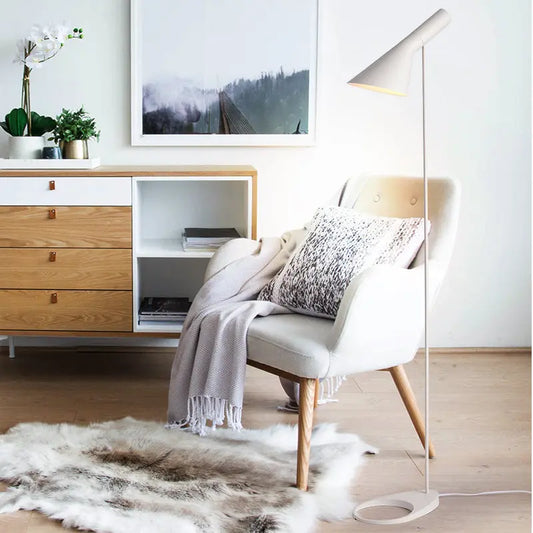
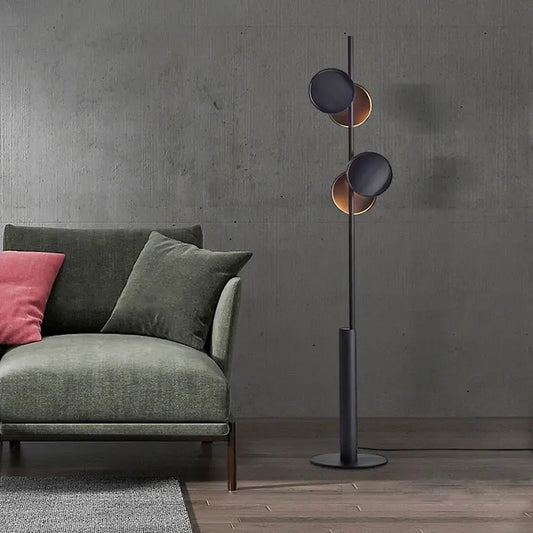
The Beth Corner Lights are specifically designed for the corner reading nook application, providing soft diffused glow that spreads throughout the room. The Yasa Vintage Arc Floor Lamp works beautifully positioned behind a chair, with the arc extending the bulb directly over the reading position.
Floor Lamp Placement by Living Room Layout
Open-Concept Living Room
Open-concept floor plans benefit from multiple floor lamps zoning different functional areas — one lamp anchoring the conversation seating area, another defining the reading nook, a third near the media zone. The lamps help visually define spaces within the larger open area.
Traditional Formal Living Room
Traditional formal living rooms work well with paired floor lamps creating symmetrical balance — matching lamps flanking a fireplace, sofa, or focal artwork. The symmetry reinforces the formal aesthetic. Choose classic styles (column lamps, traditional torchieres).
Small Living Room (Under 200 sq ft)
Small living rooms benefit from one or two strategically placed floor lamps that don't visually crowd the space. Choose slim-profile designs; position in a single corner and beside one seating piece. Tall slim arc lamps extend usable light without taking floor space.
Large Living Room (300+ sq ft)
Large living rooms need multiple floor lamps to distribute light evenly — aim for one lamp per 100 square feet. Distribute across the room: corner ambient fill, sofa-side task, armchair task, focal accent. Avoid clustering all floor lamps in one zone.
L-Shaped Living Room
L-shaped layouts often have one dark zone in the secondary leg of the L. Position a floor lamp there to bring functional light to the under-used area. Plus one lamp in the main seating zone for task lighting. The combination prevents the L's secondary leg from feeling disconnected.
Narrow / Long Living Room
Long narrow living rooms benefit from floor lamps at both ends, creating visual stops that prevent the room from reading as a tunnel. Center-room placement rarely works in narrow geometry — the lamp becomes an obstacle rather than enhancement.
Common Floor Lamp Types and Their Ideal Placements
Standard Floor Lamp
Best placement: Beside chairs, alongside furniture
Traditional vertical floor lamp with shade. The most versatile type — works in most placement scenarios. Provides ambient and task light depending on shade design (drum shades diffuse; cone shades focus down).
Arc Floor Lamp
Best placement: Behind sofa, over reading position
Curved arm extends the bulb away from the base, suspending the light source over seating areas. Excellent for behind-sofa positions where the lamp base sits behind furniture while the bulb hangs over the conversation zone.
Tripod Floor Lamp
Best placement: Beside seating, alongside furniture
Three-leg base with vertical stem and shade. Modern mid-century aesthetic. Stable base works well on rugs. Best beside individual seating pieces; less effective in corner placements where the tripod legs spread visibly.
Torchiere
Best placement: Corners (uplight ambient)
Light directed upward toward ceiling, creating bounced ambient illumination. Ideal for corner placements where indirect light fills the room. Best for rooms with white or light-colored ceilings that reflect well.
Articulating / Adjustable
Best placement: Beside reading chair, desk-side
Multi-joint arm allows precise beam direction control. Best for dedicated reading positions and task-heavy applications. Modern designs include LED with multiple color temperatures and dimming via remote.
Floor Reading Lamp
Best placement: Behind chair shoulder position
Specifically engineered for reading task lighting. Compact shade focuses light onto book/work surface. Shorter than standard floor lamps so shade reaches eye level for seated readers (typically 40-50 inches).

The Alisya Articulating Floor Lamp exemplifies the articulating type — multi-joint arm allowing precise beam direction adjustment for reading or task applications. Browse our complete floor lamps collection for all type options.
Floor Lamp Heights and Scale
| Placement Context | Recommended Lamp Height | Shade Bottom Position |
|---|---|---|
| Beside reading chair (task) | 55-62 inches | 40-50 inches (eye level seated) |
| Behind sofa or sectional | 60-65 inches | 50-55 inches |
| Corner ambient (torchiere) | 65-72 inches | N/A (light directed upward) |
| Arc lamp over seating | 70-90 inches arc | 50-60 inches above seating |
| Beside console or media unit | 58-65 inches | Coordinate with furniture height |
| Focal point standalone | 65-75 inches (statement) | Depends on design intent |
Spacing Your Floor Lamp from Furniture
- 20-24 inches from reading chair center. Close enough for effective task lighting; far enough that the lamp doesn't crowd the seating space or create heat near the reader.
- 6-12 inches behind sofa back. Tall floor lamps positioned behind sofas should sit just behind the furniture, allowing the lamp to peek over the back without visually competing with the sofa.
- 12-18 inches from walls. Floor lamps in corners need clearance from walls to allow shade rotation and prevent the base from being visibly cramped against the wall.
- 36+ inches from walkways. Floor lamps shouldn't impede traffic flow. Position with clear walking paths around the lamp; verify clearance during normal room use.
- Beside (not directly behind) TV. Position floor lamps offset from the TV's center, not directly behind it. Directly behind creates backlight glare on the screen; offset placement adds ambient warmth without TV interference.
- Coordinate with other floor lamps. Multiple floor lamps in one room need spacing that prevents visual clustering. Typically 6+ feet between floor lamps maintains balanced distribution.
Pairing Floor Lamps for Symmetry
Paired floor lamps create symmetrical visual balance that reinforces formal aesthetics and anchoring focal points. Four pairing strategies:
- Flanking a fireplace. Matching floor lamps positioned on either side of the fireplace at equal distance create perfect symmetry. The lamps frame the fireplace as the visual focal point while providing balanced ambient illumination.
- Flanking a substantial sofa. Tall lamps positioned at both ends of a substantial sofa (8+ ft) provide symmetric task lighting accessible to seated guests at either end. Particularly effective in formal living rooms.
- Flanking artwork or focal pieces. Matching lamps at equal distance from a featured artwork, mirror, or focal point create the visual frame that emphasizes the centered piece.
- End-table replacements. Two matching floor lamps used in place of traditional table lamps create the symmetry of paired table lamps while taking less surface space. Particularly effective in small living rooms.

Matching Floor Lamps to Living Room Style
Modern & Contemporary
Sleek lines, geometric forms, matte finishes. Articulating arms, slim arc designs, sculptural minimalist shapes.
Traditional
Classic shapes, ornate details, brass and wood. Column lamps, traditional torchieres, fabric shades.
Industrial
Raw materials, exposed bulbs, metal finishes. Pipe-style designs, factory-inspired shades, oversized scale.
Mid-Century Modern
Tripod bases, sputnik forms, walnut wood, brass accents. Sculptural shapes echoing 1950s-60s design.
Eclectic
Mix-and-match unique pieces. Bold statement designs, unconventional materials, artistic compositions.
Scandinavian / Japandi
Clean lines, wood and rattan, soft warm light. Paper shades, minimalist profiles, natural materials.
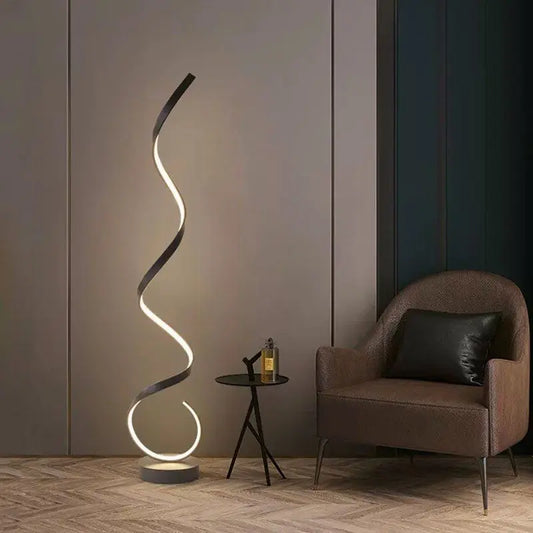
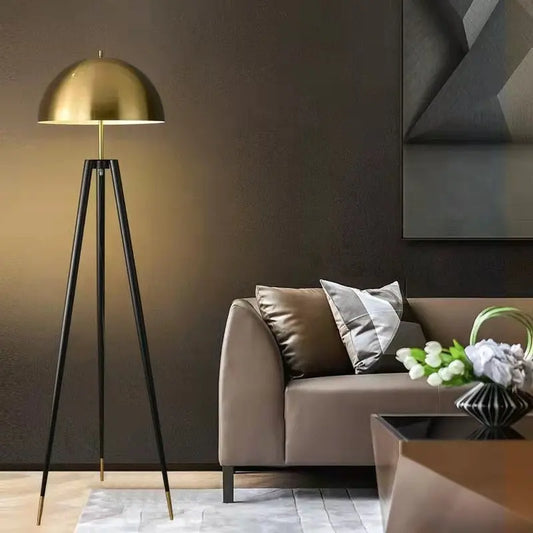
The Marya LED Wavy Floor Lamp brings modern sculptural form with adjustable color temperature. The Medi Statement Floor Lamp serves as focal-point design for living rooms wanting a distinctive style anchor.
Combining Floor Lamps with Other Lighting Layers
Floor lamps work best as one layer in a multi-source lighting design rather than as the sole light source. The 2026 best practice integrates floor lamps with three other layers:
- Ambient layer (ceiling fixtures). Chandelier, flush mount, or recessed lighting provides primary room-wide ambient illumination. Floor lamps add supplementary ambient or transition to task as needed.
- Task layer (table lamps, desk lamps). Table lamps beside seating, desk lamps in work zones. Floor lamps often replace or supplement table lamps in spaces where table surface area is limited.
- Accent layer (wall sconces, picture lights). Wall-mounted accent lighting on artwork, architectural details, or focal walls. Floor lamps positioned beside or beneath accent zones reinforce the lighting hierarchy.
- Dimmer control across all layers. Each lighting layer benefits from independent dimmer control. Floor lamps with rotary or smart dimmers integrate into the broader living room lighting management.
- Coordinate color temperatures. Maintain 2700K-3000K warm white across all living room layers for consistent comfortable atmosphere. Mixing 2700K floor lamps with 4000K ceiling fixtures creates jarring visual transitions.
- Approximately one floor lamp per 100 sq ft. Large living rooms benefit from multiple floor lamps distributed evenly rather than clustered. Smaller rooms work with one or two carefully placed lamps.
For complete layered lighting methodology, see our layered lighting guide. For comprehensive living room placement methodology covering all fixture types, see our complete living room placement guide. Explore customization options for floor lamps requiring specific dimensions or finishes.
Featured Floor Lamp Recommendations

Beth Corner Lights
Specifically designed for corner placement. Soft diffused glow ideal for ambient corner fill.
View product →
Yasa Vintage Arc Floor Lamp
Classic arc design suspending the bulb over seating areas. Ideal for behind-sofa placements.
View product →
Alisya Articulating Floor Lamp
Multi-joint articulating arm allowing precise beam direction. Ideal beside reading chairs.
View product →
Marya LED Wavy Floor Lamp
Modern sculptural form with adjustable color temperature. Works as focal point or beside seating.
View product →
Medi Statement Floor Lamp
Bold sculptural statement piece serving as focal point design anchor for living rooms.
View product →2026 Floor Lamp Trends
Adjustable-arm and articulating floor lamps replacing static designs. Functional flexibility for changing reading positions and activities.
Adjustable 2700K–6500K from same fixture via remote or app. Warm evening reading and cool morning brightness from single lamp.
LED engineered into lamp design rather than screw-in bulbs. Built-in dimmers and color temperature controls; 25,000+ hour lifespan.
Bold sculptural floor lamps as focal design anchors. Less generic styling; more distinctive artistic compositions.
Matte black replacing chrome and brushed nickel as dominant finish. Coordinates with mixed-metal 2026 home trends.
WiFi and Matter-protocol lamps with voice control via Alexa, Google Home, Apple HomeKit. App scheduling and scene presets.
Rattan, paper, linen, and natural wood shades. Japandi and Scandinavian-influenced organic warmth in floor lamp design.
Battery-powered portable floor lamps with USB-C charging. Place anywhere without outlet constraint; 8-50+ hour battery life.
Common Floor Lamp Placement Mistakes
- Placing the lamp where the bulb shines directly at seats. Bare bulbs visible to seated guests create glare and discomfort. Position lamps so shade bottom is at or above seated eye level (40-50 inches from floor).
- Positioning directly behind TV. Backlight directly behind the TV creates screen glare and reduces image visibility. Position floor lamps offset from TV center, not directly behind.
- Floor lamp too far from chair to be functional. Reading lamps placed beyond 24-30 inches from the chair don't provide adequate task illumination. Position close enough that switch is reachable from seated position.
- Wrong height for the placement. Floor lamps that are too short create down-lighting from below eye level (creates harsh shadows on faces); too tall extends above sightlines and loses visual relationship with furniture. Match height to placement context.
- Single floor lamp trying to light entire large room. One floor lamp can't adequately illuminate 300+ sq ft. Distribute multiple lamps; aim for one floor lamp per 100 sq ft in larger rooms.
- Mismatched paired lamps. "Similar" lamps from different collections look like mistakes rather than intentional pairing. Either commit to identical matching or deliberately contrasting designs.
- Skipping the dimmer. Non-dimmable floor lamps lock the space at single brightness. Modern smart bulbs and integrated LED dimming offer easy upgrade path even for older lamps.
- Blocking walkways with lamp base. Lamps positioned in traffic paths get bumped into and create obstacles. Maintain 36+ inches clear walking space around floor lamp bases.
- Wrong color temperature for living room. 4000K+ cool white feels institutional and uncomfortable in living rooms. Use 2700K-3000K warm white for living room floor lamps (3000K-3500K for task-heavy applications only).
- Forgetting the side table. Reading nook floor lamps work best paired with a side table for coffee mug, glasses, current book. The lamp + table combination creates a complete functional unit; the lamp alone is incomplete.
Browse Seus Lighting's collections for complete living room lighting solutions — floor lamps for corner ambient, reading task, and statement focal applications; table lamps for side-table layered lighting; ceiling lights for primary ambient overhead; and our custom service for floor lamps requiring specific dimensions or finishes for your unique living room.
Floor Lamps Table Lamps All Lamps Ceiling Lights Custom Service
Frequently Asked Questions
Where should you put a floor lamp in the living room?
The seven best floor lamp placements in a living room are: (1) Behind a chair in the corner — the classic reading nook setup; lamp positioned 20-24 inches from chair center, lampshade bottom at eye level when seated. (2) In an empty corner — torchiere or uplight provides ambient illumination by bouncing light off ceiling and walls. (3) Behind a sofa or sectional — provides fill light without becoming a focal point; tall arc lamps work especially well. (4) Beside an armchair for reading; adjustable-arm and articulating lamps offer best functionality. (5) Alongside larger furniture like bookshelves, console tables, or media units for visual balance. (6) Near windows to maintain artificial illumination matching natural light patterns. (7) As a focal point with sculptural statement floor lamps anchoring open areas. Choose placement based on your floor lamp's intended function (task, ambient, accent), your living room layout, and existing lighting layers.
Where should I place a lamp behind a chair in the corner?
Place a floor lamp behind a chair in the corner with these specific positioning principles: (1) 20-24 inches from the chair's center — close enough for effective task lighting; far enough that the lamp doesn't visually crowd the seating space. (2) Lampshade bottom at eye level when seated — typically 40-50 inches from the floor. This prevents the bare bulb from being visible to seated readers (no glare) while ensuring light falls below the shade onto reading material. (3) Light direction comes from behind and over your shoulder — angles forward onto reading material rather than into your face. (4) Switch reachable from seated position — typical floor lamp switches at 50-60 inches from floor. (5) Adjustable arm or articulating design preferred — allows fine-tuning beam direction for different reading positions. (6) 60W-equivalent LED bulb producing 800-1100 lumens for comfortable extended reading. (7) 2700K-3000K warm white color temperature for cozy reading atmosphere. The setup creates the classic "reading nook" that transforms a corner into a personal retreat.
How far should a floor lamp be from a chair?
Position a floor lamp 20-24 inches from the chair's center for task lighting (reading nook setup). This distance: (1) Provides effective task illumination on the seated person's reading material. (2) Keeps the switch reachable from the seated position. (3) Prevents the lamp from visually crowding the chair. (4) Allows the lampshade to direct light over your shoulder onto the book or work surface. (5) Maintains comfortable distance from any heat the bulb generates. Adjustments based on chair type: Large armchairs accommodate 22-26 inch distances; small accent chairs work with 18-22 inches. Adjustment based on lamp type: Articulating lamps with adjustable arms can sit further (24-30 inches) since the beam can be directed; static lamps need closer placement (20-24 inches). Common mistake: positioning the lamp beyond 30 inches from the chair makes it functionally useless as task lighting — the light falls behind or beside you rather than onto your work surface.
How tall should a floor lamp be next to a chair?
A floor lamp positioned beside a chair should be 55-62 inches tall total, with the lampshade bottom at 40-50 inches from the floor (eye level when seated). This positioning: (1) Prevents the bare bulb from being visible to seated readers (no glare). (2) Ensures light direction angles down onto reading material rather than into your face. (3) Maintains proportional visual relationship with the chair and surrounding furniture. Adjustments by application: Reading task lamps — 55-62 inches with shade at 40-50 inches. Behind-sofa floor lamps — 60-65 inches taller to extend above the sofa back. Corner torchiere ambient lamps — 65-72 inches with light directed upward. Arc lamps over seating — 70-90 inches arc with bulb suspended at 50-60 inches above the seating area. The "shade at eye level when seated" rule is the most reliable guide for task-oriented floor lamps beside chairs.
Can a floor lamp go in any corner?
Yes, floor lamps work effectively in nearly any corner — corners are often underutilized space that benefit from a well-placed floor lamp. Five corner placement principles: (1) Best lamp types for corners: torchiere uplights (bounce light off ceiling for ambient fill), tall slim floor lamps (vertical accent), arc lamps (extending light into the room). (2) Distance from walls: 12-18 inches from each wall allows shade rotation and prevents visual crowding. (3) Corner with chair: position lamp 20-24 inches from chair center for reading nook setup. (4) Empty corner: torchiere or substantial floor lamp anchors the corner as deliberate visual zone rather than dead space. (5) Match lamp scale to corner size: large corners accept substantial lamps; small corners benefit from slim profiles that don't dominate. Corner placement avoidance: corners where the lamp would block windows blocking natural light during day; corners with cold drafts that affect lamp electronics; corners where lamp would create awkward sightline obstacles. Generally, dark corners are exactly where floor lamps belong.
Should you put a floor lamp behind a sofa?
Yes, placing a floor lamp behind a sofa or sectional is one of the seven best floor lamp placement strategies. The behind-sofa placement: (1) Provides fill light without the lamp becoming a focal point — the sofa visually conceals most of the lamp body. (2) Works especially well with tall lamps (60+ inches) that extend above the sofa back. (3) Arc floor lamps shine in this placement — the bulb suspends over the seating area providing reading-quality light to people sitting on the sofa. (4) Reduces visual clutter in front of the sofa, keeping the conversation area clean. (5) Position 6-12 inches behind the sofa back — close enough that the lamp appears integrated rather than disconnected. Best lamp types behind sofa: arc lamps (extending bulb over seating); tall slim floor lamps (60-65"); torchiere uplights (bouncing light over the conversation area). Avoid behind-sofa placement when: the sofa sits against a window (lamp blocks daylight) or the sofa backs onto a high-traffic walkway (lamp interferes with circulation).
What color temperature is best for a living room floor lamp?
The best color temperature for a living room floor lamp is 2700K-3000K warm white. This range: (1) Feels cozy and intimate — appropriate for relaxation areas where comfort matters more than task brightness. (2) Complements natural evening atmosphere — matches the warm tones of sunset and candlelight. (3) Standard for residential living rooms across modern, traditional, and contemporary interior styles. (4) Pairs well with other living room lighting — chandeliers, ceiling fixtures, and table lamps typically also at 2700K-3000K. Specific recommendations: 2700K (warmest) — formal living rooms, traditional interiors, intimate evening atmosphere. 3000K (soft white) — contemporary living rooms, balanced warm-but-bright; the most popular 2026 choice. 3500K (neutral) — only for living rooms with strong task focus (home office hybrid); rarely best choice. Avoid 4000K+ (cool) — creates harsh institutional atmosphere inappropriate for residential living rooms. Color-tunable LED (2700K-6500K adjustable) — the 2026 standard offering single lamp flexibility across all activities and times of day.
How many floor lamps should a living room have?
The general rule: one floor lamp per 100 square feet of living room space. Specific recommendations: (1) Small living room (under 150 sq ft): one floor lamp, typically in a corner or beside seating. (2) Medium living room (150-250 sq ft): 1-2 floor lamps — one for ambient corner fill, one for task beside seating. (3) Large living room (250-400 sq ft): 2-3 floor lamps distributed across the space — corner ambient, sofa-side task, additional accent. (4) Extra large or open-concept (400+ sq ft): 3-5 floor lamps zoning different functional areas. Key principles: Distribute floor lamps evenly rather than clustering all in one area. Each floor lamp should serve a defined function (ambient, task, or accent). Consider total lighting plan — if ceiling fixtures and table lamps provide adequate baseline, fewer floor lamps are needed. Conversely, rooms with minimal ceiling lighting benefit from more floor lamps. Paired lamps count as design intent — two matching lamps flanking a fireplace count as deliberate symmetry rather than overlight. Aim for visual balance and functional adequacy over rigid numbers.
What's the difference between a floor lamp and a torchiere?
A torchiere is a specific type of floor lamp with light directed upward toward the ceiling rather than downward through a shade: Standard floor lamp — light typically directed downward or diffused through a shade; provides task or accent lighting where the beam falls. Height range: 55-65 inches. Torchiere floor lamp — light directed upward toward ceiling; creates bounced ambient illumination filling the entire room. Height range: 65-72 inches (taller to ensure adequate ceiling clearance for light bounce). Best use cases for torchiere: rooms with white or light-colored ceilings that reflect well; corner placement where the lamp anchors the corner while filling the room with ambient light; rooms with minimal ceiling fixtures needing supplemental ambient. Best use cases for standard floor lamp: task-oriented placement beside chairs or sofas; focal-point statement design; spaces where directed beam matters more than ambient bounce. Many modern lamps combine both — uplight torchiere base plus side-mounted reading light providing dual-purpose ambient and task functionality from single fixture.
Can a floor lamp be next to a TV?
Yes, a floor lamp can be next to a TV — and in fact, balanced ambient light beside a TV reduces eye fatigue during viewing by softening the contrast between bright screen and dark surrounding room. Four positioning principles: (1) Place beside, not directly behind — directly behind creates screen backlight glare; beside offsets the lamp from the TV's center. (2) Use dimmable bulbs at low intensity during viewing — bright lamps during TV watching defeat the purpose; dim soft ambient is the goal. (3) Choose warm color temperature (2700K-3000K) — cool lights compete visually with TV screen; warm light recedes into ambient background. (4) Avoid harsh directional beam aimed toward viewer — soft diffused or upward-facing light works best; harsh downlight creates uncomfortable contrast. Best lamp types beside TV: arc lamps with the bulb above the TV level; tall slim floor lamps with shaded heads; torchiere uplights bouncing light off ceiling above TV zone. The "TV bias light" effect — soft balanced ambient light around the TV — is a recognized strategy for reducing eye strain during extended viewing sessions.
Should floor lamps match in a living room?
Floor lamps in a living room should match deliberately or contrast deliberately — accidental mismatches read as mistakes. Three approaches: (1) Identical matching pairs — two identical lamps flanking a fireplace, sofa, or focal artwork create perfect symmetrical balance reinforcing formal aesthetics. The lamps frame the focal point as visual anchor. (2) Coordinated family — multiple lamps from same collection or with shared design language (matte black finish + warm bulb temperature + similar scale) but different specific designs. Creates intentional cohesion without rigid matching. (3) Deliberate contrast — one substantial statement lamp + one minimalist supplementary lamp, intentionally different scales and styles. Creates visual interest through contrast. Avoid: two "similar" lamps from different collections with slight differences in finish, shade color, or proportion — reads as mismatch rather than design choice. Single floor lamp — no matching consideration; the lamp serves its specific function independently. Three or more floor lamps — apply coordinated family approach rather than identical matching (which becomes excessive).
What are the 2026 trends in floor lamp placement and design?
Eight dominant 2026 floor lamp trends: (1) Articulating designs dominate — adjustable-arm lamps replacing static designs for functional flexibility. (2) Color-tunable LED — adjustable 2700K–6500K from same fixture via remote or app. (3) Integrated LED with built-in dimming — LED engineered into lamp design with built-in dimmers and color temperature controls; 25,000+ hour lifespans. (4) Sculptural statement pieces — bold sculptural floor lamps as focal design anchors. (5) Matte black finishes replacing chrome and brushed nickel as dominant finish; coordinates with mixed-metal trends. (6) Smart home integration — WiFi and Matter-protocol lamps with voice control via Alexa, Google Home, Apple HomeKit. (7) Natural material accents — rattan, paper, linen, natural wood shades; Japandi and Scandinavian influence. (8) Wireless and rechargeable options — battery-powered portable floor lamps with USB-C charging; place anywhere without outlet constraint.
Closing Notes on Floor Lamp Placement
Floor lamp placement rewards a deliberate approach matching each lamp's function to its specific location in your living room. Apply the universal framework: assess your living room first (identify dark zones, map existing lighting layers, define floor lamp function, consider furniture and traffic); choose from the seven best placement strategies (behind chair in corner, empty corner, behind sofa, beside armchair, alongside furniture, near windows, focal point); adjust placement by living room layout (open-concept, traditional formal, small, large, L-shaped, narrow); match floor lamp type to placement (standard, arc, tripod, torchiere, articulating, reading); maintain proper height and scale (shade bottom at seated eye level 40-50 inches); apply spacing rules (20-24 inches from chair center; 6-12 inches behind sofa; 36+ inches from walkways); pair lamps deliberately when appropriate; match style to living room aesthetic; combine floor lamps with ambient, task, and accent lighting layers; specify 2700K-3000K warm white color temperature with dimmer compatibility. Apply 2026 trends: articulating designs, color-tunable LED, integrated dimming, sculptural statements, matte black finishes, smart integration, natural materials, wireless options. Done right, well-placed floor lamps transform the living room — eliminating dark corners, providing comfortable task lighting for reading and activities, adding mid-height illumination layer, and contributing the layered lighting depth that defines professional interior design.
For complementary lighting decisions, see our related resources: complete living room placement guide, living room lighting tips for a welcoming space, layered lighting guide, ambient lighting foundation guide, color temperature guide, complete light bulb types, fixture selection guide, how much light does my room need, bedroom lighting hub, foyer lighting hub, dining room lighting hub, lighting without rewiring, lighting design mistakes, and lighting problems troubleshooting.


