

Key Takeaways
| Question | Answer |
|---|---|
| Wood or iron? | Wood for timber-dominant rooms; iron for stone, plaster, and black-hardware rooms; both together for modern farmhouse. |
| Which is heavier? | Iron: 40–100+ lb at 36 in and up; wood: 20–40 lb at the same size. |
| Which scales bigger? | Wood scales widest on a standard mount; iron scales tallest (multi-tier) on a structural mount. |
| Light quality? | Same with matching LED bulbs; wood gives a rim of light, iron a wider spread with arm shadows. |
| Sizing for a large room? | Room L + W in inches; +2–3 in per foot of ceiling above 12 ft; two-tier for height. |
| Aging and care? | Wood dries and checks slightly, dust dry; iron patinas, powder coat won't rust indoors, dust and touch up chips. |
Quick Facts
- Weight at 36 in: wrought iron 12-light ≈ 40–70 lb; wood wagon wheel ≈ 20–40 lb; branch forms 30–60 lb depending on metal content.
- Standard ceiling box: 50 lb; above that, a fan-rated box or brace bar on a joist.
- Large-room diameter: 20 × 24 ft great room → ~44 in; add 2–3 in per foot of ceiling above 12 ft.
- Clearance: 7 ft over walkways; 30–36 in over a dining table.
- Bulbs: 2700–3000K LED, CRI 90+, candelabra (E12) on iron arms, medium (E26) on wood rims — check the product page.
- Finishes: wood in natural, weathered gray, walnut, whitewash; iron in matte black, oil-rubbed bronze, aged iron.
What Each Material Brings to a Rustic Chandelier
Wood
A rustic wood chandelier builds its body from timber and uses metal only where it must — sockets, straps, chain. The forms are the wagon wheel (a rim with bulbs around it, sometimes two tiers), the beam (a horizontal timber with pendants or bulbs along it, for rectangular tables), the turned or carved column (a vertical wood body with arms), and the branch or driftwood form (natural or shaped wood arms tipped with lights, covered in tree branch chandeliers). Wood is warm at eye level, reads soft against a room's other timber, and is lighter than it looks: a 48-inch wheel is a hollow rim, not a slab, and most wood fixtures stay under a standard box's 50-pound rating. It ages by drying — slight color change and small checks along the grain — which on a rustic piece is the intended look.
Wrought iron
A wrought iron chandelier is forged or cast metal: curved arms with candle-style sockets, a ring or two of them on a central stem, a cage or lantern frame, or a wheel of iron rather than wood. It reads dark and linear, holds fine detail — scrollwork, twisted arms, hammered surfaces — that wood cannot, and scales to the tallest rustic fixtures, multi-tier designs of 20 to 30 lights for a two-story room. It is heavy: 40 to 70 pounds for a 36-inch 12-light fixture, past 100 for large tiers, which puts most large iron chandeliers on a structural mount. Indoors, a powder-coated or lacquered iron finish does not rust; it ages by patina at the edges and wear points, which is also intended.
Wood vs Wrought Iron: Side by Side
| Rustic wood | Wrought iron | |
|---|---|---|
| Typical forms | Wagon wheel (1–2 tier), beam, turned column, branch or driftwood | Candle-style arms, multi-tier rings, cage or lantern, iron wheel |
| Weight at 36 in | 20–40 lb | 40–70 lb; 100+ for large tiers |
| Mounting | Standard 50-lb box for most | Fan-rated box or brace bar for most large pieces |
| Largest practical size | 48–60 in wide, 1–2 tiers | 48–60 in wide, 3–5 tiers, 20–30 lights |
| Light pattern | Bulbs on a rim or beam; even ring over a table | Bulbs on arms with shades or cages; wider, softer, some arm shadow |
| Reads as | Warm, soft, horizontal | Dark, linear, detailed |
| Matches | Exposed beams, wood floors, cabin and modern-farmhouse rooms | Stone, plaster, terracotta, black hardware; Spanish, Tuscan, farmhouse, industrial |
| Aging | Dries, slight color shift, hairline checks | Patina at edges; powder coat does not rust indoors |
| Care | Dry dust; barely damp cloth, dried at once; no silicone polish | Dust; damp cloth and mild soap, dried; touch up chips |
| Damp locations | Indoors only; keep from steam and direct sun | Damp- or wet-rated versions exist for covered porches |
Which Material for a Large Room or High Ceiling
Large rooms ask two different things of a rustic chandelier — width to cover the floor and height to fill the ceiling — and the two materials answer them differently. Wood scales wide cheaply in weight: a 48- to 60-inch wagon wheel is a hollow rim and stays in the 30- to 40-pound range, so a great room of 20 by 24 feet (44 inches by the formula) takes a wood wheel on a standard mount. Wood does not scale tall well; a two-tier wheel is about the limit before the fixture becomes a column of timber.
Iron scales tall: three-, four-, and five-tier wrought iron chandeliers with 20 to 30 candle sockets fill a two-story great room or a tall foyer with a fixture that has height as well as diameter, and the material's strength lets the tiers hang from one stem. The price is weight — 70 to 120 pounds is normal for a large tiered iron fixture — and a structural mount planned before installation. The rule of thumb for either material is the room's length plus width in inches for diameter, plus 2 to 3 inches per foot of ceiling above 12 feet, with a two-tier or multi-tier design once the ceiling passes 14 feet. The high ceiling chandelier guide covers the height arithmetic, and the extra large chandeliers guide the mounting for fixtures past 50 pounds. Rustic fixtures for a stairwell specifically are in farmhouse staircase chandeliers.
| Room | Diameter | Wood option | Iron option |
|---|---|---|---|
| Dining, 12 × 14 ft, 9-ft ceiling | 26 in (or ½–⅔ table width) | Single wagon wheel or beam over the table | 6–9 light candle-arm chandelier |
| Living room, 16 × 20 ft, 10–12 ft | 36 in | Two-tier wheel | 12-light single-tier or 2-tier |
| Great room, 20 × 24 ft, 14–18 ft | 44–56 in | Two-tier wheel, 48–60 in | 3-tier, 18–24 lights, structural mount |
| Two-story foyer, 12 × 14 ft, 18–20 ft | 26–34 in, tall | Wood staircase chandelier (vertical) | 3–4 tier iron, 16–24 lights |
| Cabin loft, sloped ceiling | Room L + W | Wheel on chain with slope adapter | Cage or lantern on chain |
Light Quality: The Frame Sets the Pattern
Neither material lights the room; the bulbs do, and the frame decides where they sit. A wood wheel carries its bulbs around the rim, so the light forms an even ring — good over a dining table, where every seat gets the same light, and predictable in a room. An iron chandelier carries its bulbs on arms with candle sleeves, small shades, or a cage, so the light spreads wider and softer but the arms cast shadows on the ceiling and, with a bare-bulb design, on the table. Wood beams and branch forms fall between the two. With matching LED bulbs at 2700–3000K and CRI 90 or higher the light itself is identical; what changes is the pattern, and a dimmer matters for both because rustic fixtures tend to use exposed bulbs. Iron arms usually take candelabra (E12) bulbs and wood rims medium (E26); check the base on the product page before buying bulbs.
Finish, Aging, and Matching the Room
Wood finishes run from natural and honey through weathered gray to dark walnut and whitewash, and the rule is to match the room's dominant timber or go one step darker so the fixture reads as its own object rather than an extension of the beams. Iron finishes are matte black, oil-rubbed bronze, and aged or rust-effect iron: black for modern farmhouse and rooms with black hardware, bronze for Tuscan and Spanish rooms with brass or copper, aged iron for antique and vintage interiors — the look covered in vintage rustic chandeliers. Both materials age in ways their owners usually want: wood dries and develops fine checks along the grain, iron wears to a lighter patina at the edges. Neither should be fought with polish; a rustic fixture that looks new after ten years has been refinished, not maintained. Where a room has both exposed beams and black hardware — most modern farmhouse interiors — the combined fixture, a wood body with iron straps, sockets, and chain, matches both at once.
Quick decision: wood, iron, or both
Exposed beams, wood table, cabin or lodge: wood — wheel, beam, or branch • Stone, plaster, terracotta, Spanish or Tuscan: wrought iron — candle arms or tiers • Beams plus black hardware (modern farmhouse): wood body with iron hardware • Widest fixture on a standard mount: wood wheel, 48–60 in • Tallest fixture for a two-story room: multi-tier iron on a structural mount • Covered porch: damp- or wet-rated iron • Every rustic fixture: 2700–3000K, dimmer, 7 ft clearance, room L + W in inches.
Rustic Chandeliers by Material
Six fixtures: three in wrought iron, three in wood and branch forms.
Wrought iron

The Rustic Wrought Iron Chandeliers 12 Lights is the tiered iron form for a large dining room, a living room with a 10- to 12-foot ceiling, or a standard-height foyer: twelve candle-style sockets on forged arms in black, sized for a room of 16 by 20 feet. Its weight puts it at the top of a standard box's range — confirm the rating or use a brace.
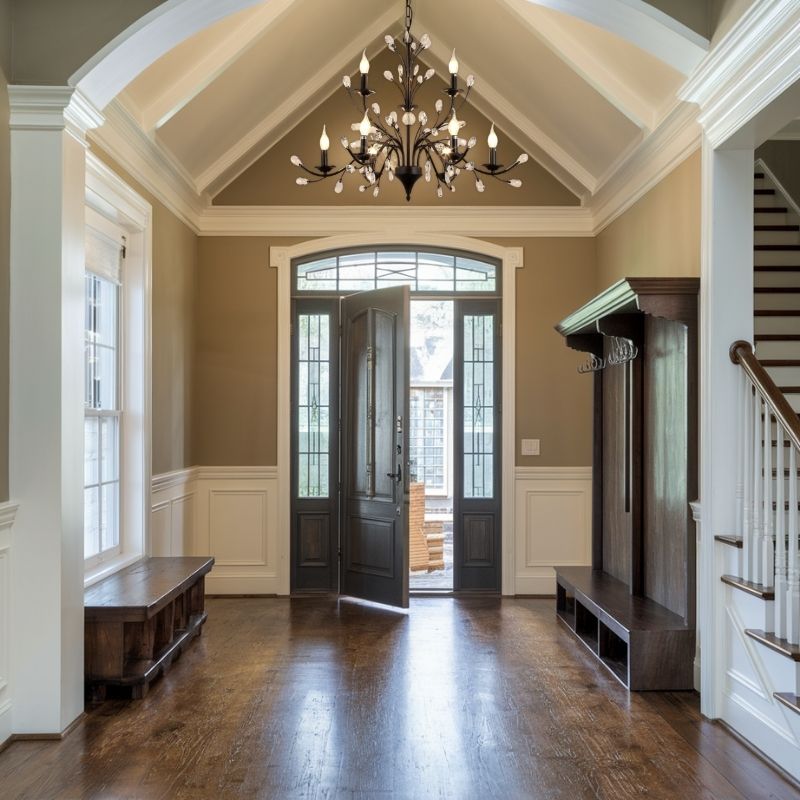
The Wrought Iron Chandeliers 6/9 Lights is the single-tier iron chandelier for a dining table or a 9-foot living room: six lights over a 42- to 48-inch table, nine over a larger one or open floor. In black it suits a farmhouse or Spanish room; in gold it leans transitional.
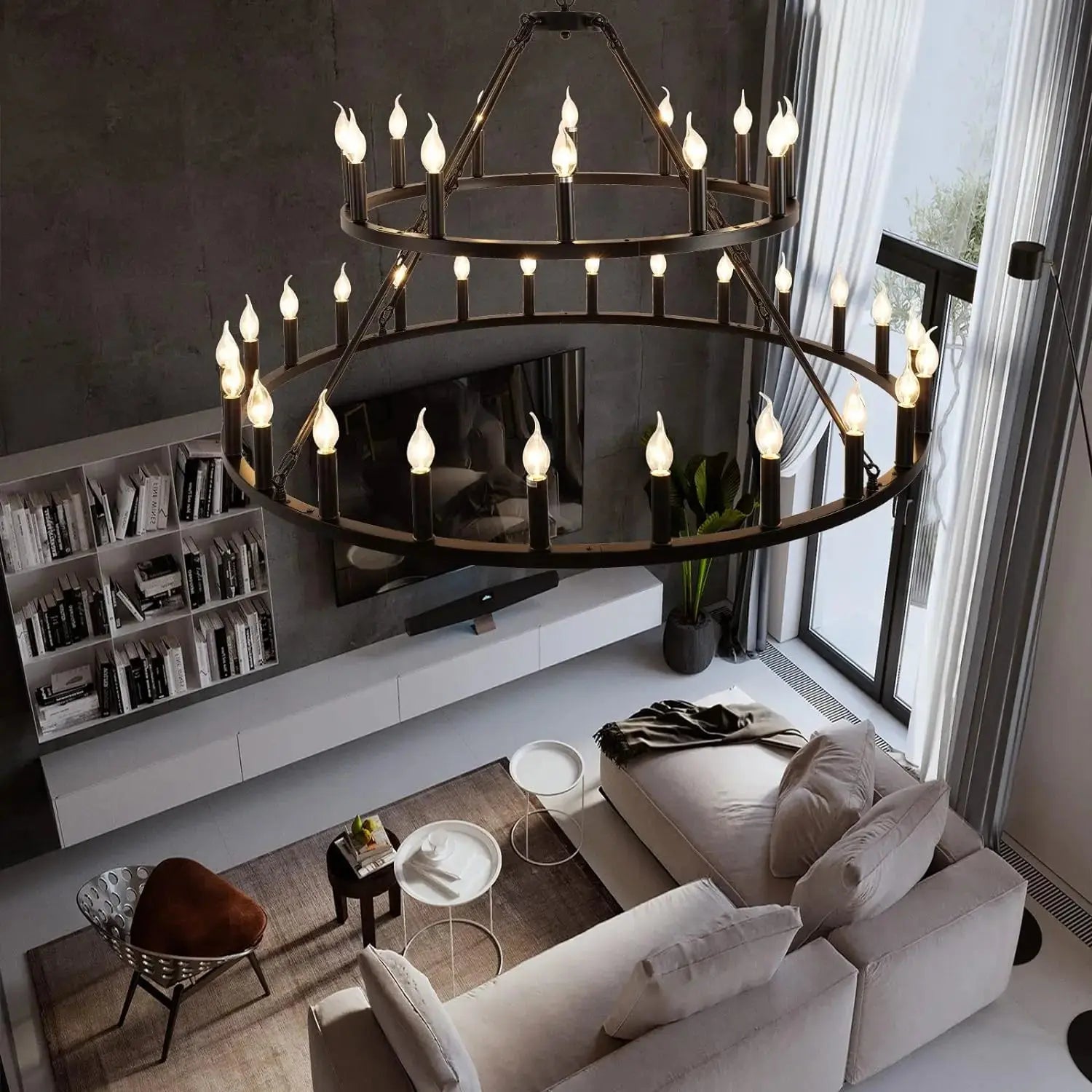
The Rustic 48-inch 2 Tier Wagon Wheel Chandelier is the wheel form in metal at large-room scale: two tiers, 48 inches across, for a great room of 20 by 24 feet or a tall foyer, with the height a single wheel lacks. It shows how the wagon-wheel silhouette moves between the two materials.
Wood and branch

The Ivy Rustic Wagon Wheel Chandelier is the wood wheel: a timber rim with bulbs around it, the classic rustic dining and living room fixture for a room with beams or a wood table. Its hollow rim keeps it in standard-box range at a diameter that would push an iron fixture past it.
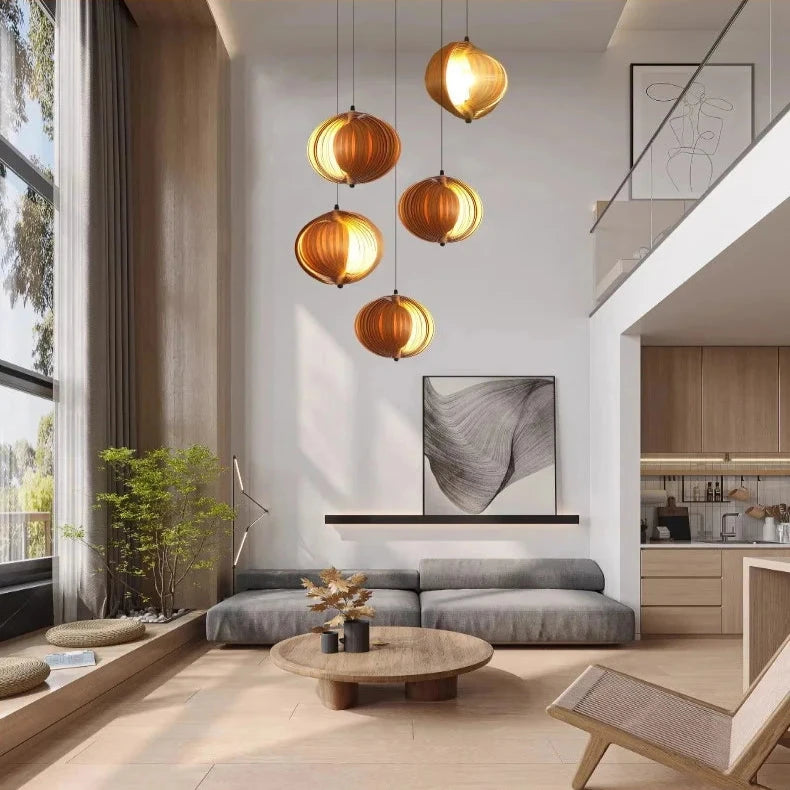
The Nia Wood Staircase Chandelier, in dark or light wood, is wood's answer to the tall-room problem: a vertical wood composition for a two-story foyer or stairwell, where a stacked iron tier would be the usual choice. It gives a timber-heavy house a fixture that matches its beams from the landing as well as the floor.
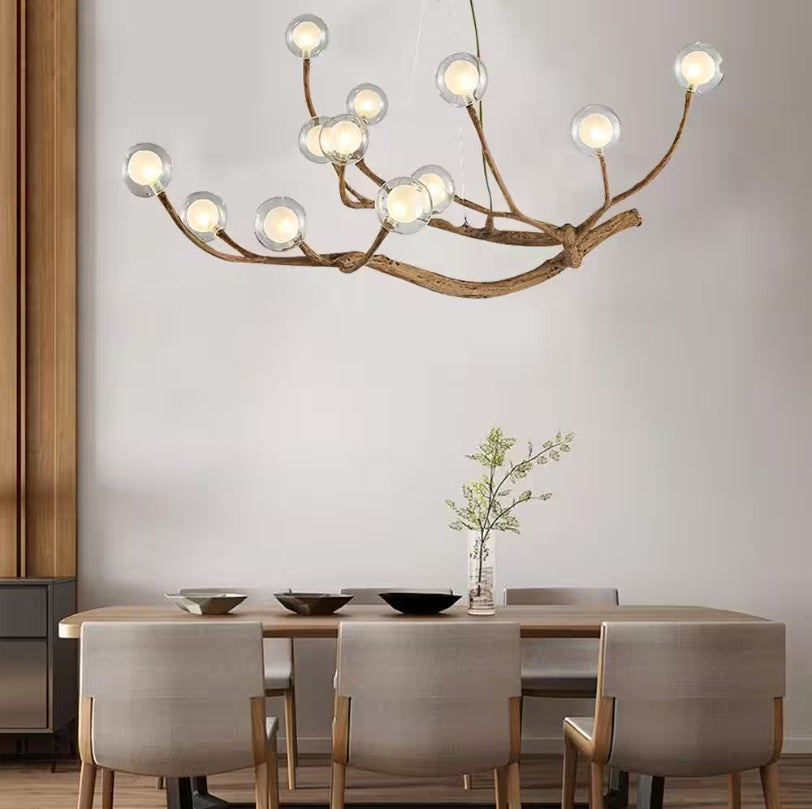
The Appa Rustic Tree Branch Chandelier is the branch form: organic arms tipped with lights, for a dining room or living room that wants the rustic register in a sculptural rather than a wheel or arm shape. Branch fixtures sit between the two materials in weight and pattern; the form's own guide is tree branch chandeliers.
Wagon wheels, beams, branch forms, and forged iron tiers for dining rooms, great rooms, and foyers.
Rustic Chandeliers Branch Chandeliers Farmhouse Foyer All Chandeliers
Mounting and Care
Wood fixtures mostly mount to a standard 50-pound box, and the check is the box's fastening to a joist rather than its rating. Iron fixtures are where the rating matters: a 12-light tiered iron chandelier at 50 to 70 pounds needs a fan-rated box or a brace bar between joists, a three- to five-tier fixture at 100 pounds and more needs a structural mount planned before installation, and both go up with two people. Sloped cabin ceilings take a chain suspension with a slope adapter for either material. Care is simple and different: wood is dusted dry, wiped with a barely damp cloth and dried at once, and never polished with silicone; iron is dusted, wiped with a damp cloth and mild soap, dried, and touched up where the finish chips so moisture stays off the metal. The chandelier installation guide covers mounting, and the chandelier cleaning guide the cleaning routine.
Frequently Asked Questions
What is the difference between a rustic wood chandelier and a wrought iron chandelier?
A rustic wood chandelier uses a wooden body — a wagon wheel, a beam, a turned column, a branch form — with metal only at the sockets and suspension; it reads warm and soft, is lighter than it looks, and ages by drying and slight color change. A wrought iron chandelier uses a forged or cast iron body — curved arms, a cage, a candle-style ring — in black, bronze, or aged finishes; it reads darker and more linear, is heavier, and ages by patina. Wood suits log, cabin, and modern-farmhouse rooms with exposed timber; iron suits Spanish, Tuscan, farmhouse, and industrial-leaning rooms with stone and plaster.
Which is heavier, a wood or a wrought iron chandelier?
Iron, by a wide margin. A 36-inch wrought iron chandelier with 12 lights typically weighs 40 to 70 pounds, and large multi-tier iron fixtures pass 100. A wood wagon wheel or beam chandelier of the same diameter runs 20 to 40 pounds, because wood is hollow-framed and lighter than steel by volume. Any fixture over 50 pounds needs a ceiling box rated for the load fastened to a joist or brace bar; most large iron chandeliers do, most wood ones do not.
Which gives better light, wood or iron?
Neither material lights the room; the bulbs and shades do, and the frame decides how many and where. Wood fixtures usually carry exposed bulbs on the rim of a wheel or along a beam, which gives an even ring of light and works well over a table. Iron fixtures carry candle-style sockets on arms and often shades or cages, which spread light wider and softer but can cast arm shadows. Both take 2700–3000K LED bulbs; with matching lumens the light quality is the same, and the difference is in the pattern the frame casts.
Which is better for a high ceiling or a large room?
Iron for the largest fixtures, wood for the widest. Multi-tier wrought iron chandeliers scale to 48 to 60 inches and 20 to 30 lights for a two-story great room or foyer, with the weight and structural mount that implies. Wood wagon wheels scale to 48 to 60 inches wide but stay within a standard box's rating, and a two-tier wheel gives height without the iron weight. In a room with exposed wood beams, wood matches; in a stone or plaster great room, iron does.
How do I size a rustic chandelier for a large room?
The same way as any chandelier: add the room's length and width in feet and use that number as the diameter in inches for open floor — a 20 by 24 foot great room takes a 44-inch fixture — or half to two-thirds of the table width over a dining table. For ceilings above 12 feet, add 2 to 3 inches of diameter per foot above 12, and choose a two-tier or multi-tier design so the fixture has height as well as width. Keep 7 feet of clearance over walkways.
Do wood chandeliers warp or crack?
Solid kiln-dried wood in a conditioned house does not warp, but it does move slightly with humidity and can develop small checks — hairline surface cracks — along the grain over years, which are part of the look on a rustic piece. Keep a wood chandelier away from a steam-prone room and out of direct sun for long periods, and avoid rooms that swing between very dry winters and humid summers without conditioning. Reclaimed and driftwood pieces are already stable.
Does wrought iron rust indoors?
Not in a dry room. Indoor wrought iron chandeliers are finished with powder coat, paint, or lacquer over the iron and do not rust in normal household air. Bare or oiled iron finishes can spot in a humid room or a covered porch; in those places choose a fixture rated damp or wet and finished for it. Dust with a dry cloth and touch up chips with a matching finish to keep moisture off the metal.
Can I mix wood and wrought iron in one chandelier?
Yes, and the combination is the current farmhouse standard: a wood wheel or beam with iron straps, sockets, and chain, or an iron cage with a wood canopy. The mix gives the warmth of wood at eye level with the strength and detail of iron where the load and the hardware are. It also bridges a room with both timber beams and black hardware, which most modern farmhouse interiors have.
What finish should a rustic chandelier have?
Match the room's dominant material. Wood fixtures come in natural, weathered gray, dark walnut, and whitewashed tones; choose the one closest to the room's beams, floor, or table, or one step darker so the fixture reads as a separate object. Iron fixtures come in matte black, oil-rubbed bronze, and aged or rust-effect finishes; black suits modern farmhouse and black hardware, bronze suits Tuscan and Spanish rooms with brass or copper, aged iron suits antique and vintage rooms.
How do I clean and maintain a wood or iron chandelier?
Wood: dust monthly with a dry microfiber cloth; wipe with a barely damp cloth and dry at once; no furniture polish with silicone, which builds up, and no water left standing. Iron: dust monthly; wipe with a damp cloth and mild soap; dry immediately; touch up any chips in the finish. Both: turn off the breaker before cleaning, and for fixtures above 12 feet use an extendable duster monthly and a ladder or lift for the annual deep clean.
Choosing Between Wood and Wrought Iron
Look at the room's dominant material and its ceiling height before its style label: timber points to wood, stone and plaster point to iron, and a ceiling past 14 feet points to iron's tiers or wood's vertical staircase forms rather than a wider wheel. Then let the fixture's weight decide the mounting, and let both materials age as they were made to. A rustic chandelier chosen by material rather than by catalog photo is the one that looks like it was always in the room.
Compare wood and iron designs in the rustic chandeliers collection, branch forms in branch chandeliers, and entry fixtures in farmhouse foyer lighting. For rustic against modern as a style choice, read rustic vs modern chandeliers; for round against rectangular over a farmhouse table, farmhouse round or rectangular chandelier.


