

Putting up a chandelier in a staircase with a vaulted ceiling can be tricky. The combination of height, slope, and electrical work requires careful planning and the right equipment. This guide will help you choose the right chandelier, figure out where to hang it, and install it safely on sloped or vaulted ceilings.
Key Takeaways
- Choose a chandelier suitable for vaulted ceilings and high ceilings
- Size your chandelier based on room dimensions and ceiling height
- Position the chandelier 7-8 feet above the floor
- Use a sloped ceiling adapter and special mounting bracket for angled installations
- Understand electrical box requirements before installation
- Prioritize safety during installation
- Consider recessed lighting or track lighting as complementary options
- Regular cleaning and maintenance are essential
Understanding Sloped vs Vaulted Ceilings
Before you install a chandelier, understand what type of ceiling you're working with, as this affects the hardware and installation approach.
Vaulted Ceilings have equal slopes on both sides meeting at a central ridge, creating a symmetrical arch. They add extra space in a room and are common in living rooms, dining rooms, and two-story foyers.
Sloped Ceilings (also called cathedral ceilings) angle in one direction following the roofline. One side has standard ceiling height while the other slopes upward.
Both require a sloped ceiling adapter to ensure your fixture hangs straight rather than at an angle matching the ceiling slant.
Selecting the right fixture for your vaulted space starts with understanding which designs work best for angled installations. Browse our curated collection of staircase chandelier options specifically suited for high and sloped ceilings, featuring multi-tier designs, cascade styles, and modern linear fixtures.
Picking the Perfect Chandelier
For vaulted ceilings, multi-tier or linear chandeliers often work well. They can fill up the tall space nicely. Consider the style of your home and the existing decor when making your selection. A chandelier should complement your interior design while making a statement.
When choosing between a pendant or chandelier for sloped ceilings, consider scale, visual weight, and how the fixture will look from multiple viewing angles (stairs, second floor). Multi-tier designs fill tall spaces better than single-tier fixtures.
Here are two great options:
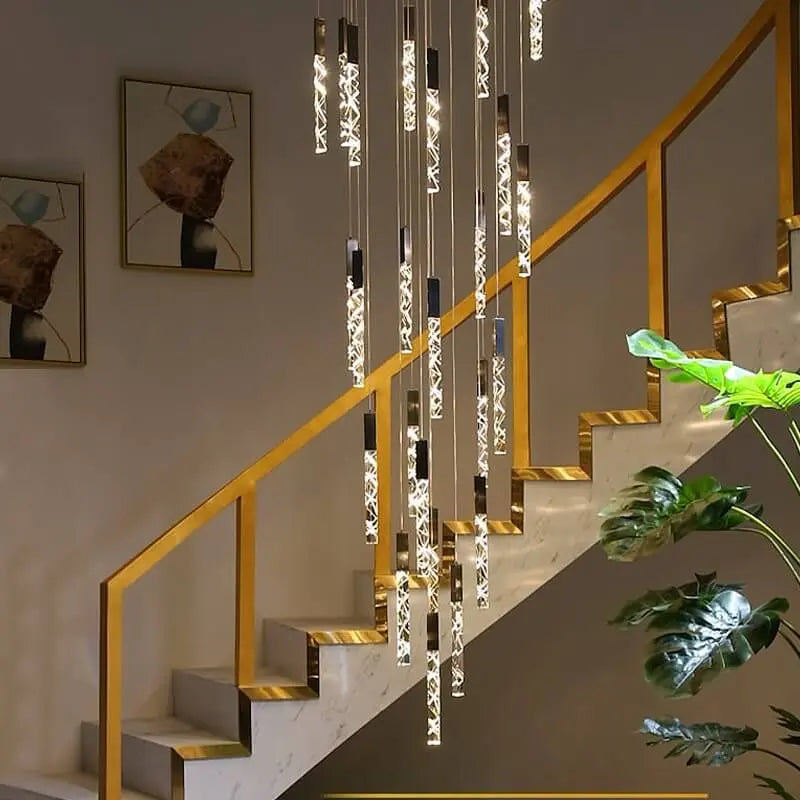
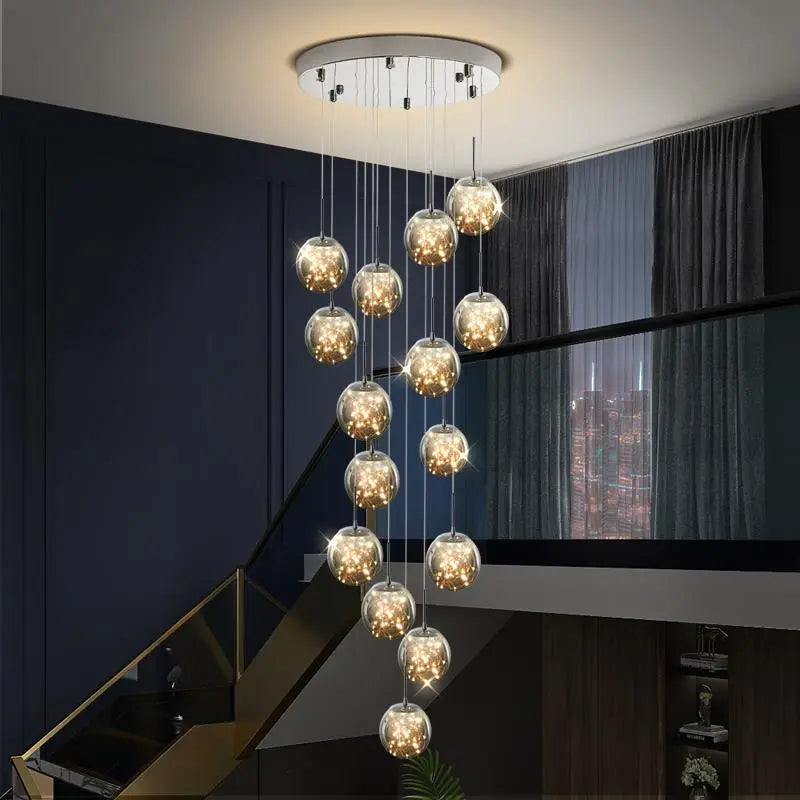
The crystal chandelier on the left is perfect for high ceilings and costs $159.99. It features 16 lights with warm white illumination, creating a luxurious ambiance. The spiral chandelier on the right is great for staircases and is priced at $586.99. It comes with 6 amber glass balls and a golden finish, adding a modern touch to your space. It even comes with a remote control for easy dimming!
Alternative Lighting Options for Vaulted Ceilings
While chandeliers make stunning focal points, consider these alternatives or complementary options:
Recessed Lighting: LED recessed lighting works exceptionally well on sloped or vaulted ceilings. These fixtures mount flush regardless of angle, don't require sloped ceiling adapters, and provide even illumination across the ceiling. They're ideal for creating a layer of ambient light while using a chandelier as the focal point.
Track Lighting: Track systems mount to follow the ceiling slope with adjustable heads that direct light where needed. This provides a modern lighting effect and works well for highlighting architectural features like beams.
Pendant Lighting: Individual pendants or cluster arrangements offer simpler installation than large chandeliers, with adjustable cord lengths and a contemporary aesthetic at lower cost.
Sizing Your Chandelier
Getting the size right is super important. Here's a simple trick: add the length and width of your room in feet. That number in inches is a good size for your chandelier's diameter. For example, if your room is 20 feet long and 15 feet wide, a 35-inch wide chandelier would look good.
For vaulted ceilings, you might want to go a bit bigger. The extra height can make a regular-sized chandelier look tiny. Consider the scale of your space and the visual weight of the chandelier. A good rule of thumb is to add 2-3 inches to the diameter for every foot of ceiling height over 8 feet.
Measure ceiling height at the peak, account for the chandelier's drop length, and consider the size of the room as viewed from multiple levels.
Chandelier Sizing for Vaulted Ceilings
| Ceiling Height at Peak | Room Size (L+W) | Recommended Diameter | Style Recommendation |
|---|---|---|---|
| 10-12 feet | 20-25 feet | 23-28 inches | Standard chandelier |
| 12-15 feet | 25-30 feet | 28-33 inches | Multi-tier chandelier |
| 15-18 feet | 30-35 feet | 33-38 inches | Cascade or linear design |
| 18-20+ feet | 35+ feet | 38-43+ inches | Large multi-tier, professional install |
Figuring Out Where to Hang It
In a staircase, you want your chandelier to look good and be safe. Here are some tips:
- Hang it 7-8 feet above the floor in foyers
- In two-story spaces, make sure it's not below the second floor
- Center it over the stairs if possible
- Consider the viewing angles from different levels of the staircase
- Ensure it doesn't obstruct the path of people using the stairs
- Use a sloped ceiling adapter so the fixture hangs straight down, not at an angle
Remember, you can always check out our blog for more tips on choosing the right size and placement.
Proper height placement is critical for both safety and aesthetics in staircase installations. For comprehensive guidance on measuring, calculating clearances, and determining the best positioning based on your specific ceiling configuration, review our detailed resource on optimal heights for hanging staircase chandeliers with step-by-step instructions.
Essential Hardware for Sloped Ceiling Installation
Installing a chandelier on a sloped ceiling requires specialized hardware. Here's what you may need to install:
Sloped Ceiling Adapter
A sloped ceiling adapter is an accessory that attaches between the ceiling and the chandelier canopy. It compensates for the ceiling angle so the fixture hangs vertically, adjusts to different slope angles (typically up to 45 degrees), and is essential for ensuring your light fixture hangs straight. Most adapters cost $15-50 depending on size and finish.
Mounting Bracket
The mounting bracket for sloped ceilings must be rated for your chandelier's weight, designed to attach securely to sloped electrical boxes, and often includes adjustable features to fine-tune positioning.
Electrical Box Requirements
The electrical box must be rated for ceiling fans or heavy fixtures, properly secured to structural beams or blocking, and compatible with sloped ceiling mounting hardware. If your existing electrical box isn't appropriate, you may need to install a new one before hanging your chandelier—this often requires professional help.
Installation Steps
Turn off power, use special mounting bracket, connect wires carefully, ensure it's level.
- Turn off the power at the breaker box – Use a voltage tester to confirm power is off
- Install a special mounting bracket for sloped ceilings – Ensure it's secure and can support the chandelier's weight
- Attach the sloped ceiling adapter – Adjust the angle so the chandelier will hang straight despite the ceiling slope
- Attach an extended downrod if needed – For very high ceilings, ensure the cord or wire is long enough
- Connect the wires carefully – Match wire colors: black to black, white to white, green/copper to ground. Follow the instructions
- Hang the chandelier and adjust it so it's level – Use a level to ensure the fixture hangs straight
- Double-check all connections and secure the canopy – The canopy should fit flush and hide all wiring
- Install light bulbs and any decorative elements – Add bulbs and crystals or shades
- Turn the power back on and test the chandelier – Verify all lights work and the fixture is stable
If this sounds too complicated, don't hesitate to call a pro. Installing a chandelier can be tricky, especially on a vaulted ceiling. Professional electricians have the tools and experience to handle complex installations safely and efficiently.
Installation Quick Reference
| Step | Key Requirement | Tools/Hardware Needed |
|---|---|---|
| Power Off | Test with voltage tester | Circuit breaker, voltage tester |
| Mount Bracket | Must support chandelier weight | Mounting bracket rated for slope |
| Sloped Adapter | Adjust to ceiling angle (up to 45°) | Sloped ceiling adapter, level |
| Wiring | Match wire colors, proper insulation | Wire nuts, electrical tape |
| Hang & Level | Ensure fixture hangs straight | Level, ladder, assistant |
| Final Test | Check stability and all lights work | Bulbs, remote (if applicable) |
Safety First!
Safety is super important when you're dealing with heavy lights and electricity. Make sure your ceiling can support the weight of the chandelier. Also, check that your electrical box can handle the chandelier's power needs. Here are some additional safety tips:
- Use a sturdy ladder or scaffolding to reach high ceilings safely
- Wear safety goggles and gloves during installation
- Have someone assist you to hold the chandelier while you connect wires
- Ensure all wiring connections are properly insulated
- Follow local electrical codes and regulations
- Never work alone on high ceiling installations
- Consider using a lift or scaffolding for ceilings over 15 feet
- Verify the beam or structural support can handle the fixture weight
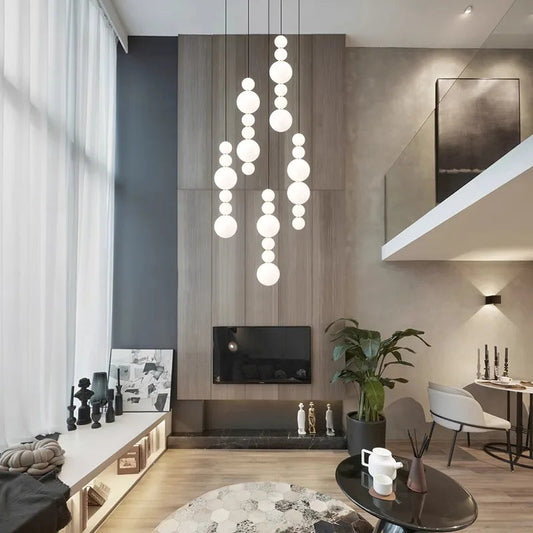
Here's a cool chandelier that's both pretty and safe for staircases:
Layering Your Staircase Lighting
Don't rely solely on a chandelier for staircase illumination. Layer multiple types for both safety and ambiance:
- Primary lighting: Your chandelier provides the main lighting effect and focal point
- Task lighting: Step lights or recessed lighting ensure safe navigation
- Accent lighting: Wall sconces or track lighting highlight architectural features
This approach ensures your staircase is well-lit while the chandelier adds elegance.
Keeping Your Chandelier Looking Great
Once your chandelier is up, you'll want to keep it clean and working well. Regular maintenance not only keeps your chandelier looking beautiful but also ensures its longevity and optimal performance. Here are some quick tips:
- Dust it regularly with a soft cloth or feather duster
- Clean crystals with a mixture of warm water and mild soap
- Change bulbs promptly when they burn out
- Check and tighten any loose connections annually
- Use a dimmer switch to extend bulb life and create ambiance
- Consider professional cleaning for intricate or hard-to-reach chandeliers
For very high vaulted ceilings, you may need a professional cleaning service since reaching the fixture safely can be challenging.
For more detailed advice, check out our guide on how to clean and maintain your staircase chandelier.
Wrapping Up
Installing a chandelier in a staircase with a vaulted ceiling isn't easy, but it's doable. With proper planning, the right tools, and attention to safety, you can transform your staircase into a stunning focal point of your home. Remember these key points:
Key Points for Staircase Chandeliers:
- Choose a chandelier that fits your space
- Use a sloped ceiling adapter to ensure the fixture hangs straight
- Position and size the chandelier correctly
- Use special equipment for sloped ceilings
- Make safety the top priority during installation
- Consider layering with recessed lighting or track lighting
- Clean and maintain the chandelier regularly
If you're not sure about doing this yourself, it's okay to ask for help. A professional can make sure everything is installed safely and correctly. They can also provide valuable advice on the best lighting solutions for your specific staircase and ceiling configuration.
Beyond technical installation requirements, consider how your chandelier placement affects the energy and balance of your home's vertical spaces. Explore the ancient principles of feng shui and staircase chandeliers to create harmonious flow and positive energy throughout your stairwell while maintaining proper illumination.
Want more ideas for your staircase lighting? Check out our blog for inspiration. From modern designs to classic farmhouse styles, you'll find plenty of options to make your home's interior look amazing. Happy decorating!
Frequently Asked Questions
Q: What is a sloped ceiling adapter and do I need one to install a chandelier on a sloped ceiling?
A sloped ceiling adapter is a mounting accessory that compensates for the ceiling angle, allowing your chandelier to hang straight. You absolutely need one for any chandelier on a sloped ceiling—without it, your fixture will hang at an awkward angle matching the ceiling slant. Most adapters adjust to accommodate angles up to 45 degrees and cost $15-50.
Q: Can I install recessed lighting on a vaulted ceiling instead of a chandelier?
Yes, LED recessed lighting works excellently on sloped or vaulted ceilings. Recessed lights mount flush regardless of angle, don't require sloped ceiling adapters, and provide even illumination. Many homeowners combine recessed lighting with a chandelier for both functionality and elegance—the recessed lights handle task lighting while the chandelier serves as a focal point.
Q: How do I know if my electrical box can support a chandelier on a sloped ceiling?
Your electrical box must be rated for ceiling fans or heavy fixtures to safely support most chandeliers—check for weight ratings of at least 50 pounds. On sloped ceilings, the box must also be properly secured to structural beams since the angle creates additional stress. If you're unsure, consult an electrician. You may need to install a new box before hanging your chandelier.
Q: What's the difference between pendant lighting and a chandelier for vaulted ceilings?
Chandeliers feature multiple arms, tiers, or elaborate designs with many bulbs, making them ideal focal points for large two-story foyers. Pendant lighting consists of single fixtures hanging from a cord, offering a simpler, more modern aesthetic. Pendants are easier to install on sloped ceilings, more adjustable in height, and work well in narrower staircases. A cluster of pendants can create visual impact similar to a chandelier.
Q: How high should I hang a chandelier in a room with vaulted ceilings?
Hang the chandelier so the bottom is 7-8 feet above the floor in foyers and staircases, ensuring adequate clearance. For very high cathedral ceilings (15+ feet), you may hang it slightly higher (8-9 feet) while maintaining visual proportion. The key is ensuring the fixture hangs straight using a sloped ceiling adapter, regardless of ceiling angle. Measure from the floor, not from the sloped ceiling.
Q: Do I need a professional electrician to install a chandelier on a sloped ceiling?
While experienced DIYers can handle the installation, hiring a professional is recommended due to complexity and safety concerns. Professionals have proper ladders for high ceilings, understand electrical box requirements, can properly install sloped ceiling adapters, and ensure secure mounting. If your ceiling is over 12 feet high or you're uncomfortable with electrical work, professional installation is worth the investment.
Q: Can I use track lighting on a vaulted ceiling?
Yes, track lighting is an excellent option for sloped or vaulted ceilings. Track systems mount to follow the ceiling slope, and adjustable heads direct light where needed. This makes track lighting useful for staircases where you want to illuminate specific areas like steps or architectural beams. Track lighting provides a modern lighting effect and layers well with recessed lighting or a chandelier.


