

LED bubble chandeliers have become one of the most practical upgrades inside the broader world of decorative chandeliers because they combine sculptural glass design with lower energy use, longer bulb life, and better day-to-day control. They keep the soft, globe-based character that makes bubble lighting so recognizable, but they also bring modern advantages such as dimming, lower heat output, and more stable long-term performance.
That combination matters because many homeowners are no longer choosing ceiling lighting only by shape. They are also thinking about operating cost, maintenance, brightness control, and how the fixture behaves in everyday life. A bubble chandelier may look beautiful in a product photo, but LED lighting is often what makes it easier to live with over time. If you want to compare LED-based pieces against the wider family first, the main bubble chandeliers collection is the best place to see how different sizes, layouts, and finishes fit together.
Why LED Bubble Chandeliers Appeal to So Many Buyers
- They usually use far less energy than older incandescent-based chandelier setups.
- LED light sources often last much longer, which reduces how often bulbs need to be replaced.
- Many LED bubble chandeliers support dimming, remote control, or multi-level brightness adjustment.
- Lower operating heat makes them more practical in daily use, especially in rooms where the chandelier stays on for longer periods.
- They are available in clustered, linear, minimalist, foyer-ready, and decorative bubble styles.
- They can work in dining rooms, living rooms, bedrooms, foyers, and open-plan interiors.
What Makes LED Bubble Chandeliers Different?
At a basic level, LED bubble chandeliers use LED light sources inside or alongside glass or acrylic globes. That sounds simple, but it changes the whole experience of the fixture. Traditional bulb-based chandeliers can create more heat, require more frequent bulb changes, and make it harder to keep light output consistent over time. LED lighting changes that by making the chandelier more efficient and often easier to control.
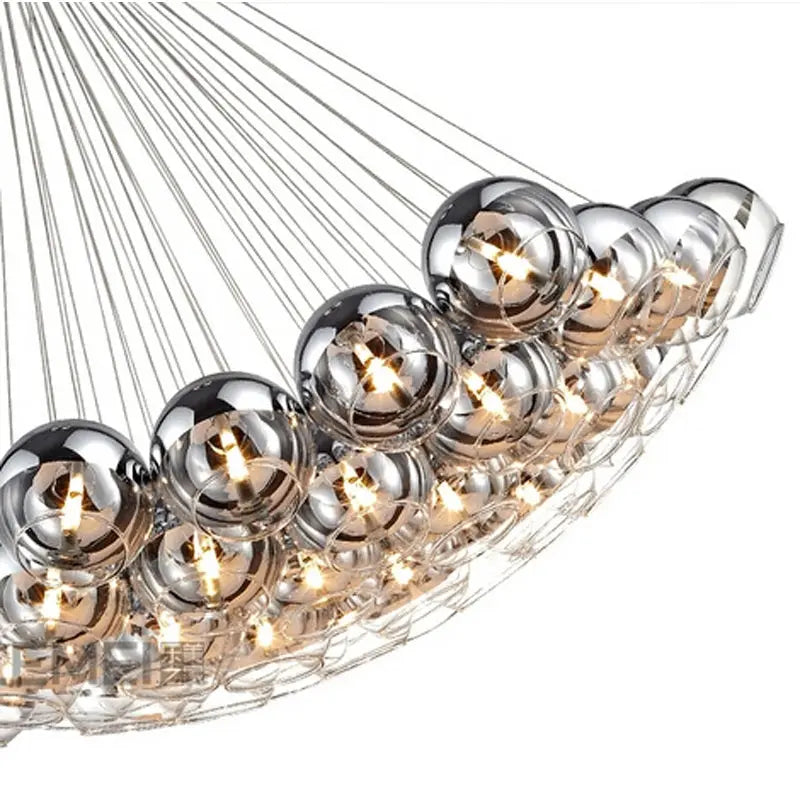
This is especially useful in bubble chandeliers because the glass globes already shape the light in a distinctive way. Some bubble fixtures use clear glass for a brighter, more open look. Others use frosted or tinted glass to soften the light. When those effects are paired with LED technology, the chandelier can deliver both decorative value and more predictable daily performance.
Why Many Homeowners Prefer LED in Bubble Chandeliers
The strongest reason is usually energy use. LED lighting typically consumes much less power than older bulb formats, which means the chandelier can stay decorative and practical without becoming expensive to operate. That matters even more in multi-globe fixtures, because a chandelier with many light points can otherwise become more costly to run over time.
The second reason is lifespan. LED lighting usually lasts much longer than traditional incandescent bulbs, which reduces the maintenance burden. In a chandelier with many glass globes, fewer bulb changes is not a small convenience. It can make a real difference in how often the fixture needs attention, especially when it hangs above a dining table, in a stairwell, or in a taller foyer.
The third reason is lower heat. Bubble chandeliers often rely on visible globes or enclosed glass forms, so lower operating temperature helps the chandelier feel more comfortable in daily use. This is especially useful in bedrooms, dining spaces, and rooms that stay lit for longer stretches in the evening.
Dimming and Light Control Are a Big Part of the Value
One of the most useful reasons to choose an LED bubble chandelier is controllability. Many LED-ready fixtures support dimming, and some also support remote control or multiple brightness levels. In practical terms, that means the same chandelier can provide stronger light during active hours and softer ambient light at night.
This matters because bubble chandeliers are often used in rooms where mood changes through the day. A dining room may need brighter light during setup or cleanup, then softer light during the meal. A bedroom may need practical light at one time and a gentler glow later in the evening. In a living room, dimming can make the chandelier feel less like a pure overhead source and more like part of the room’s atmosphere.
That is one reason LED bubble chandeliers are often more useful than non-dimmable fixtures, even when the design looks similar on the surface. Control changes how the chandelier actually behaves in the room.
How LED Bubble Chandeliers Work in Different Spaces
Dining rooms
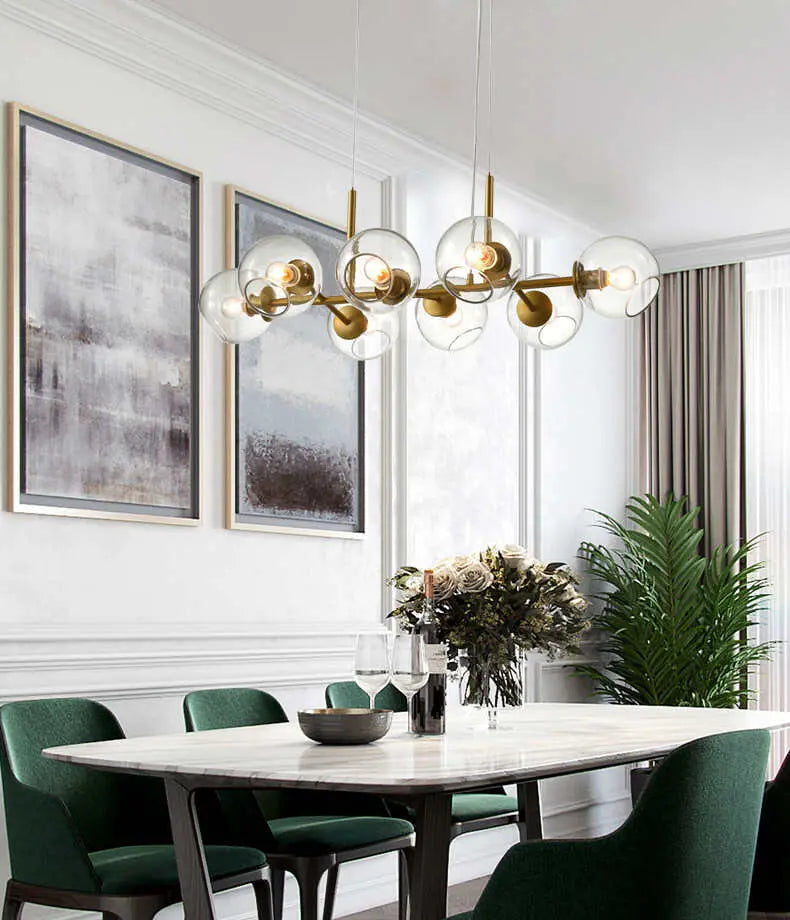
In dining rooms, LED bubble chandeliers are often chosen because they combine decorative presence with everyday practicality. A linear LED bubble chandelier can spread light across a longer table while still keeping the relaxed bubble look. Dimming is especially useful here because dining rooms often need both practical brightness and softer evening atmosphere.
If your next step is still about proportion rather than LED, the most relevant supporting page remains our guide on how to choose the perfect bubble chandelier size.
Living rooms
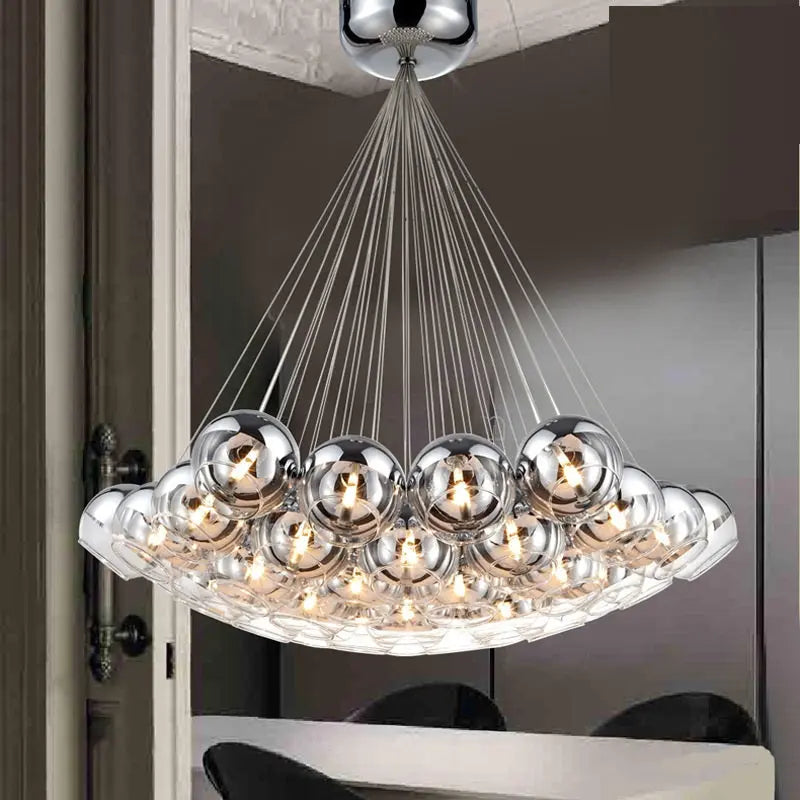
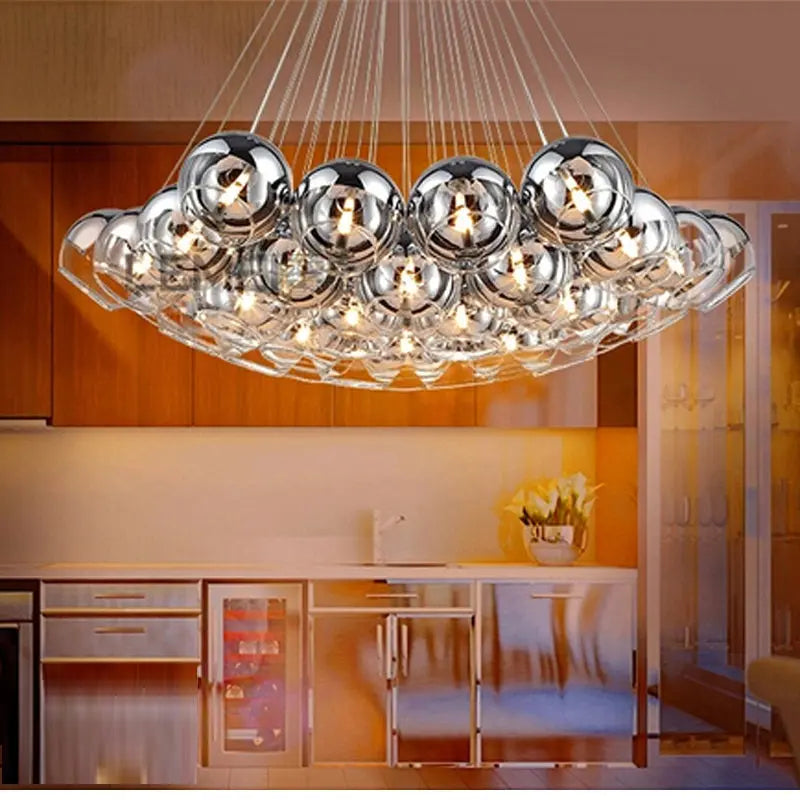
In living rooms, LED bubble chandeliers often work best when the goal is ambient light with a ceiling focal point. A clustered or branching bubble chandelier can create visual interest overhead, while LED lighting helps keep the fixture efficient enough for frequent use. In rooms where the chandelier may stay on for long evenings, this is one of the most practical reasons to prefer LED.
Bedrooms
Bedrooms benefit from LED bubble chandeliers because lower heat and dimmable light make the room easier to control. In a softer space, the combination of frosted or gently reflective globes with adjustable LED brightness often feels more comfortable than harsher light sources.
Foyers and taller entries
In foyers, LED bubble chandeliers can be especially useful in fixtures with many globes or taller drops. These chandeliers often stay visible from a distance and may stay on longer in the evening. LED lighting helps keep the fixture efficient while still delivering the decorative effect that a foyer chandelier needs to create.
Popular LED Bubble Styles Still Matter
Even though LED is the main angle here, style still shapes the final result. Clustered LED bubble chandeliers tend to feel softer and more decorative. Linear versions often suit long tables better. Sputnik-inspired designs introduce more visible structure, which can help in modern interiors that need stronger ceiling rhythm. Minimalist forms use fewer globes and cleaner lines, which can be useful in smaller rooms or more restrained interiors.
The key point is that LED does not replace style. It improves how the chosen style performs. That is why the best LED bubble chandelier is not simply the one with the strongest technical specification. It is the one whose layout, brightness control, and room fit all work together.
Examples of LED Bubble Chandeliers From Seus Lighting
Laura Black Bubble Sputnik Chandelier
The Laura Bubble Sputnik Chandelier is a good example of how LED-friendly bubble lighting can still feel bold and architectural. The black frame gives the chandelier more visible structure, while the clear globes keep the design from feeling too visually dense. This makes it especially useful in living rooms and dining spaces that need a stronger overhead focal point.

Nora White Bubble Cluster Chandelier
The Nora Bubble Cluster Chandelier represents the softer side of the category. Its more clustered composition creates a cloud-like ceiling presence, while LED lighting helps the fixture stay practical in bedrooms, living rooms, and softer dining spaces. The globe layout gives it decorative richness, but LED functionality makes it easier to use every day.

Violet Gold Glass Bubble Chandelier
The Violet Glass Bubble Chandelier shows how LED and decorative finish can work together. The gold frame warms up the fixture, while the glass globes keep the chandelier from feeling heavy. This kind of chandelier often works well in dining rooms, foyers, and master bedrooms where both decorative presence and everyday usability matter.

LED Bubble Chandeliers and Long-Term Value
LED bubble chandeliers may cost more upfront in some cases, but their long-term value is usually easier to justify because they reduce both energy use and maintenance. Lower energy consumption, longer bulb life, and less frequent replacement all contribute to that value. In multi-globe fixtures, those practical benefits become even more important because the chandelier has more light points to maintain over time.
LED vs Traditional Bubble Chandelier Comparison
That does not mean every LED fixture is automatically the better choice. It still needs to suit the room and the way the chandelier will be used. But if the chandelier will be on often, if the fixture has many globes, or if dimming matters, LED usually becomes the more practical direction.
Maintenance Still Matters, Even With LED
LED reduces some upkeep, but it does not eliminate the need for care. Bubble chandeliers still rely heavily on clean glass to look their best, and dust or residue can reduce the visual effect quickly. That is why regular care still matters, even if bulb replacement becomes less frequent.
If your main concern is cleaning and long-term upkeep rather than LED selection itself, the most useful next step is the guide on how to clean, install, and maintain your bubble chandelier. That page goes deeper into care, while this page stays focused on why LED matters when choosing the fixture in the first place.
Where This Fits in a Bubble Chandelier Buying Decision
If the main decision is style, finish, or layout, bubble chandeliers should still be compared by room and visual direction first. If the main decision is how the chandelier will perform every day, then LED becomes one of the most useful filters. It affects energy use, dimming, brightness control, operating heat, and the long-term practicality of the fixture.
That is why LED bubble chandeliers deserve their own role inside the broader bubble category. They are not a completely separate design family. They are a more practical and often more adaptable way to use a bubble chandelier in real daily life.
For readers who want broader product comparison before choosing a specific LED route, the full chandeliers collection is a useful final reference point because it shows how bubble lighting compares with other decorative ceiling-light directions across the site.


