

Chandelier design moved decisively over the past three years, and the direction is unusually consistent: warmer metals, simpler silhouettes, less crystal used more deliberately, and light sources built into the fixture rather than screwed into it. This guide covers the six directions defining 2026, what each looks like room by room — including the two-story and staircase applications that show trends most clearly — what is fading and why, and the three filters that separate a design worth living with from one that will date in eighteen months.
The Short Version
- Warm metals lead. Aged brass, gold and copper have displaced polished chrome as the default across every price tier.
- Sculptural minimalism. Fewer elements, cleaner geometry, and forms that read as objects rather than arrangements.
- Crystal is not gone — it is edited. Sparse crystal on modern frames replaced full traditional dressing.
- Organic glass. Bubble clusters, hand-blown irregularity, fluted and smoked bodies.
- Integrated LED forms. Rings, discs and continuous lines that no bulb-based fixture could produce.
- Natural materials. Wood, rattan, stone and marble carrying warmth metal cannot.
- The durability test: simple silhouette, honest material, correct scale. Designs passing all three age well regardless of trend.
On this page
- What Is Actually New
- 1. Warm Metals
- 2. Sculptural Minimalism
- 3. Crystal, Edited
- 4. Organic and Textured Glass
- 5. Integrated LED Forms
- 6. Natural Materials
- Trends Room by Room
- Staircases and Two-Story Spaces
- Designs Across the Six Directions
- What Is Fading
- Choosing a Trend That Lasts
- Common Mistakes
- Frequently Asked Questions
What Is Actually New in Chandelier Design
Most trend coverage confuses two different things: what is being manufactured, and what is being chosen. Manufacturers release variations constantly; homeowners and designers select from them slowly, and the selections cluster. When the same cluster holds across three years, it stops being a trend and becomes a direction.
Six directions currently hold across the latest chandelier designs. What they share is more telling than what separates them — every one of them reduces ornament and increases material honesty. The tiered, crystal-heavy fixture that dominated for decades hid its structure; today's designs display it. That single shift explains warm metals (the metal is meant to be seen), sculptural minimalism (the form is the ornament), sparse crystal (the frame stays legible), and natural materials (grain and stone are inherently honest).
The six directions currently holding, and the single shift that connects them
1. Warm Metals
The clearest reversal of the past decade. Polished chrome and cooler nickel — the default from roughly 2000 to 2015 — have given way to aged brass, unlacquered gold and copper across every price tier.
The reason rooms respond is physical: warm metals reflect light in the amber band, the same register as candlelight and late sun, so skin tones, wood and food all read better beneath them. They also age as assets rather than liabilities, developing patina where cooler metals develop fingerprints. Current execution matters, though — the brass that dated badly in the 1980s was thin polished plating on traditional silhouettes used everywhere at once. Today's version is brushed or burnished, on modern frames, deployed as an accent against black, wood or glass rather than as a whole-house scheme.
2. Sculptural Minimalism
Fewer elements, doing more. Where a traditional fixture arranged many small parts into a shape, current designs commit to one clear form — a ring, an asymmetric spread, a cluster of spheres, a single sweeping line — and let it carry the room alone.
This is the direction with the widest reach, because it works at every scale and in every room. It is also the most demanding to execute: with nothing to hide behind, joints, proportions and finish quality are fully visible. A sculptural fixture that reads slightly off in person almost always has a proportion problem rather than a style one.
3. Crystal, Edited
Crystal never left; the frames around it changed. The current version treats crystal as an element rather than a costume — smooth drops along a matte black ring, a single row of beads on a linear bar, faceted pieces set into clean geometry. The frame stays legible, which is exactly what full traditional dressing prevented.
The result reads as contemporary luxury rather than period revival, and it explains why searches for crystal fixtures remain strong while traditional tiered designs decline. For formal rooms the full-dress version is still correct — but it now needs architectural support (moulding, a formal table, real volume) rather than being the default everywhere.
4. Organic and Textured Glass
Glass is doing the work crystal used to do, in a softer register. Three variations lead: clustered bubble compositions that read joyful rather than formal, hand-blown bodies whose slight irregularity catches light in a way moulded glass cannot, and textured surfaces — fluted, ribbed, seeded, smoked — that add character without adding ornament.
Colour is part of this direction too. Smoked grey and warm amber-cognac have moved from specialist to mainstream, pairing with the brass and wood tones leading elsewhere. Clear glass remains the highest-output option, but it now competes with bodies chosen specifically for how they soften light rather than how much they transmit.
5. Integrated LED Forms
The technology stopped imitating bulbs and started enabling shapes. With no socket to house, a fixture body can shrink to a disc, stretch into a continuous ring of light, or run as a thin illuminated line — proportions no bulb-based design can reach. Ring and halo fixtures, the most recognisable modern silhouette of the past five years, exist only because of it.
Two specifications decide whether these designs satisfy: dimming depth with a flicker-free driver, since the source cannot be swapped later, and colour rendering at CRI 90 or above so materials and food read true. Warm white at 2700K to 3000K remains the residential standard. The trade to accept is permanence — everything the fixture will do, it does on day one.
6. Natural Materials
Wood, rattan, stone and marble entered mainstream chandelier design for a reason metal cannot match: they read warm before the fixture is switched on. Grain, weave and veining register in daylight, which makes these fixtures work as objects during the two-thirds of their life when they are unlit.
Most are combinations rather than pure material, and honestly so — wood carries warmth but not tension, so a metal armature holds the geometry while the timber supplies the surface. That partnership also sets the style: wood with black iron reads rustic, with brass reads mid-century, with white or nickel reads coastal.
The Latest Designs, Room by Room
| Room | Leading direction | What it looks like |
|---|---|---|
| Dining room | Sculptural + edited crystal | One clear form over the table; sparse crystal on modern frames; linear designs over rectangular tables |
| Living room | Sculptural minimalism | Rings and organic forms centred on the seating group rather than the room |
| Kitchen | Integrated LED + glass | Runs of glass pendants over islands; slim LED profiles where sightlines matter |
| Bedroom | Natural materials + soft glass | Opal, marble and fabric bodies; hung pairs replacing bedside table lamps |
| Entry and foyer | Warm metals + statement scale | Brass and black frames sized for the volume; the house's most visible fixture after dark |
| Staircase and two-story | Cascades and vertical compositions | Extended drops that use height; the placement where trends show most clearly |
Staircases and Two-Story Spaces
Stairwells deserve their own section because they are where current design is most visible — and most demanding. A staircase fixture is seen from two levels, at close range from the stairs themselves, and from the entry below. Nothing hides.
What is leading. Cascading compositions built from repeated elements — glass spheres, crystal drops, LED rods — falling through the open well at staggered heights. Linear vertical designs that read as a single drawn line down the volume. And sculptural clusters that fill height from one ceiling point rather than a long single drop.
The measurements that govern them. Keep 84 in of clearance above every stair tread and landing, measured to the fixture's lowest point from the nose of the tread directly beneath. Position the composition so its centre sits at or just below the second-floor line, which keeps it visible from both levels rather than only one. Where a two-story window faces the street, centre the fixture in the window as seen from outside — after dark that is the view most people see.
The practical questions. Weight climbs fast in this class: past 50 lb a listed heavy-fixture brace box replaces a standard one, and past 90 lb the mounting should tie into structural blocking. Decide how the fixture will be cleaned before it goes up — a lowering system costs little during installation and a great deal afterward. And plan the install as professional work: scaffold height plus fixture weight is not a homeowner combination.
Designs Across the Six Directions
Fixtures representing each direction, from warm metal statements to integrated LED forms and natural materials. Sizing follows the standard formula — room length plus width in feet gives target diameter in inches — with 30 to 36 in of clearance above a dining table and 84 in wherever people walk.
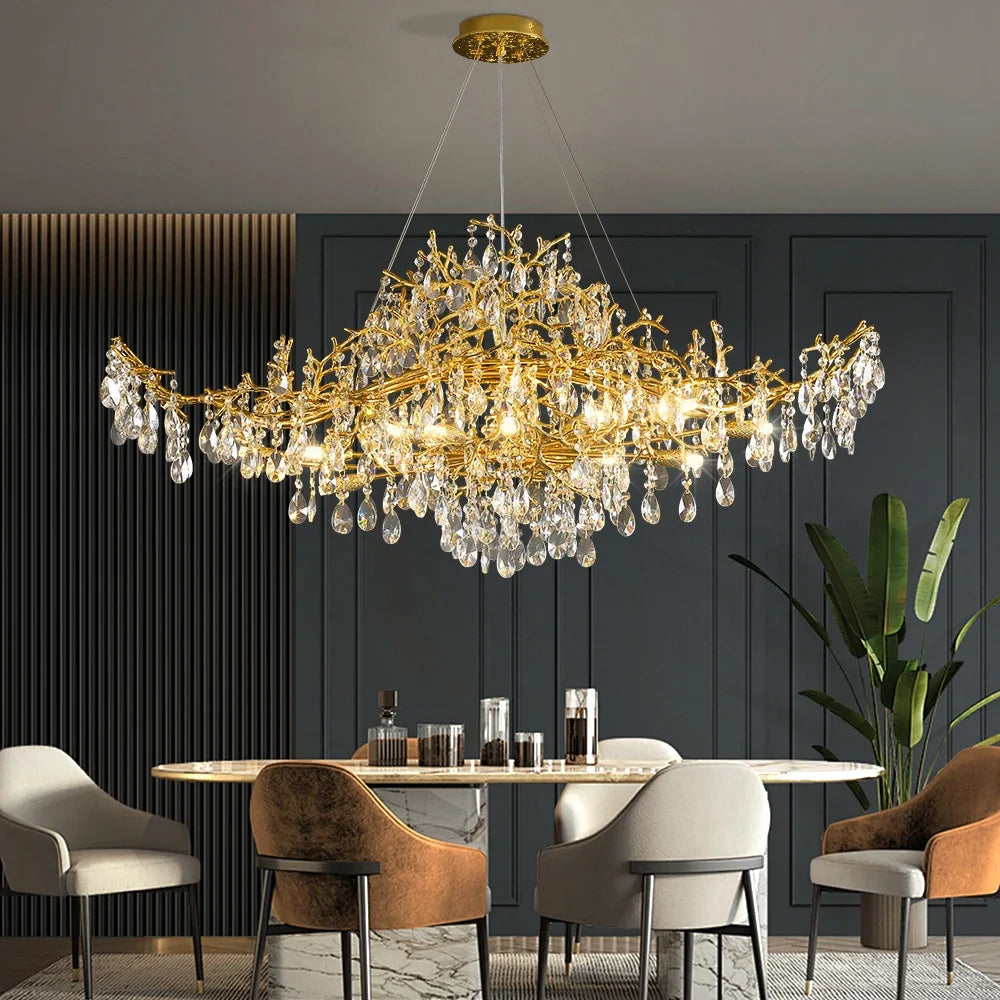
1Bessa Modern Large Gold Crystal Branch Chandelier
Warm Metal · Gold + Crystal 2026 Lead DirectionThe warm metal direction executed correctly: gold on an organic branch frame rather than traditional scrollwork, with crystal used as accent along the arms instead of full dressing. It lands in two current directions at once, which is why this class of design has held rather than passed.
Finish: Gold — warm reflection band
Best rooms: Dining, foyer, living
Pairs with: Walnut, cream, deep green
Light: Warm white on a dimmer
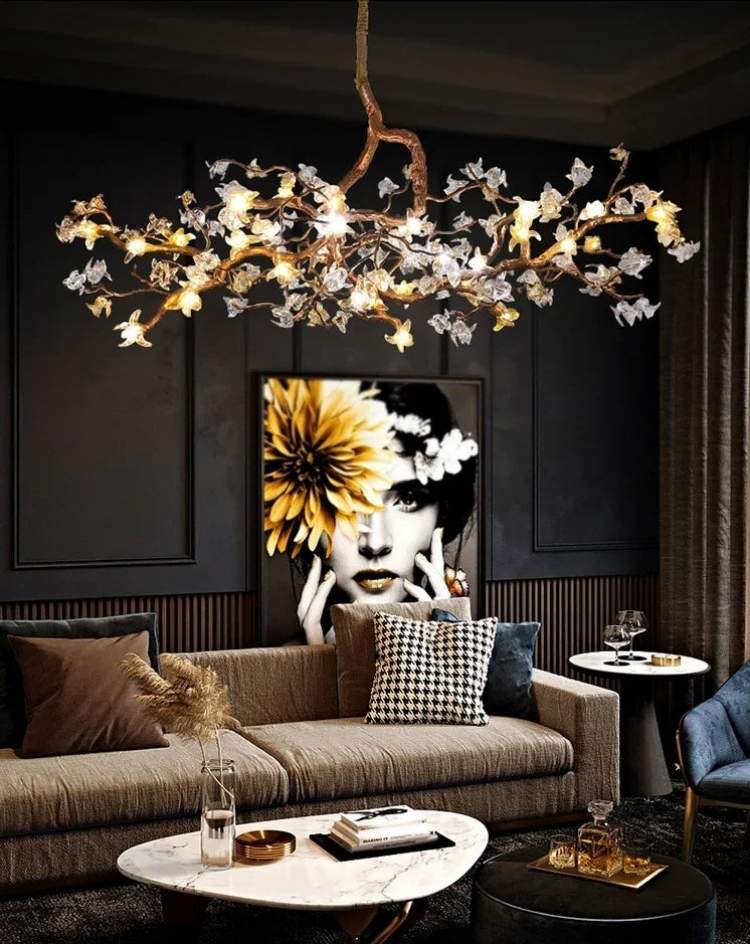
2Asut Sculptural Branch Chandelier Lighting
Sculptural MinimalismOne committed form rather than an arrangement of parts — the direction with the widest reach and the least tolerance for poor proportion. With nothing to hide behind, this class either resolves immediately or never quite does, which makes build quality visible at a glance.
Reads as: An object rather than an arrangement
Best rooms: Open plans, living rooms, modern dining
Check: Proportion and joint quality, both fully visible
Scale: Room length plus width in feet equals inches
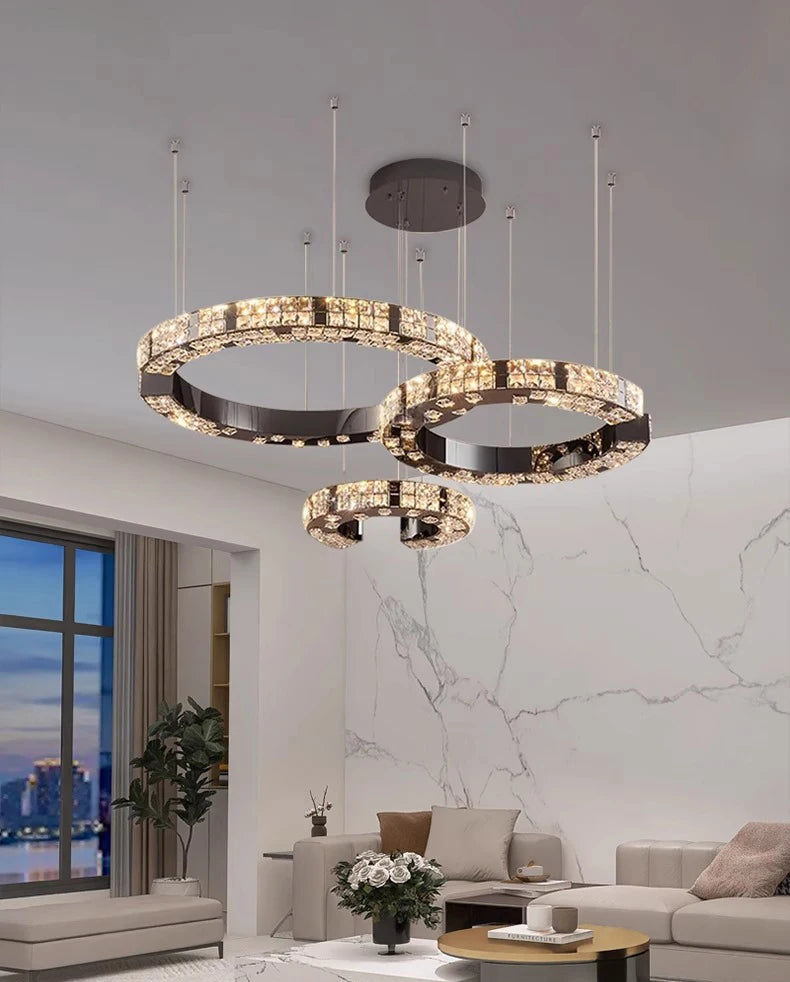
3Cosmo Luxury Circle Crystal Chandelier
Crystal · EditedCrystal on a circular modern frame — the edited version of the material, where the geometry stays legible from across the room instead of disappearing under full dressing. This is the execution that reads as contemporary luxury rather than period revival.
Frame: Stays visible through the crystal
Best rooms: Dining, entry, primary bedroom
Dimmer: Essential — crystal performs best at 30-60% output
Compare with: Full-dress traditional, which needs formal architecture
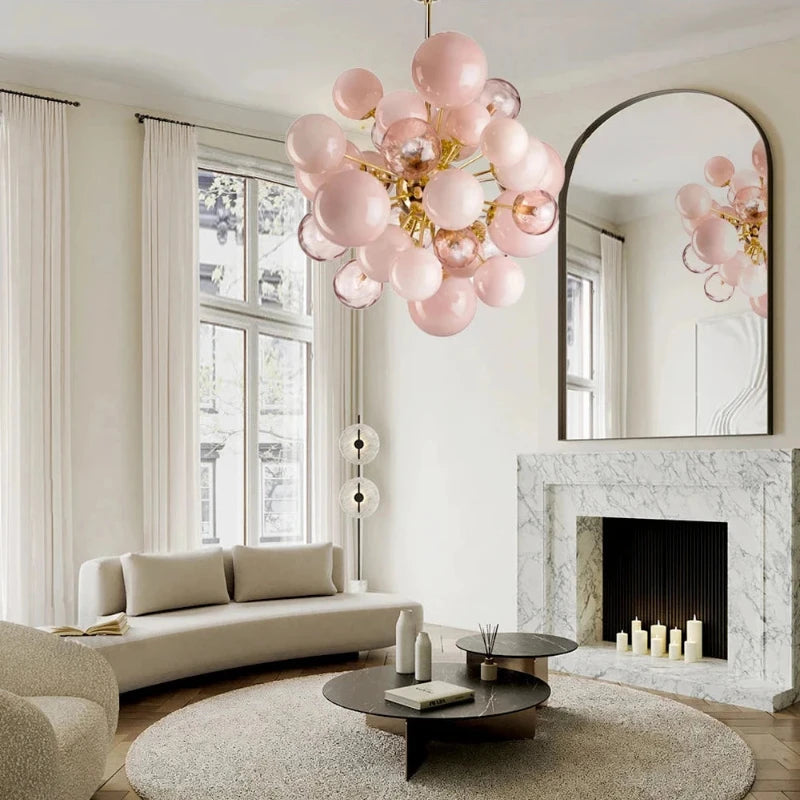
4Neve Glass Bubble Chandelier
Organic Glass · ClusterThe clustered-glass direction at statement scale — a gathering of glowing spheres with no hard edges and no single viewing angle, which is why it works in rooms seen from several directions at once. The form also scales without changing its design language.
Quality check: Hand-blown irregularity catches light; moulded glass does not
Best rooms: Foyer, stairwell, dining, open plans
Viewing: No front or back — reads from every approach
Scales: From compact accent to two-story statement
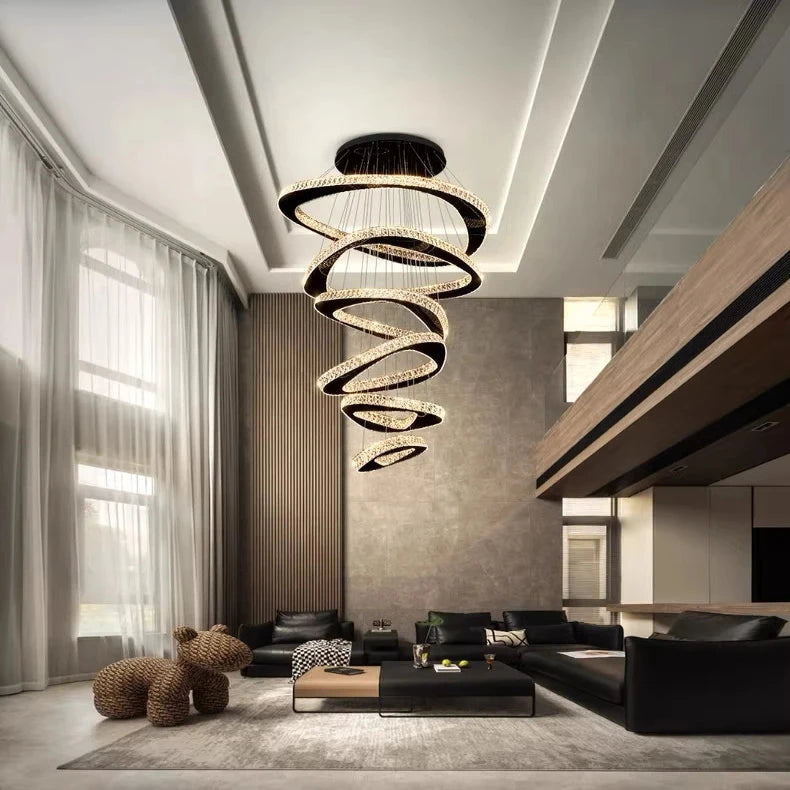
5Twisted Ring Led Light Chandelier for High Ceiling
Integrated LED · Ring Form Technology-Led FormA form that exists only because integrated LED removed the socket — a continuous twisted ring of even light is impossible with bulbs. Built for high ceilings, where the vertical composition uses volume a single-plane fixture would leave empty.
Check: Flicker-free dimming, CRI 90+, driver access
Colour: 2700K-3000K for living spaces
Lifespan: 30,000-50,000 hours in quality designs
Trade: No lamp swaps — specify correctly first time
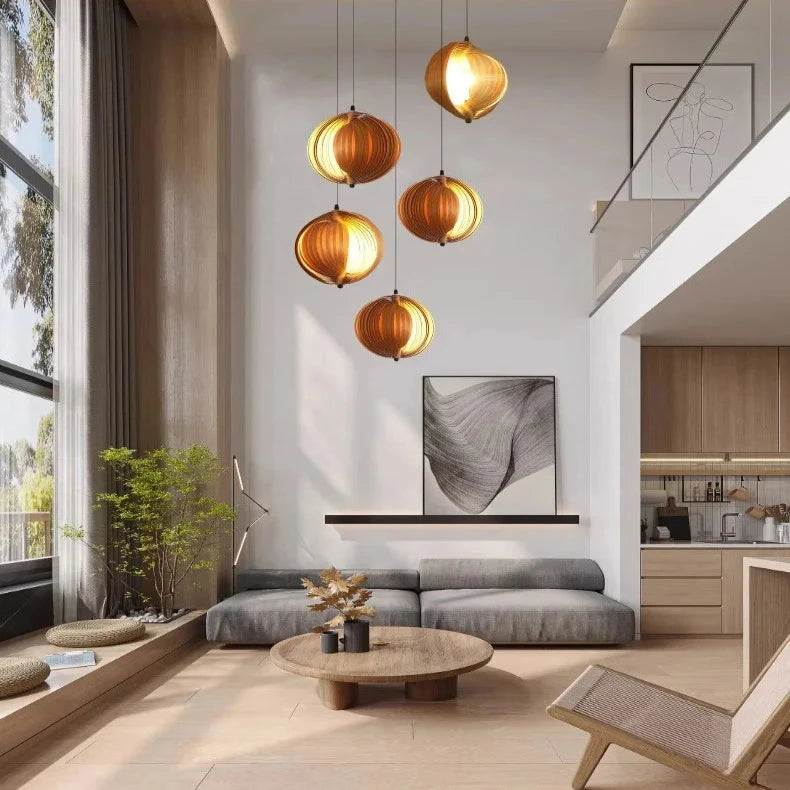
6Nia Wood Staircase Chandelier
Natural Material · WoodTimber carried on a metal armature — the honest partnership behind almost every wood fixture, since wood holds warmth but not tension. Grain registers in daylight, so the fixture works as an object during the hours it is unlit, which no metal design manages.
Why it works: Warmth visible before the fixture is lit
Structure: Metal armature holds geometry; timber supplies surface
Tones: Dark wood and light wood options
Care: Dry dusting; avoid liquid on oiled finishes
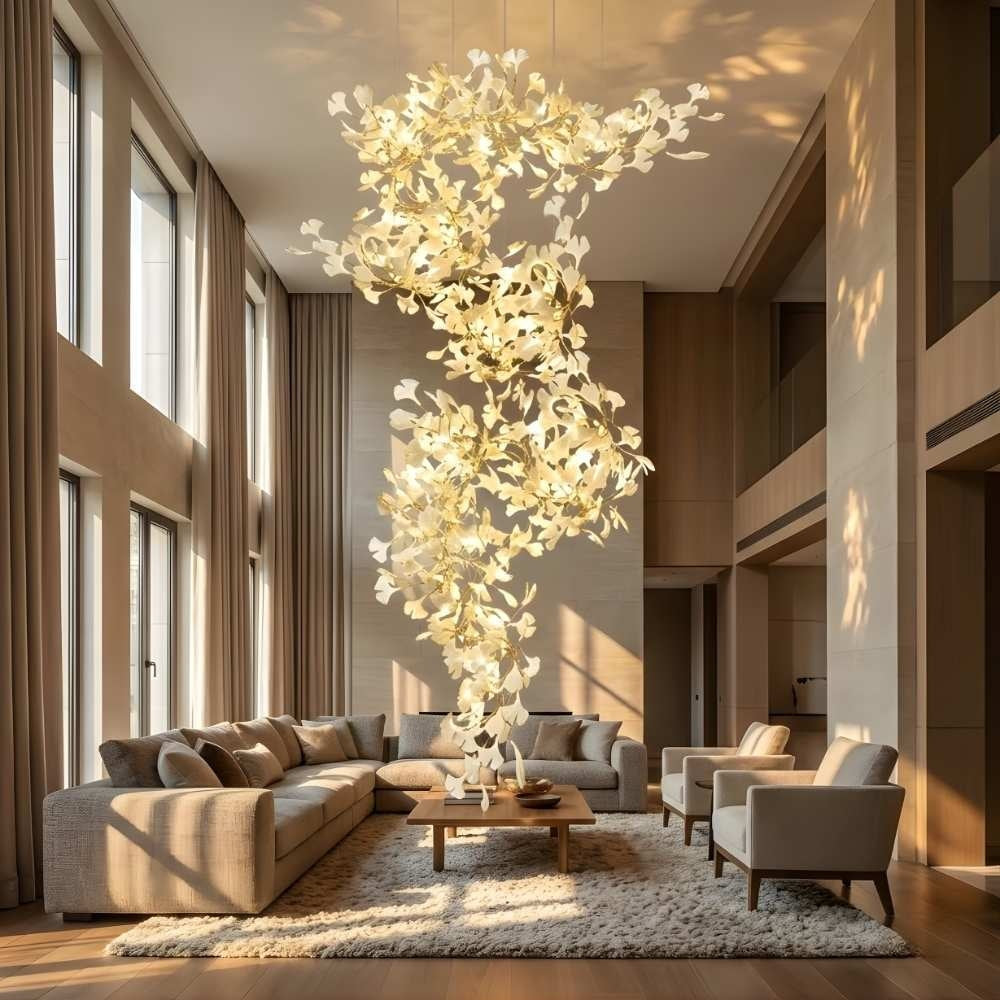
7Calla Luxury Staircase Chandelier
Cascade · Staircase and Two-StoryThe placement where current design shows most clearly: a cascading composition read from two levels and at close range from the stairs. Keep 84 in of clearance above every tread, and centre the composition at or just below the second-floor line.
Clearance: 84 in above every tread and landing
Position: Centre at or below the second-floor line
Mounting: Brace box past 50 lb; blocking past 90 lb
Plan ahead: Decide cleaning access before installation
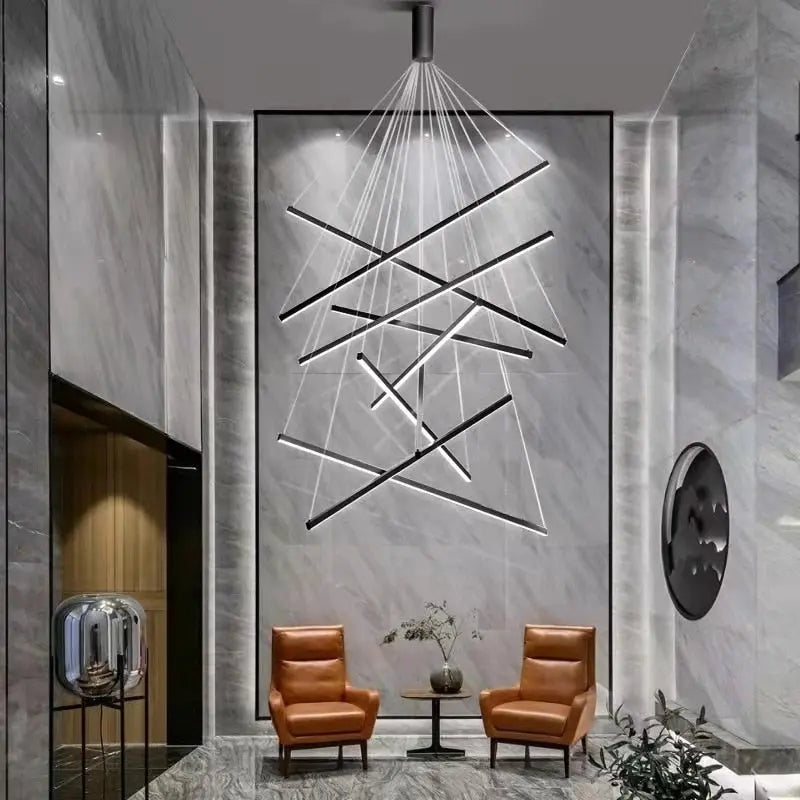
8Cora Contemporary Foyer Chandelier
Transitional · Long-Horizon ChoiceA design that passes all three durability filters: a silhouette describable in one phrase, honest materials, and scale that follows the room formula. Fixtures in this class rarely lead a magazine feature and rarely date either — the right trade in a room you do not plan to redo.
Passes: Simple form, honest material, correct scale
Best for: Foyers, dining rooms, long-term interiors
Finishes: Black, gold, white — wide room tolerance
Style span: Reads correctly with current and classic furniture
Browse the current range
Every direction above is represented across the collections.
All Chandeliers → Modern → Staircase → Oversized →What Is Fading
Trends are easier to judge in reverse. Four things are receding, and each for a reason rather than by fashion accident.
- Polished chrome as a default. It still suits contemporary and monochrome rooms, but as the automatic choice it has been replaced by warm metals and matte black. Chrome also shows fingerprints and dust more than any alternative.
- Full traditional crystal in casual rooms. The full-dress tiered fixture is not obsolete — it is now specific. Without moulding, a formal table or real volume to support it, it reads as costume rather than heritage.
- Uniform mini-shade multiples. Five or six identical small shades on a frame was the transitional default for years. Current design either commits to one form or repeats a genuinely simple element, not a busy one.
- Faux-industrial cage overload. Exposed-bulb cage designs remain valid in rustic and loft settings, but the phase of putting them in every room has passed. They work where the architecture supports them.
Choosing a Trend That Lasts
The useful question is not whether a design is current but whether it will still look considered in ten years. Three filters answer it, and a design passing all three is safe regardless of what the cycle does next.
Simple silhouette. Can you describe the fixture's shape in one short phrase? Forms that need a paragraph tend to be assemblies of details, and details date faster than shapes.
Honest material. Real metal, real glass, real crystal, real wood. Imitations do not age — they degrade, and they photograph better than they live. Weight in the hand is the quickest test.
Correct scale. The most common reason a fixture looks wrong has nothing to do with its style. Use the room formula — length plus width in feet gives target diameter in inches — and size to the table rather than the room where a table is involved. A correctly scaled traditional fixture beats an incorrectly scaled fashionable one every time.
Common Mistakes
- Buying the trend instead of the room. A direction that leads nationally may not suit your architecture. Match the fixture to the house first, the moment second.
- Chasing every direction at once. Warm metal plus organic glass plus natural material plus statement crystal in one room produces noise. Choose one lead and let the rest support it.
- Assuming crystal is dated. Full traditional dressing has narrowed; crystal itself is thriving in its edited form. The material was never the problem.
- Judging integrated LED by price alone. Two fixtures at similar prices can differ enormously in dimming quality and colour rendering — and neither can be fixed with a bulb change afterward.
- Ignoring scale in favour of style. An undersized fixture reads as an oversight regardless of how current the design is. The formula comes before the shortlist.
- Skipping the dimmer. Every direction above assumes dimming. Without it, a room gets one brightness setting for the fixture's life.
- Forgetting the unlit hours. A fixture is off for most of the day. Natural materials and clear silhouettes work in daylight; heavily lit-dependent designs do not.
- Mixing colour temperatures across a room. Specify every fixture in one space to the same target — 2700K to 3000K in living areas — or the room reads unsettled without an obvious cause.
Frequently Asked Questions
What are the latest chandelier designs in 2026?
Six directions lead: warm metals (aged brass, gold, copper), sculptural minimalism, sparse crystal on modern frames, organic and textured glass, integrated LED forms such as rings and discs, and natural materials including wood, rattan and stone.
What chandelier styles are out of style?
Polished chrome as a default finish, full traditional crystal in casual rooms without architectural support, uniform mini-shade multiples, and faux-industrial cage designs used in every room. Each still works in its correct setting.
Are crystal chandeliers still in style?
Yes, in edited form. Sparse crystal on clean modern frames is one of the strongest current directions; what has narrowed is full traditional dressing, which now needs formal architecture to support it.
What finish is replacing chrome?
Warm metals — aged brass, gold and copper — with matte black as the graphic alternative. Brushed and burnished finishes lead over mirror-polished ones at every price tier.
What is sculptural minimalism in lighting?
Designs that commit to one clear form — a ring, a spread, a cluster — rather than arranging many small elements. Fewer parts, cleaner geometry, and the form itself acting as the ornament.
Are LED chandeliers a trend or a permanent shift?
A permanent shift in what shapes are possible. Continuous rings and slim discs exist only because integrated LED removed the socket. The trade is that the light source cannot be changed later, so dimming quality and colour rendering matter at purchase.
What is trending for staircase chandeliers?
Cascading compositions of repeated elements at staggered heights, vertical linear designs that read as a single drawn line, and sculptural clusters that fill height from one ceiling point. All keep 84 in of clearance above every tread.
What height should a staircase chandelier hang?
Keep 84 in of clearance above every tread and landing, measured from the tread nose directly beneath the fixture's lowest point, and centre the composition at or just below the second-floor line so both levels see it.
How do I choose a chandelier that will not date?
Apply three filters: a silhouette you can describe in one short phrase, honest materials rather than imitations, and correct scale from the room formula. Designs passing all three age well regardless of the cycle.
What size chandelier do I need?
Add the room's length and width in feet; the sum in inches is the target diameter. Over a dining table, size to the table instead — one-half to two-thirds of its width — hung 30 to 36 in above the surface.
Can I mix trends in one room?
Choose one lead direction and let the others support it. Warm metal plus organic glass plus natural material plus statement crystal in a single room produces noise rather than layering.
Do current designs still need dimmers?
More than ever. Every direction above assumes a dimmer, and integrated LED designs in particular cannot be softened later by fitting a lower-output lamp.
Direction Over Season
The six directions above have held for three years, which is what separates a direction from a season. Choose the one that suits your architecture, let it lead while the others support, and run the three durability filters before ordering — simple silhouette, honest material, correct scale. A fixture passing those will still look considered long after the next cycle has come and gone.
Browse the range: chandeliers, modern chandeliers, crystal chandeliers, staircase chandeliers.


