

Key Takeaways
| Question | Answer |
|---|---|
| What first? | One color temperature everywhere, LED bulbs, dimmers on main fixtures — low effort, whole-house effect. |
| Which fixtures to replace first? | Entry, dining table, kitchen island, then hallway and bedroom domes. |
| How much does LED save? | Residential LEDs use at least 75% less energy and last up to 25 times longer than incandescent bulbs, per the U.S. Department of Energy. |
| Which color temperature? | 2700–3000K in living rooms, bedrooms, dining rooms, halls; 3000–3500K kitchens; 3500–4000K offices and laundry. |
| Biggest mistake? | Mixed color temperatures and one overhead light per room with no second layer. |
| DIY or electrician? | Swapping a fixture on an existing box or adding a dimmer: usually DIY. New boxes, circuits, recessed cans, or moving a box: electrician. |
Quick Facts
- Lumen targets: 10–20 lm/sq ft living rooms, bedrooms, hallways; 20–30 dining; 30–40 kitchens and work areas.
- Dimmers must match the LED driver type — TRIAC, ELV, or 0–10V — or fixtures flicker and buzz.
- Integrated-LED fixtures with switchable color usually ship on 6000K; set them to 3000K on first use.
- A fixture over 50 lb needs a ceiling box rated for the load on a joist or brace bar.
- Three layers per main room: ambient (ceiling), task (pendants, under-cabinet, reading lights), accent (wall lights, picture lights).
- CRI 90 or higher keeps skin, food, wood, and paint colors natural.
Upgrades Ranked by Impact and Effort
The order matters because the cheapest changes fix the problems people notice most. A house where every room is a different color of white — a 2700K lamp next to a 5000K ceiling light, a 6000K LED fixture down the hall — looks unplanned no matter how good the fixtures are, and fixing it costs only bulbs. Dimmers change the dining room and bedroom more than a new fixture would. After those, money goes furthest on the fixtures visitors see first and the ones over surfaces people use every day.
| Upgrade | Impact | Effort | DIY? | Notes |
|---|---|---|---|---|
| One color temperature per house | High | Low | Yes | 2700–3000K living spaces, 3000–3500K kitchen; reset switchable LEDs |
| LED bulbs throughout | Medium–high | Low | Yes | Match base (E26, E12, G9) and choose dimmable where dimmers will go |
| Dimmers on main fixtures | High | Low–medium | Usually | Match driver type; LED-rated dimmer |
| Re-hang dining fixture | High | Low | Yes | 30–36 in above the table; center on the table, not the room |
| Under-cabinet LED | High in kitchens | Low–medium | Plug-in yes; hardwired no | Puts task light on the counter, not the cook's back |
| New entry or dining chandelier | High | Medium | Usually | Size to the room or table; rated box over 50 lb |
| Replace hallway/bedroom domes | Medium | Low | Yes | Flush or low semi-flush; same box |
| Wall lights | Medium–high | Medium | Plug-in yes; hardwired no | Second layer for living rooms, halls, bedside |
| Recessed lights or new boxes | High | High | No | Electrician and permit in most areas |
LED Retrofit: Bulbs First, Fixtures Second
If any incandescent, halogen, or CFL bulbs are still in the house, they are the first thing to go. According to the U.S. Department of Energy, residential LEDs — especially ENERGY STAR-rated ones — use at least three-quarters less energy than incandescent lighting and last up to 25 times as long, which means fewer ladder trips to high fixtures as well as lower bills. Choose by lumens, not watts (800 lumens replaces an old 60-watt bulb), match the base the fixture takes, and buy dimmable bulbs for any socket that will be on a dimmer. Integrated-LED fixtures go further: no bulbs at all, 25,000 to 50,000 hours of life, and often a remote that dims and switches color. When a fixture is due for replacement anyway, choosing integrated LED removes the bulb question for the next 15 years.
Dimmers and Controls
A dimmer is the single most effective upgrade for any room used in the evening. It lets the dining room run at full output for homework and at a third for dinner, and lets the living room drop to a level a ceiling fixture alone never could. The catch is compatibility: LED fixtures and bulbs need an LED-rated dimmer that matches the driver — TRIAC (forward phase), ELV (reverse phase), or 0–10V — listed on the product page; the wrong match causes flicker, buzz, or a fixture that will not dim below half. Fixtures with built-in remote or app dimming skip the wall dimmer entirely, which makes them the easiest upgrade on an existing switch. Smart switches and bulbs add schedules and scenes, useful for entries and exterior lights; for most interior rooms a good dimmer does 90% of the job. Driver types are explained in the dimmer and color temperature guide.
One Color Temperature, Room to Room
Mixed color temperature is the most common reason a house looks under-designed. Choose one warm white for every living space — 2700K or 3000K — and use it in every fixture, bulb, and lamp in those rooms; move to 3000–3500K only in the kitchen and 3500–4000K only in offices, laundry, and garages. Integrated-LED fixtures with a switchable setting usually ship on 6000K, which reads as a cold, blue office light; set them to 3000K the day they go up. Keep CRI at 90 or higher where color matters — kitchens, bathrooms, dining rooms, closets — so food, skin, and paint look like themselves. The full scale is in the lighting color temperature guide.
Layering: Stop Relying on One Ceiling Light
A room lit by a single overhead source has bright floors, dark walls, and shadows under every face. The fix is three layers: ambient light from the ceiling fixture, task light where work happens (island pendants, under-cabinet strips, reading lamps, bedside wall lights), and accent light on walls (sconces, picture lights, lit shelves). Adding even one wall-mounted or lamp layer to a living room or bedroom changes it more than a larger ceiling fixture would, because it lights the vertical surfaces the eye actually reads. Plug-in and battery wall lights make this possible without wiring; the options are in installing wall lights in old homes with limited wiring, and mounting heights in the wall sconce height guide.
Room-by-Room Fixture Upgrades
| Room | Common problem | Upgrade | Target |
|---|---|---|---|
| Entry / foyer | Small builder fixture, too low or too dim | Chandelier or semi-flush sized to the room (L + W in inches); taller form in two-story entries | 1,500–3,000 lm, 2700–3000K, dimmer |
| Dining room | Wrong size, hung too high, cold light | Fixture at ½–⅔ of table width (linear ⅔–¾ of length), 30–36 in above the table | 20–30 lm/sq ft, dimmer |
| Kitchen | One center light; shadows on counters | Island pendants or linear fixture + under-cabinet LED + flush ceiling light | 30–40 lm/sq ft total, 3000–3500K |
| Living room | Fan light or dome only | Chandelier or ring at room L + W in inches, plus lamps and wall lights | 10–20 lm/sq ft, dimmer |
| Hallway | One dome, dark ends | Matching flush mounts every 8–10 ft, or a linear flush | 10–20 lm/sq ft |
| Bedroom | Harsh overhead, no bedside light | Flush or semi-flush on a dimmer + bedside wall lights | 1,500–2,500 lm, 2700K |
| Stairs | Treads in shadow | Step or wall lights along the run + landing fixture on a three-way switch | Even light on every tread |
Each row has its own guide: modern kitchen light fixtures by layout, modern hallway ceiling lights, semi-flush mount ceiling lights, flush mount chandeliers for low ceilings, and indoor stair lights. For sizing any chandelier, the chandelier size calculator does the arithmetic; lumen targets are in how much light does my room need.
DIY or Electrician?
Replacing a fixture on an existing ceiling box, swapping a switch for a compatible dimmer, and adding plug-in lights are usually homeowner jobs: power off at the breaker, match black to black, white to white, ground to ground, and confirm the box rating for anything over 50 pounds. New boxes, new circuits, recessed lights, moving a box to re-center a fixture, hardwired under-cabinet or wall lights, and anything in a bathroom wet zone or outdoors are electrician work and usually need a permit. If a house still has two-wire circuits with no ground, aluminum wiring, or warm or discolored switch plates, an electrician should look before any upgrade goes in. Installation basics are in how to install a chandelier.
Five Upgrade Mistakes
Buying fixtures before fixing color temperature, which leaves a new chandelier under mismatched light. Sizing by photograph rather than by measurement — fixtures look smaller online than on the ceiling. Hanging the dining fixture where the box is rather than over the table. Adding brightness without a dimmer, so rooms are either glaring or dark. And replacing every fixture with the same model, which makes a house read like a hotel corridor — match the finish and the color temperature, vary the form by room.
Quick decision: where to spend first
Smallest budget: LED bulbs at one color temperature + one dimmer in the dining room • A weekend: under-cabinet LED, plug-in wall lights, replace hallway and bedroom domes • One fixture to buy: the entry or the dining chandelier, sized to the room • Kitchen refresh: island pendants or linear fixture + under-cabinet strips • Bigger project: recessed or new boxes and stair lighting with an electrician • Always: 2700–3000K, CRI 90+, LED-rated dimmers matched to drivers.
Fixtures for the Most Common Upgrades
Six fixtures that solve the upgrades above — a smarter flush mount, a correctly sized dining fixture, a living-room chandelier, a ring for 9-foot rooms, a linear flush for long spaces, and stair lights.
Ceiling and dining upgrades

The Nelis Modern Smart LED Flush Mount Ceiling Light is the dome replacement: a shallow integrated-LED fixture with app and remote dimming and switchable color, on the existing box, for hallways, bedrooms, and kitchens with 8-foot ceilings. No wall dimmer needed.
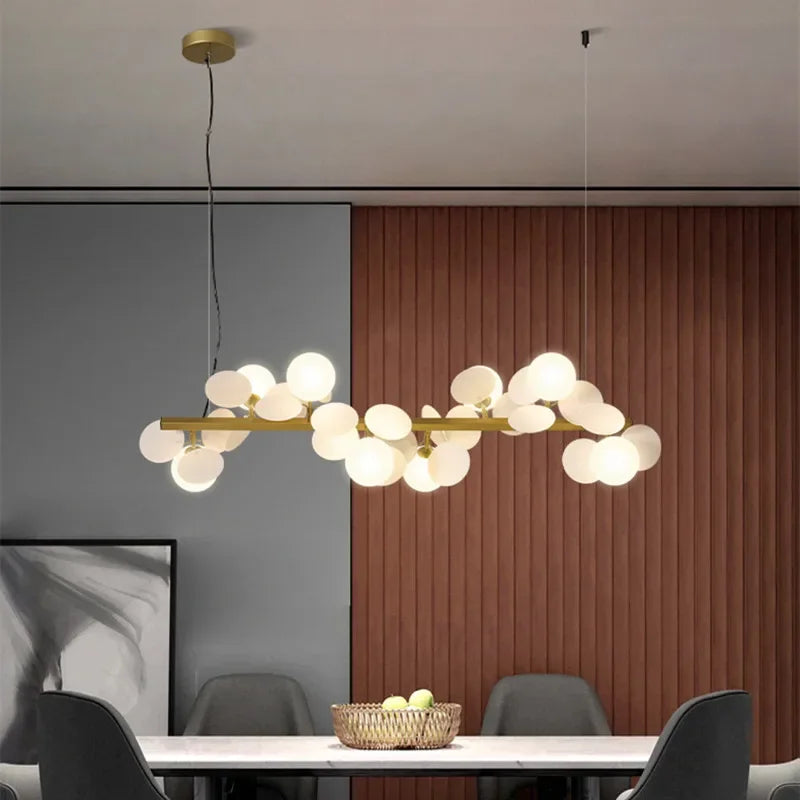
The Eli Glass Globes Linear Chandelier for Dining Room is the dining-room upgrade for a rectangular table: a linear row of glass globes sized at two-thirds to three-quarters of the table length, hung 30 to 36 inches above it. It replaces the undersized center fixture most dining rooms start with.
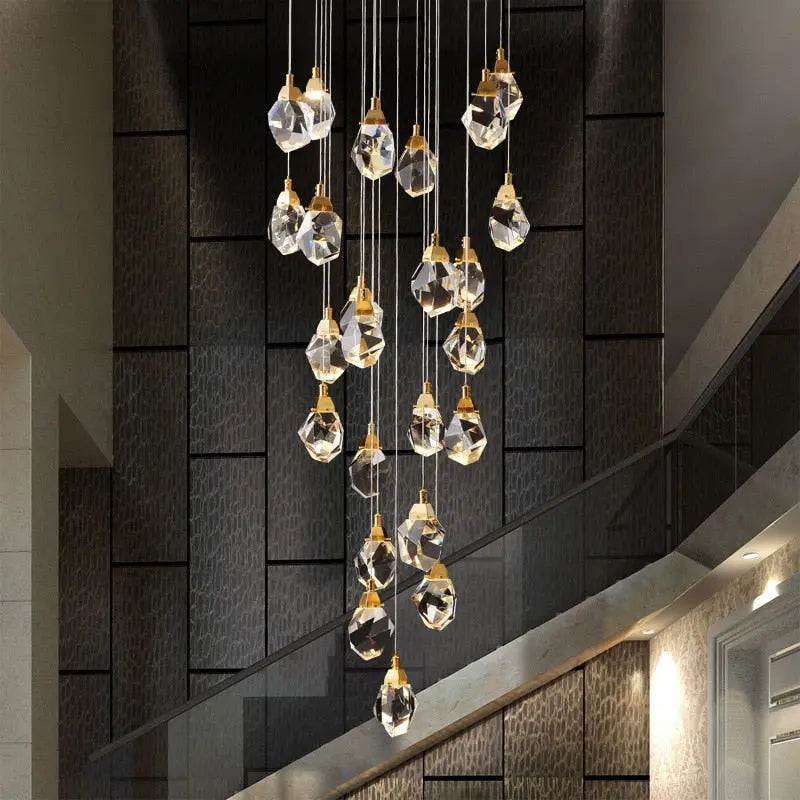
The Modern Crystal Chandelier for High Ceiling Living Room, in gold or black, is the straightforward living-room or entry upgrade: a modern crystal fixture in several sizes, warm 3000K options, for replacing a fan light or builder fixture in a room with a 9-foot ceiling or higher.
Modern forms, long spaces, and stairs
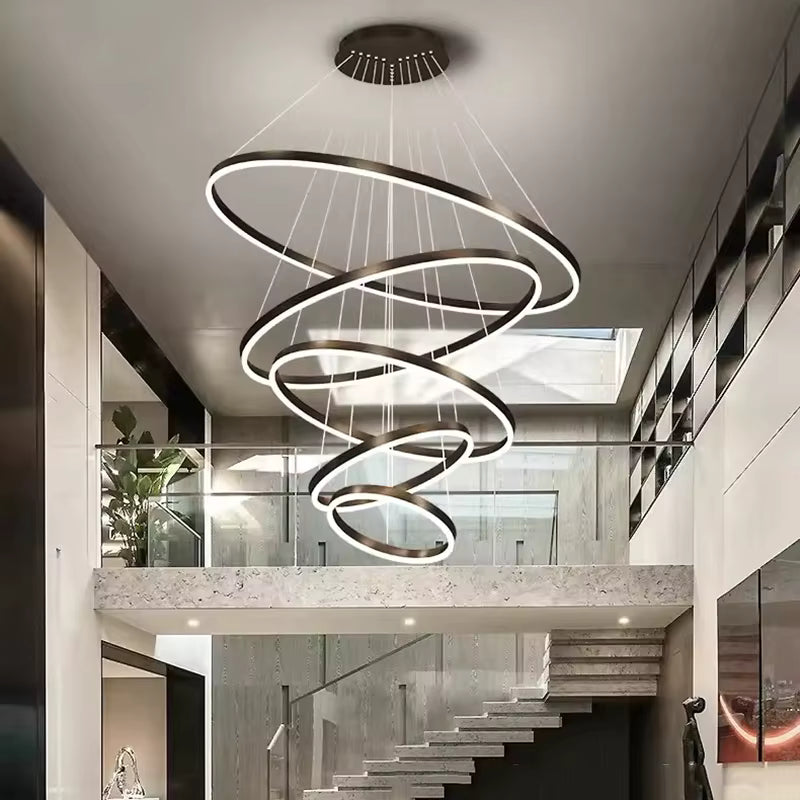
The Aysan Modern Ring Chandeliers, in two- to seven-ring versions, is the integrated-LED upgrade for a living or dining room that wants a modern fixture with remote dimming — two rings on a 9-foot ceiling, more as the ceiling rises.
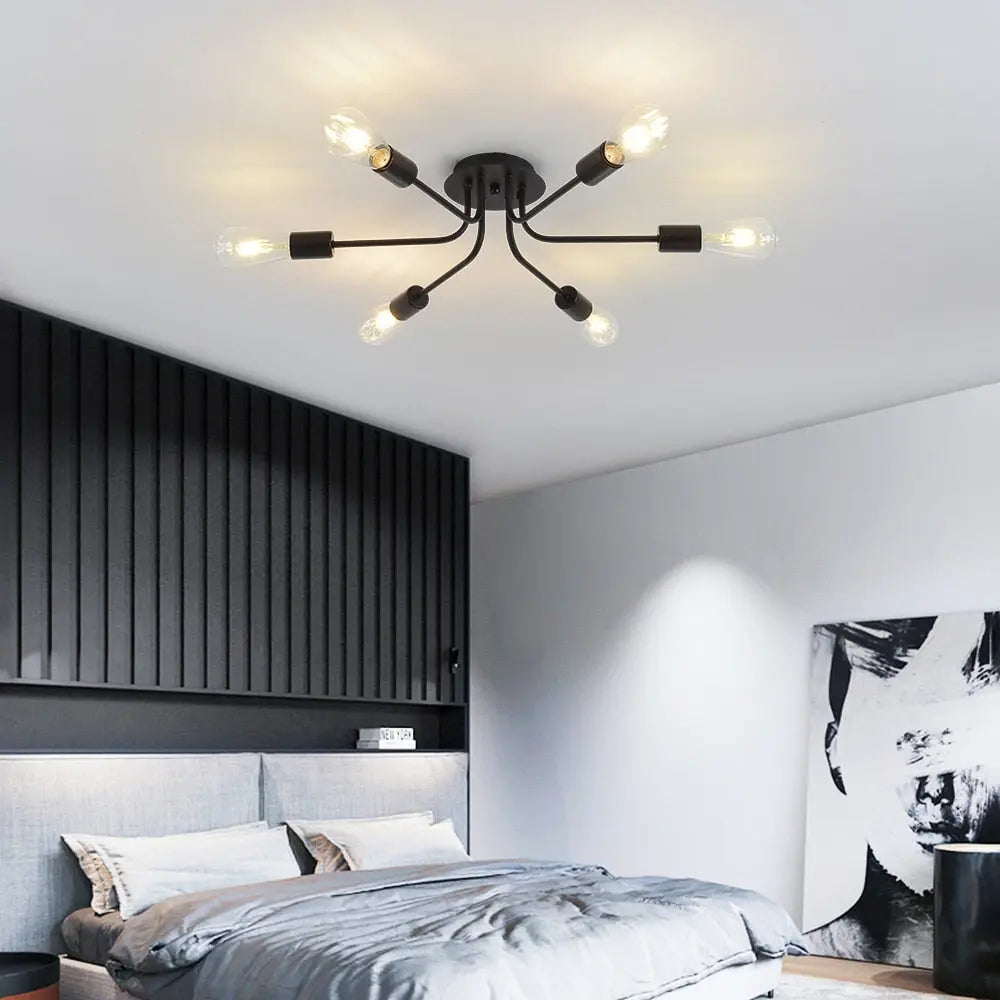
The Flush Mount Linear Chandelier, in black or gold, lights a long hallway or a kitchen from one box: a linear bar mounted along the space that replaces one dome with even light end to end.
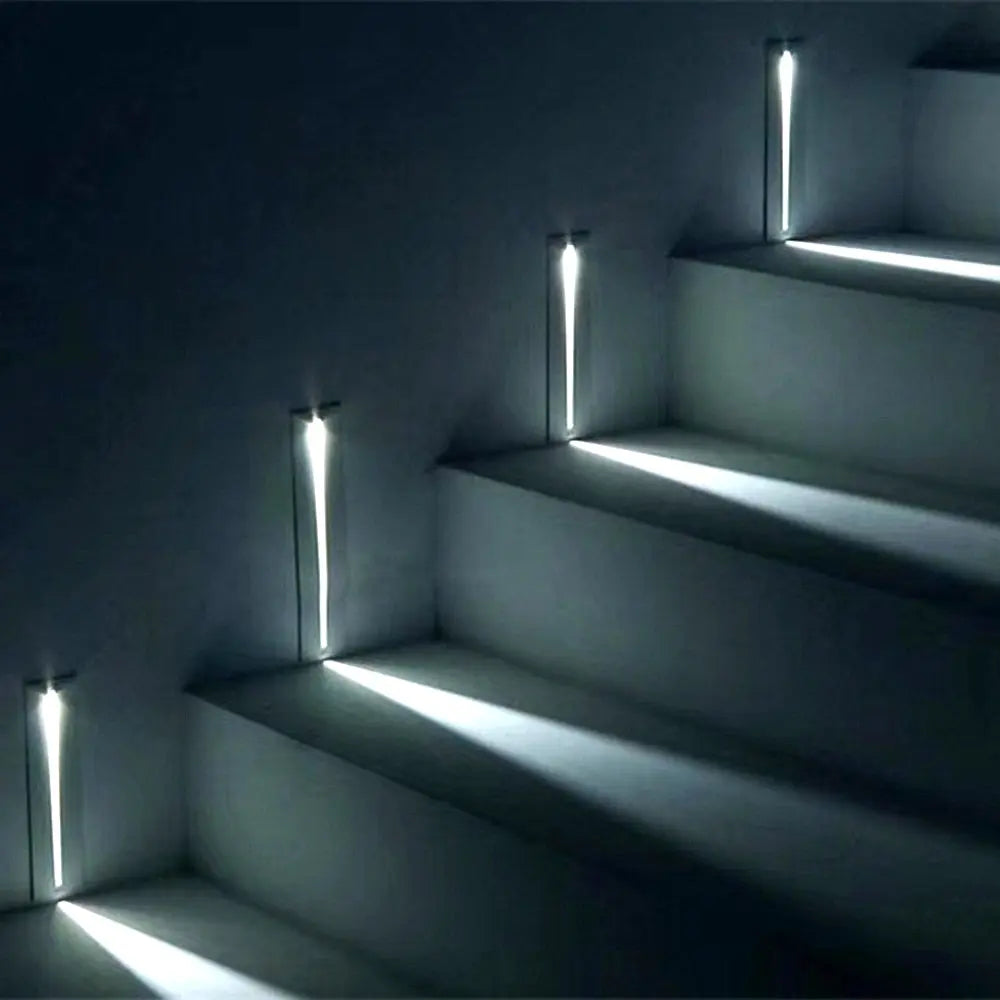
The LED Lights for Staircase Wall, in black, white, or silver, are low step lights for the wall beside the treads — the stair-safety upgrade that puts light where feet land, on a three-way switched circuit or a sensor.
Flush mounts, dining and living room chandeliers, wall lights, and stair lights for every room.
Ceiling Lights Dining Room Wall Lights Foyer
Frequently Asked Questions
What lighting upgrade adds the most impact for the least money?
Putting every room on one warm color temperature with LED bulbs, then adding dimmers to the dining room, living room, and bedroom fixtures. Together these change how the whole house looks for the cost of bulbs and a few switches.
Which light fixtures should I replace first?
The ones people see most and use most: the entry or foyer fixture, the dining chandelier, and the kitchen island lighting. Hallway and bedroom domes come next because they are cheap and quick to swap on the existing box.
Are LED upgrades worth it?
Yes. The U.S. Department of Energy reports that residential LEDs use at least 75% less energy and last up to 25 times longer than incandescent bulbs, which cuts both bills and bulb changes on high fixtures. Integrated-LED fixtures last 25,000 to 50,000 hours.
What color temperature should I use throughout my house?
2700K or 3000K in living rooms, bedrooms, dining rooms, and hallways; 3000–3500K in the kitchen; 3500–4000K in offices, laundry, and garages. Keep every fixture in a room at the same value and choose CRI 90 or higher.
Why do my LED lights flicker on a dimmer?
The dimmer does not match the LED driver. Check the product page for TRIAC, ELV, or 0–10V and install a matching LED-rated dimmer; also confirm every bulb on the circuit is marked dimmable.
How do I add light to a room without new wiring?
Use plug-in or battery wall lights, floor and table lamps, plug-in under-cabinet strips, and smart bulbs in existing sockets. Fixtures with built-in remote dimming also avoid rewiring a switch.
Can I replace a light fixture myself?
On an existing ceiling box, usually yes: power off at the breaker, connect black to black, white to white, ground to ground, and check the box is rated for fixtures over 50 pounds. New boxes, circuits, recessed lights, and wet or outdoor locations need an electrician.
How bright should each room be?
About 10–20 lumens per square foot in living rooms, bedrooms, and hallways, 20–30 in dining rooms, and 30–40 in kitchens and work areas, from all fixtures combined.
Should every light fixture in my house match?
Match the finish and the color temperature, not the model. Repeating one metal and one warm white ties the house together; varying the form by room keeps it from looking like a hotel corridor.
Do smart lights count as an upgrade?
They help for schedules, scenes, entries, and exterior lights. For most interior rooms, a correctly matched dimmer and one color temperature deliver most of the benefit; smart controls are a layer on top, not a substitute.
Planning Your Lighting Upgrade
Walk the house at night with every light on, note the rooms that look like a different color, the surfaces in shadow, and the fixtures that are too small or too low, and fix them in that order — color, control, then fixtures. A house upgraded that way looks planned rather than accumulated, and the expensive purchases land in rooms that are already lit correctly around them.
Start with ceiling lights for dome replacements, dining room lighting and foyer lighting for the fixtures guests see first, and wall lights for the second layer. For kitchens specifically, read kitchen chandeliers: island or table.


