

A high-ceiling entryway is the rare space where a chandelier can be as tall as it is wide — and the fixtures that work there follow different rules than the ones over a dining table or in a standard hall. This guide covers how to size and choose a chandelier for a soaring entrance, five statement fixtures built for the job, and the specifics of two-story foyers, cathedral ceilings, and 20-foot drops.
What Makes a High-Ceiling Entry Different
Standard entry fixtures solve a horizontal problem — spread light across a room. A high-ceiling entrance adds a vertical one: there's a tall volume of empty air above the door that a normal fixture leaves gaping. The chandelier's job here is to occupy that vertical space gracefully, which is why the fixtures that succeed are the ones with real drop — cascading tiers, long columns of crystal or glass, multi-level clusters — rather than a single wide fixture stranded near the ceiling.
The second difference is viewing angle. In a two-story entry, people see the fixture from the ground floor looking up and from the upstairs landing looking across or down. That double sightline rewards fixtures designed to look finished from every angle and rules out ones with an ugly top of exposed wire and hardware. If your entry is compact and standard-height instead, the fixtures and rules are different — the compact entryway lighting guide covers that space.
The 5 Best High-Ceiling Entryway Chandeliers
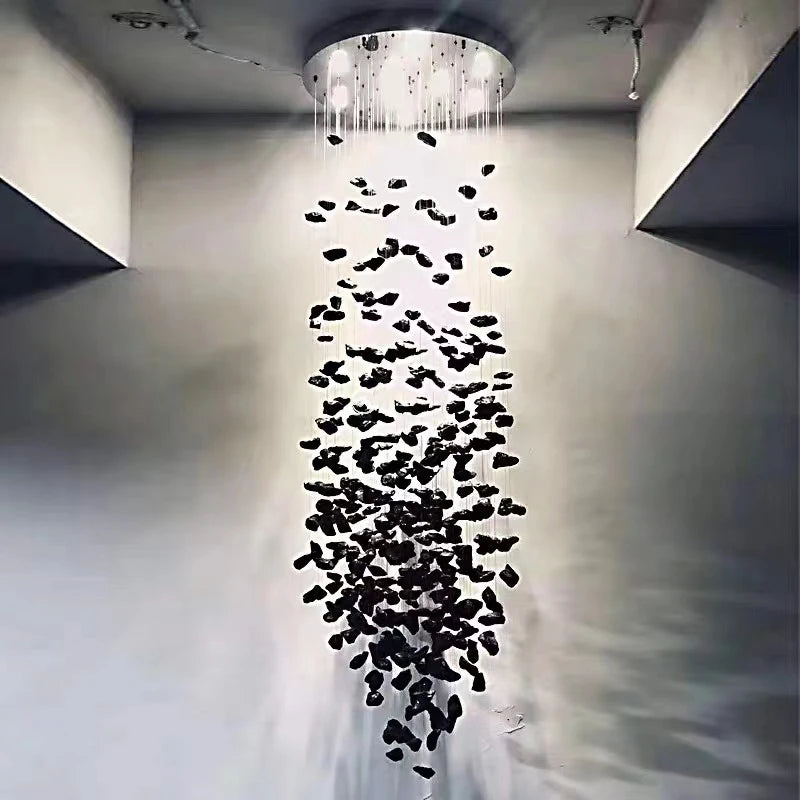
1. Assena Large Black High-Ceiling Entryway Chandelier — best bold statement
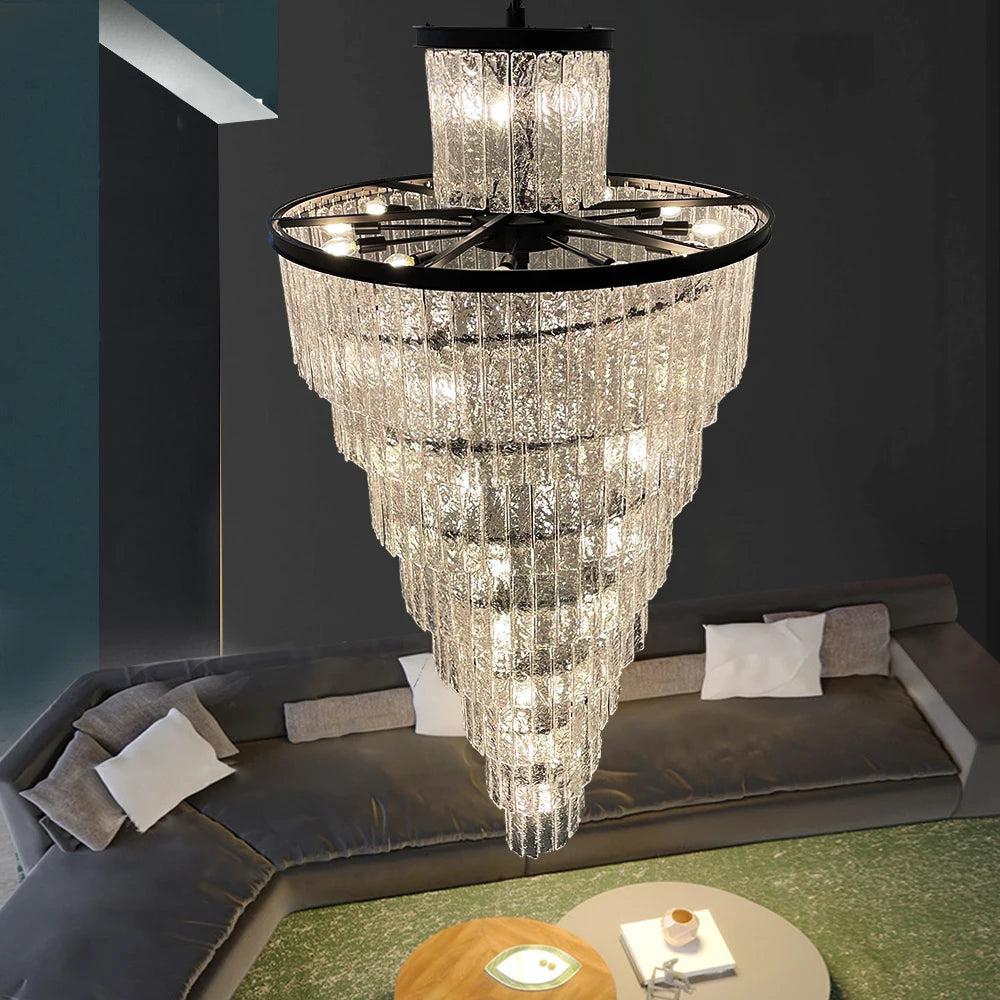
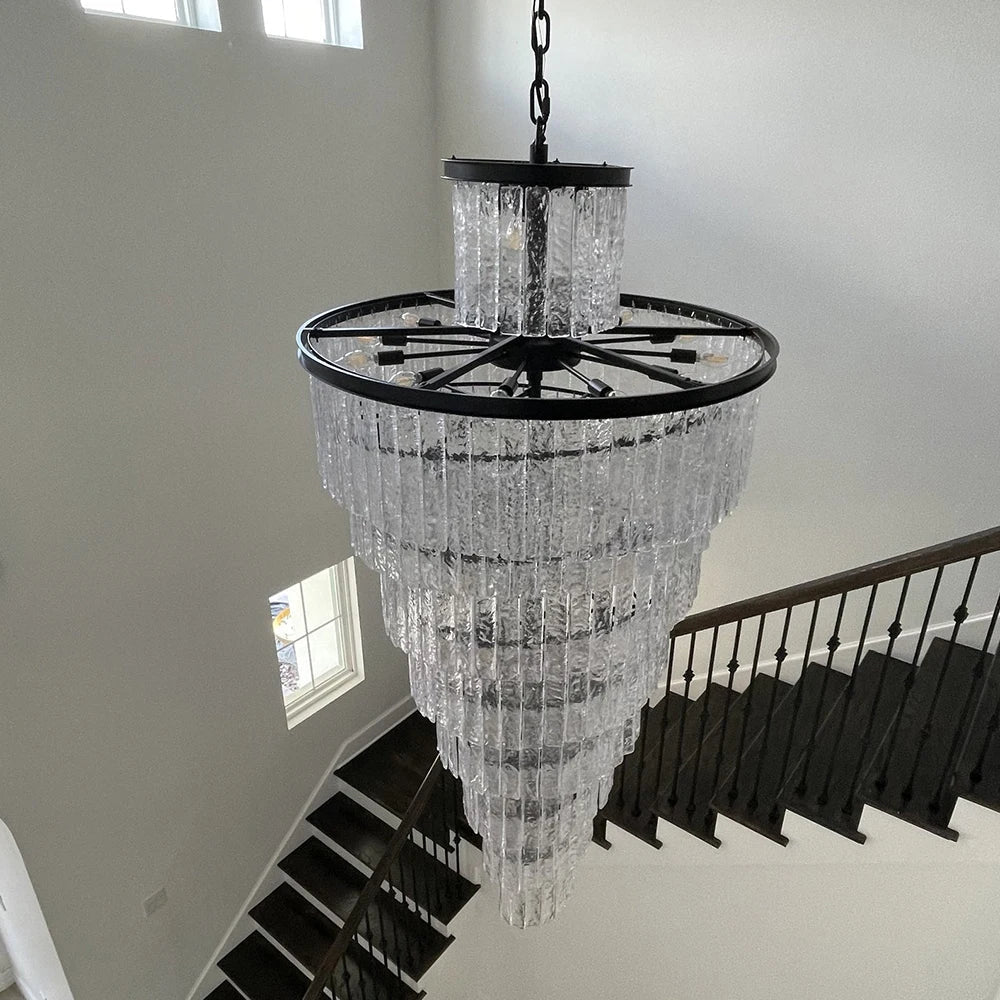
At 250 cm (about 8.2 feet) of drop, the Assena is built specifically for the vertical challenge — a spiral glass-crystal column that fills the tall air above a grand door rather than hovering near the ceiling. The black finish is the interesting choice: where most statement entry fixtures default to clear or gold, black reads modern and holds its own against light-colored walls and stone. Dimmable with warm and cool white modes, in stainless steel and crystal.
2. Aysha Black Crystal High-Ceiling Entryway Fixture — best modern drama
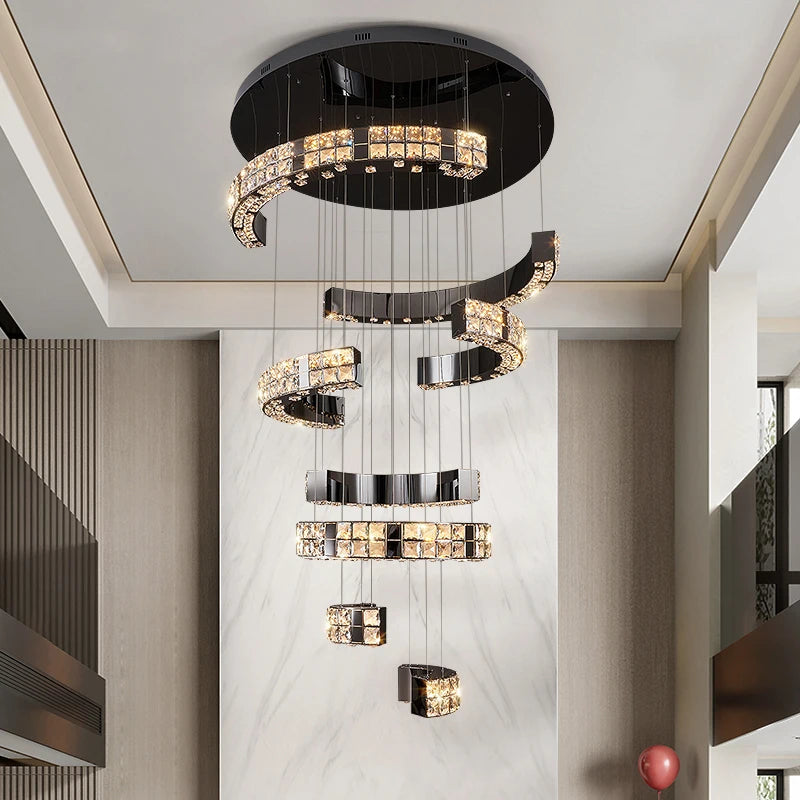
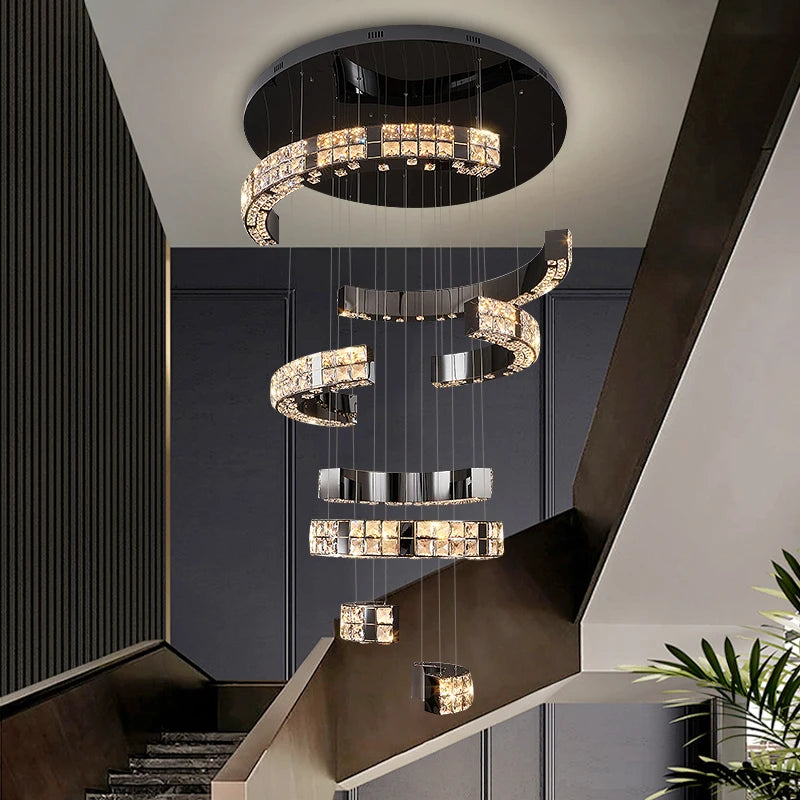
Nearly 110 inches tall, the Aysha uses black crystal to do something clear crystal can't — create a play of light and shadow rather than pure sparkle, which gives a tall entry genuine drama instead of just glitter. Dimmable LED keeps the substantial fixture energy-efficient, and the dark crystal reads equally well in contemporary and moody-traditional entries.
3. Clear Crystal Bubble Chandelier — best vertical column for narrow tall entries
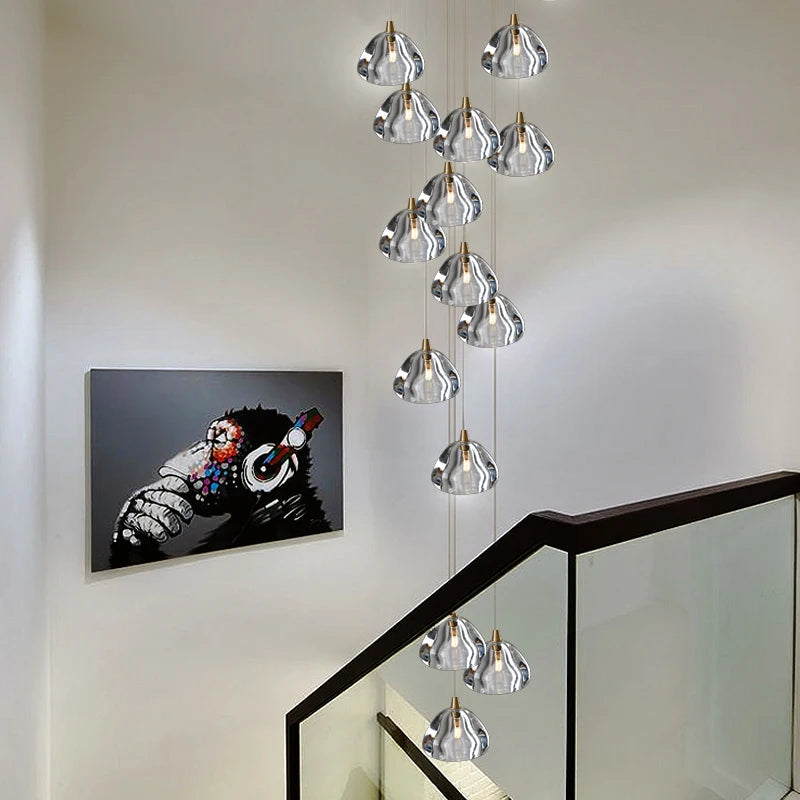
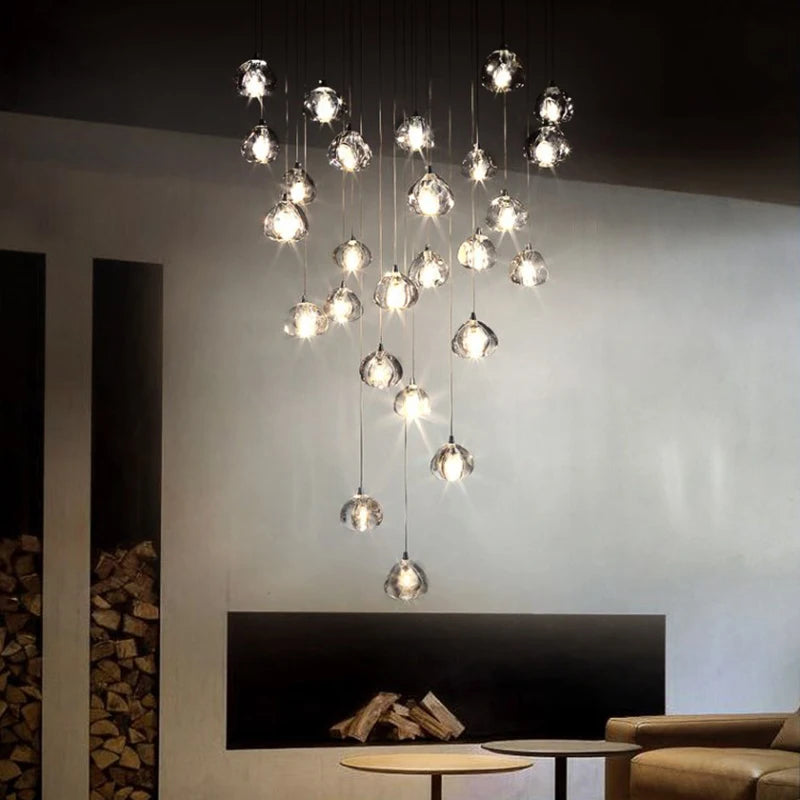
At just 9.65 inches wide but 87.70 inches tall, the Clear Crystal Bubble is the specialist for tall-but-narrow entries — a slim vertical column of crystal bubbles that fills height without eating width. Adjustable color temperature (3000K–6000K) lets it shift from warm welcome to crisp modern, and the bubble form keeps it airy where a dense crystal fixture would feel heavy in a tight footprint. More in this family sits in the bubble chandelier collection.
4. Contemporary High-Ceiling Chandelier — best versatile sizing

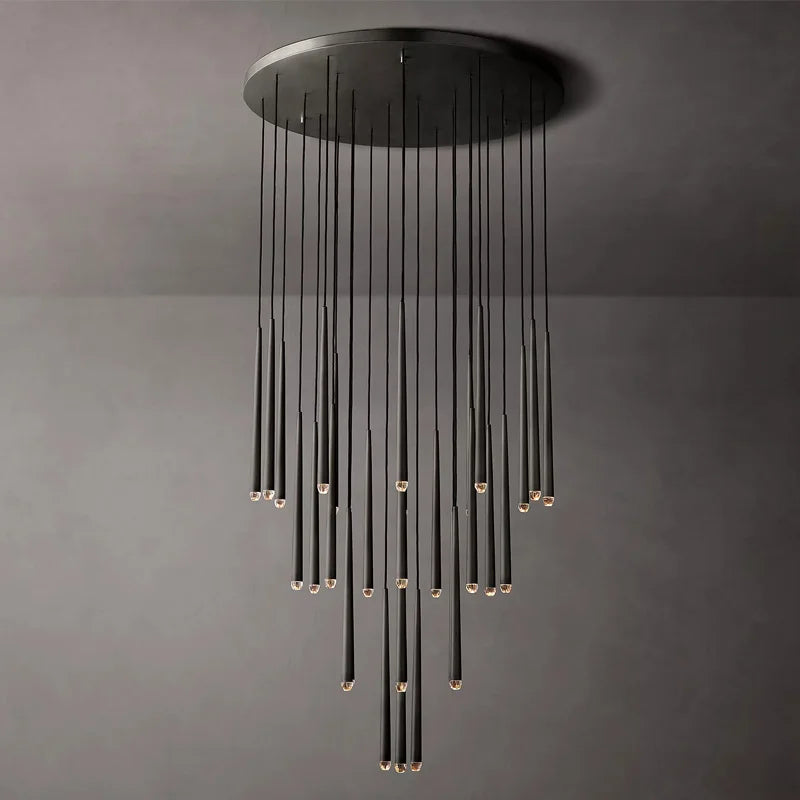
The Contemporary earns its place through range: light configurations from 6 to 24 lights and dimensions adapting from about 13 to 35 inches wide by up to 87.70 inches tall, which means one design scales from a modest two-story entry to a genuinely grand one. Stainless steel and clear crystal give it a bright, reflective character, and the flexibility makes it the safe recommendation when you're unsure exactly how much fixture your space needs.
5. Art Stone Crystal Chandelier — best textural luxury
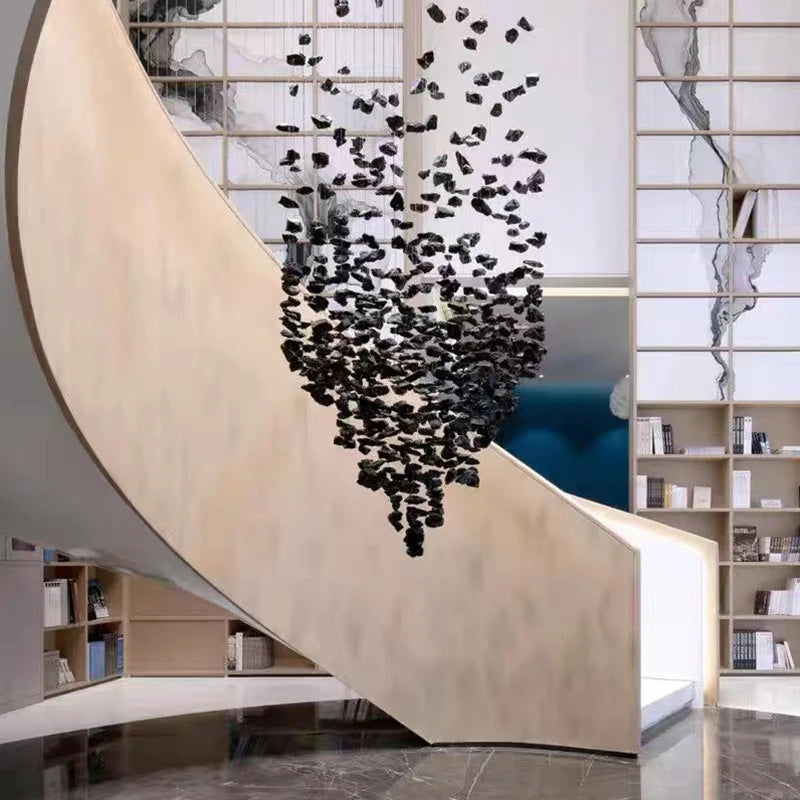
The Art Stone pairs crystal with stone-textured elements for a fixture that has interest even when unlit — a mix of matte texture and refraction that reads as considered rather than merely sparkly. It scales widely too (5 to 18 lights, roughly 17–44 inches wide by up to 131 inches tall), which lets it reach into truly cathedral-height entries. The textural quality bridges traditional and modern rooms in a way pure crystal doesn't.
Sizing a Chandelier for a High-Ceiling Entry
Two measurements matter, and tall entries make the second one — height — as important as the first.
Diameter, by floor area. Add the entry's length and width in feet and read the total as inches. A 12 × 14 ft entry points to about 26 inches; a 14 × 16 ft entry to 30 inches. This keeps the fixture proportional to the footprint below it.
Height, by ceiling. Allow 2.5 to 3 inches of fixture height per foot of ceiling. A 12-ft ceiling suits a 30–36 inch fixture; 16 ft suits 40–48 inches; 20 ft suits 50–60 inches; 24 ft cathedral entries carry 60–72+ inches. This is the number standard sizing guides skip, and it's why so many tall-entry fixtures look undersized — they were chosen for width alone.
Height & Drop Reference
| Ceiling Height | Fixture Height (drop) | Typical Form | Bottom Clearance |
|---|---|---|---|
| 10–12 ft | 25–36 in | Single-tier statement | 7 ft from floor |
| 14–16 ft | 35–48 in | Two-tier or tall column | 7–8 ft, or align to 2nd floor |
| 18–20 ft | 45–60 in | Cascading multi-tier | Align with second-floor level |
| 22–24 ft | 55–72+ in | Extended cascading | Align with second-floor level |
| 24 ft+ (cathedral) | 70 in+ (often custom) | Custom cascading column | Balanced to peak height |
For the full room-by-room sizing reference, the chandelier size calculator covers every ceiling height; for the wider high-ceiling buying picture beyond entries, see the high-ceiling chandelier guide.
Entryway or Foyer — and Does It Matter?
The terms blur, but there's a useful distinction. "Entryway" often means the immediate space inside the door, which can be modest even when the ceiling is tall; "foyer" usually implies a larger, more formal entrance hall, frequently two stories. For chandelier purposes, what actually matters is the ceiling height and whether the space is open to an upstairs landing — those two facts drive the fixture choice more than the label.
If your entrance is genuinely two-story with an open staircase or gallery above, treat it as a foyer for sizing: the fixture should be visible and balanced from the upper level, and cascading multi-tier forms come into their own. The dedicated foyer light sizing guide goes deeper on the two-story math, and the two-story foyer chandelier collection gathers fixtures built for it.
Large & Grand Entryway Chandeliers
When the entry is genuinely large — wide as well as tall — the fixture has to hold a big volume of space, and a few approaches work where a single ordinary chandelier would look lost. Oversized single fixtures (48 inches and up in diameter) anchor grand entries with one bold gesture. Cascading multi-tier designs fill vertical volume while spreading light across the space below. And in very wide entries, some designs read better as a substantial central fixture flanked by coordinated wall sconces, distributing light rather than concentrating it all overhead.
The key discipline with large fixtures is the junction box: oversized crystal and multi-tier pieces routinely pass 50 pounds, which means a rated box with structural blocking and, often, professional installation. Browse grand-scale options in the large foyer chandelier collection and the broader foyer chandelier collection.
Modern & Contemporary Entry Chandeliers
Modern high-ceiling entries have moved well beyond traditional tiered crystal. The current directions: black-finish crystal and metal for drama over dazzle; bubble and orb glass for airy vertical columns; geometric and sculptural forms that read as architecture; and mixed materials — stone with crystal, metal with glass — for texture that holds interest unlit. Gold and brass accents warm up the modern palette where an all-black or all-clear fixture would feel cold.
What ties the modern approach together is restraint in ornament and confidence in form: one strong vertical gesture rather than layers of decoration. Fixtures with integrated LED, adjustable color temperature, and real dimming range fit the contemporary entry both stylistically and functionally.
Bubble Glass Chandeliers for Tall Entries
Bubble glass deserves its own mention because it solves the high-entry problem so specifically. A column of glass bubbles suspended at varying heights fills vertical space the way flat fixtures can't, while staying visually light — each orb is mostly air and reflection, so even a tall fixture doesn't feel like a weight hanging over the door. The effect is contemporary and a little playful, and it photographs beautifully in the double-height sightlines these entries create.
Bubble designs range from slim vertical columns (ideal for tall narrow entries) to wide multi-orb clusters (for grand open foyers). The bubble chandelier collection spans both; for the airier modern look generally, they pair naturally with light walls and minimalist architecture.
20-Foot, Double-Height & Cathedral Entries
The tallest entries — 20 feet and up, or angled cathedral ceilings — need specific handling beyond just a bigger fixture.
- Measure to the actual mounting point. On a cathedral or angled ceiling, the peak height (not the wall height) determines the fixture's drop, and a sloped-ceiling adapter is usually required.
- Cascading forms fill 20-foot volume best. A 50–60 inch cascading fixture reads as intentional; a single small fixture near a 20-foot ceiling looks marooned.
- Align with the second floor. In double-height entries, position the fixture so its main mass sits around the upstairs landing level — balanced from both floors.
- Plan the maintenance access before buying. A fixture 15 feet up needs a plan for cleaning and bulb changes; a motorized lift mechanism is worth considering at these heights, and the high-ceiling maintenance guide covers the options.
- Professional installation is effectively mandatory at this height and weight — this isn't a ladder-and-a-helper job.
Stairwell-adjacent entries — where the fixture is shared with a staircase — have their own considerations covered in the staircase chandelier collection.
Entryway Lighting Ideas Beyond the Chandelier
The chandelier carries the space, but the best high entries layer it with support. A few ideas that raise the whole effect:
- Wall sconces at eye level add light where a high fixture can't reach and give the lower half of a tall wall something to do — mount around 60–66 inches from the floor.
- A large mirror opposite the fixture doubles the chandelier visually and bounces light into a space that otherwise has a lot of dim vertical wall.
- Recessed or accent lighting prevents the dark zones that tall entries develop between the high fixture and the floor.
- A dimmer on the main fixture shifts the entry from bright daytime welcome to soft evening glow.
- Warm white bulbs throughout (2700K–3000K) keep the first impression inviting rather than clinical.
Keep the chandelier the star, though — these are supporting players. For entries where the chandelier itself is more modest, the entryway ceiling lights collection offers flush and semi-flush alternatives.
Common Mistakes in High-Ceiling Entries
- Choosing for width, ignoring height. The classic tall-entry error — a correctly-wide fixture that's far too short, leaving a gap of empty air above it. Use the height formula.
- Hanging it too high. Fixtures mounted right up near a 20-foot ceiling look lost; a tall entry fixture should drop into the space, aligned with the second-floor level.
- Forgetting the upstairs view. In two-story entries the fixture's top is visible from the landing — choose one that's finished from above.
- Ignoring door swing and traffic path. The fixture must clear an opening door and stay above the 7-foot walking line where people pass.
- Underlighting the volume. A big vertical space needs real output; one dim fixture leaves the entry gloomy despite its size.
- Skipping the maintenance plan. A gorgeous fixture you can't reach to clean becomes a dusty one within a year.
Chandeliers built for tall, grand, and two-story entrances.
Foyer Chandeliers Two-Story Foyer Large Foyer Crystal Bubble Glass Staircase Custom Sizing
Frequently Asked Questions
What chandelier is best for a high-ceiling entryway?
The best fixture for a tall entry has vertical presence — long, cascading, multi-tier, or a slim column of crystal or glass bubbles — rather than a wide, flat form that strands near the ceiling. Size the diameter by the floor area (length plus width in feet, read as inches) and the height by the ceiling (2.5–3 inches of fixture per foot, so a 20-ft ceiling wants 50–60 inches of drop). Statement crystal, black crystal for drama, bubble glass for airy modern entries, and cascading multi-tier designs for two-story spaces all suit the scale.
What size chandelier for an entryway with a high ceiling?
Two numbers. Diameter: add the entry's length and width in feet and use the total as inches — a 14 × 16 ft entry suits about 30 inches across. Height: allow 2.5–3 inches of fixture per foot of ceiling — a 12-ft ceiling wants 30–36 inches, 16 ft wants 40–48, 20 ft wants 50–60, and 24-ft cathedral entries want 60–72+ inches. The height number is the one most people miss, which is why tall-entry fixtures so often look undersized. Keep the bottom at least 7 feet above the floor, and in two-story entries align the fixture with the second-floor level.
How high should a chandelier hang in a two-story entryway?
In a two-story or double-height entry, forget the "so many inches below the ceiling" rule and instead position the fixture's main mass around the second-floor level, so it reads as balanced from both the ground floor looking up and the landing looking across. The bottom should still clear 7 feet above the floor for walking safety. Practically, this means a substantial fixture with real drop — a 50–60 inch cascading design in a 20-foot entry — rather than a small fixture hovering near the top of the space.
What's the difference between an entryway and a foyer chandelier?
Mostly the scale of the space. "Entryway" often refers to the immediate area inside the door, which can be compact even with a tall ceiling; "foyer" usually means a larger, more formal — often two-story — entrance hall. For choosing a fixture, the labels matter less than two facts: how tall the ceiling is, and whether the space opens to an upstairs landing. A tall two-story entrance is treated like a foyer for sizing regardless of what you call it, favoring cascading fixtures visible from both levels.
What chandelier works for a 20-foot ceiling entryway?
A 20-foot entry wants a 50–60 inch cascading or multi-tier fixture (following the 2.5–3 inches per foot rule), positioned with its main mass around the second-floor level rather than tucked near the ceiling. Cascading crystal, tall bubble-glass columns, and extended multi-tier designs all fill the vertical volume well; a single small fixture looks marooned at this height. Plan for professional installation — 20 feet plus fixture weight is beyond a ladder job — and think through maintenance access before buying, since cleaning a fixture 15 feet up needs a strategy.
Are large entryway chandeliers hard to install?
The larger statement fixtures for tall entries typically require professional installation, and for good reasons: many exceed the 50-pound rating of a standard junction box, needing a reinforced box with structural blocking; the working height involves scaffolding or lift equipment rather than a step ladder; and the electrical and weight considerations at height carry real safety stakes. Budget for professional installation as part of the fixture cost on anything substantial. A reinforced electrical box and, in some homes, a dedicated circuit may be part of the job.
Can a modern chandelier work in a traditional entryway?
Yes — the transitional space between modern and traditional is exactly where mixed-material and textural fixtures live. A design pairing crystal with stone texture, or clean geometric forms with warm metal, bridges a traditional architecture and a contemporary sensibility without either dominating. The rule is to pick up one cue from the existing space — a metal tone, a formality level — while letting the fixture bring the modern note. Fully modern black-crystal or bubble-glass fixtures suit traditional entries best when the rest of the entry has at least one contemporary element to echo them.
What are bubble glass chandeliers, and do they suit high entries?
Bubble glass chandeliers use clusters of glass orbs — suspended at varying heights or arranged in a column — instead of crystal strands or shades. They suit tall entries especially well for two reasons: the vertical arrangement fills high volume that flat fixtures leave empty, and the mostly-air, mostly-reflection orbs keep even a large fixture feeling light rather than heavy overhead. Slim bubble columns work in tall narrow entries; wide multi-orb clusters suit grand open foyers. The look is contemporary and works best against light walls and minimalist architecture.
How do I light a tall entryway besides the chandelier?
Layer it. Wall sconces at 60–66 inches add light and interest to the lower half of tall walls the high fixture can't reach; a large mirror opposite the chandelier doubles it visually and bounces light into an otherwise dim vertical space; recessed or accent lighting fills the dark zones tall entries develop between the high fixture and the floor; and a dimmer shifts the whole space from bright daytime to soft evening. Keep all bulbs the same warm white (2700K–3000K) for coherence, and keep the chandelier the clear focal point — everything else supports it.
Why does my entryway chandelier look too small?
Almost always because it was sized for width but not height. A fixture correctly proportioned to the floor area can still look lost in a tall entry if it lacks vertical drop — the eye reads the empty air above it as the fixture being undersized. The fix is the height formula: 2.5–3 inches of fixture per foot of ceiling, which for a 20-foot entry means 50–60 inches of drop, not the 20-odd inches a standard-room fixture might have. Cascading and multi-tier forms add that vertical dimension; a longer chain or rod on an existing fixture can sometimes help, but a properly tall fixture is the real answer.
Wrapping Up
The tall entry is a vertical problem disguised as a lighting one, and the fixtures that solve it are the ones with real drop — cascading tiers, crystal and glass columns, statement forms sized by height as well as width. Get the two measurements right (diameter by floor area, height at 2.5–3 inches per foot of ceiling), align the fixture with the second floor in two-story spaces, and keep the chandelier the star with sconces and mirrors in support.
Start with the foyer chandelier collection for statement pieces, confirm dimensions in the size calculator, and for two-story sizing specifics see the foyer light size guide. If your entry is compact and standard-height, the compact entryway guide is the better fit.


