

Custom bubble chandeliers are one of the best ways to make a room feel more considered from the ceiling down. They keep the playful, glass-based look that makes bubble lighting so recognizable, but they also allow you to adjust the size, hanging drop, layout, and finish so the fixture fits the room more precisely. In some spaces, that means making the chandelier longer so it aligns better with a dining table. In others, it means changing the glass finish, the number of globes, or the overall drop so the chandelier feels balanced in a foyer, staircase, bedroom, or living room.
That is what separates a standard bubble chandelier from a custom one. A standard design asks the room to adapt to the fixture. A custom bubble chandelier is shaped around the room itself. If you want to start with the full product family before narrowing down which details should be customized, the main bubble chandeliers collection is the most useful starting point.
Key Things to Decide Before Ordering a Custom Bubble Chandelier
- Overall fixture size, including width, length, and body height
- Hanging drop based on ceiling height and room function
- Glass finish, such as clear, frosted, smoked, or colored glass
- Layout direction, including cluster, linear, branching, or more compact forms
- Frame finish and hardware tone
- Room type, especially dining room, foyer, living room, staircase, or bedroom
- Light behavior, including whether you want sharper sparkle or softer diffusion
What Makes a Bubble Chandelier Truly Custom?
A custom bubble chandelier is not just a standard fixture in a different size. It usually means one or more parts of the chandelier are adjusted to fit the room more exactly. That can include the overall diameter, the total length over a table, the number of globes, the hanging height, the canopy finish, the color of the frame, or the type of glass used.
This matters because bubble chandeliers are unusually sensitive to proportion. A design that works well in a high foyer may feel too vertical in a standard dining room. A clustered chandelier that looks beautiful in a living room might not spread far enough over a long rectangular table. A colored-glass version that looks striking in a bedroom might feel too playful in a more restrained entryway. The point of customization is to solve those mismatches before the chandelier is installed.
That is also why custom bubble chandeliers tend to work best for people who already know the room where the fixture will go. The more clearly you understand the room, the easier it becomes to choose which part of the chandelier actually needs to change.
Which Parts of a Bubble Chandelier Can Be Customized?
| Custom Option | Why It Matters |
|---|---|
| Overall width or length | Helps the chandelier fit a dining table, foyer footprint, or seating area more accurately. |
| Hanging drop | Lets the chandelier feel proportional to the ceiling height instead of hanging too low or too high. |
| Number of globes | Changes both the visual density and the amount of decorative presence. |
| Glass finish | Affects how bright, soft, colorful, or reflective the chandelier feels. |
| Layout | Determines whether the chandelier reads as clustered, linear, branching, or more architectural. |
| Frame finish | Helps the chandelier connect to nearby hardware, furniture finishes, and room style. |
| Canopy color or shape | Useful when the ceiling detail matters or when the chandelier needs a cleaner ceiling transition. |
Not every project needs every one of these changes. In many rooms, only one or two customizations make the real difference. A dining room may need only a longer linear layout and a controlled hanging height. A foyer might need only a taller drop and more globe density. A bedroom may need only softer glass and a more compact frame.
Custom Bubble Chandeliers by Room Type
Dining rooms
Dining rooms are one of the best places for custom bubble chandeliers because the table gives the fixture a clear visual anchor. In most cases, the most useful custom changes are length, hanging height, and globe distribution. A rectangular table usually benefits from a more linear or stretched layout so the chandelier follows the footprint below instead of sitting as a compact cluster in the middle.
Custom sizing matters here because a standard fixture often ends up too short or too dense for the table. If your main question is still the right scale over the table, the related guide on how to choose the perfect bubble chandelier size is the best supporting resource after this page.
Foyers and entryways
Custom bubble chandeliers are especially useful in foyers because entry volumes vary so much. A compact standard chandelier may disappear in a taller entry, while a long fixture can feel too aggressive in a lower foyer. In this type of room, custom drop and globe arrangement usually matter more than width alone. A more vertical or cascading bubble composition can help the chandelier fill the ceiling space without needing a very heavy frame.
Living rooms
In living rooms, the chandelier usually needs to relate to the seating zone rather than to a table. That is why bubble chandeliers here often benefit from custom width, cluster density, and finish direction. Some rooms need a fuller clustered shape to create a stronger focal point. Others need a more open branching or orb-based form so the room still feels airy.
Bedrooms
Bedrooms usually benefit from softer glass finishes, lighter visual weight, and more controlled sizes. A custom bubble chandelier in a bedroom often makes the most sense when the goal is to soften the room rather than to make the ceiling dramatic. In that case, frosted or lightly tinted glass, a compact body, and a warmer finish can all help.
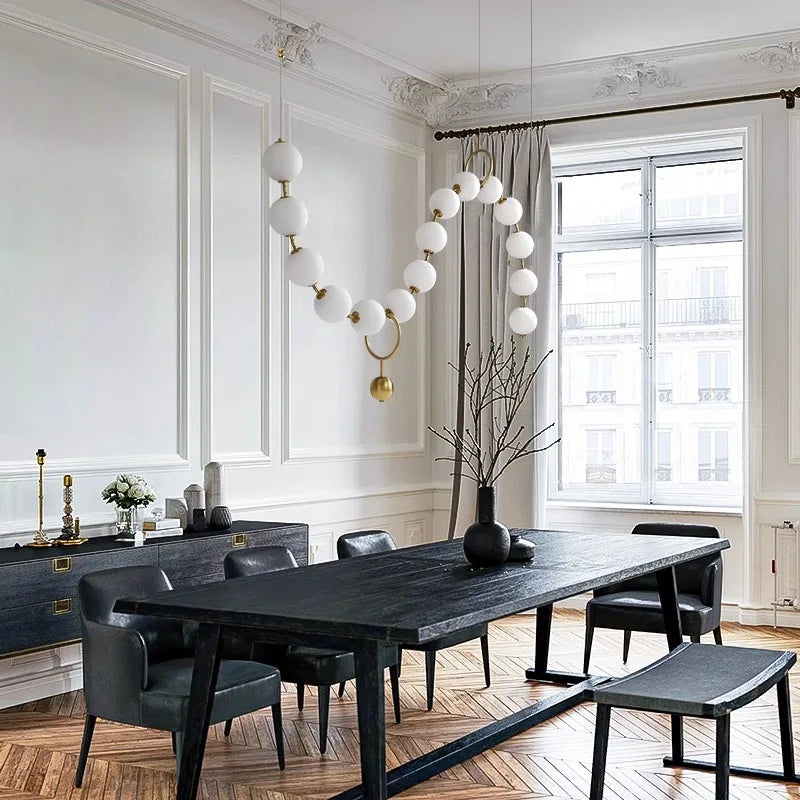
Clear, Frosted, Smoked, and Colored Bubble Glass
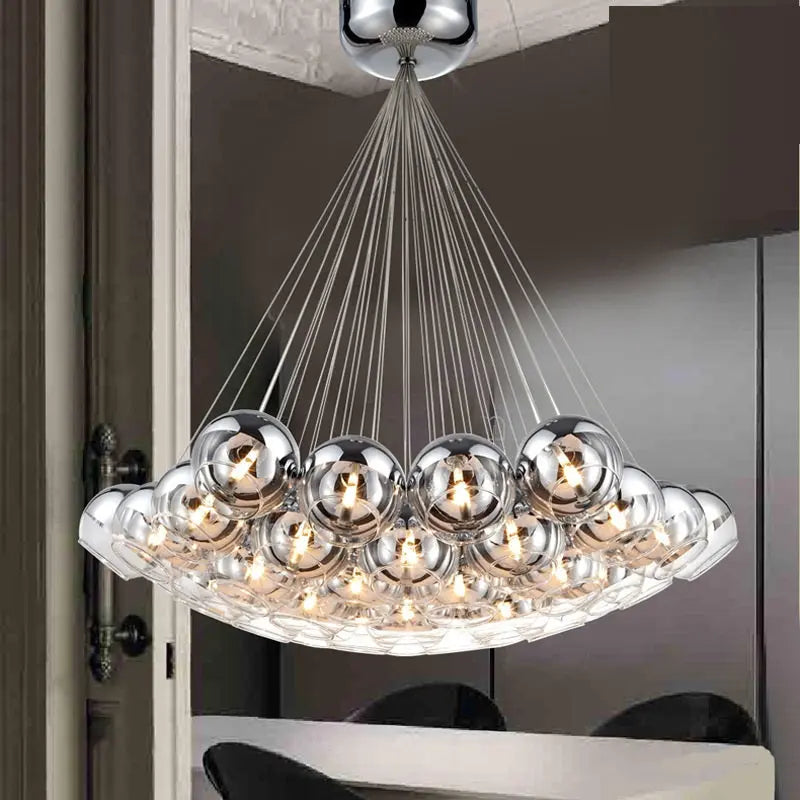
Glass finish is one of the most important custom choices because it changes both the daytime appearance and the nighttime light effect. Clear glass usually feels brighter, more reflective, and more decorative. It lets the bulb and the interior reflections stay visible, which makes the chandelier feel more open and lively.
Frosted glass softens the light and reduces visual sharpness. This can be a better fit in bedrooms, softer dining rooms, and interiors where the chandelier should feel calm rather than sparkling. Smoked glass makes the chandelier feel moodier and more contrast-driven. Colored glass introduces a different kind of personality because the fixture no longer depends only on the globe form for its identity.
The right choice depends on what the room needs. If the goal is to keep things open and versatile, clear glass usually makes the most sense. If the room needs gentler lighting, frosted or partly diffused glass may be more useful. If the chandelier itself is meant to add visual personality, tinted glass becomes much more relevant.
Cluster, Linear, Branching, and More Open Layouts
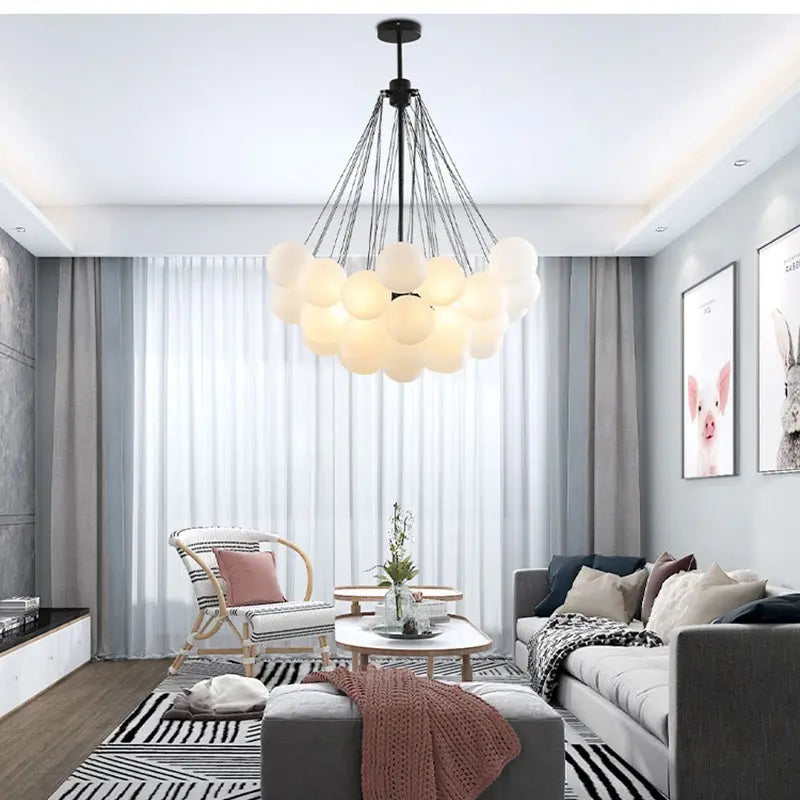
Layout is where many custom bubble chandeliers become truly room-specific. A clustered chandelier gathers the globes together, which creates a fuller and softer cloud-like effect. This is usually the best choice when the chandelier needs to feel decorative from multiple angles, especially in foyers, living rooms, and centered dining areas.
A linear layout spreads the globes across a longer line, which usually works better over rectangular tables and kitchen islands. A branching or sputnik-style layout introduces more visible structure and direction, which suits modern interiors that want the chandelier to feel more architectural. More open orb-based layouts usually work well when the room needs decorative lighting but not too much visual mass.
The reason layout matters so much is simple. A custom chandelier should solve the room’s shape problem, not just add more decoration overhead.
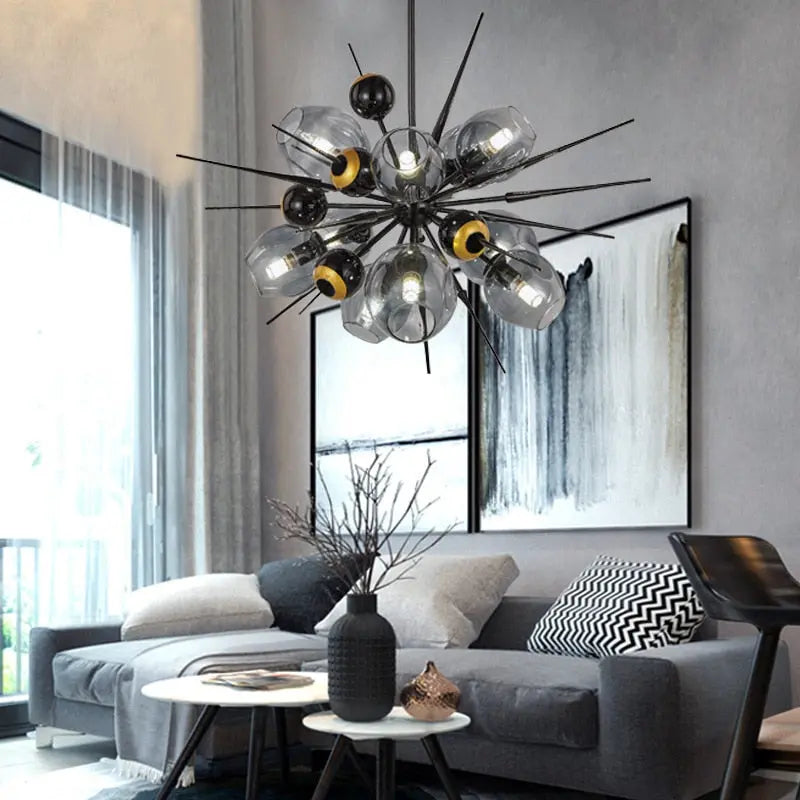
The Laura Bubble Sputnik Chandelier shows how a branching structure can create a stronger architectural presence without losing the softness that bubble lighting brings.
How to Choose the Right Custom Size
Custom sizing should begin with the room dimensions and the object below the chandelier, if there is one. In dining rooms, the fixture should usually relate to the table first. In foyers and living rooms, it should relate to the room footprint and the way people move through the space.
Ceiling height matters just as much. A chandelier that is wide enough may still feel wrong if the drop is too short or too deep for the room. This is where custom hanging height becomes one of the most useful upgrades. It helps the chandelier feel intentionally placed rather than simply adapted from a standard factory length.
A good custom order usually solves all three size questions together: - how wide or long the chandelier should be - how much body the chandelier should have - how low or high the chandelier should hang
What Measurements to Prepare Before Ordering
If you are ordering a custom bubble chandelier, the best results come when the measurements are prepared before discussing the design. The most useful measurements are usually:
- Room length and width
- Ceiling height
- Dining table size, if the chandelier is going above a table
- Distance you want between the fixture and the table or floor
- Whether the chandelier will hang in a walkway, above furniture, or in an open void
- Preferred overall chandelier width or length, if you already have a range in mind
It also helps to know the room style. Even if the exact product has not been chosen yet, knowing whether the room leans minimal, soft-modern, colorful, sculptural, or more architectural will make the customization decisions easier.
Product Directions That Show Different Custom Possibilities
Modern Minimalist Bubble Glass Orb Chandelier
This type of design suits rooms that want a simpler bubble effect. It shows how a custom bubble chandelier does not have to become dense or oversized to feel tailored. In many bedrooms and smaller living rooms, a more controlled orb arrangement works better than a large cluster.
Nora Bubble Cluster Chandelier
The Nora Bubble Cluster Chandelier represents the fuller, more decorative side of the category. In custom terms, this kind of fixture is most likely to benefit from changes in globe count, hanging drop, and cluster density depending on the room size.
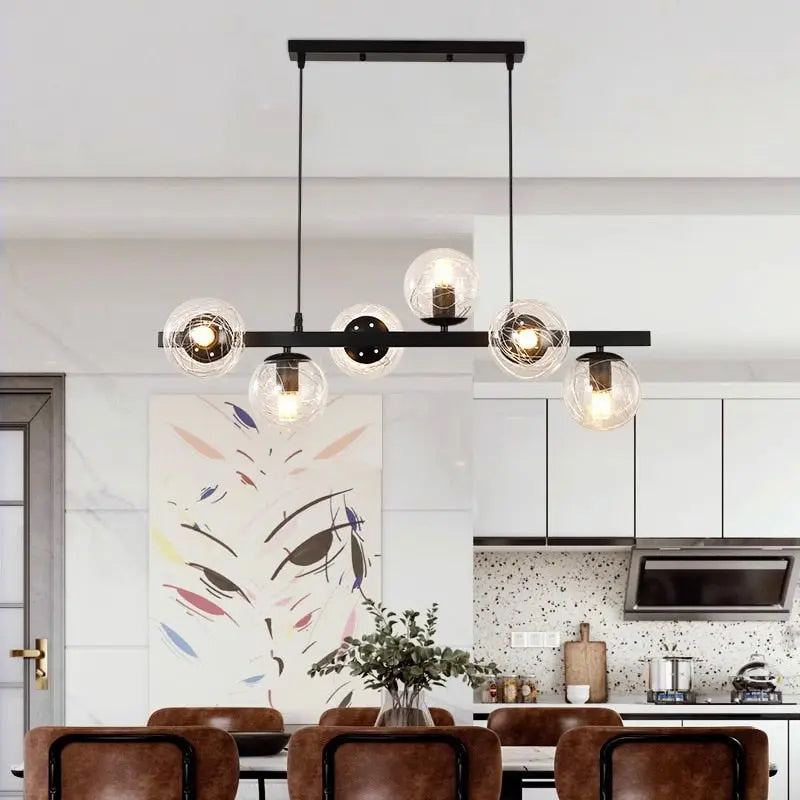
Modern Bubble Chandelier for Dining Room
The Modern Bubble Chandelier for Dining Room is a good example of where linear customization makes the most sense. A dining table often benefits more from length and spread than from central cluster density.
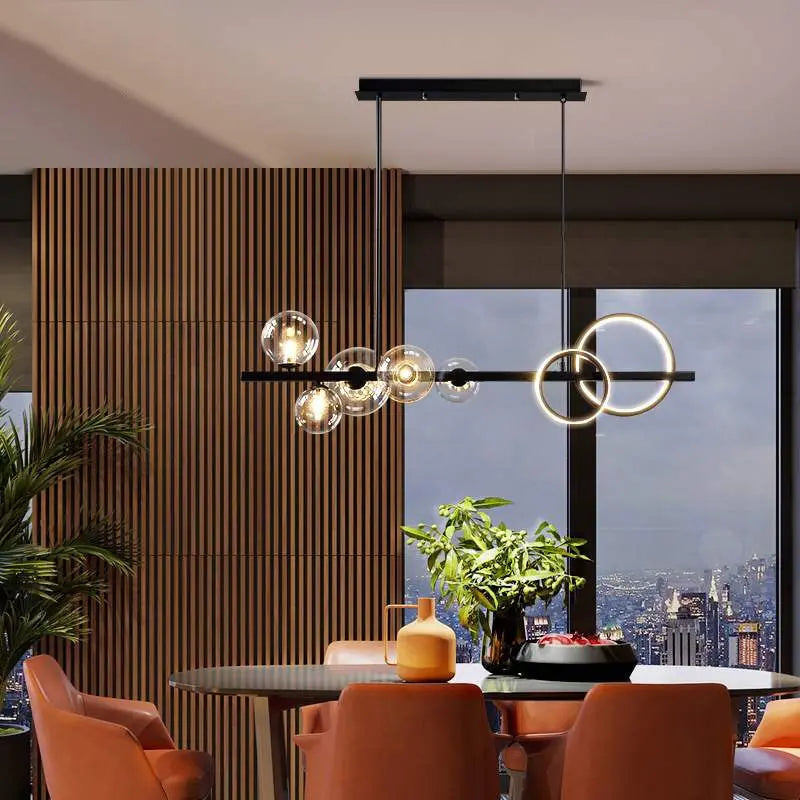
Zelda Modern Linear Bubble Chandelier
The Zelda Modern Linear Bubble Chandelier shows another direction for long surfaces. It is useful when the room needs a cleaner and more directional layout rather than a cloud-like composition.
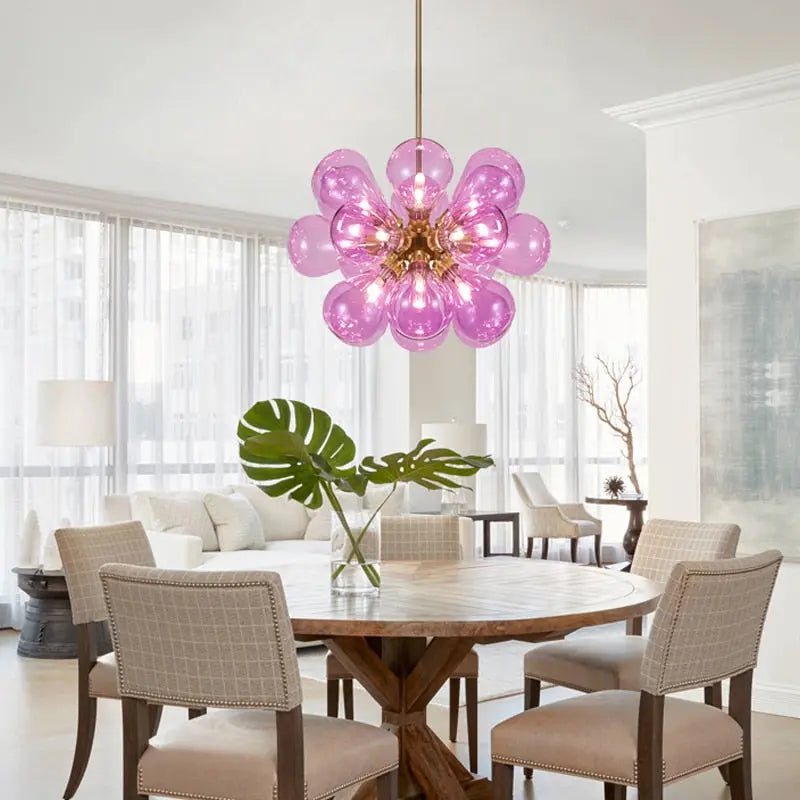
Nadine Pink Bubble Chandelier
The Nadine Pink Bubble Chandelier shows how color can become part of the custom direction. In some homes, the custom question is not only about size or drop. It is also about whether the chandelier should remain neutral or become a stronger design feature through tinted glass.
When a Custom Bubble Chandelier Makes More Sense Than a Standard Design
A custom bubble chandelier usually makes the most sense when one of three things is true. First, the room has unusual proportions, such as a long table, a tall stairwell, or a foyer with a difficult ceiling height. Second, the homeowner wants a glass finish, color, or layout that is not easily available in a standard product. Third, the fixture needs to coordinate more closely with the room’s finishes and mood than a standard catalog option allows.
In a simple room with standard dimensions, a ready-made bubble chandelier may be enough. But in a room where proportion, glass tone, or layout really matter, custom options usually create a much more convincing final result.
Care and Long-Term Planning
Custom bubble chandeliers still need practical planning. Glass clarity, globe count, bulb access, and hanging height all affect how easy the fixture will be to live with. A more complicated chandelier can look incredible in a room, but it should still be realistic to clean and maintain over time.
If ongoing care is one of your concerns, the most useful follow-up resource is the guide on how to clean, install, and maintain your bubble chandelier. That is where the maintenance side becomes more important than the customization side.
Closing Thoughts
Custom bubble chandeliers work best when the room, the glass finish, the layout, and the hanging proportions are all considered together. That is what turns the fixture from a beautiful product into a chandelier that actually feels made for the space. Some rooms need more width, others need more drop, and others need a softer or more expressive glass finish. The more clearly those needs are defined before ordering, the better the final chandelier tends to work.
That is why custom bubble chandeliers remain such a valuable part of the broader bubble category. They allow the room to guide the chandelier rather than forcing the chandelier to fit the room afterward.
If you are still comparing whether to start with a standard design or move directly into a more tailored one, the full bubble chandeliers collection is still the best place to compare the overall family before deciding which custom changes matter most for your space.


