

Conseguir el espaciado correcto de las luces colgantes de la isla de la cocina es una de las maneras más fáciles de hacer que una cocina se sienta intencional en lugar de ligeramente desajustada. Cuando las luces colgantes están demasiado juntas, la isla parece abarrotada y desproporcionada. Cuando están demasiado separadas, la encimera termina con huecos oscuros y todo el plan de iluminación se siente desconectado. El mejor resultado proviene de tratar la colocación de las luces colgantes como un conjunto de medidas prácticas, no como una suposición.
Esta guía se basa en una lógica de colocación exacta: qué tan separadas deben espaciarse las luces colgantes, qué tan alto deben colgarse, cuántas usar, cómo el diámetro de la luz colgante afecta el diseño y cómo ajustar todo para islas más largas o techos más altos. Si desea comparar familias de accesorios antes de acotar el diseño exacto, comience con nuestra colección de luces colgantes. Si su objetivo principal es planificar toda la cocina en lugar de solo la isla, también ayuda revisar nuestra gama más amplia de iluminación de cocina para ver cómo las luces colgantes de la isla se relacionan con las luces de techo, la iluminación de tareas y la iluminación de capas de la habitación.
Reglas de espaciado de luces colgantes de isla de cocina de un vistazo
- Espaciado de luz colgante a luz colgante: de 24 a 30 pulgadas de centro a centro en la mayoría de las cocinas
- Altura sobre la encimera: de 30 a 36 pulgadas, con 34 pulgadas como punto medio de trabajo confiable
- Espacio libre en el borde: al menos 6 pulgadas desde el extremo de la isla hasta el centro de la luz colgante más cercana
- Diámetro estándar de luz colgante: de 6 a 12 pulgadas funciona para muchas islas, pero el ancho y la altura del techo siguen siendo importantes
- Techos más altos: agregue aproximadamente 3 pulgadas de altura de suspensión por cada pie por encima de un techo de 8 pies
- Punto de partida: siempre mida desde el centro de la isla hacia afuera, no desde las paredes circundantes
Por qué el espaciado de las luces colgantes de la isla de la cocina cambia toda la cocina
La iluminación de la isla de la cocina no es solo decorativa. Modela la forma en que se percibe la isla desde todos los ángulos. Las luces colgantes crean ritmo en la encimera, definen la isla como una superficie focal e influyen en qué tan bien la habitación equilibra la iluminación de tareas con la atmósfera visual. Un diseño que es técnicamente lo suficientemente brillante aún puede sentirse incorrecto si las luces colgantes están agrupadas, colgadas demasiado bajas o demasiado separadas.
Por eso, el espaciado de la isla funciona mejor cuando se trata como un problema de medición primero y una decisión de estilo después. El estilo sigue siendo importante, pero las reglas de espaciado son las que evitan que la instalación final parezca accidental. Esta es también la principal diferencia entre una guía de espaciado de luces colgantes de isla de cocina y un artículo de resumen de estilos. Si todavía está en la etapa de selección de accesorios, nuestro artículo sobre cómo elegir luces colgantes para una isla de cocina es un compañero útil porque se centra más en elegir la familia de luces colgantes adecuada antes de que comience la colocación final.

Este tipo de tabla de espaciado es útil porque mantiene las principales variables en un solo lugar: espaciado de centro a centro, espacio libre en los bordes, altura de suspensión, tamaño del colgante y longitud de la isla.
La regla fundamental: distancia entre luces colgantes
La medida más importante en la planificación de las luces colgantes de la isla de la cocina es la distancia entre los centros de los accesorios. En la mayoría de las cocinas estándar, el rango de trabajo útil es de 24 a 30 pulgadas de centro a centro. Ese rango crea suficiente espacio visual para respirar entre las luces colgantes sin dejar de mantener la isla uniformemente iluminada.
Un espaciado inferior a 24 pulgadas suele hacer que la fila se sienta abarrotada, especialmente si las luces colgantes tienen más de 8 pulgadas de ancho o son visualmente pesadas en su material. Un espaciado superior a 30 pulgadas a menudo crea zonas muertas entre los accesorios y hace que la isla se vea menos cohesiva. El punto ideal dentro de ese rango depende de dos cosas: el diámetro de la luz colgante y la longitud total de la isla.
- Luces colgantes de menos de 8 pulgadas de ancho: suelen funcionar mejor a 24 a 26 pulgadas de centro a centro
- Luces colgantes de 8 a 12 pulgadas de ancho: suelen funcionar mejor a 26 a 28 pulgadas de centro a centro
- Luces colgantes de más de 12 pulgadas de ancho: suelen necesitar de 28 a 30 pulgadas de centro a centro, a veces más si tienen una fuerte masa visual


Las luces colgantes modernas de cristal con forma de flor son un buen ejemplo de una familia de luces colgantes compactas que pueden funcionar en el extremo más ajustado del rango de espaciado porque las pantallas son visualmente más ligeras y no sobrecargan las islas más estrechas.
Qué altura deben tener las luces colgantes sobre una isla de cocina
La altura es la segunda regla principal. En la mayoría de las cocinas, las luces colgantes deben colgar de 30 a 36 pulgadas por encima de la superficie de la encimera. Ese rango mantiene el accesorio lo suficientemente bajo como para proporcionar una iluminación de tareas útil, mientras que permanece lo suficientemente alto como para evitar el deslumbramiento, la obstrucción visual o la interferencia con la cabeza.
En el extremo inferior del rango, las luces colgantes se sienten más íntimas y más enfocadas sobre la isla. En el extremo superior, la cocina se siente más abierta y la iluminación se percibe de manera más amplia. Para muchos hogares, 34 pulgadas por encima de la encimera es un término medio práctico porque funciona bien en diferentes alturas de usuario y líneas de visión.
“Una luz colgante de isla de cocina debe sentirse conectada con la encimera que tiene debajo, no flotar tan alto como para desconectarse de la superficie de trabajo.”
El punto de medición más importante es la parte inferior de la pantalla colgante, no el dosel del techo. Esto parece obvio, pero es uno de los errores más comunes en las instalaciones reales. Siempre debe medir desde la parte visible más baja de la luz colgante hasta la superficie de la isla que se encuentra debajo.
Cuántas luces colgantes necesitas para diferentes longitudes de isla
El número de luces colgantes cambia toda la ecuación de espaciado. Dos, tres y cuatro luces colgantes no siguen la misma lógica visual, incluso si la regla de centro a centro sigue aplicándose. El número correcto de accesorios depende de la longitud de la isla, el diámetro del accesorio y el peso visual que cada luz colgante aporta a la habitación.
Dos luces colgantes
Dos luces colgantes suelen funcionar mejor en islas de alrededor de 4 a 5 pies de largo. Esta disposición se siente limpia y equilibrada cuando los accesorios están centrados simétricamente y tienen suficiente espacio libre en los bordes. A menudo es la configuración más fácil para cocinas compactas e islas más estrechas.
Tres luces colgantes
Tres luces colgantes suelen ser la opción más equilibrada para islas de 5 a 7 pies. Comience por encontrar el centro de la isla, coloque la luz colgante central allí y luego coloque los accesorios exteriores de manera uniforme a cada lado dentro del rango de espaciado de 24 a 30 pulgadas. Esto crea el ritmo visual más fuerte para una longitud de isla estándar.
Cuatro luces colgantes o más
Una vez que la isla supera los 7 pies, la instalación puede necesitar cuatro luces colgantes o un accesorio de varias luces. Aquí es donde muchos propietarios complican demasiado el diseño al forzar demasiados colgantes individuales en una sola fila. En algunas cocinas, un colgante de varias luces alargado da un resultado más limpio que intentar espaciar cuatro accesorios separados con precisión.
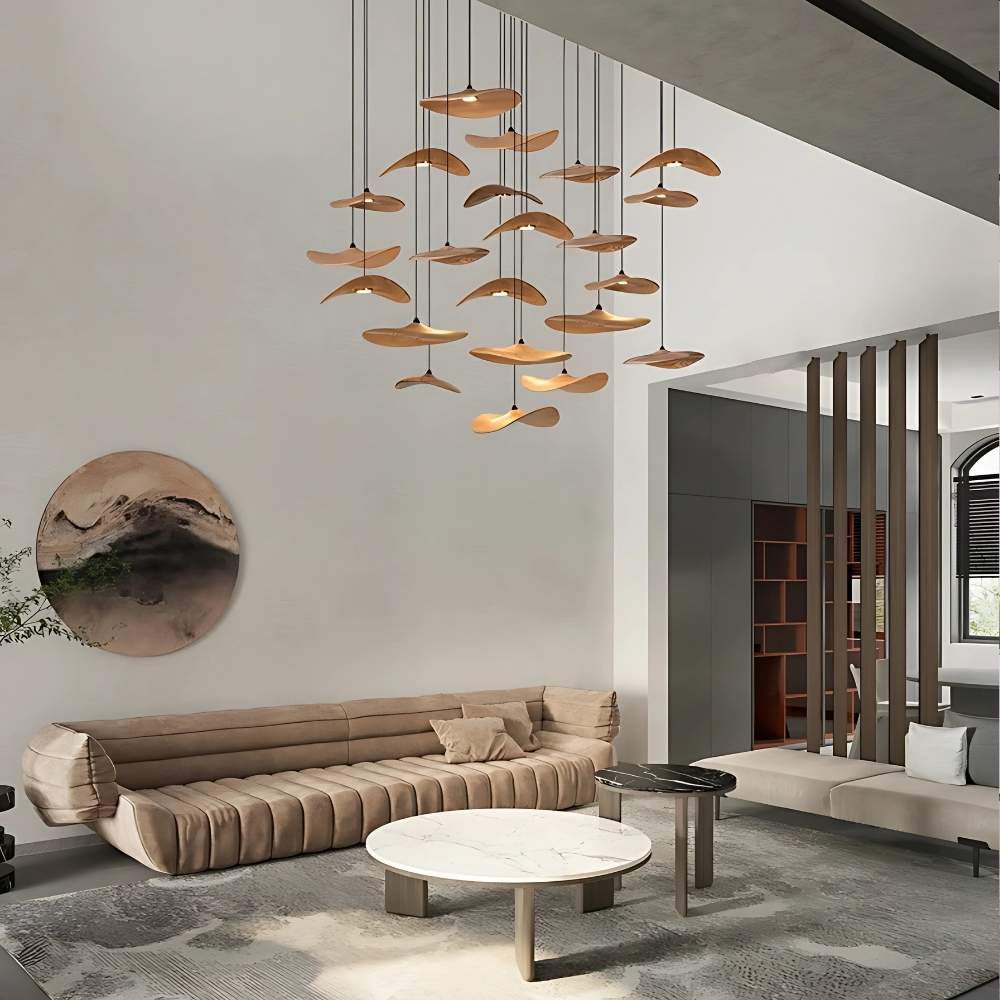
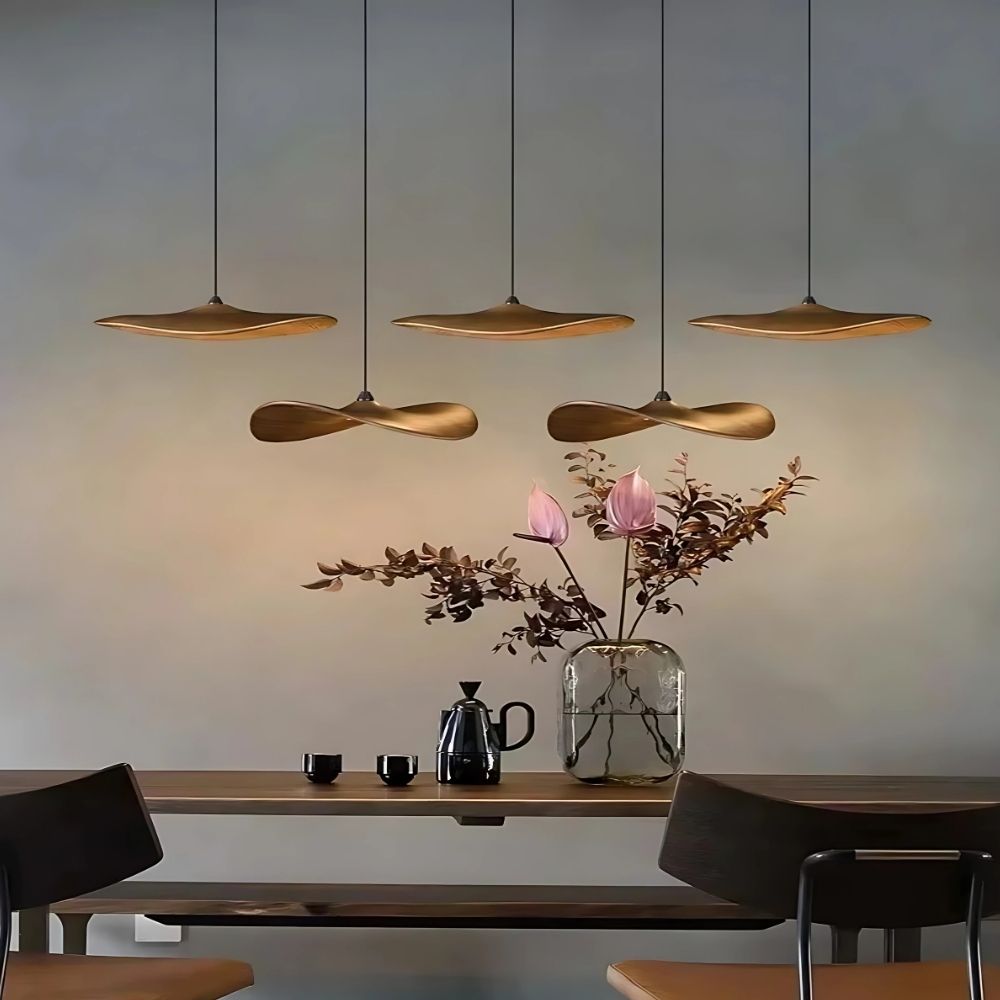
La lámpara colgante de múltiples luces Bidi es un claro ejemplo de cómo un formato de múltiples luces puede simplificar el diseño de una isla larga al reemplazar varias decisiones individuales de puntos de unión con un solo cuerpo de luminaria coordinado.
La regla de separación de bordes que la mayoría de la gente ignora
Muchos propietarios se centran únicamente en la distancia entre las luces colgantes y olvidan la distancia desde el extremo de la isla hasta el centro de la lámpara más cercana. Esa separación de bordes es igual de importante porque determina si las luces colgantes parecen enmarcadas por la isla o si se están cayendo por sus bordes.
Un mínimo práctico es de 6 pulgadas desde el extremo de la isla hasta el centro de la lámpara colgante más cercana. Si los accesorios son más anchos, pesados o tienen una forma pronunciada, a menudo tiene sentido dejar entre 8 y 10 pulgadas. Esto es especialmente cierto para campanas de vidrio, cúpulas de metal y luces colgantes con perfiles inferiores más anchos.

La lámpara colgante rústica tipo campana es un buen ejemplo de una lámpara colgante más ancha que se beneficia de una mayor separación en los extremos, porque la pantalla en sí tiene más ancho visual que una varilla delgada o un globo de cristal más pequeño.
Cómo la longitud de la isla debe dar forma al diseño de su luz colgante
| Longitud de la isla | Número de luces colgantes recomendado | Dirección típica |
|---|---|---|
| 3 a 4 pies | 1 luz colgante | Única luz colgante centrada |
| 4 a 5 pies | 2 luces colgantes | Par compacto y simétrico |
| 5 a 7 pies | 2 a 3 luces colgantes | Rango más común para cocinas estándar |
| 7 a 9 pies | 3 a 4 luces colgantes | Un espaciado más amplio o un accesorio de varias luces suele funcionar mejor |
| 9 pies o más | 4 luces colgantes o accesorio alargado | Necesita una planificación más sólida para el ritmo y el peso visual |
Esta tabla ofrece un punto de partida práctico, pero el diámetro de la luz colgante sigue siendo importante. Una isla larga no siempre necesita más accesorios si cada luz colgante es grande. A veces, la mejor solución es menos accesorios con una presencia visual más fuerte. Esta es una razón por la que las publicaciones de inspiración de resumen de estilos deben mantenerse separadas de las guías de espaciado. Si está buscando por apariencia en lugar de por medida, nuestro artículo sobre luces colgantes modernas para islas de cocina es la página de inspiración más relevante porque se centra más en la dirección visual que en la geometría de la instalación.


La lámpara colgante de madera contemporánea de varias luces Elor muestra cómo una estructura alargada puede resolver el problema de espaciado de manera más elegante que una fila de luces colgantes separadas sobre una isla más larga.
El diámetro de la lámpara colgante cambia todo el plan de espaciado
El tamaño de la lámpara colgante debe elegirse antes de que se fije el espaciado final. Este es uno de los errores de planificación más comunes. Un número de espaciado fijo solo funciona si el diámetro de la lámpara colgante lo permite. Una lámpara colgante de 12 pulgadas y una de 7 pulgadas se comportan de manera muy diferente incluso cuando se colocan a la misma distancia de centro a centro.
Una fórmula inicial práctica es considerar el diámetro de la lámpara colgante como aproximadamente un tercio del ancho de la isla. Así, para una isla de 36 pulgadas de ancho, una lámpara colgante de alrededor de 12 pulgadas de ancho puede ser un buen punto de partida. Esto no significa que todas las cocinas deban usar ese tamaño exacto, pero vincula la discusión sobre la escala a la isla en lugar de a las conjeturas.
- Lámparas colgantes de menos de 8 pulgadas: ideales para islas más estrechas o cocinas donde la fila debe permanecer visualmente ligera
- Lámparas colgantes de 8 a 12 pulgadas: el rango más versátil para cocinas estadounidenses estándar
- Lámparas colgantes de 12 a 16 pulgadas: más adecuadas para islas más anchas, especialmente con techos más altos
- Lámparas colgantes de más de 16 pulgadas: generalmente se usan mejor individualmente o en pares, no en filas abarrotadas
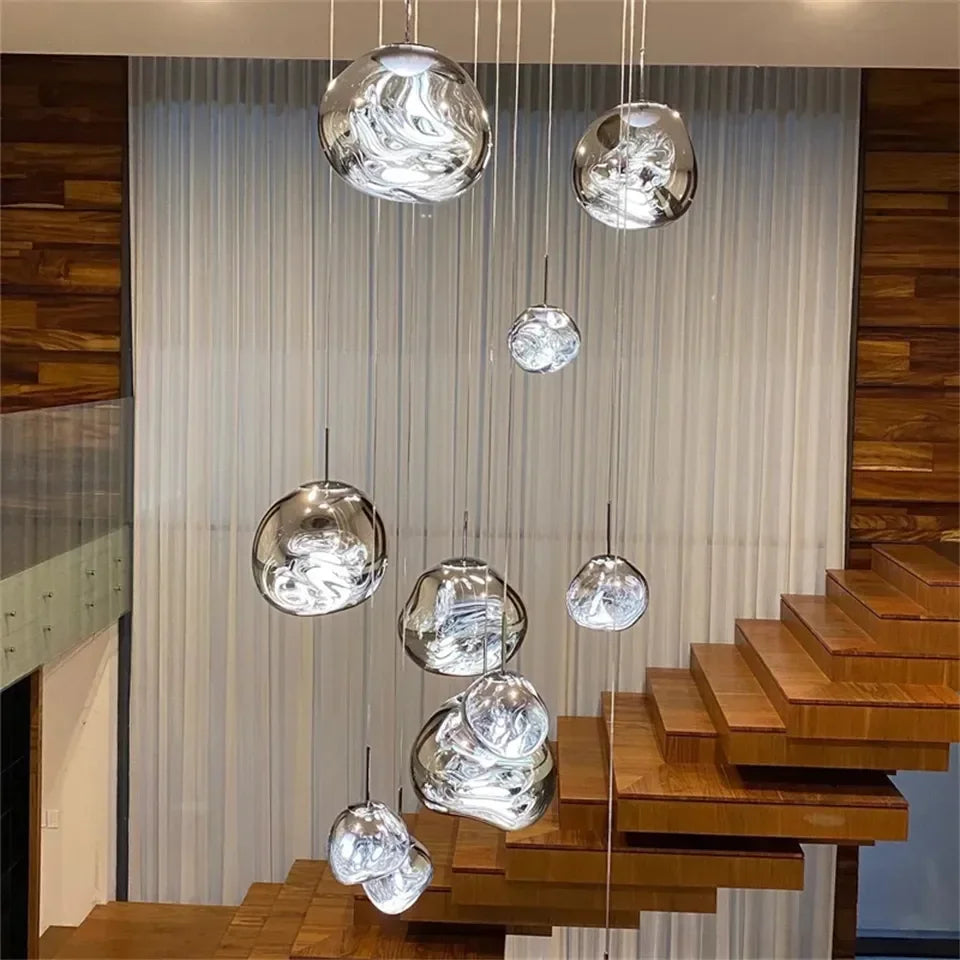
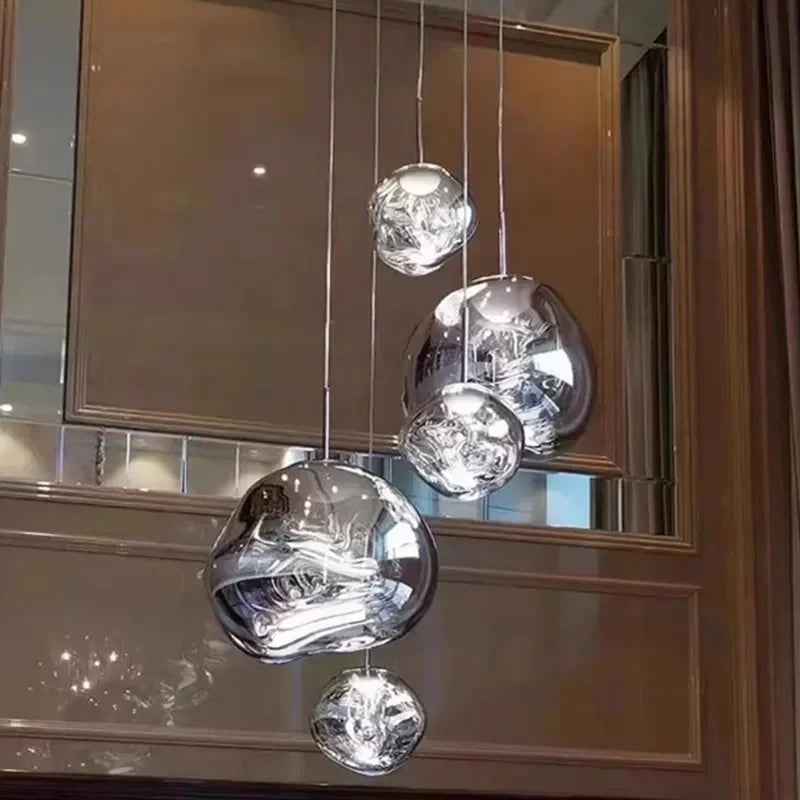
La lámpara colgante de burbujas de cristal contemporánea Ruby es útil aquí porque muestra cómo una lámpara colgante más luminosa y de mayor diámetro cambia no solo el espaciado, sino también la extensión de la luz en la superficie de la isla.
Ajuste de la altura de la lámpara colgante para techos más altos
La regla estándar de 30 a 36 pulgadas de altura de suspensión asume un techo de 8 pies. Una vez que el techo es más alto, las lámparas colgantes deben subir con él o comienzan a sentirse demasiado comprimidas contra la altura de la habitación. Una regla práctica es agregar aproximadamente 3 pulgadas de altura de suspensión por cada pie adicional por encima de los 8 pies.
| Altura del techo | Altura recomendada de la lámpara colgante sobre la encimera |
|---|---|
| 8 pies | 30 a 36 pulgadas |
| 9 pies | 33 a 39 pulgadas |
| 10 pies | 36 a 42 pulgadas |
| 11 pies | 39 a 45 pulgadas |
| 12 pies | 42 a 48 pulgadas |
Este ajuste mantiene las luces colgantes visualmente conectadas a la isla sin que parezcan demasiado bajas en una habitación más alta. También mantiene la proporción del plan de iluminación cuando la cocina forma parte de un espacio de planta más abierta. Si su objetivo es buscar nuevas tendencias de estilo para cocinas más altas y limpias después de establecer las medidas, nuestro artículo sobre luces colgantes contemporáneas para islas de cocina es la página de inspiración más relevante.
Cómo afectan los diferentes tipos de luces colgantes al espaciado
Luces colgantes de cristal
Las luces colgantes de cristal suelen parecer visualmente más ligeras y a menudo pueden colocarse un poco más cerca. Las formas de cristal transparente, esmerilado y burbuja tienden a difundir la luz más suavemente y no crean tanta pesadez visual en una fila.
Luces colgantes de metal y acero inoxidable
Las luces colgantes de metal suelen necesitar más espacio para respirar porque tienen una masa visual más fuerte. Incluso cuando su diámetro real es similar al de las luces colgantes de cristal, a menudo parecen más pesadas y se destacan más en una fila. Por eso, tienden a funcionar mejor más cerca del rango de 28 a 30 pulgadas.
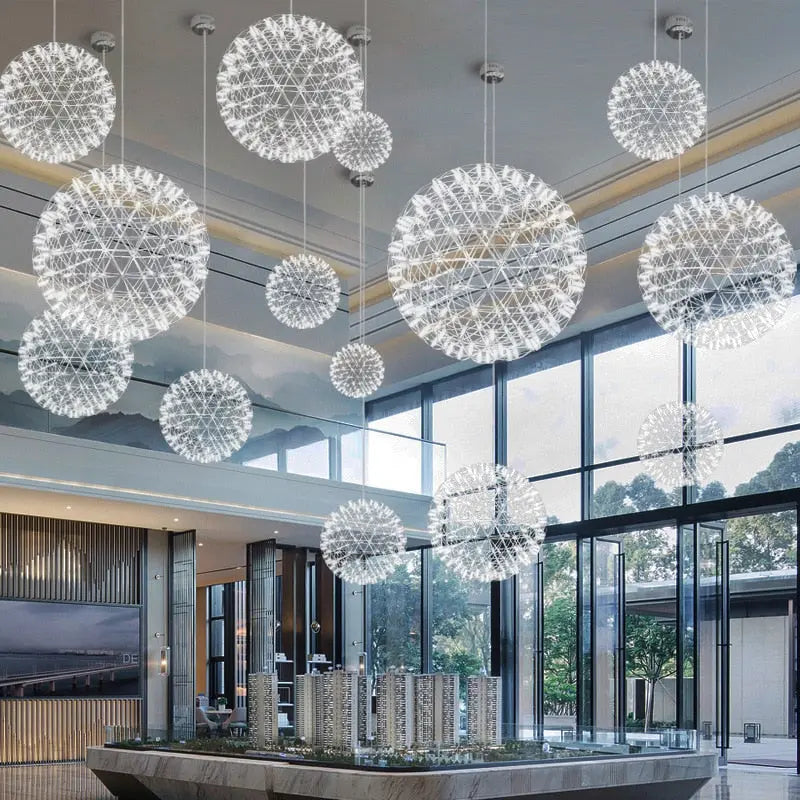

La lámpara colgante Spark Ball de acero inoxidable es un buen ejemplo de una lámpara colgante que se beneficia de un espacio visual deliberado porque su cuerpo esférico reflectante crea una presencia focal más fuerte que una pantalla de cristal más ligera.
Madera natural y accesorios de varias luces
Las luces colgantes de madera y los colgantes de varias luces a menudo se comportan de manera diferente a los accesorios simples de una sola pantalla. Los materiales orgánicos aportan calidez y textura, mientras que los cuerpos de varias luces resuelven el espaciado al integrar varios puntos de luz en una forma coordinada.
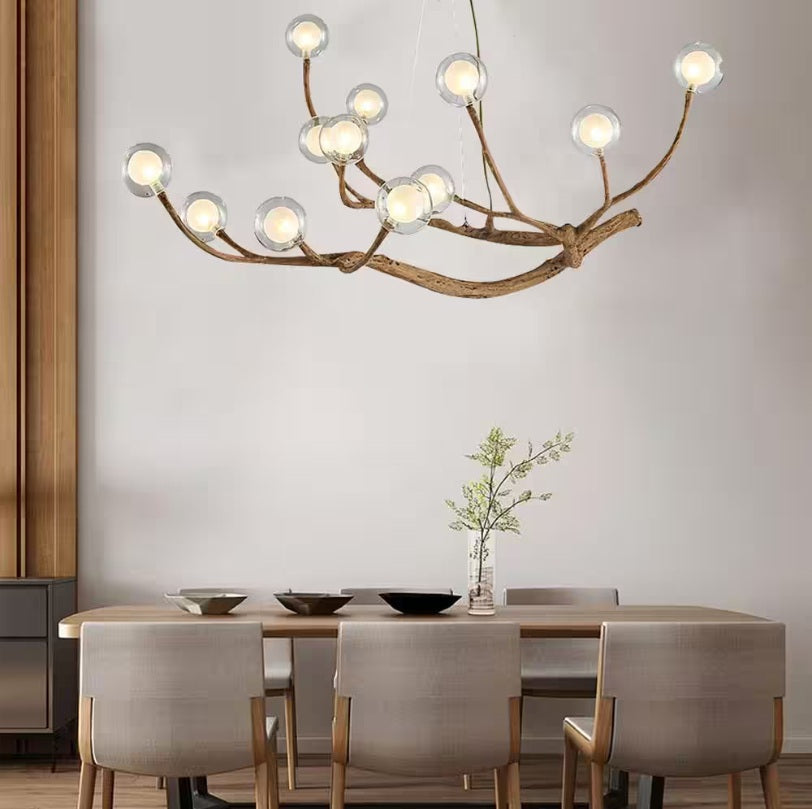
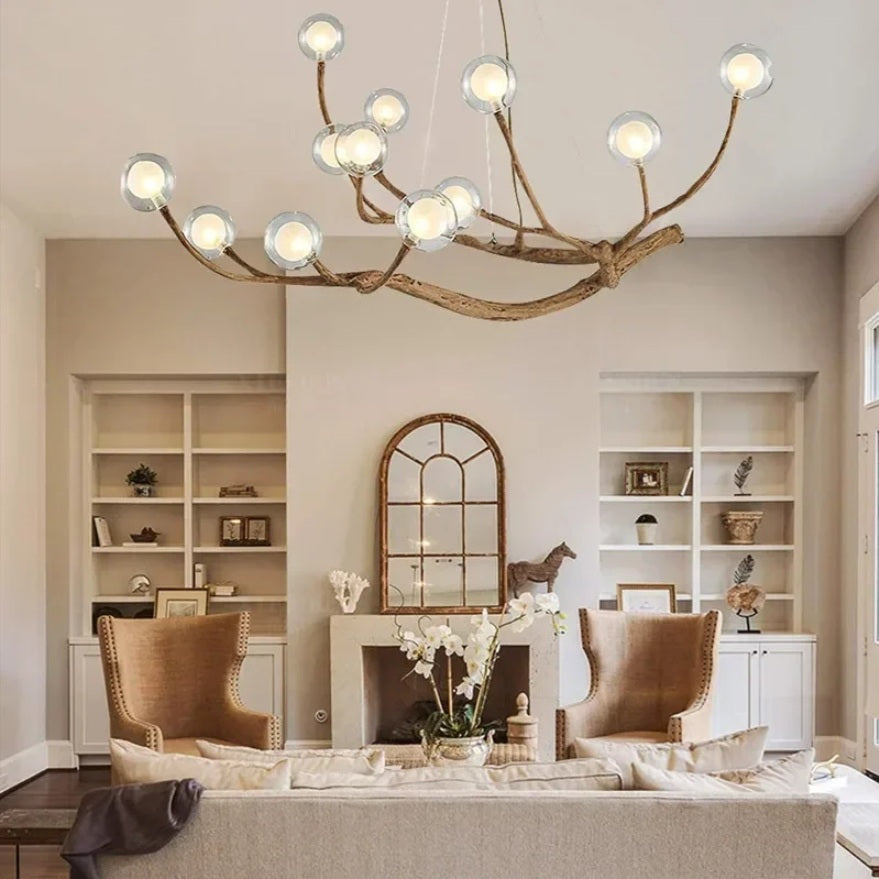
La lámpara de araña rústica Appa de ramas de árbol se centra menos en el espaciado entre lámparas colgantes y más en utilizar un artefacto horizontal más ancho cuando la isla es lo suficientemente grande como para justificar una pieza central en lugar de una fila repetida.
Cómo los artefactos de cristal y de múltiples colgantes cambian la regla
Los diseños de cristal y de múltiples colgantes a menudo emiten luz más allá de su huella física exacta. Eso cambia la forma en que se interpreta el espaciado. Si bien el artefacto aún necesita la distancia visual correcta con respecto a la siguiente unidad, la luz en sí misma puede extenderse más generosamente que una lámpara colgante opaca compacta. En algunas cocinas, eso permite un espaciado ligeramente mayor sin crear los mismos huecos oscuros que aparecerían con una pantalla más cerrada.
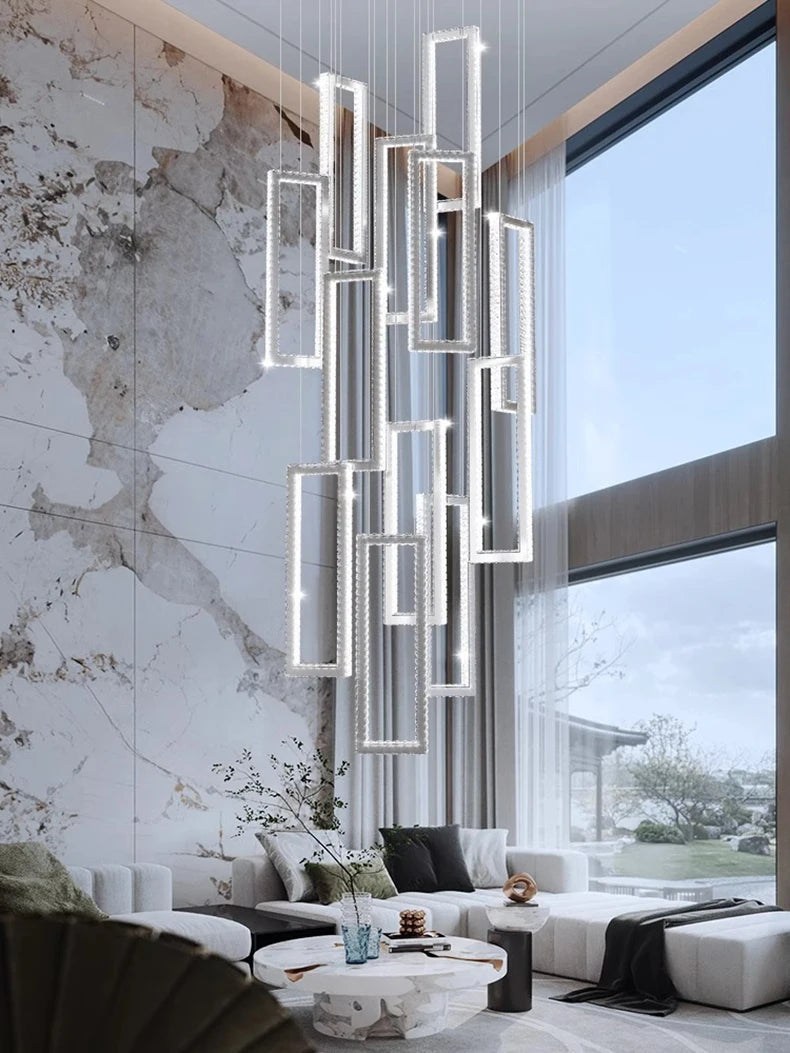
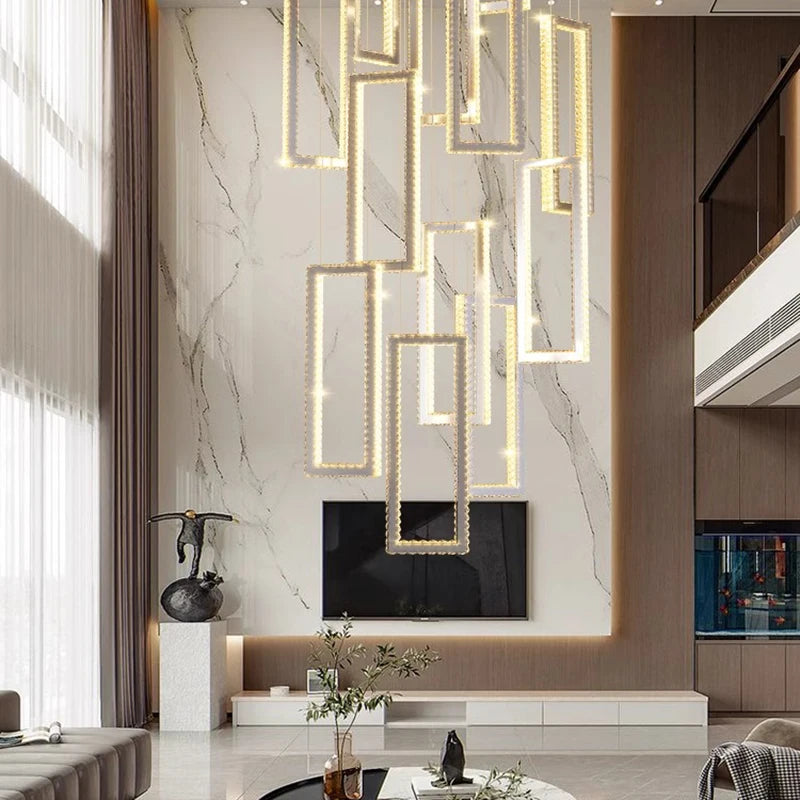
El candelabro de múltiples colgantes de cristal Acai muestra cómo un formato de cristal agrupado puede iluminar una sección más amplia de la isla y actuar más como una solución escultórica única que como una fila de lámparas colgantes separadas.
Errores comunes en el espaciado de las lámparas colgantes de la isla de la cocina
Error 1: Medir desde la pared en lugar de desde el centro de la isla
La isla en sí es el ancla. Siempre comience desde el centro de la isla y trabaje hacia afuera. Las medidas basadas en la pared a menudo crean un diseño que parece descentrado una vez que la habitación está terminada.
Error 2: Fijar el espaciado antes de elegir el tamaño de la lámpara colgante
El tamaño y el espaciado de las lámparas colgantes pertenecen a la misma decisión. Una no se puede fijar correctamente sin la otra.
Error 3: Ignorar el rango de ajuste del cable o la varilla
Una lámpara colgante que se ve bien en el papel puede no colgar a la altura de trabajo correcta si el rango de ajuste es demasiado limitado. Esto importa más de lo que muchos compradores esperan.
Error 4: Olvidar las zonas de asiento
Si parte de la isla se duplica como asiento de bar, la lectura visual y práctica de las lámparas colgantes puede cambiar. En algunas cocinas, las lámparas pueden necesitar sentirse más altas sobre las líneas de visión de los asientos de lo que lo harían sobre una zona de preparación pura.
Error 5: Usar demasiadas lámparas colgantes en una isla corta
Tres lámparas colgantes sobre una isla corta a menudo se ven abarrotadas incluso antes de que finalice la instalación. En cocinas pequeñas, menos lámparas suelen crear un mejor resultado.


Si ya se encuentra en la etapa de instalación en lugar de la etapa de diseño, el artículo de soporte más relevante es cómo instalar lámparas colgantes de forma segura y sencilla. Ese artículo profundiza en la configuración, mientras que esta página se centra en las reglas de espaciado y colgado.
El espaciado de las lámparas colgantes de la isla de la cocina funciona mejor cuando se empieza por la isla
El diseño más fiable de lámparas colgantes para la isla de la cocina comienza con la propia encimera: su longitud, anchura, uso de asientos y posición en la habitación. Después de eso, el diámetro de la lámpara colgante, la familia de estilos, la altura de colgado y el espaciado de centro a centro se vuelven mucho más fáciles de resolver. Por eso, los mejores planes de iluminación para la isla de la cocina parecen tranquilos. Los artefactos no están luchando contra la isla. Están alineados con ella.
Para recapitular el marco central, separe la mayoría de las lámparas colgantes de 24 a 30 pulgadas de centro a centro, cuélguelas de 30 a 36 pulgadas por encima de la encimera, mantenga al menos 6 pulgadas de espacio libre en los bordes y ajuste la altura de colgado hacia arriba en cocinas más altas. Una vez que esas reglas están establecidas, la decisión final del diseño se vuelve mucho más fácil porque las proporciones ya funcionan.
Si desea un siguiente paso más amplio a nivel de habitación después de resolver la isla en sí, la guía relacionada más útil es Dominando la iluminación de la isla de la cocina: una guía completa, porque amplía la conversación desde el espaciado de las lámparas colgantes hasta la iluminación por capas de la isla y la planificación general de la cocina.


