

Las lámparas de araña de cristal con forma de gota de lluvia resuelven un problema de diseño muy específico que comparten muchos vestíbulos y escaleras: la habitación tiene un gran volumen vertical, pero las formas de lámparas de araña ordinarias no saben cómo llenarlo con elegancia. Un accesorio en forma de tambor puede resultar demasiado superficial. Un cuerpo redondo compacto puede perderse visualmente. Una lámpara de araña muy ancha puede abarrotar la abertura sin utilizar realmente la altura. Las lámparas de araña de cristal con forma de gota de lluvia funcionan de manera diferente porque el diseño crece hacia abajo en una composición vertical controlada, lo que permite que el accesorio ocupe un espacio alto sin parecer voluminoso.
Por eso son especialmente eficaces en vestíbulos, huecos de escaleras y entradas de dos pisos. Son espacios donde la altura no es solo una medida técnica. Es parte de la identidad visual de la habitación. La lámpara de araña de gota de lluvia adecuada no solo debe agregar brillo. Debe guiar la vista hacia arriba, conectar varios niveles y crear un punto focal que se sienta proporcionado desde el suelo, las escaleras y el rellano superior. Si aún está comparando esta familia de cristales con la categoría más amplia, puede comenzar con la colección principal de lámparas de araña de cristal antes de centrarse en las formas específicas de gota de lluvia.
Principios clave de planificación para las lámparas de araña de cristal con forma de gota de lluvia
- Utilice la lámpara de araña para llenar el espacio vertical, no simplemente para decorar el plano del techo.
- Planifique primero la altura libre del suelo, luego determine cuánto cuerpo de lámpara de araña y caída puede soportar la habitación.
- En los vestíbulos, la lámpara de araña debe ser visible y sustancial desde la puerta principal, no demasiado alta en el techo.
- En las escaleras, la caída debe evaluarse en función del tramo de la escalera y la vista a mitad del vuelo, no solo de la altura del techo.
- El diámetro y la densidad importan tanto como la caída total. Un accesorio alto pero excesivamente estrecho aún puede parecer débil en una abertura ancha.
- Las formas de gota de lluvia funcionan mejor cuando la cascada de cristal parece intencional desde varios ángulos de visión, no solo directamente desde abajo.
Por qué las lámparas de araña de cristal con forma de gota de lluvia funcionan tan bien en espacios verticales
La ventaja definitoria de una lámpara de araña de cristal con forma de gota de lluvia es que está construida alrededor del descenso. En lugar de leerse como un cuerpo central compacto, se lee como una cascada de luz controlada. Eso es importante en vestíbulos y escaleras porque esos espacios suelen percibirse primero por su altura. Cuando una lámpara de araña es demasiado superficial, la habitación todavía se siente vacía por encima del nivel de los ojos. Cuando el accesorio utiliza una composición de gota de lluvia, puede ocupar ese vacío de una manera más natural.
Esta es también la razón por la que las lámparas de araña de gota de lluvia a menudo se sienten más resueltas que las formas estándar de lámparas de araña en los huecos de las escaleras. La escalera ya crea un movimiento direccional. Una forma de cristal de gota de lluvia puede hacer eco de ese movimiento descendiendo a través del vacío en lugar de quedarse en la parte superior. En los vestíbulos, el efecto es ligeramente diferente pero igual de importante. La lámpara de araña se convierte en un ancla vertical que le da a la secuencia de entrada una mayor sensación de llegada.

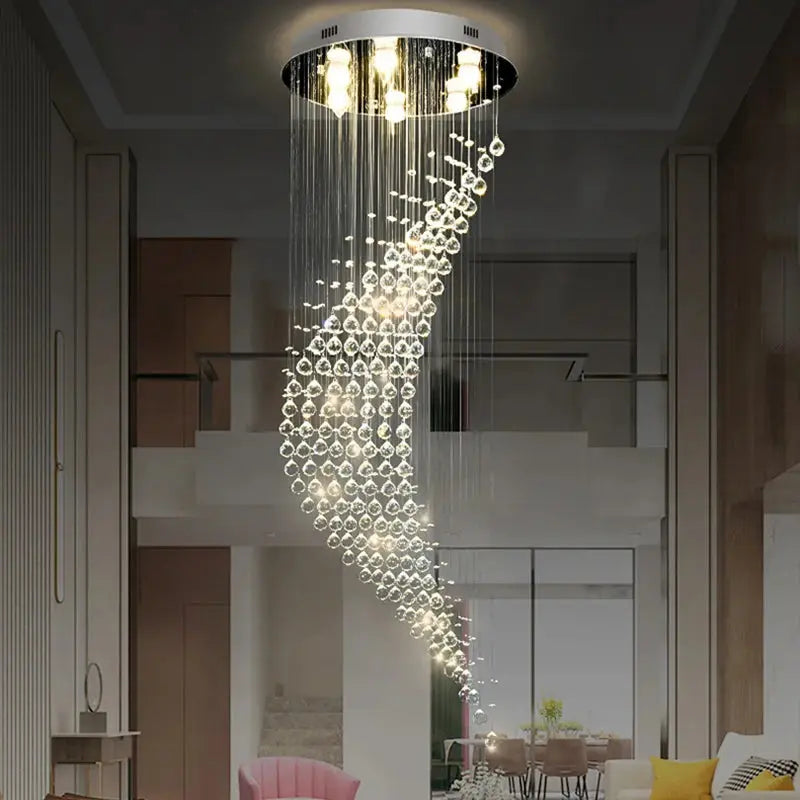
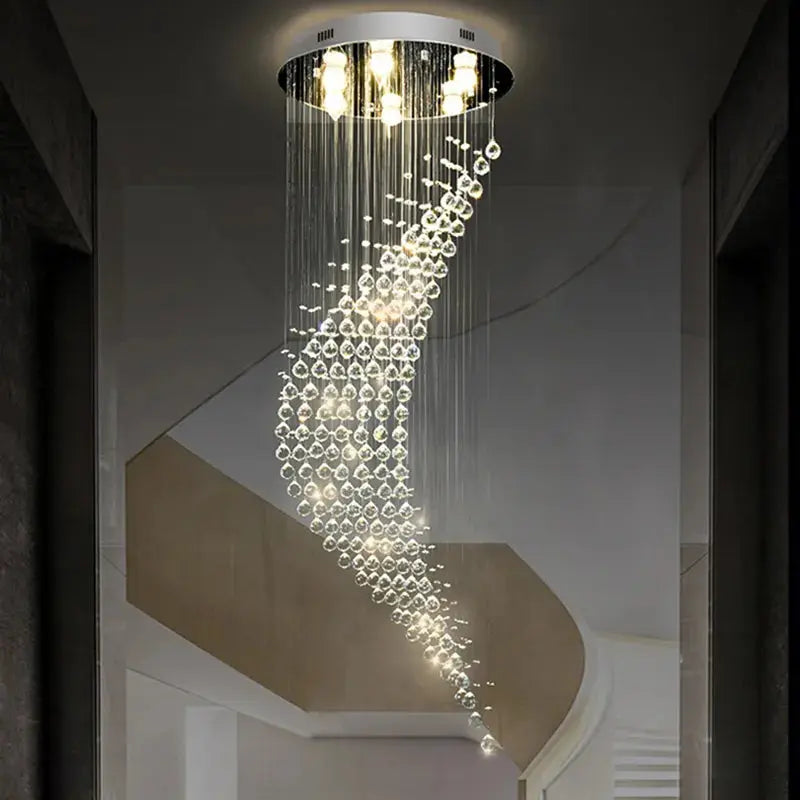
No todas las lámparas de araña de cristal pueden hacer esto. Algunas formas de cristal son mejores en ancho, brillo o simetría centrada en la mesa. Las lámparas de araña de gota de lluvia son más fuertes cuando la habitación necesita un gesto visual descendente. Esa es exactamente la razón por la que están tan estrechamente ligadas a vestíbulos, escaleras y otros espacios de transición altos.
Cómo planificar lámparas de araña de cristal con forma de gota de lluvia para vestíbulos
En los vestíbulos, el principal desafío no es solo la altura. Es la visibilidad. Una lámpara de araña colgada demasiado alta puede convertirse en parte del techo en lugar de parte de la habitación. Una lámpara de araña colgada demasiado baja puede interferir con la circulación o hacer que la entrada se sienta comprimida. La posición correcta es la que permite que el accesorio permanezca visible desde la entrada, se sienta sustancial en el volumen de la habitación y aún conserve una distancia cómoda debajo.
Como punto de partida práctico, la parte inferior de la lámpara de araña nunca debe comprometer la seguridad del movimiento. En áreas de paso estándar, mantener aproximadamente 7 pies de espacio libre desde el suelo hasta el punto más bajo del accesorio es la regla básica. Una vez establecido ese espacio libre, la decisión restante es cuánto del volumen vertical visible debe ocupar la lámpara de araña. En un vestíbulo de dos pisos, la respuesta suele ser mucho más de lo que esperan los propietarios. Un accesorio que deja demasiado aire vacío por encima o por debajo de él casi siempre se leerá como de tamaño insuficiente.
Las lámparas de araña de gota de lluvia en los vestíbulos también deben juzgarse desde la puerta principal, no solo directamente desde abajo. Esta es una de las razones por las que las lámparas de araña de cristal compactas a menudo decepcionan en entradas altas. Pueden encajar técnicamente, pero no acumulan suficiente peso visual desde el punto de vista principal. Si su tipo de habitación principal está centrado en la entrada en lugar de en la escalera, la colección de lámparas de araña para vestíbulo es el punto de comparación más relevante para ver cómo las siluetas más completas orientadas al vestíbulo difieren de las formas más largas de las escaleras.

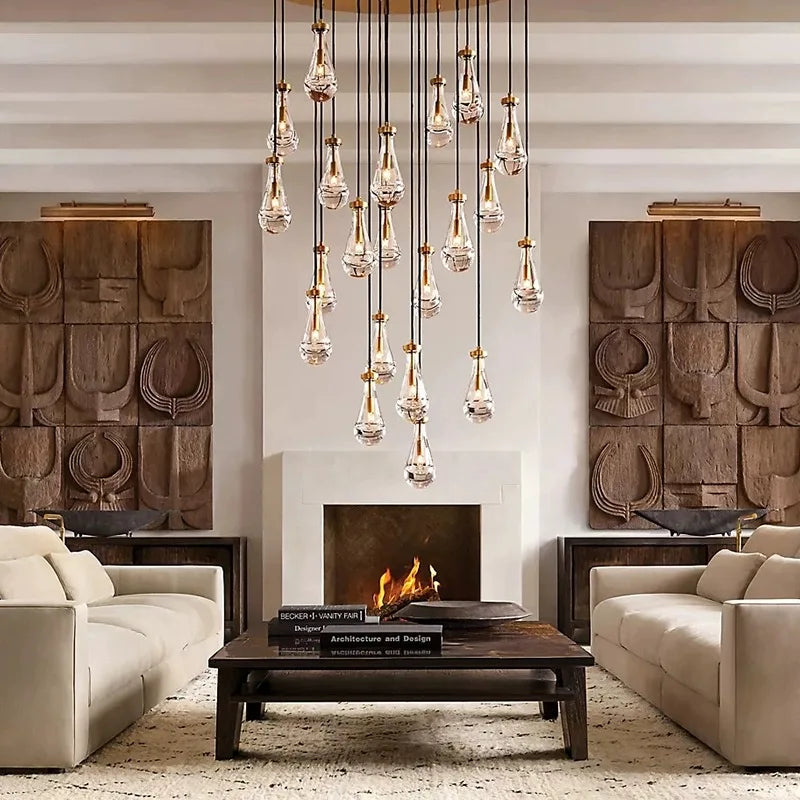
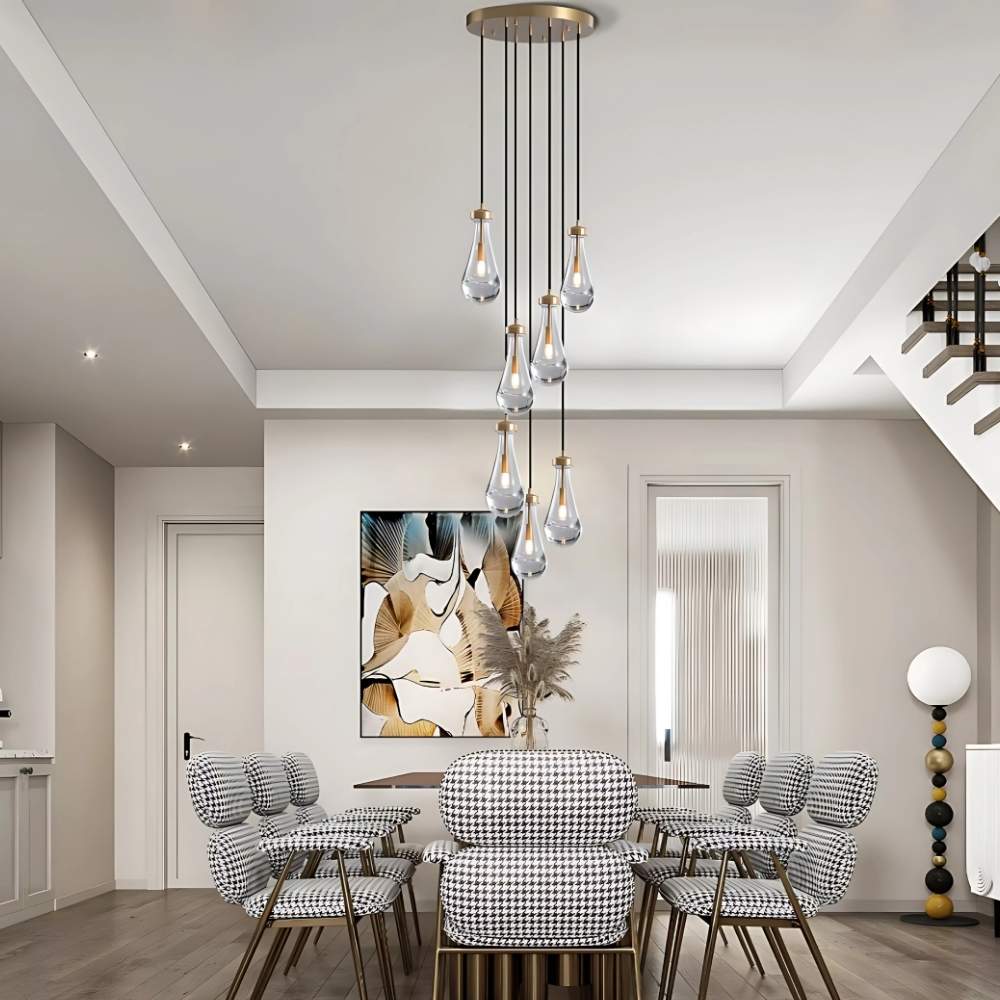
Para vestíbulos más bajos, esto no significa que una lámpara de araña de gota de lluvia sea imposible. Significa que el cuerpo del accesorio necesita más disciplina. Una disposición compacta de gota de lluvia con un cuerpo más corto aún puede funcionar maravillosamente si la forma se mantiene lo suficientemente vertical como para sentirse distinta, pero no desciende demasiado agresivamente en la habitación.
Cómo planificar lámparas de araña de cristal con forma de gota de lluvia para escaleras
Las escaleras son diferentes porque el nivel del suelo cambia a medida que se ve la lámpara de araña. Por eso, la lógica simple de "cuélgala a esta distancia del suelo" no es suficiente. En un hueco de escalera, el accesorio debe evaluarse en función del tramo de las escaleras, el rellano y el nivel cambiante de los ojos a medida que alguien se mueve hacia arriba o hacia abajo.
La forma más útil de pensar en la ubicación de las escaleras es centrarse en el punto medio visual del hueco de la escalera en lugar de solo en el techo. Una lámpara de araña colocada demasiado alta en la parte superior del vacío a menudo deja el resto del hueco de la escalera con una sensación de subutilización. Una lámpara de araña que cae demasiado lejos puede interferir con las líneas de visión o crear un rellano visualmente abarrotado. La posición ideal generalmente permite que la cascada interactúe con todo el volumen de la escalera, especialmente cuando se ve desde la base de la escalera.
Esta es una de las razones por las que la suspensión ajustable es mucho más importante en las escaleras que en las habitaciones normales. Una caída fija rara vez coincide exactamente con un hueco de escalera real. La geometría del tramo de la escalera, la ubicación del rellano y la altura del techo varían demasiado de una casa a otra. Si está comparando accesorios más largos específicos para escaleras, la familia de productos más relevante es la colección de lámparas de araña para escaleras porque muestra cómo la altura del cuerpo y el ritmo de la cascada deben escalar de manera más dramática en las aberturas verticales.
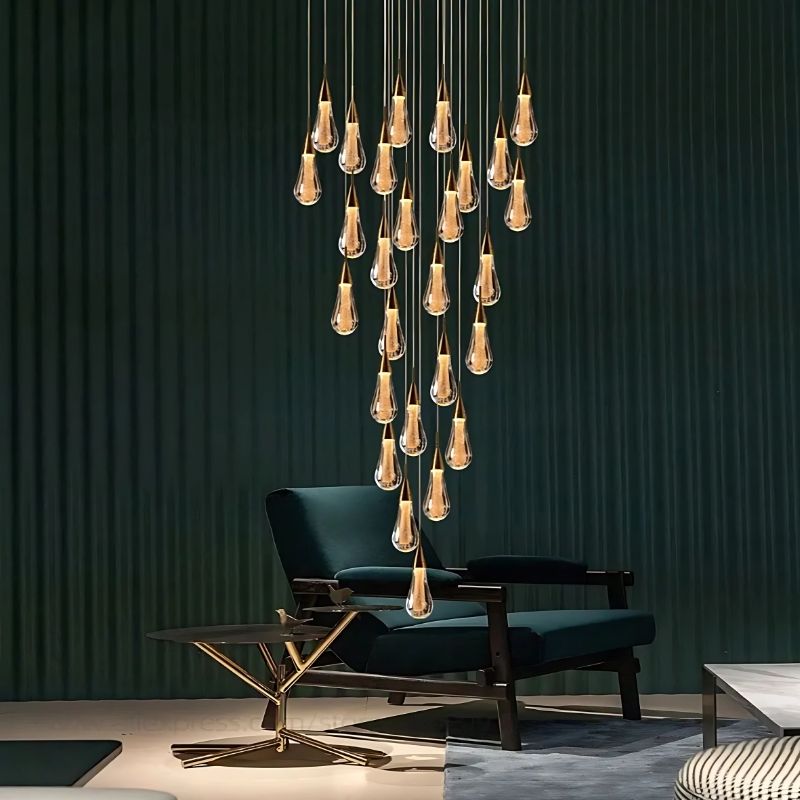
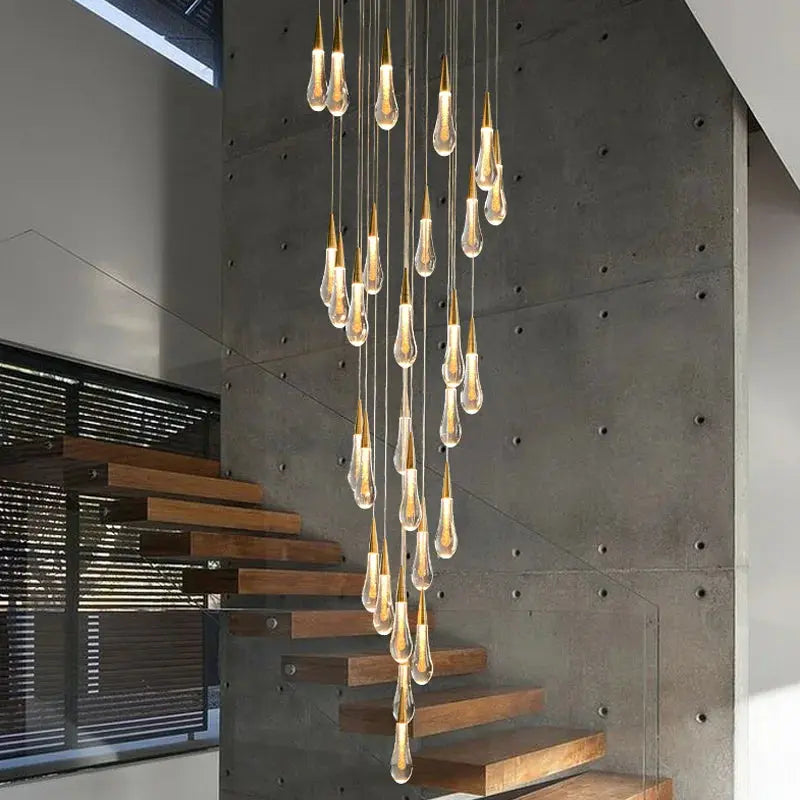
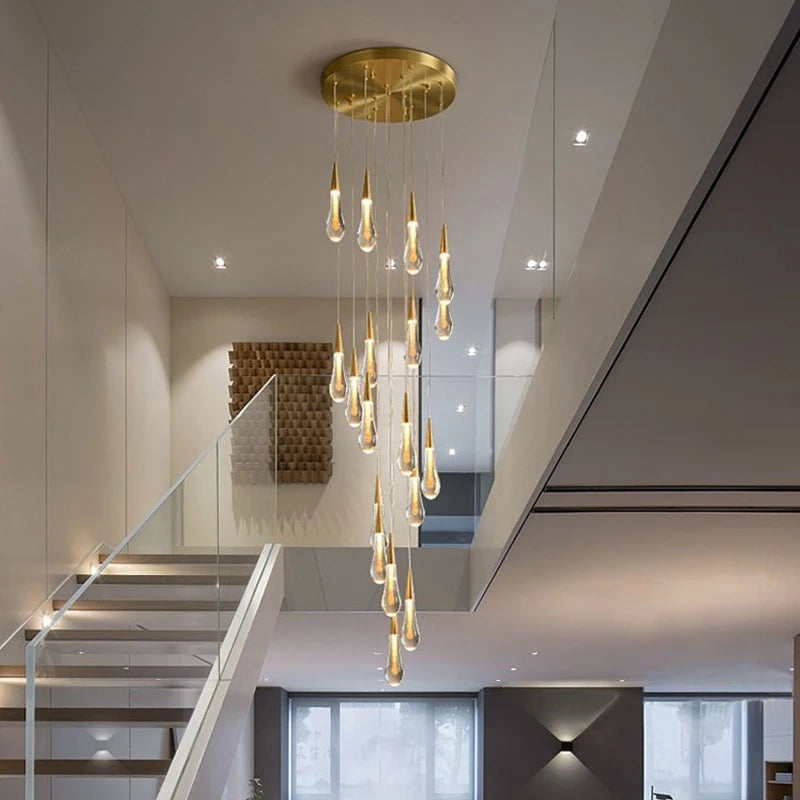
En las escaleras, la caída total importa, pero también cómo se distribuyen los cristales dentro de esa caída. Una lámpara de araña larga pero visualmente delgada aún puede sentirse débil si la abertura del hueco de la escalera es ancha. Una disposición espiral o en capas más densa de gotas de lluvia suele funcionar mejor porque le da a la cascada más presencia a múltiples alturas.
Equilibrio visual: diámetro, densidad y relleno proporcional
Muchos propietarios se centran solo en la longitud de la caída, pero las lámparas de araña de gota de lluvia también necesitan el diámetro y la densidad adecuados. Una lámpara de araña demasiado estrecha puede desaparecer en una abertura ancha, incluso si es muy alta. Una lámpara de araña demasiado ancha puede abarrotar el vacío, interrumpir las líneas de visión o competir torpemente con las barandillas del piso superior.
Un punto de partida práctico es asegurarse de que la lámpara de araña tenga suficiente ancho para sostener visualmente la abertura. En muchos huecos de escaleras, esto significa que el diámetro no debe tratarse como una ocurrencia tardía. El accesorio debe sentirse sustancial en relación con el vacío que ocupa, no solo elegante de forma aislada. La densidad vertical también importa. Algunas lámparas de araña de gota de lluvia se sienten dispersas y aireadas, mientras que otras utilizan un espacio entre cristales más ajustado y una masa visual más fuerte. La densidad correcta depende de cuán formal, dramático o arquitectónico quiera que se sienta el resultado.
Este marco visual es útil porque mantiene la conversación en las tres variables que más importan en espacios altos: altura, caída y equilibrio visual.
Otro principio útil es el relleno proporcional. Una lámpara de araña de gota de lluvia suele lucir más fuerte cuando ocupa visiblemente suficiente de la abertura vertical para sentirse integrada con la arquitectura. Si queda demasiado volumen vacío alrededor de la lámpara de araña, el accesorio a menudo se lee como de tamaño insuficiente, incluso cuando las medidas reales suenan grandes en papel.
Cómo la densidad del cristal cambia el efecto diurno y nocturno
Las lámparas de araña de gota de lluvia no solo se tratan de la forma. También se tratan de cómo la densidad del cristal interactúa con la luz. Durante el día, las gotas de cristal más claras y espaciadas pueden hacer que la lámpara de araña se sienta más ligera y transparente. Por la noche, los arreglos de cristal más densos suelen producir un brillo más completo y un efecto reflectante más dramático.
Esto es importante porque los vestíbulos y las escaleras a menudo se usan de manera diferente a los comedores o dormitorios. En algunas casas, la lámpara de araña es parte de la secuencia de entrada iluminada por el día y debe sentirse visualmente aireada. En otras, se espera que cree un drama nocturno y un brillo más fuerte. El mismo concepto de gota de lluvia puede inclinarse en cualquier dirección dependiendo de qué tan apretados estén los cristales y cómo se controle la luz.
Si aún está decidiendo cuánto del efecto debe provenir del comportamiento del cristal en sí, en lugar de la silueta general, la comparación de materiales en Lámparas de araña de cristal vs. vidrio: diferencias clave explicadas es una lectura de apoyo útil porque ayuda a aclarar cómo el cristal se comporta de manera diferente al vidrio estándar en interiores reales.


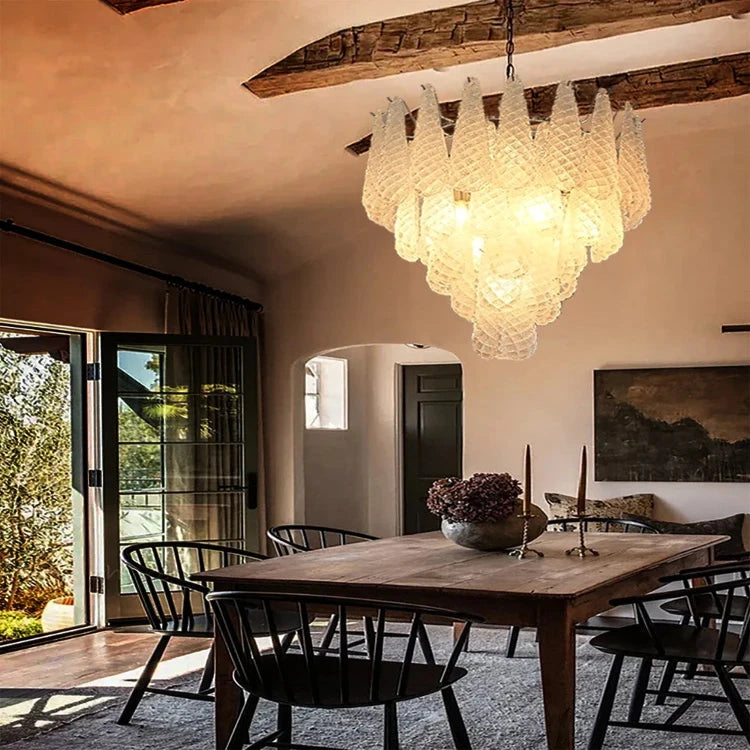
La temperatura del color también juega un papel importante aquí. El blanco cálido suele hacer que un vestíbulo se sienta más acogedor y suave. El blanco más frío hace que el cristal se sienta más nítido y reflectante, lo que puede adaptarse a escaleras más contemporáneas. En un accesorio de gota de lluvia, esta decisión cambia el ambiente de toda la composición vertical, no solo el nivel de brillo.
Cómo comparar las lámparas de araña de cristal con forma de gota de lluvia por tipo de espacio
| Tipo de espacio | Lo que suele importar más | Mejor dirección de gota de lluvia |
|---|---|---|
| Vestíbulo de dos pisos | Altura visible del cuerpo, visibilidad de la entrada, cálida bienvenida, caída proporcional | Lámpara de araña de gota de lluvia de tamaño mediano a grande con suficiente densidad para anclar la entrada |
| Hueco de escalera abierto | Alineación a mitad del vuelo, flexibilidad total de la caída, visualización multiángulo | Cascada vertical o en espiral más larga con longitud de suspensión ajustable |
| Gran hueco de escalera | Diámetro, masa de cristal en capas, escala arquitectónica | Forma grande en espiral o de gota de lluvia de varios niveles con un volumen visual más completo |
| Vestíbulo inferior | Espacio libre seguro, altura del cuerpo controlada, silueta más limpia | Diseño compacto de gota de lluvia con proporciones más disciplinadas |
Por eso, una lámpara de araña de gota de lluvia que funciona maravillosamente en una escalera puede fallar en otra. El problema rara vez es solo el "estilo". Suele ser la relación entre el volumen vertical, la densidad de la lámpara de araña, la geometría de la escalera y la cantidad de abertura arquitectónica visible.
Direcciones de productos dentro de la familia de cristal con forma de gota de lluvia
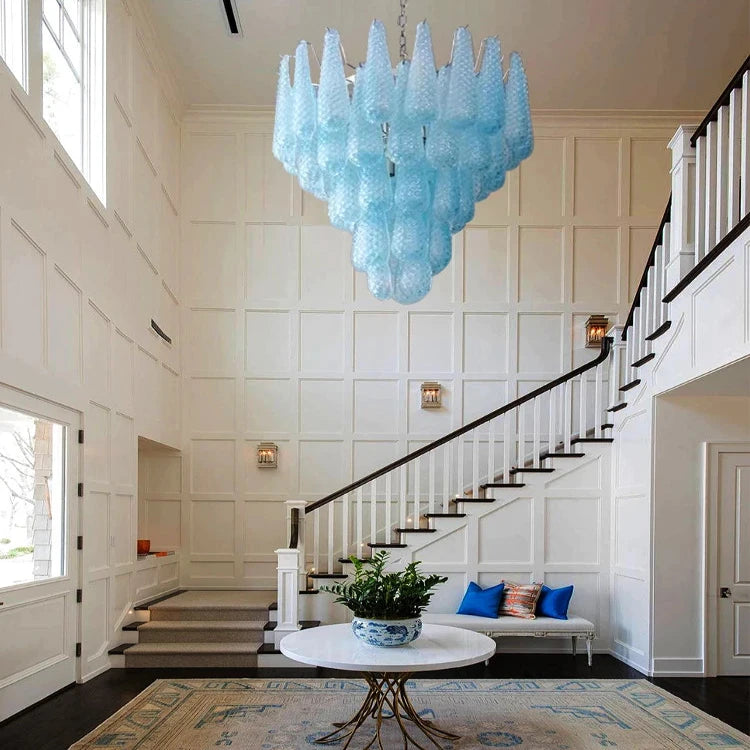
Lámpara de araña de cristal de gota de lluvia de lujo para escalera y vestíbulo
Esta dirección se adapta a vestíbulos que necesitan una declaración de entrada clara con suficiente desarrollo vertical para sentirse intencional desde la puerta principal. Es una opción sólida cuando la habitación necesita drama pero aún debe sentirse acogedora en lugar de excesivamente rígida.

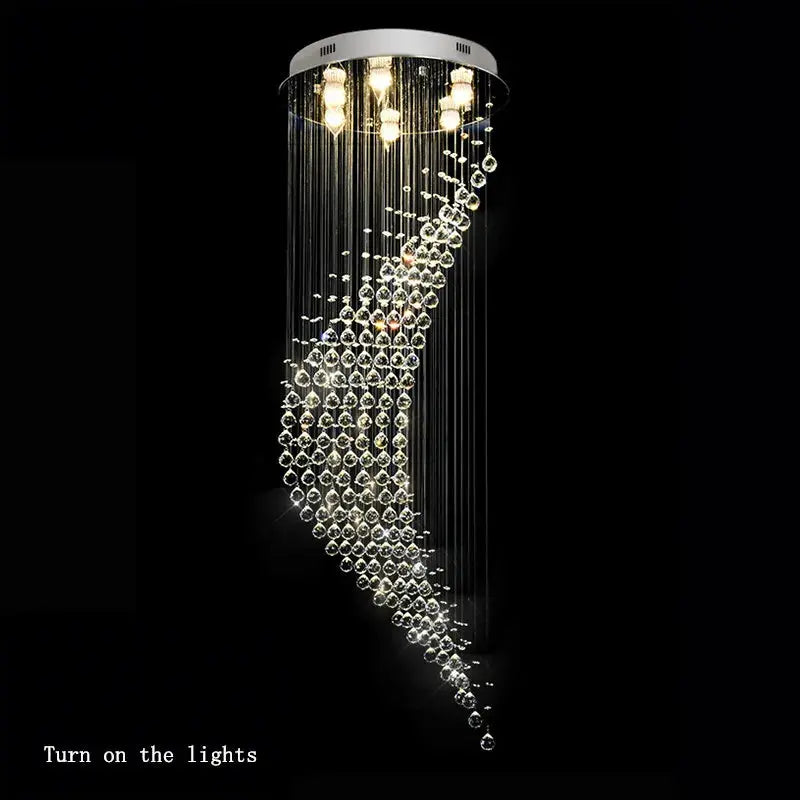
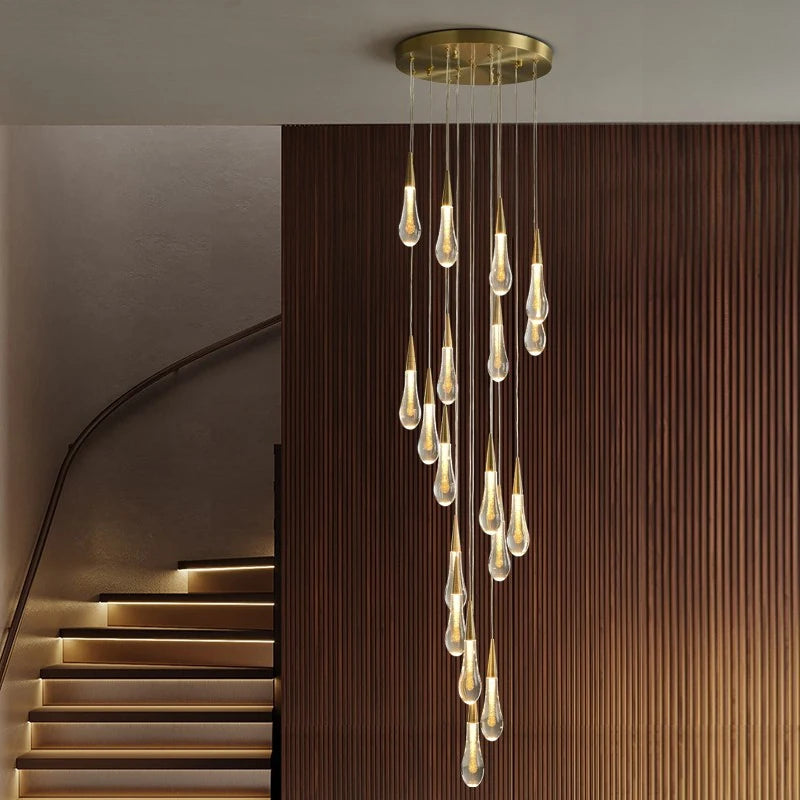
Lámpara de araña de gota de lluvia moderna para vestíbulo y escalera
Este tipo es útil cuando se necesita un perfil de gota de lluvia más limpio y contemporáneo. Los cables ajustables hacen que la silueta final sea más adaptable, lo que es útil cuando la habitación necesita una forma personalizada más que un cuerpo espiral fijo.
Lámpara de araña de cristal de gota de lluvia en espiral Vena para escalera
La dirección Vena es más adecuada para escaleras que necesitan un gesto helicoidal más fuerte. Funciona mejor cuando la arquitectura puede soportar una forma más visiblemente espiral y cuando se espera que la lámpara de araña soporte más el drama de la habitación por sí sola.

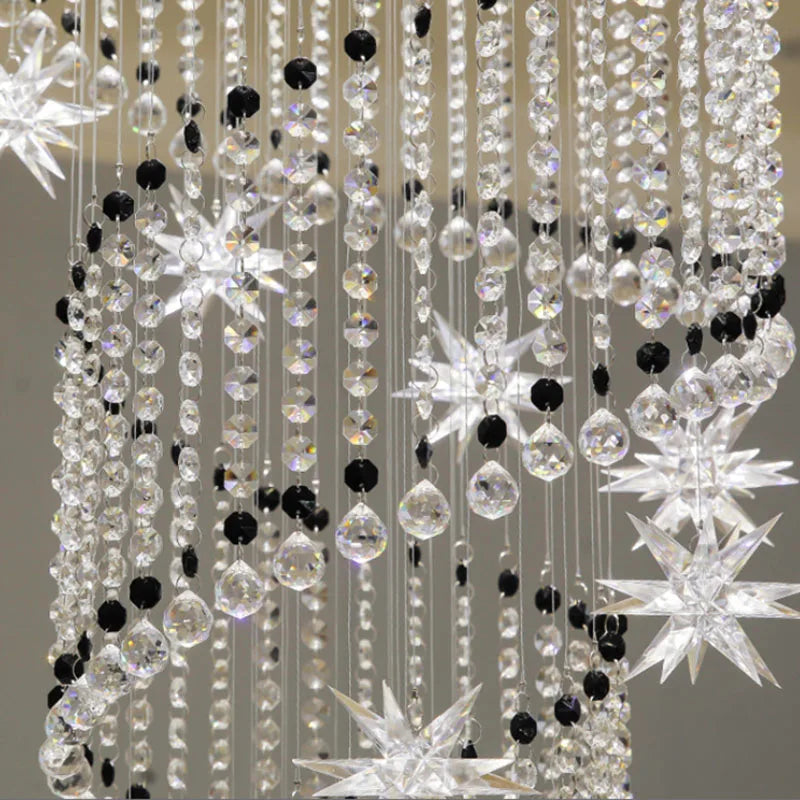
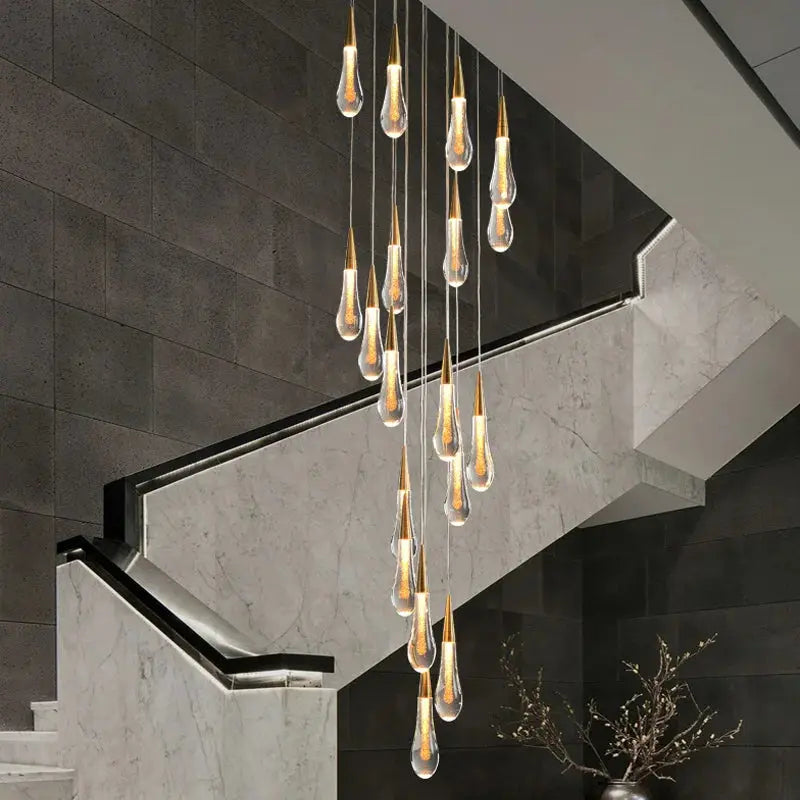
Iluminación de escalera de techo alto de cristal
Esta dirección funciona mejor cuando la habitación necesita una composición de cristal más alta con un fuerte énfasis en la caída y una intención más obvia de techo alto. Es especialmente útil en hogares donde una lámpara de araña compacta desaparecería demasiado fácilmente en el hueco de la escalera.
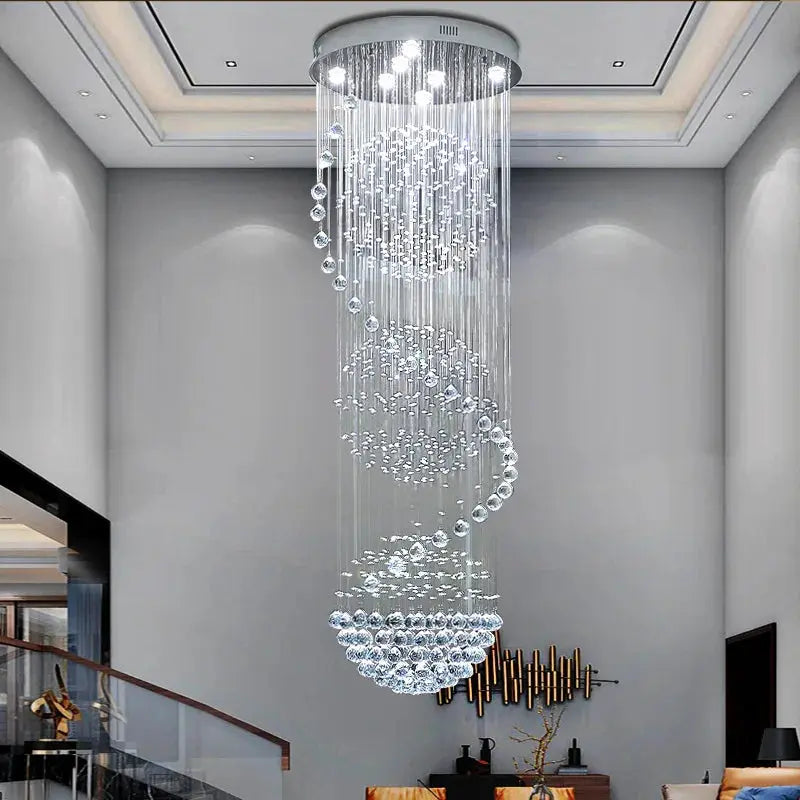
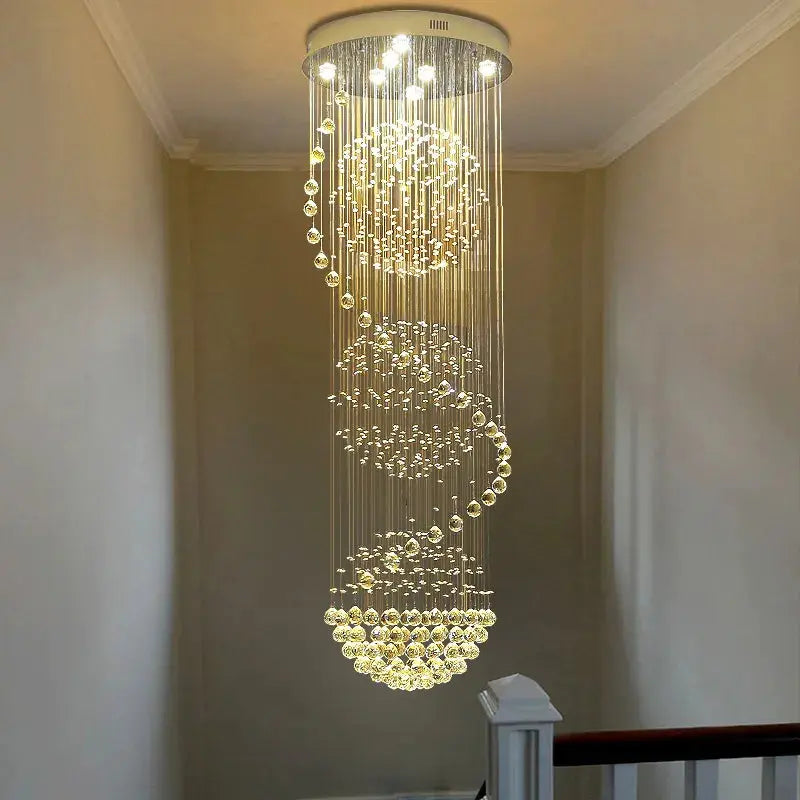
Lámpara de araña de escalera de gota de agua de vidrio vintage Jia
Este tipo es mejor cuando la habitación necesita un efecto de gota de agua más decorativo y lujoso en lugar de una silueta de gota de lluvia moderna más limpia. Se adapta a escaleras más grandes, entradas estilo villa e interiores donde la lámpara de araña debe leerse como una declaración de diseño importante.
Qué medidas preparar antes de hacer el pedido
Si quieres que un candelabro de lágrima encaje correctamente, prepara algo más que la altura del techo. Las medidas más útiles son:
- altura del suelo al techo en el punto de montaje
- ancho de la abertura de la escalera
- distancia desde el soporte del techo hasta la línea de visión importante más baja
- espacio libre en el suelo en el punto de paso más bajo
- posición del rellano, si la escalera incluye uno
- si el candelabro debe verse principalmente desde la puerta principal, desde la base de la escalera o desde varios niveles
Aquí es donde la comparación de categorías amplias puede ayudar. Si aún no estás seguro de si la habitación realmente necesita una forma de lágrima en lugar de otra silueta de cristal, la categoría más amplia de candelabros es útil para una comparación final con las familias de candelabros que no son de lágrima antes de decidirse por una composición de cristal totalmente vertical.
Instalación y distancia de seguridad
La seguridad no es una preocupación secundaria en los vestíbulos y las escaleras. Es la primera regla que toda decisión de diseño debe respetar. Un candelabro que parezca espectacular pero comprometa la circulación no tiene éxito. En las zonas de paso, el espacio libre en el suelo debe ser cómodo. En las escaleras, el candelabro debe evaluarse en función del punto más bajo del camino de paso, no solo del soporte del techo.
El soporte estructural también importa porque los candelabros de lágrima largos pueden combinar el peso del cristal, la caída extendida y múltiples puntos de suspensión. La resistencia de la caja del techo, el tamaño del dosel, la flexibilidad de la suspensión y el acceso del instalador deben comprobarse antes de finalizar la instalación.
"Los candelabros de escalera y vestíbulo más exitosos no se eligen solo por la altura del techo. Se eligen por cómo el candelabro ocupa el vacío desde los ángulos de visión reales de la casa."
Si el candelabro será difícil de acceder después de la instalación, la planificación del mantenimiento también importa. La limpieza del cristal, el acceso a las bombillas y el ajuste de la suspensión deben ser realistas para el espacio, no tratarse como algo secundario.
Reflexiones finales
Los candelabros de cristal de lágrima son lo mejor cuando la habitación realmente necesita un gesto de iluminación vertical. No son simplemente accesorios decorativos de cristal con una caída extra. Son una respuesta específica al problema del espacio alto, los puntos de vista cambiantes y el volumen aéreo vacío en vestíbulos y escaleras.
La instalación más exitosa suele ser el resultado de equilibrar cinco cosas: el espacio libre en el suelo, la caída total, el diámetro del accesorio, la densidad del cristal y la forma en que se ve el candelabro desde el camino real a través de la casa. Cuando esos cinco elementos están alineados, un candelabro de lágrima hace algo más que brillar. Se convierte en parte de la arquitectura del espacio.


