

Las lámparas de araña modernas para recibidores con techos altos funcionan mejor cuando se alinean tres cosas: el tamaño de la lámpara, la altura a la que cuelga y cómo la lámpara ocupa visualmente la habitación. En una entrada alta, los pequeños errores de tamaño se vuelven mucho más obvios porque la altura del techo exagera la proporción, el espacio vacío y el desequilibrio visual.
Esta guía se centra en cómo elegir una lámpara de araña moderna para recibidor con techo alto sin depender solo de las fotos del producto. El objetivo es ayudarle a juzgar el diámetro, la longitud de caída, la orientación, el brillo y el peso visual para que la lámpara se sienta conectada a la arquitectura en lugar de flotar torpemente en la entrada.
Conclusiones clave
| Pregunta frecuente | Respuesta rápida |
|---|---|
| ¿Qué tamaño debe tener una lámpara de araña para recibidor? | Un punto de partida común es sumar la longitud y el ancho de la habitación en pies, y luego usar ese número en pulgadas como un diámetro aproximado para la lámpara de araña. |
| ¿Qué tan bajo debe colgar? | En la mayoría de los recibidores abiertos, un punto de partida útil es mantener la parte inferior del artefacto a unos 7 pies del suelo como mínimo, y luego elevarlo según la altura del techo, la densidad del artefacto y las líneas de visión. |
| ¿Qué lámpara de araña funciona mejor en un recibidor de dos pisos? | Las lámparas verticales, de varios niveles o en cascada suelen funcionar mejor que las formas compactas porque ocupan visualmente los volúmenes altos de manera más efectiva. |
| ¿Qué es el peso visual? | Es lo pesada o ligera que parece una lámpara de araña en la habitación. Los marcos abiertos suelen parecer más ligeros, mientras que los cristales densos, los grandes grupos de esferas y las formas de farol pesadas parecen más pesados. |
| ¿Debe la lámpara de araña enfatizar la altura o el ancho? | Eso depende de la arquitectura. Los recibidores estrechos y altos suelen beneficiarse del énfasis vertical, mientras que las entradas más anchas a menudo necesitan una mayor extensión horizontal. |
1. Por qué los techos altos cambian las reglas de la iluminación del recibidor
Los techos altos crean oportunidades, pero también crean más errores visibles. En una habitación de altura estándar, una lámpara de araña ligeramente pequeña puede seguir siendo aceptable. En una entrada alta, la misma lámpara puede parecer perdida porque hay mucho espacio vacío a su alrededor.
Por eso, la iluminación del recibidor debe leerse como parte de la arquitectura en lugar de tratarse como un accesorio decorativo. La altura del techo, el ancho de la entrada, la ubicación de la escalera, las aberturas de nivel superior y las líneas de visión desde la puerta principal influyen en la forma de la lámpara de araña que realmente funcionará.
Si su entrada se abre a una escalera o a un rellano superior, la lámpara de araña a menudo tiene que hacer algo más que proporcionar luz. Necesita conectar visualmente el espacio vertical. En esos casos, una lámpara compacta puede no tener suficiente presencia, incluso si el diámetro es técnicamente correcto.
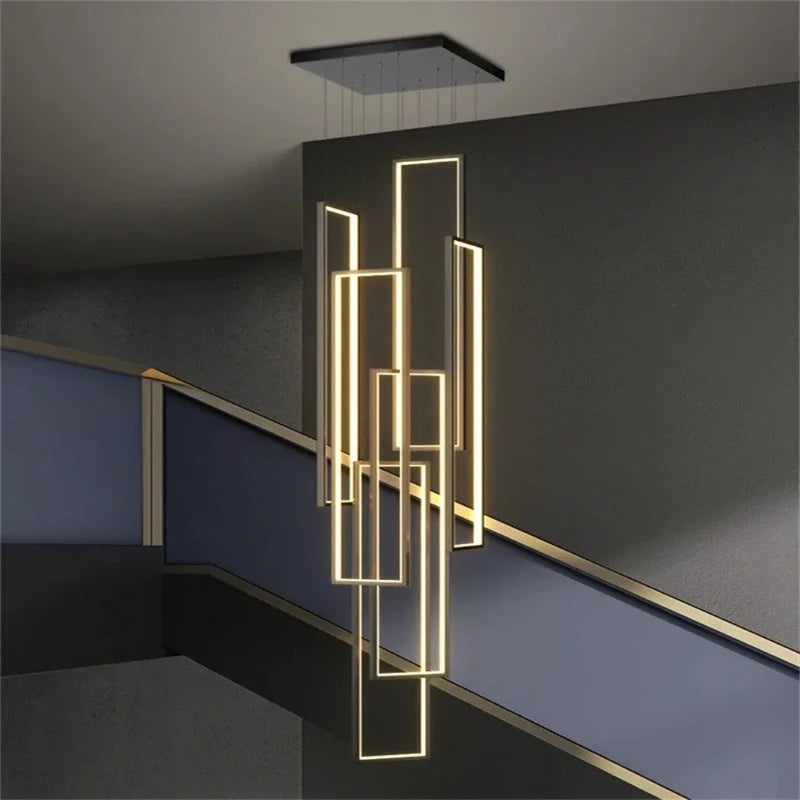
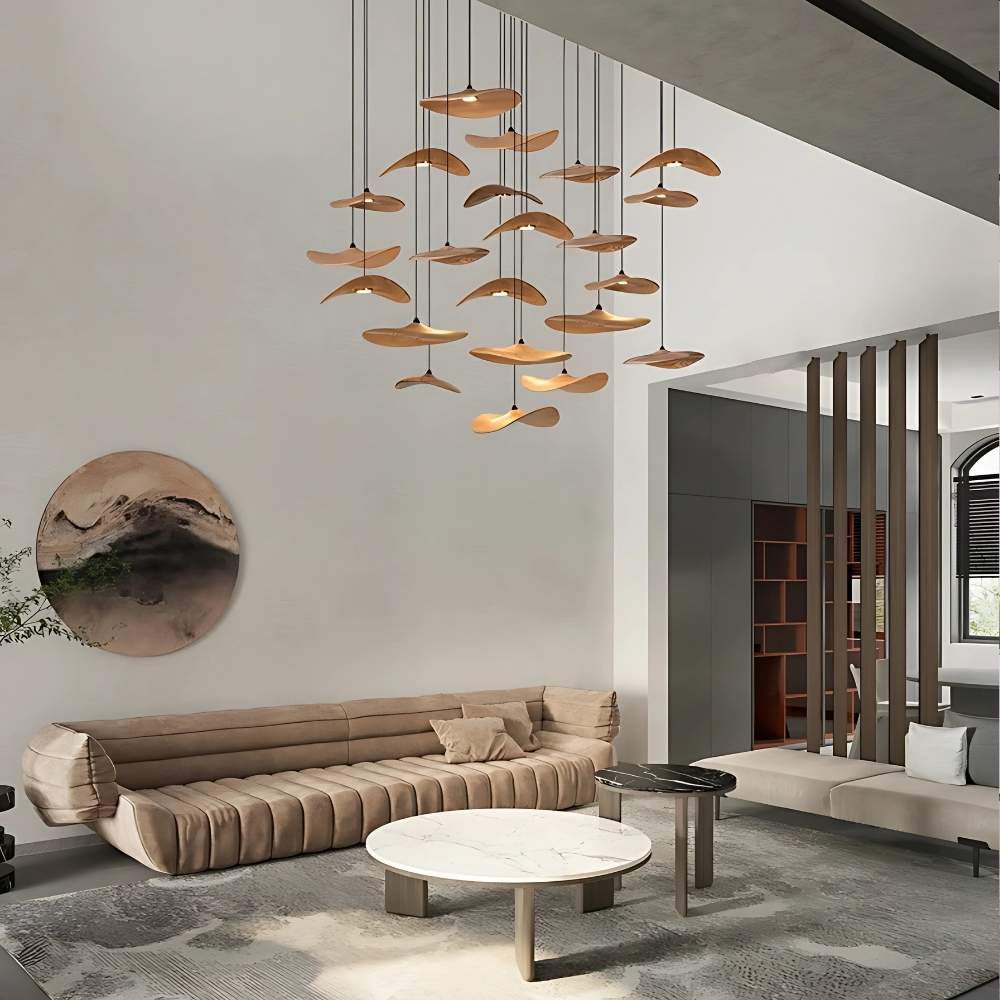
2. La fórmula de tamaño correcta para las lámparas de araña modernas de recibidor
Una fórmula inicial ampliamente utilizada para el diámetro de una lámpara de araña es sumar la longitud y el ancho de la habitación en pies, y luego convertir ese total a pulgadas. Esto le da una base práctica antes de refinar la elección basándose en la altura del techo y la densidad de la lámpara.
Por ejemplo, un recibidor de 12 por 14 pies indica una lámpara de araña de aproximadamente 26 pulgadas de ancho. Eso no significa que todas las lámparas de araña de 26 pulgadas funcionen igual de bien. Un marco ligero y abierto y un cuerpo de cristal denso pueden comportarse de manera muy diferente con el mismo diámetro. Aun así, la fórmula le ayuda a evitar uno de los errores más comunes en las entradas de techo alto: elegir una lámpara que es demasiado pequeña para el volumen de la habitación.
Una vez que tenga un tamaño aproximado, compare la familia de formas. Las formas de anillo, los grupos abiertos, los faroles delgados y las lámparas verticales de varias luces a menudo se comportan de manera diferente en los recibidores, incluso cuando su ancho parece similar en papel. Si desea comparar opciones de formas más amplias primero, comience con candelabros modernos.
3. Cómo planificar la caída de la lámpara de araña en una entrada alta
La longitud de la caída controla dos cosas a la vez: la presencia visual que tiene la lámpara de araña y la comodidad con la que funciona la habitación debajo de ella. En una entrada, la lámpara generalmente necesita llenar el espacio vertical sin parecer demasiado baja o obstructiva.
Un punto de partida práctico es mantener una distancia de aproximadamente 7 pies desde el suelo hasta la parte inferior de la lámpara de araña como mínimo, y luego levantar la lámpara a medida que los techos son más altos y a medida que la lámpara se vuelve más densa o visualmente más dominante. En muchos recibidores, la lámpara de araña debe ocupar la parte superior de la habitación en lugar de colgar en el medio de la zona de circulación.
En entradas de dos pisos, muchos diseñadores permiten que la lámpara de araña ocupe visualmente el tercio superior del volumen vertical. Ese enfoque ayuda a que la luz se sienta intencional y arquitectónica en lugar de flotar demasiado cerca del techo o caer demasiado en la habitación. Los sistemas de suspensión ajustables son especialmente útiles aquí porque la caída final a menudo necesita refinamiento después de que la lámpara de araña esté físicamente en su lugar.

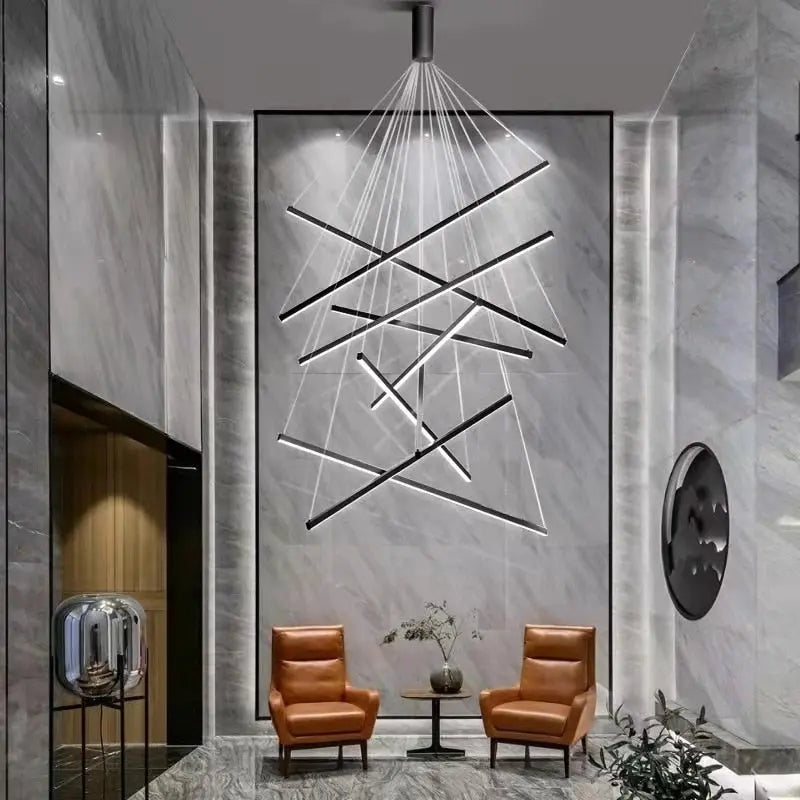
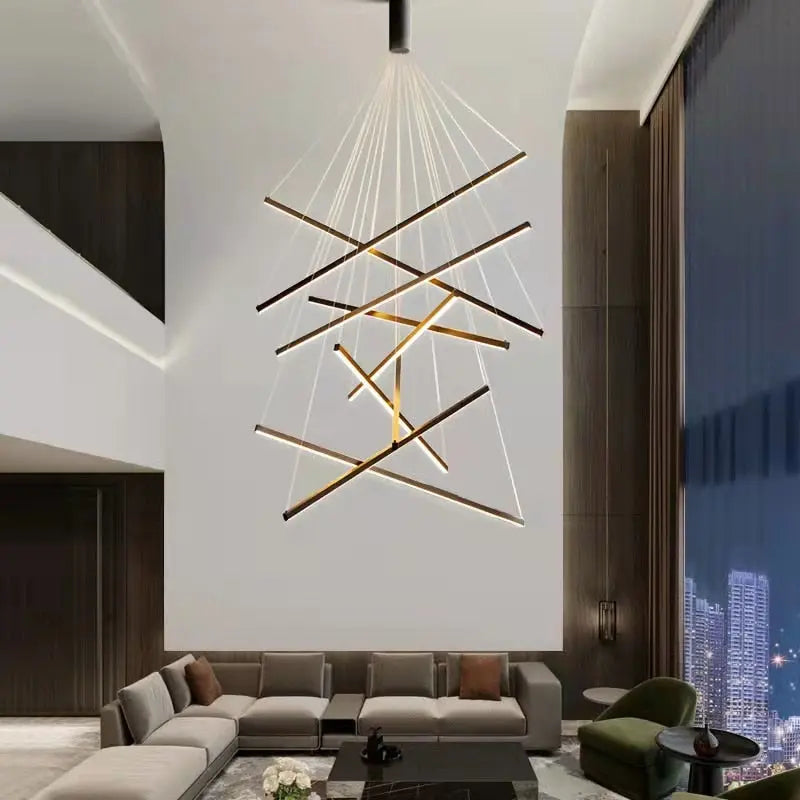
Esta guía visual muestra cómo el tamaño del candelabro, la caída y el peso visual afectan el equilibrio en vestíbulos altos.
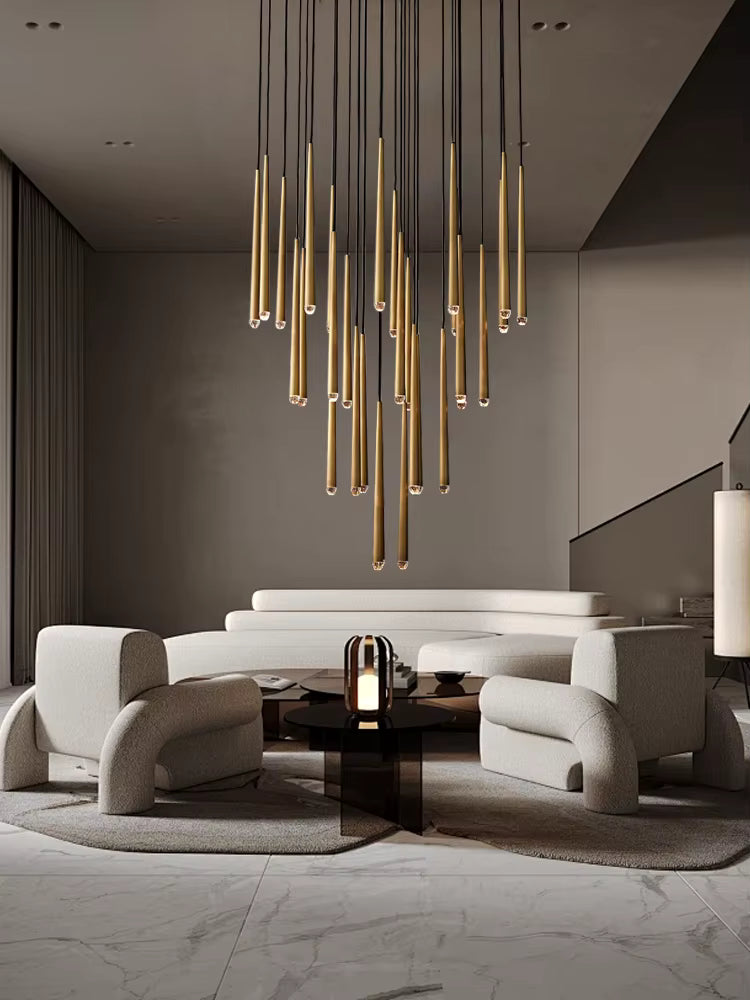
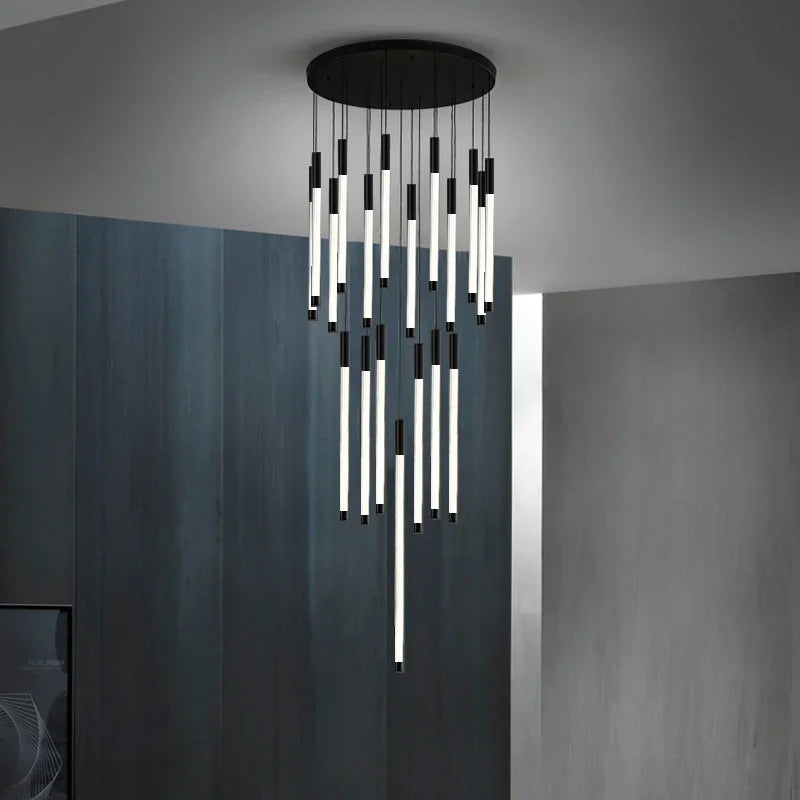
4. Peso visual: La parte que la mayoría de los propietarios pasan por alto
La selección de la lámpara de araña no solo se trata de dimensiones. Dos lámparas pueden tener el mismo ancho y aun así sentirse completamente diferentes debido al peso visual. Este es el peso percibido de la lámpara de araña una vez instalada en la habitación.
Los materiales densos, los grandes grupos de esferas, los marcos de faroles gruesos o los arreglos de cristal pesados suelen parecer más pesados que los anillos abiertos, las barras más delgadas o los colgantes aéreos de varias luces. En una entrada alta, una lámpara densa puede dominar fácilmente el espacio, incluso si la fórmula del diámetro dice que el tamaño es técnicamente correcto.
Los recibidores modernos a menudo se benefician de una lámpara de araña que se siente sustancial sin volverse visualmente abarrotada. Los espacios abiertos, los marcos más delgados y los materiales más transparentes como el vidrio o el acrílico pueden ayudar a que la lámpara de araña mantenga su presencia mientras mantiene la entrada visualmente más ligera.
5. Las mejores formas de lámparas de araña para recibidores con techos altos
La silueta de la lámpara de araña cambia la sensación del recibidor. Algunas formas son naturalmente mejores para manejar el volumen vertical que otras.
- Las cascadas verticales son útiles para escaleras y vestíbulos de doble altura porque conectan visualmente los niveles superiores e inferiores.
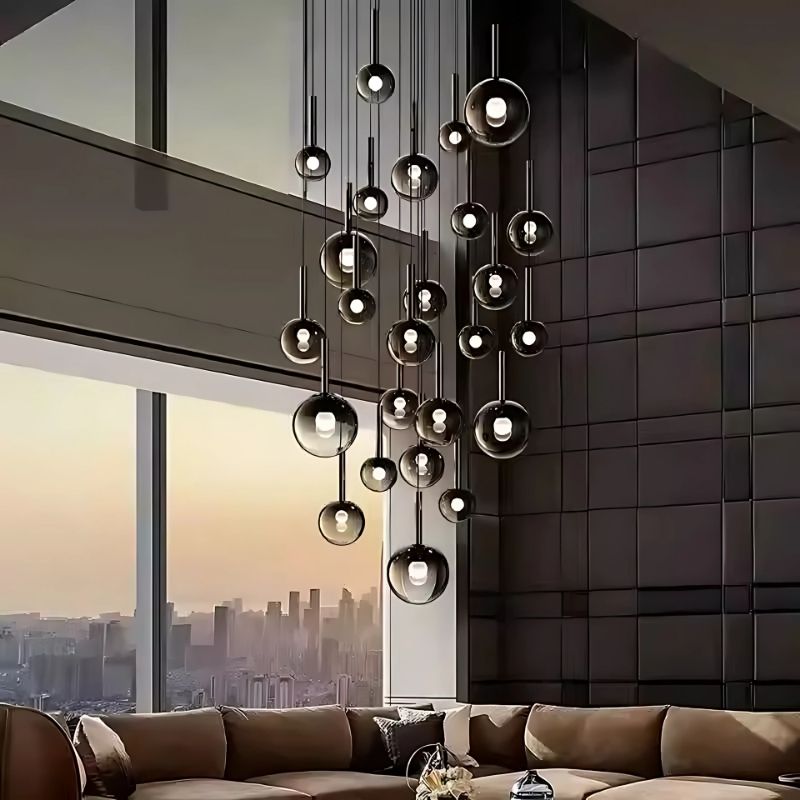
- Los colgantes de racimo distribuyen la luz a través de múltiples alturas, lo que ayuda a que la lámpara se sienta tridimensional en lugar de plana.
- Los marcos lineales o rectangulares se adaptan a la arquitectura moderna, especialmente cuando la entrada tiene líneas rectas fuertes y un sistema de barandilla limpio.
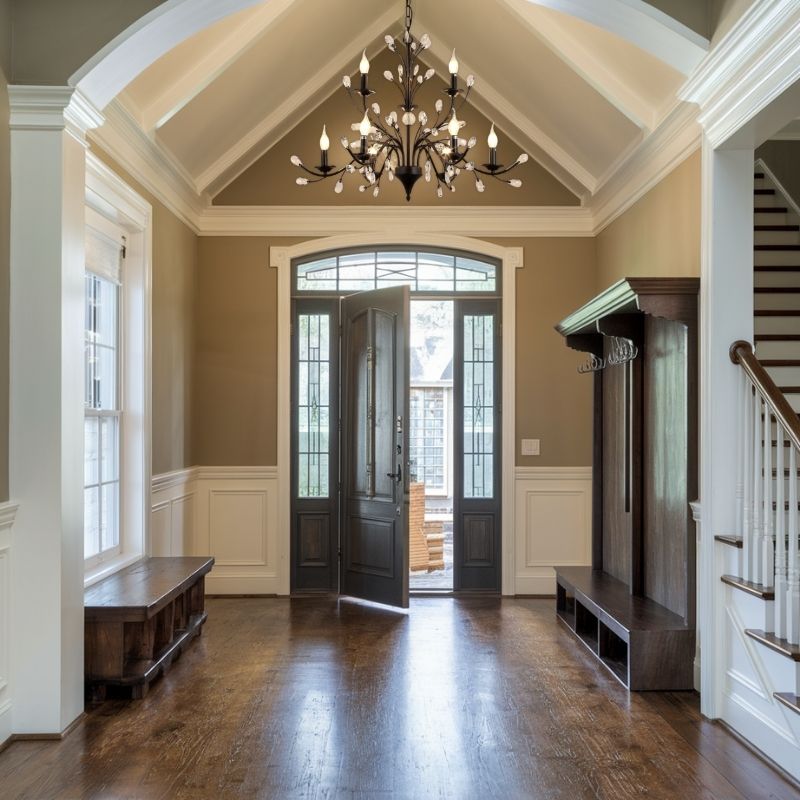
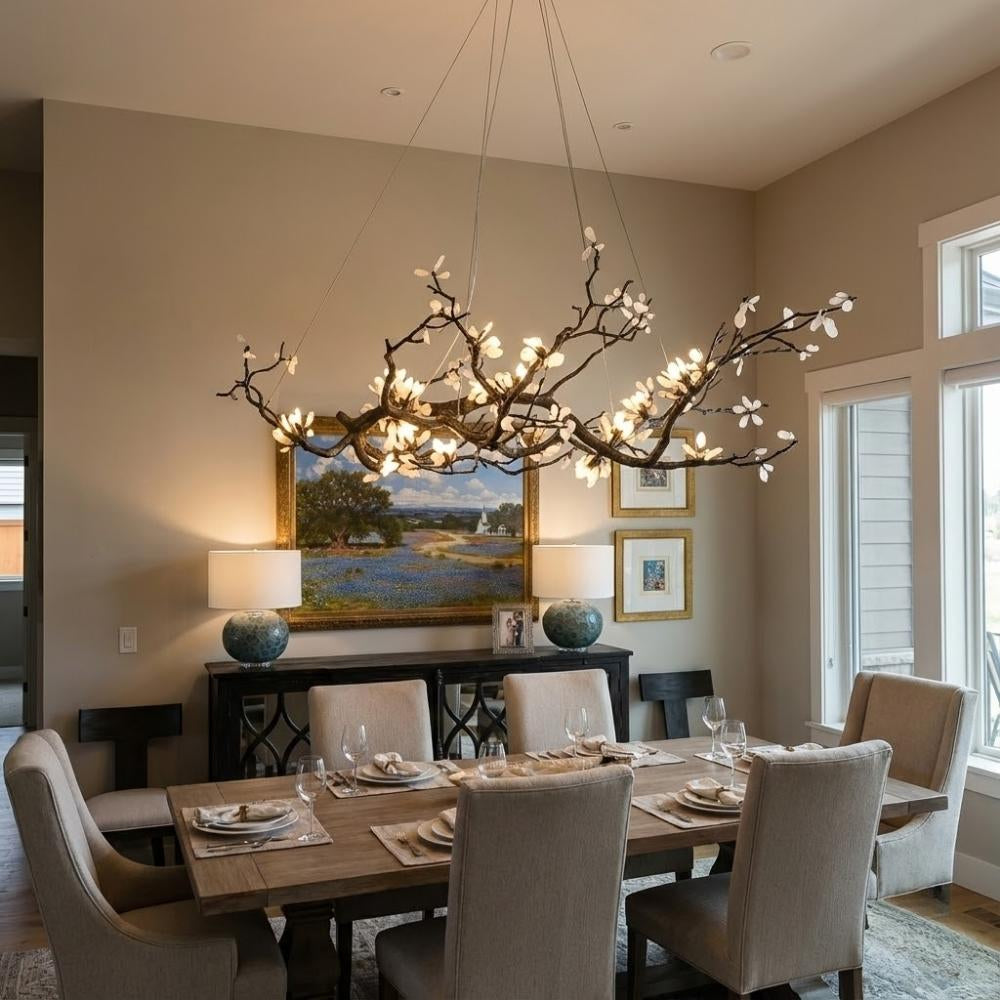
- Las formas de ramas orgánicas extienden la masa visual sin hacer que la lámpara se sienta cuadrada o demasiado formal.
Si el recibidor se conecta directamente a una escalera, los estilos verticales a menudo funcionan mejor que los accesorios anchos y compactos porque siguen el movimiento ascendente de la habitación. En esos casos, puede comparar opciones dedicadas en candelabros para escaleras.
6. Rangos de presupuesto para lámparas de araña modernas para recibidor
El presupuesto importa, pero el precio por sí solo no determina si un candelabro es adecuado para la habitación. La iluminación de entrada alta abarca una amplia gama dependiendo del tamaño, los materiales y la complejidad de la estructura.
| Artículo | Estilo | Precio |
|---|---|---|
| Candelabros de hierro forjado 6/9 luces | Clásico industrial | $599.99 |
| Candelabro contemporáneo Cora para recibidor | Pieza central moderna para recibidor | $849.99 |
| Candelabro acrílico moderno Arten | LED moderno minimalista | $999.99 |
| Candelabro rústico Minas con ramas de árbol | Diseño escultural de ramas | $4,999.99 |
La mejor decisión de compra no es simplemente la lámpara más cara. Es aquella cuya escala, caída y peso visual se alinean con las proporciones de la arquitectura de su entrada. Si está comparando específicamente opciones de gran tamaño, candelabros grandes para recibidor es una categoría útil para revisar después de confirmar el tamaño de la habitación.
7. Potencia lumínica y brillo para entradas
Una lámpara de araña para recibidor debe funcionar como iluminación, no solo como escultura. Las entradas altas necesitan suficiente potencia para sentirse acogedoras sin producir un resplandor intenso o zonas oscuras profundas en las paredes de la escalera.
Las lámparas con múltiples puntos de luz, bombillas en capas o LED regulables suelen funcionar mejor que los candelabros muy compactos con una potencia limitada. Esto es especialmente cierto en los recibidores de doble altura, donde las superficies verticales de la habitación pueden, de otro modo, parecer poco iluminadas.
La atenuación es especialmente útil en las entradas porque el mismo espacio puede necesitar una luz más fuerte durante las horas de mayor actividad y una luz más suave por la noche. Si está comparando una secuencia de entrada completa en lugar de un solo candelabro de forma aislada, iluminación de recibidor ofrece una visión más amplia de las familias de lámparas compatibles.
8. Lámparas verticales vs. horizontales en recibidores de dos pisos
La orientación cambia cómo se siente la habitación. Los candelabros verticales enfatizan la altura y el movimiento, mientras que las lámparas más horizontales extienden la presencia visual por el suelo de la entrada.
En muchos recibidores de dos pisos, los candelabros verticales se sienten más naturales porque reflejan la forma de la habitación. También se conectan más claramente con escaleras abiertas y espacios vacíos de nivel superior. Los accesorios horizontales aún pueden funcionar, pero generalmente necesitan más ancho y un tamaño más cuidadoso para evitar que se vean demasiado bajos o demasiado planos.
Esta es también la razón por la que los candelabros de cascada altos suelen ser ligeramente más estrechos que los candelabros anchos de una sola capa. Un candelabro vertical estrecho todavía puede sentirse dominante porque el ojo lo lee primero como altura, no como ancho. Si su entrada es un espacio de doble altura real, puede ayudar comparar estilos en candelabros para recibidores de dos pisos.
9. Materiales y acabados que funcionan mejor en entradas modernas
La elección del material influye tanto en el peso visual de la lámpara de araña como en el ambiente de la entrada. En los recibidores contemporáneos, los materiales mezclados suelen funcionar mejor que los acabados uniformes porque añaden profundidad sin obligar a la lámpara de araña a parecer demasiado formal.
- El latón cepillado añade calidez y tiende a suavizar los grandes marcos modernos.
- El metal negro crea un contraste arquitectónico más fuerte, especialmente contra paredes blancas o pálidas.
- Las burbujas de cristal transparente reducen la densidad visual al mismo tiempo que añaden brillo y dimensión.
- Los paneles acrílicos funcionan bien en interiores minimalistas donde el objetivo es una luz más limpia y una silueta más ligera.
El mejor acabado suele ser el que soporta discretamente la arquitectura del vestíbulo. En otras palabras, la araña debe sentirse integrada en la secuencia de entrada en lugar de estar sobre ella como un objeto no relacionado.
10. Cómo leer el plano antes de elegir el accesorio
La forma más útil de elegir una lámpara de araña para un recibidor es leer el plano antes de fijarse en los detalles del acabado. La altura del techo, el ancho de la entrada, la apertura del nivel superior, la dirección de la escalera y la primera línea de visión desde la puerta principal, todo importa.
Un candelabro que funciona en un recibidor estrecho conectado por una escalera puede no funcionar en un recibidor cuadrado y abierto. En un caso, puede necesitar una composición más alta y estrecha. En otro, puede necesitar más ancho y un marco ligeramente más ligero para que la habitación no se sienta pesada en la parte superior.
Si su objetivo es un aspecto más limpio y contemporáneo en toda la entrada, también puede ayudar revisar candelabros modernos para recibidores después de establecer las proporciones.
La lámpara de araña adecuada para el recibidor comienza con la proporción
Las lámparas de araña modernas para recibidores con techos altos funcionan cuando el tamaño, la caída y el peso visual se apoyan mutuamente. El diámetro mantiene la lámpara conectada a la huella de la habitación. La caída controla cómo la lámpara ocupa el volumen vertical. El peso visual determina si la lámpara se siente equilibrada una vez instalada.
Cuando estos tres elementos se alinean, la lámpara de araña se convierte en algo más que una fuente de luz. Se convierte en el ancla arquitectónica de la entrada y establece el tono para las habitaciones más allá de ella. Ese es el verdadero objetivo en un recibidor de techo alto: no simplemente llenar el espacio vacío, sino elegir una lámpara que haga que toda la entrada se sienta intencionada.


