

Una lámpara de araña en la sala de estar debe hacer más que llenar un espacio vacío en el techo. Debe organizar la habitación, relacionarse con la zona de asientos de abajo y sentirse proporcionada desde cada línea de visión principal. Por eso, el tamaño de una lámpara de araña para la sala de estar es diferente al de una para una mesa de comedor. En un comedor, la mesa te da un ancla visual fija. En una sala de estar, tienes que construir esa ancla tú mismo utilizando las dimensiones de la habitación, la altura del techo, la distribución de los muebles y el peso visual.
Esta guía está escrita específicamente para salas de estar, no para el tamaño general de candelabros en todo tipo de habitaciones. Se centra en las preguntas que más importan en los espacios de vida reales: qué tan ancho debe ser el candelabro, qué tan alto debe sentirse en la habitación, qué tan bajo debe colgar, cómo ajustarlo para diseños abiertos y cómo los diferentes materiales se ven más pesados o más livianos con el mismo tamaño. Si desea comparar familias de accesorios terminados antes de trabajar con las medidas, comience con nuestra colección de iluminación para sala de estar.
Reglas de tamaño de candelabros para sala de estar de un vistazo
- Regla de diámetro inicial: sume la longitud y el ancho de la habitación en pies, luego use ese total en pulgadas como un diámetro de candelabro inicial.
- Regla de altura inicial: multiplique la altura del techo en pies por 2.5 a 3 para estimar la altura del cuerpo del candelabro en pulgadas.
- Salas de estar abiertas: use las dimensiones de la zona de asientos, no la superficie completa de planta abierta.
- Espacio libre mínimo en el suelo: mantenga al menos 7 pies desde el suelo hasta la parte inferior del accesorio en áreas de estar abiertas.
- Techos de más de 8 pies: agregue aproximadamente 3 pulgadas de presencia vertical al candelabro por cada pie adicional de altura del techo.
- El peso visual importa: los marcos abiertos y los diseños de ramas pueden escalar más que los accesorios densos de varias capas sin abarrotar la habitación.
Por qué el tamaño del candelabro de la sala de estar necesita sus propias reglas
Muchas guías de tamaño aplican la misma fórmula a cada habitación, pero las salas de estar son más complicadas que eso. Un candelabro de sala de estar debe relacionarse con la agrupación de muebles, los caminos, las líneas de visión a través de la habitación y la forma en que se usa el espacio durante el día. Un candelabro que es técnicamente del diámetro correcto aún puede verse mal si flota sobre la habitación sin conectarse al área de asientos o si cuelga lo suficientemente bajo como para interrumpir la apertura que la gente espera de una sala de estar.
Por eso, el tamaño de los candelabros para la sala de estar es realmente un problema de escala y ubicación, no solo un problema de ancho. El candelabro debe sentirse anclado a la habitación de abajo, pero no debe abarrotar el centro del espacio. Debe sentirse intencional desde el sofá, desde la entrada de la habitación y desde los ángulos de asientos secundarios. Eso es lo que separa un candelabro que decora una sala de estar de uno que realmente la define.
Las dos medidas principales que necesitas primero
Antes de comparar diseños de cristal, ramas, acrílico o lineales, necesita dos números de partida: un objetivo de ancho y un objetivo de altura. Estas no son respuestas finales, pero le brindan una base confiable que luego se puede ajustar para la altura del techo, el peso visual y la forma de la habitación.
Fórmula 1: Diámetro inicial del candelabro
Sume la longitud y el ancho de la habitación en pies. Use ese total en pulgadas como diámetro inicial del candelabro.
- Sala de estar de 12 x 14 pies: 12 + 14 = 26, así que comience alrededor de 26 pulgadas
- Sala de estar de 15 x 20 pies: 15 + 20 = 35, así que comience alrededor de 35 pulgadas
- Sala de estar de 20 x 24 pies: 20 + 24 = 44, así que comience alrededor de 44 pulgadas
Fórmula 2: Altura del cuerpo del candelabro inicial
Multiplique la altura del techo en pies por 2.5 a 3 para estimar una altura útil del cuerpo del candelabro en pulgadas. Esto ayuda a que el artefacto se sienta proporcional verticalmente, especialmente en salas de estar más altas.
- Techo de 9 pies: 9 x 2.5 = aproximadamente 22.5 pulgadas de alto
- Techo de 12 pies: 12 x 3 = aproximadamente 36 pulgadas de alto
- Techo de 16 pies: 16 x 3 = aproximadamente 48 pulgadas de alto
Estas dos fórmulas siguen siendo el marco inicial más común en las guías actuales de tamaño de candelabros, pero deben tratarse como una línea de base para la sala de estar, no como una prescripción final. La distribución de la habitación y la masa visual del candelabro aún deben considerarse antes de elegir el accesorio. :contentReference[oaicite:1]{index=1}

Este tipo de referencia visual ayuda porque el tamaño de las lámparas de araña para la sala de estar nunca es solo una medida. El ancho, la altura del techo, la forma de la habitación, la disposición de los asientos y el peso visual cambian la forma en que se ve el mismo accesorio en el espacio.
Cómo la altura del techo cambia el candelabro que realmente necesitas
El tamaño de los candelabros para la sala de estar a menudo falla porque los propietarios se centran solo en las dimensiones del suelo. La altura del techo es igual de importante. Un candelabro que es lo suficientemente ancho pero demasiado corto para el techo seguirá pareciendo pequeño, especialmente en habitaciones con paredes más altas, volumen superior abierto o ventanas grandes que enfatizan la dimensión vertical de la habitación.
Una regla útil es agregar aproximadamente 3 pulgadas de presencia vertical al candelabro por cada pie por encima de un techo de 8 pies. Esto no significa que el candelabro deba colgar siempre más bajo. Significa que el accesorio en sí debe tener más cuerpo, caída o articulación vertical para que no se vea visualmente comprimido contra una habitación más alta. Las guías de iluminación actuales todavía utilizan este marco de "7 pies de espacio libre mínimo más aproximadamente 3 pulgadas por pie extra" para habitaciones abiertas y grandes salones. :contentReference[oaicite:2]{index=2}
| Altura del techo | Qué ajustar | Lo que suele funcionar mejor |
|---|---|---|
| 8 pies | Se necesita un ajuste mínimo | Candelabros compactos o de altura media con suficiente espacio libre |
| 9 a 10 pies | Añadir altura al cuerpo o un poco más de caída | Formas más verticales de ramas, acrílico o cristal |
| 11 a 13 pies | Aumentar la altura y presencia del accesorio | Candelabros más altos, cuerpo central más largo, silueta visual más fuerte |
| 14 pies y más | Tratar la habitación como un volumen vertical, no solo como una superficie | Candelabros alargados o diseños de varios niveles que no desaparecen por encima |
Para techos abovedados, use el punto del techo directamente encima de la ubicación de montaje del candelabro, no el punto más alto en otra parte de la habitación. Eso da una idea más precisa de cómo se asentará realmente el candelabro en el espacio habitable.
Las salas de estar de planta abierta requieren un enfoque de tamaño diferente
Una de las principales razones por las que un candelabro de sala de estar se ve mal es que el artefacto está dimensionado para todo el piso de planta abierta en lugar de para la sala de estar en sí. En hogares de concepto abierto, la sala de estar puede compartir espacio visual con un comedor, una cocina o una zona de entrada, pero eso no significa que un solo candelabro deba dimensionarse para todo.
En un diseño abierto, defina primero la sala de estar con los muebles. Utilice la agrupación del sofá, la alfombra, las sillas y la mesa de centro como el espacio de trabajo. Luego, aplique la fórmula del diámetro a esa zona de asientos, no a toda la superficie del piso. Un candelabro escalado para toda la habitación abierta generalmente se ve sobredimensionado una vez que el ojo comienza a leer el área de la sala de estar como su propia zona.
Esto es especialmente importante en hogares que utilizan más de un gran accesorio de techo en el mismo espacio continuo. El candelabro debe establecer el área de la sala de estar, no competir visualmente con un accesorio de comedor o la iluminación de la isla de la cocina cercana.
La forma de la habitación cambia la forma del candelabro, no solo el tamaño
La escala de la sala de estar no se trata solo del diámetro. La forma de la habitación cambia el tipo de cuerpo de candelabro que se sentirá proporcional. Una habitación cuadrada naturalmente soporta un candelabro redondo o radial equilibrado. Una habitación rectangular más larga a menudo se beneficia de un diseño lineal o de ramas que se extiende visualmente a lo largo del eje más largo. Una habitación en forma de L puede necesitar una solución completamente diferente, a veces incluso dos accesorios más pequeños en lugar de un candelabro central de gran tamaño.
Aquí es donde muchas salas de estar se dimensionan incorrectamente. La fórmula del diámetro da un ancho inicial, pero la geometría de la habitación aún determina si ese ancho debe llevarse en una forma redonda, una extensión de ramificación más abierta o una silueta lineal. Si la dirección de su habitación se inclina más hacia lo contemporáneo y desea marcos más limpios con una masa visual más ligera, la categoría de candelabros modernos es especialmente útil porque los marcos abiertos y las siluetas arquitectónicas a menudo resuelven formas de sala de estar largas o incómodas mejor que las formas tradicionales densas.
Cómo el peso visual cambia la percepción del tamaño
Dos candelabros con el mismo diámetro listado pueden sentirse completamente diferentes en la misma habitación. Esa diferencia generalmente proviene del peso visual. Un accesorio de cristal con niveles densos, prismas apilados o un marco oscuro se ve más pesado que un anillo acrílico abierto o un candelabro de ramas con brazos espaciados. Esto es importante porque las salas de estar son menos indulgentes que los comedores cuando un candelabro se siente demasiado pesado. No hay una mesa debajo para soportarlo visualmente.
- Cristal y vidrio: a menudo se sienten más grandes porque reflejan la luz y crean movimiento en toda la habitación.
- Metal negro mate: generalmente se ve más denso y estructural que la misma forma en un acabado metálico cálido.
- Acrílico y marcos abiertos: se sienten más ligeros, lo que significa que a menudo pueden aumentar de tamaño sin abrumar la habitación.
- Candelabros de ramas: distribuyen la masa visual hacia afuera, lo que los hace ideales para salas de estar más grandes que necesitan amplitud sin un cuerpo central pesado.
Si desea que un candelabro se sienta sustancial en una habitación grande sin que el techo se vea abarrotado, los diseños de marco abierto o de ramas suelen ser más seguros que los grupos centrales densos.
¿Qué tan bajo debe colgar un candelabro de sala de estar?
A diferencia de un candelabro de comedor, un accesorio de sala de estar no tiene una mesa debajo para establecer una altura de suspensión fija. En la mayoría de las salas de estar, la regla básica es mantener al menos 7 pies desde el suelo hasta la parte inferior del accesorio. Esta sigue siendo la regla de espacio libre más repetida en las referencias de iluminación actuales para habitaciones abiertas, y sigue siendo una buena base para las líneas de visión y el movimiento cómodo. :contentReference[oaicite:3]{index=3}
En habitaciones con techos más altos, el candelabro puede colgar más alto, pero aún debe sentirse conectado a la habitación en lugar de demasiado cerca del plano del techo. En muchas salas de estar, eso significa que el centro visual del candelabro debe estar más bajo de lo que la gente espera. Un candelabro colgado demasiado alto casi siempre se ve más pequeño de lo que realmente es.
Si el candelabro está colocado encima de una mesa de centro o centrado sobre una zona de asientos, mantenga la misma lógica de espacio libre en el suelo. Si se encuentra directamente en una zona de circulación principal, elevarlo ligeramente puede mejorar la comodidad sin arruinar la escala. Para una lógica de altura de suspensión más detallada en diferentes tipos de habitaciones, la guía de apoyo más útil es ¿Qué tan bajo debe colgar un candelabro?.
Mejores tipos de candelabros para sala de estar según el tamaño de la habitación
Salas de estar pequeñas
Las salas de estar pequeñas suelen funcionar mejor con candelabros de menos de 24 pulgadas de ancho, especialmente si el accesorio tiene un cuerpo más denso. Las formas acrílicas abiertas, las siluetas de ramas más ligeras y los candelabros modernos compactos suelen funcionar mejor que los cristales en capas o los accesorios de tambor pesados.
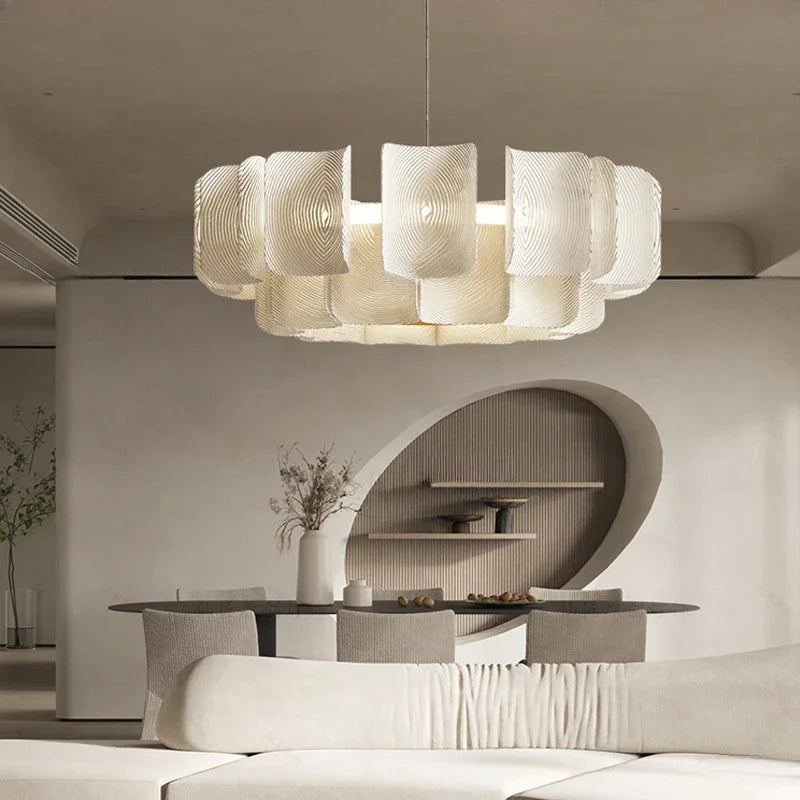
El Candelabro acrílico moderno Arten es un buen ejemplo de un accesorio que mantiene la apertura visual al tiempo que proporciona a una pequeña sala de estar un anclaje de techo definido.
Salas de estar medianas
Las habitaciones medianas son las más flexibles. Aquí es donde los candelabros de ramas, las formas de cristal de escala media y los diseños de múltiples luces con marco abierto suelen funcionar mejor. La habitación es lo suficientemente grande como para soportar una presencia real, pero no tan grande como para necesitar un diámetro extremo o una caída vertical profunda.

Los Candelabros rústicos de hierro forjado encajan bien en esta banda de tamaño porque aportan estructura y calidez sin ocupar demasiada profundidad visual.
Salas de estar grandes
Las salas de estar grandes necesitan un accesorio con un alcance real. En estas habitaciones, un candelabro de menos de 36 pulgadas de ancho a menudo se siente demasiado débil a menos que tenga una altura dramática o una reflectividad muy fuerte. Los candelabros de ramas, los accesorios de cristal más grandes y las piezas lineales de declaración suelen funcionar mejor porque pueden sostener visualmente la habitación desde la distancia.
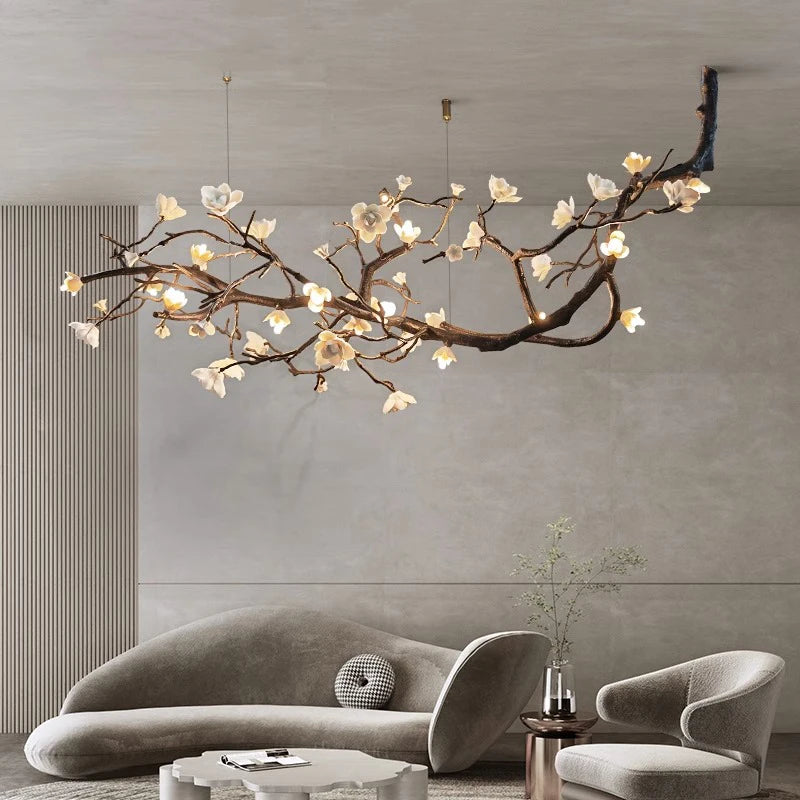
El Candelabro de ramas de árbol rústico regulable Minas muestra cómo un candelabro puede parecer grande sin verse denso. La extensión de las ramas da amplitud al plano del techo, y la configuración regulable hace que la habitación sea más flexible durante todo el día.
Qué hacer en salones con techos altos
Las salas de estar con techos altos necesitan más que una fórmula estándar. Una vez que el techo es lo suficientemente alto, el volumen de la habitación se vuelve más importante que solo las medidas del piso. En estos casos, es posible que deba aumentar ligeramente el diámetro del candelabro por encima de la fórmula base de la habitación o elegir un diseño con mayor presencia vertical para que el accesorio no desaparezca en lo alto.
Esta es una de las razones por las que los candelabros de cristal alargados y las formas de ramas más altas suelen funcionar bien en salones altos. No siempre necesitan una huella mucho más grande, pero sí necesitan suficiente cuerpo para destacarse con la altura del techo.
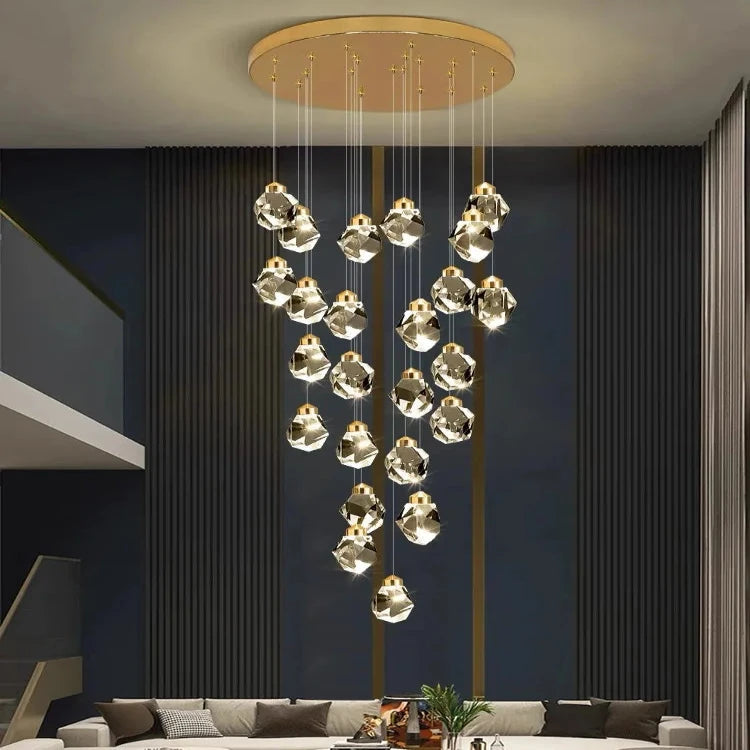
El Candelabro de cristal moderno para sala de estar de techo alto es un buen ejemplo de un accesorio que gana presencia a través de la altura y la reflectividad en lugar de solo a través del ancho.
Errores comunes al dimensionar un candelabro para sala de estar
- Elegir un accesorio demasiado pequeño: el error más común, especialmente en habitaciones más grandes o altas.
- Colgar el candelabro demasiado alto: esto hace que incluso un accesorio de tamaño correcto parezca desproporcionado.
- Ignorar el peso visual: un candelabro denso de 36 pulgadas y un candelabro abierto de 36 pulgadas no se ven igual.
- Centrarlo en la habitación en lugar de en los muebles: en muchos diseños abiertos, el grupo de asientos es el verdadero ancla.
- Tratar el candelabro como la única fuente de luz: incluso un candelabro perfectamente dimensionado necesita un soporte en capas.
Estos errores suelen provenir de confiar únicamente en el instinto o en las dimensiones de la página del producto en lugar de leer la habitación en su conjunto. La escala nunca es solo un número. Es la relación entre el ancho, la altura, los muebles, los caminos y la densidad visual.
La iluminación en capas sigue siendo importante después de que el candelabro tiene el tamaño correcto
Un candelabro de tamaño correcto le da a la sala de estar un centro visual, pero no debe llevar todo el plan de iluminación por sí mismo. Las salas de estar más atractivas aún utilizan lámparas, apliques u otras fuentes de luz secundarias para que el candelabro pueda funcionar como ancla en lugar de como la única fuente de luz.
Si se pretende que la habitación se sienta más dramática o más refinada por la noche, la atenuación es tan importante como el tamaño. Un candelabro ligeramente audaz en escala aún puede sentirse cómodo si el nivel de luz se controla bien. Esa es una de las razones por las que muchos candelabros de sala de estar funcionan mejor cuando el plan de iluminación final se trata como en capas en lugar de singular.
Elegir el candelabro de sala de estar adecuado comienza con la zona de asientos
La forma más fiable de dimensionar una lámpara de araña para la sala de estar es empezar por la huella real de la habitación tal como se utiliza. En una habitación cerrada, eso significa las dimensiones de la habitación. En una planta abierta, generalmente significa la zona de asientos. A partir de ahí, utilice la fórmula del diámetro, compruebe la altura del techo, considere el peso visual, confirme el espacio libre en el suelo y luego elija la familia de lámparas de araña que mejor se adapte a la forma de la habitación.
Este proceso elimina las conjeturas y lo devuelve a la proporción. Eso es lo que marca la diferencia entre un candelabro que simplemente ocupa el techo y uno que realmente define la habitación.
Si desea comparar más direcciones de estilo después de resolver primero el lado de la medición, la guía de candelabros destacados es una lectura útil a continuación porque explica por qué algunos accesorios tienen más autoridad visual que otros incluso con tamaños similares. Para una búsqueda más amplia de accesorios después de eso, la colección completa de candelabros es el mejor punto de comparación final.


