

The entryway is the first room anyone sees, and its lighting sets the tone for the whole home — yet it's easy to get wrong, since it has to be welcoming, correctly scaled, and bright enough to be useful all at once. This guide covers how to choose entryway lighting: which fixture types suit which space, how to size and hang them, and the ideas that work for high-ceiling and small entries alike.
Start by Reading Your Entryway
Before choosing a fixture, take stock of the space, since its dimensions and features decide what will work. Measure the floor area and ceiling height, note architectural features like columns or built-in shelving that affect placement, and check the natural light from any windows or glass doors. A grand two-storey foyer calls for a statement fixture that fills the vertical space; a compact entry is better served by a flush mount or wall sconces that don't crowd it. Reading the space first is what keeps the fixture from looking lost or overwhelming once it's up.
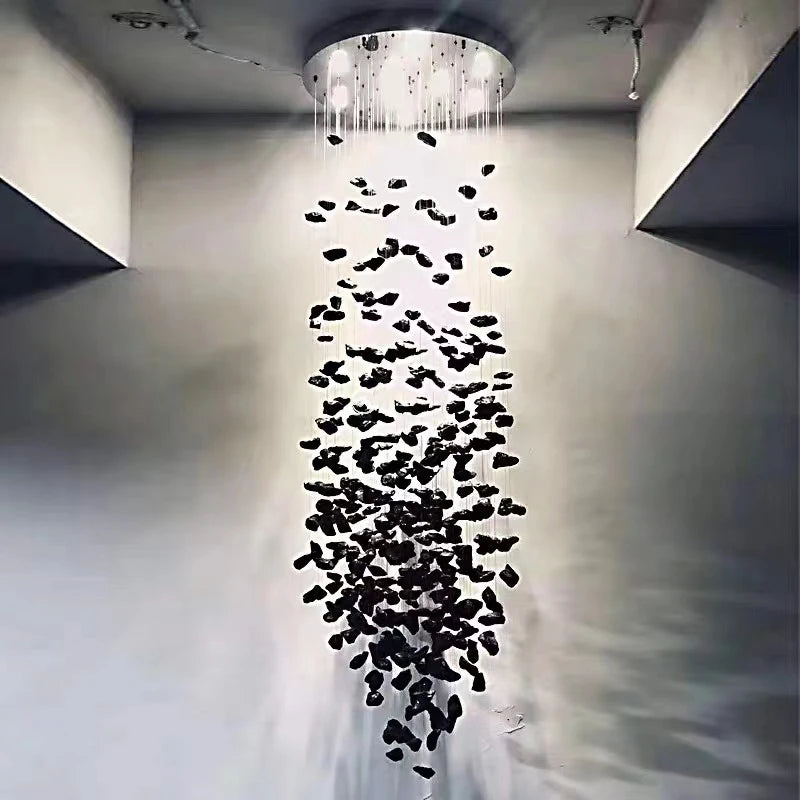
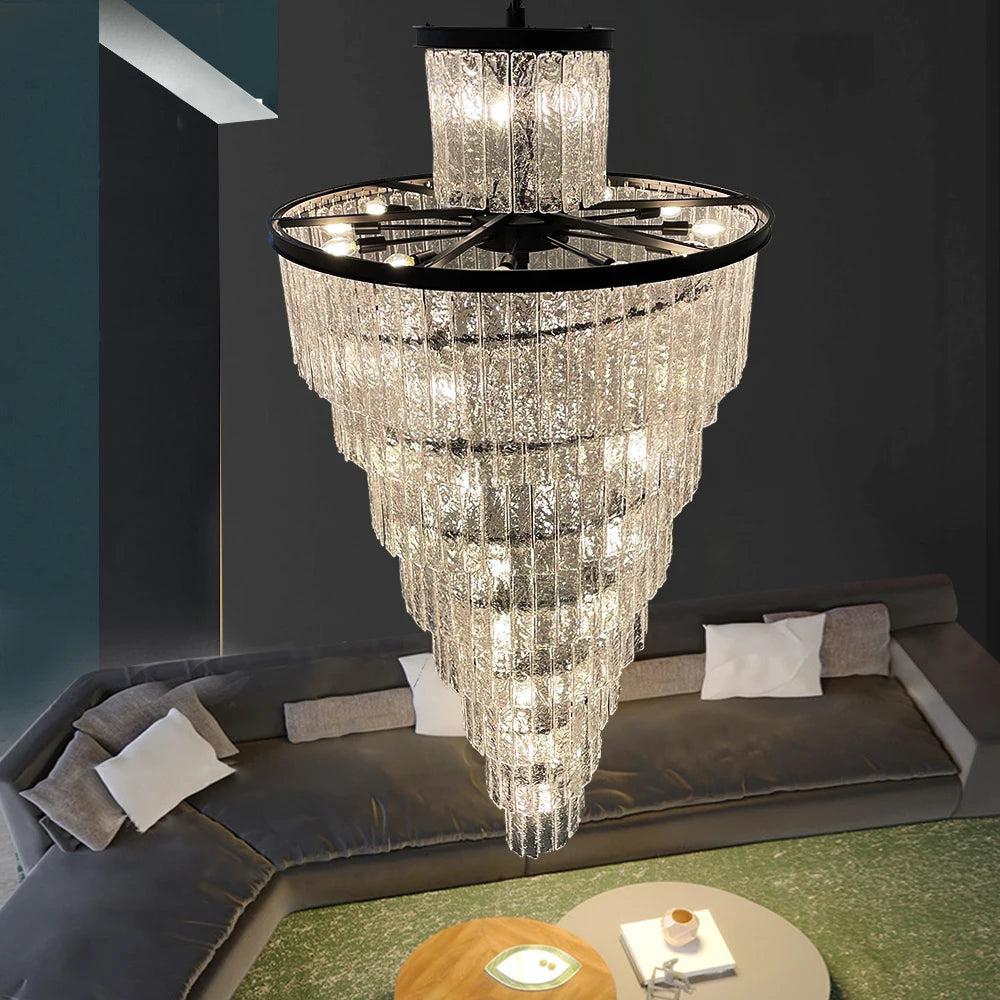
The Fixture Types That Suit an Entry
Four fixture types cover almost every entryway, and the right one is mostly decided by ceiling height and width.
Chandeliers — for spacious, high-ceilinged entries
Chandeliers make a statement and work best in spacious entries with the height to carry them, serving as both the main light source and the room's centrepiece. They range from traditional crystal to clean modern forms. Scale matters most here — the fixture must suit the space and light the whole area.

Browse the foyer chandelier collection for statement pieces.
Pendant lights — versatile across sizes
Pendants suit a range of entry sizes: a single one creates a focal point in a smaller space, while a cluster fills a larger area. They come in every style and can hang at varying heights over a console table or in a two-storey foyer.

Wall sconces — for narrow and small entries
Sconces add ambient light without using floor or ceiling space, which makes them ideal for narrow entries — alone, or paired with a main fixture in a larger one. Placed on both sides of a mirror, they give balanced, shadow-free light for checking your appearance. Mount them around eye level, roughly 65–70 inches from the floor.

Flush and semi-flush mounts — for low ceilings
These are the answer for lower ceilings, giving good general light without hanging into head height. Flush mounts sit tight to the ceiling; semi-flush drop slightly for a little more presence. Both suit height-restricted spaces and layer well with sconces.

See the flush mount chandelier collection for low-ceiling options.
Sizing and Hanging Height
Two calculations get the proportions right.
Height: hang the bottom about 7 feet above the floor on a standard 8-ft ceiling, adding roughly 3 inches per foot of ceiling above 8 ft. In a two-storey foyer, position it around the second-floor line to fill the vertical space. Over a console, leave at least 30 inches between the surface and the fixture.
In very tall entries, size up — add 2–3 inches of diameter per foot of ceiling over 8 feet — since a fixture that suits a standard entry looks undersized in a grand foyer. If the entry has a staircase or balcony, check the fixture reads well from both levels. Our foyer sizing guide covers the numbers in full, and the size calculator does the maths.
Layering Light for a Welcoming Entry
A single fixture rarely lights an entry well. Layering three types gives a space that works and adapts:
- Ambient — the main overhead fixture (chandelier, flush mount) that fills the space and makes it welcoming. Put it on a dimmer.
- Task — focused light for checking the mirror or finding keys: sconces beside a mirror, a lamp on a console. Position it to avoid shadows on the face.
- Accent — light that highlights art or an architectural feature, adding depth. Picture lights or a small wall-washer work well.
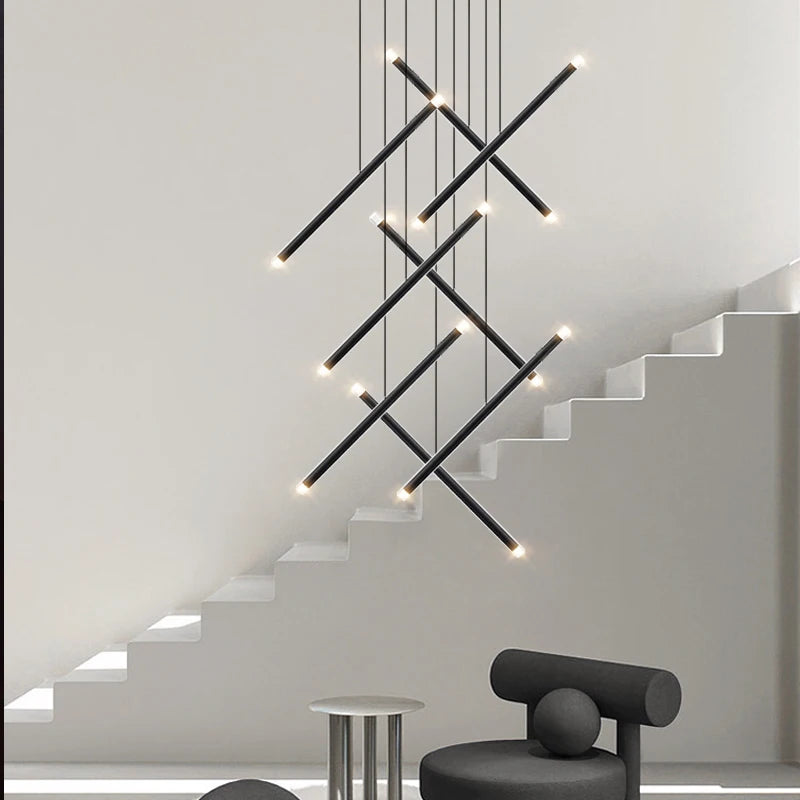
The foyer layering guide works through balancing the three layers in detail.
Matching the Fixture to Your Home's Style
Entry lighting should relate to the home's overall style so the first impression flows into the rest:
- Traditional: classic chandeliers or lantern pendants in warm brass or bronze, with crystal or candle-style detail.
- Modern: clean, minimal fixtures in chrome, brushed nickel, or matte black; LED designs with distinctive forms.
- Transitional: a blend — a classic silhouette in a current finish, or mixed traditional and modern pieces.
- Farmhouse / rustic: natural materials like wood and wrought iron, lantern pendants, distressed finishes.
- Industrial: exposed bulbs, raw metal, cage forms, and filament lamps.
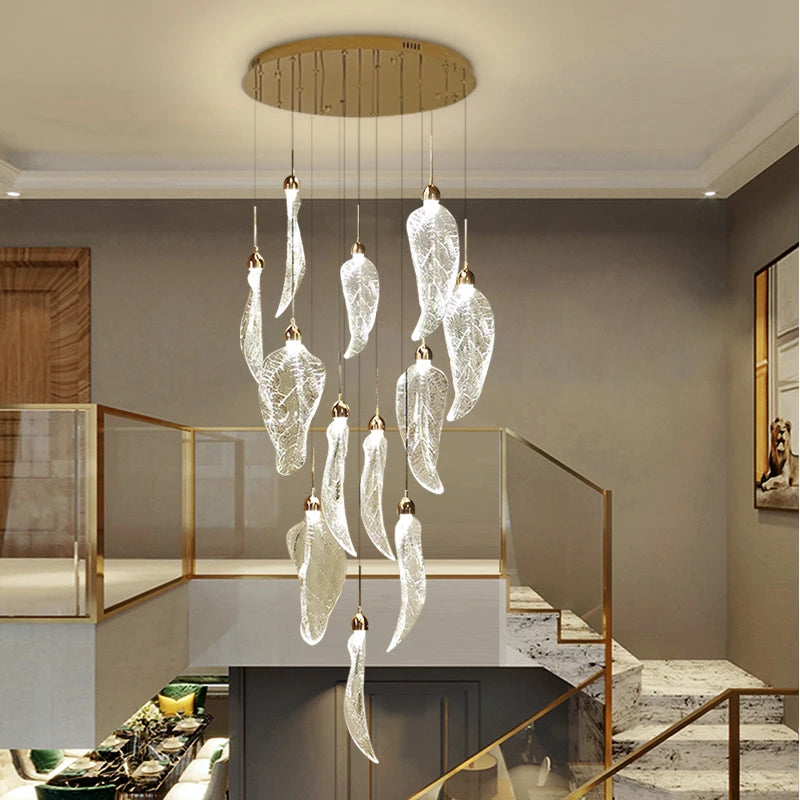
For choosing a style overall, our lighting styles guide covers each in depth.
Choosing Bulbs: Colour, Brightness, Efficiency
The bulb shapes the entry's feel as much as the fixture.
| Factor | For an entryway |
|---|---|
| Colour temperature | Warm white (2700K–3000K) for a welcoming feel; avoid over 4000K |
| Brightness (small entry, to 50 sq ft) | About 1,000–2,000 lumens |
| Brightness (medium, 50–100 sq ft) | About 2,000–3,000 lumens |
| Brightness (large, 100+ sq ft) | 3,000+ lumens |
| Bulb type | LED — efficient, long-lived, dimmable; CRI 90+ for true colour |
Warm white makes an entry inviting; dimmable bulbs let you shift from bright and practical during the day to soft in the evening. A high CRI (90+) keeps colours true as people arrive.
Ideas for High-Ceiling Entryways
A tall entry is an opportunity. Multi-tier chandeliers and cascading designs fill vertical space and draw the eye upward; long pendants and linear fixtures balance the proportions, especially near a staircase or balcony. Uplighting a beam or vaulted ceiling adds depth, and for very tall spaces, combining a chandelier with sconces or recessed light ensures every level is lit.
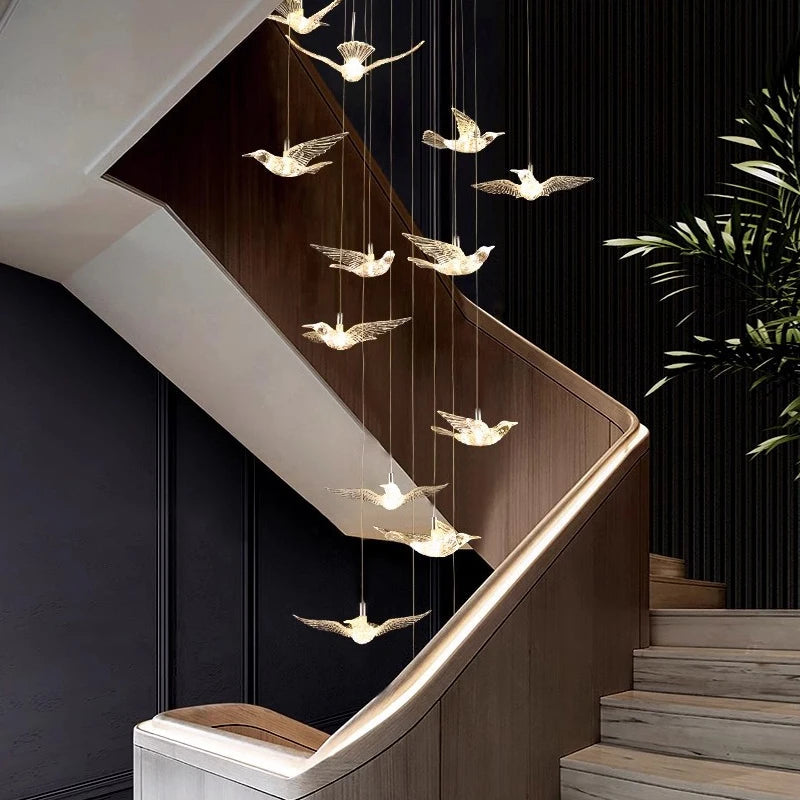
Scale up for height — a fixture that suits a standard entry looks small in a grand foyer. Our high ceiling entryway guide covers tall entries in full.
Ideas for Small Entryways
Small entries reward clever choices over big fixtures. Wall sconces save floor and ceiling space while giving both ambient and task light; flush mounts keep headroom clear; and a well-placed mirror bounces light around to make the space feel larger. Light-coloured walls help, and recessed or track lighting adds brightness without visual clutter. The rule is proportion — choose sleek fixtures scaled to the space rather than anything oversized. Our small entryway lighting guide has more.
Smart Controls and Upkeep
A few controls make an entry more useful: dimmers to shift the mood, motion sensors that light the space as you arrive with your hands full, and smart bulbs for app or voice control and scheduling. For upkeep, dust fixtures regularly, clean crystal with one part isopropyl alcohol to three parts distilled water for sparkle, and check fixings annually — hiring an electrician for large or high-ceiling fixtures.
Chandeliers, pendants, flush mounts, and sconces sized for every entry.
Foyer Lighting Foyer Chandeliers Entryway Ceiling Lights Wall Lights Size Calculator
Entryway Lighting Questions, Answered
What kind of light is best for an entryway?
It depends on the ceiling. A high or two-storey entry suits a chandelier or long pendant that fills the vertical space; a standard entry takes a chandelier, pendant, or semi-flush mount; a low ceiling needs a flush or semi-flush mount that won't hang into head height; and a narrow entry is best served by wall sconces that save space. Across all of them, layer in task light near a mirror and choose warm white bulbs (2700K–3000K) on a dimmer. Match the fixture's style to your home so the entry sets the right tone.
What size light fixture do I need for an entryway?
Add the entry's length and width in feet, and use that total in inches as the fixture's diameter — a 10 × 12 ft entry suits about a 22-inch fixture. For a long, narrow entry, several smaller pendants often work better than one wide fixture. In a high-ceilinged entry, size up, adding 2–3 inches of diameter per foot of ceiling above 8 feet, since a fixture scaled for a standard entry looks lost in a grand foyer. Always confirm the fixture still leaves 7 feet of floor clearance beneath it.
How high should you hang an entryway light?
Hang the bottom about 7 feet above the floor on a standard 8-foot ceiling, which keeps it clear of anyone walking under it. For higher ceilings, raise it roughly 3 inches per foot of ceiling above 8 feet. In a two-storey foyer, position the fixture around the second-floor line to fill the vertical space and read well from both levels. Over a console table, leave at least 30 inches between the surface and the bottom of the fixture. Wall sconces mount lower, around 65–70 inches from the floor.
How do I light an entryway?
Layer three types of light. Start with an ambient overhead fixture — a chandelier, pendant, or flush mount sized to the space — to fill it and make it welcoming. Add task light where you check a mirror or find keys, such as sconces beside a mirror or a console lamp. Then add accent light on art or an architectural feature for depth. Put the layers on dimmers so the entry shifts from bright during the day to soft in the evening. Choose warm bulbs, size the main fixture correctly, and hang it with 7 feet of clearance.
How do I light a small entryway?
Favour space-saving fixtures over large ones. Wall sconces give ambient and task light without using floor or ceiling space; flush mounts keep headroom clear; and a mirror bounces light around to make the entry feel larger. Light-coloured walls and ceilings help, and recessed or track lighting adds brightness without clutter. Keep fixtures proportional to the space — sleek and streamlined rather than oversized, which would overwhelm a small entry. The goal is adequate, welcoming light that maintains a sense of openness.
What light fixtures work for a high-ceiling entryway?
High and two-storey entries suit fixtures with real vertical presence: multi-tier chandeliers and cascading designs that fill the space and draw the eye upward, or long pendants and linear fixtures that balance the proportions, especially near a staircase. Uplighting a beam or vaulted ceiling adds depth, and combining a chandelier with sconces or recessed light ensures every level is lit in very tall spaces. Scale the fixture up for the height — add 2–3 inches of diameter per foot of ceiling over 8 feet — and check it reads well from both the floor and any upper landing.
What colour temperature is best for an entryway?
Warm white in the 2700K–3000K range, which makes an entry feel welcoming and flatters people as they arrive. Avoid anything above 4000K, which reads cold and clinical — the opposite of the welcome an entry should give. Bulbs with adjustable colour temperature add flexibility for different times of day, and dimmable bulbs let you move from bright and practical to soft and atmospheric. Keep the colour temperature consistent with the rooms the entry opens onto, since mixing warm and cool light across a sightline looks subtly wrong.
How many lumens does an entryway need?
It scales with size: a small entry up to 50 square feet wants about 1,000–2,000 lumens, a medium entry of 50–100 square feet about 2,000–3,000 lumens, and a large entry over 100 square feet 3,000 or more. These are starting points — adjust for ceiling height, how much natural light the space gets, and personal preference. Dimmable bulbs give flexibility to run bright when you need it and low for a welcoming evening glow. Spreading the output across layered fixtures produces a better-lit entry than pushing one fixture to its maximum.
Putting Your Entry Together
Choosing entryway lighting comes down to a clear sequence: read the space, pick the fixture type by ceiling height, size and hang it by the formulas, layer in task and accent light, and match the style and warm bulbs to your home. Follow that and the entry becomes the welcoming first impression it's meant to be rather than a passageway you pass through.
To go further, size your fixture with the size calculator, avoid the usual pitfalls with our entryway lighting mistakes guide, and see the foyer sizing guide for the measurements in full.


