

Key Takeaways
| Question | Answer |
|---|---|
| Alabaster or marble? | Alabaster transmits light (a glowing shade); marble is solid and sculptural (light washes over it). |
| Which form for which room? | Linear alabaster over tables and islands; round alabaster or marble in living rooms; vertical marble in stairwells. |
| How to size a linear one? | ⅔–¾ of table length, 30–36 in above the table; 60–70% of island length, 28–34 in above the counter. |
| Weight and mounting? | Alabaster linear: ~15–35 lb, standard box. Marble: 30–60+ lb, structural mount above 50 lb. |
| Light? | 2700–3000K, CRI 90+, dimmable; switchable LEDs often ship on 6000K — reset to 3000K. |
| Care? | Alabaster: dry dusting only, no water or sprays. Marble: damp cloth, pH-neutral cleaner, nothing acidic. |
Quick Facts
- Alabaster is usually gypsum (soft, slightly water-soluble) or calcite (harder); both are translucent at ⅛–⅜ in thickness.
- Marble is calcium carbonate; it transmits light only below about ¼ in and is mostly used as a solid element.
- Stone absorbs part of the light: an alabaster fixture rated 2,500–4,000 lumens reads like a 2,000–3,000-lumen glass fixture.
- Linear sizing: 72-in table → 48–54-in fixture; 84-in island → 50–59-in fixture.
- Natural stone: irregular veining, no two shades identical. Resin/faux: uniform pattern, lighter, cheaper — product page should say which.
- Keep alabaster 4 ft or more from a range hood and out of steam; never clean it with liquid.
What Alabaster and Marble Each Do With Light
The two stones look related and behave differently. Alabaster is a soft, fine-grained stone — most fixtures use gypsum alabaster, some the harder calcite variety — that becomes translucent when cut to an eighth to three-eighths of an inch. Light passing through it is scattered by the crystal structure and colored by the veining, so the shade glows evenly with no visible hot spot, in a tone somewhere between cream and amber. That is why alabaster has been used for lamp shades since antiquity and why it works as the shade itself on a modern fixture.
Marble is calcium carbonate, much denser, and transmits light only when sliced thinner than most fixtures can safely carry. In lighting it appears as a solid element — a disc under a bulb, a cylinder around an LED, a drop on a chain, a canopy — that the light falls on rather than through, so the veining is seen by reflected light and the fixture reads as sculpture. Some designs pair a marble body with a glass or acrylic diffuser to get both. The practical result: an alabaster chandelier is chosen for the quality of its light, a marble chandelier for its form.
Alabaster vs Marble: Side by Side
| Alabaster | Marble | |
|---|---|---|
| Stone | Gypsum (soft) or calcite (harder); fine-grained, veined | Calcium carbonate; dense, crystalline, veined |
| Light transmission | High at ⅛–⅜ in; glows from within | Low; solid element that light washes over |
| Light quality | Warm, diffused, glare-free; absorbs 20–35% of output | Depends on the paired diffuser; stone itself reflects |
| Weight | Moderate; linear fixtures 15–35 lb | Heavy; 30–60 lb and more with several pieces |
| Typical forms | Linear bar, round disc or ring, small globe pendant | Round chandelier with marble discs on brass, vertical stairwell fixture, marble cylinders on rings |
| Best rooms | Dining, island, living room, bedroom | Dining, living room, stairwell, two-story foyer |
| Moisture and heat | Sensitive; keep dry and away from cooktops and steam | Tolerant of humidity; avoid acids |
| Care | Dry dusting only | Damp cloth, pH-neutral cleaner |
| Natural vs faux | Natural alabaster or resin "faux alabaster" | Natural marble or cast "faux marble" |
The Forms Stone Lighting Comes In
Linear alabaster chandeliers
The form that drives most of the interest: a bar of alabaster, 40 to 70 inches long, in a slim brass, black, or copper frame, with LEDs inside the stone and usually a second downward strip beneath it. It is built for the rectangular dining table and the kitchen island, where a linear fixture matches the surface and the alabaster's even glow avoids the glare of exposed bulbs at seated eye level. Sizing is the standard linear rule — two-thirds to three-quarters of the table length, 30 to 36 inches above the top — and the dining room ceiling lights guide covers the arithmetic. The rectangular chandeliers collection holds the linear stone designs.
Round marble and alabaster chandeliers
A round frame — often brass — carrying marble discs, cylinders, or drops, or a single alabaster disc or ring. These are living room and round-table fixtures: the round form suits a square or round room, and marble on brass reads as a sculptural object that holds the room when switched off. Size them like any round chandelier, at the room's length plus width in inches over open floor or half to two-thirds of a round table's width.
Vertical marble fixtures for stairwells
Marble drops, cylinders, or spheres on cables at different heights, filling a stairwell or a two-story foyer. Marble's weight is the design constraint here — a large hanging marble fixture can pass 60 pounds — so these need a structural mount and are usually installed by two people. The two-story foyer chandelier guide covers drop and clearance; the staircase chandeliers collection includes the marble designs.
Small stone pendants
A single alabaster globe or marble-capped pendant, 6 to 12 inches, alone over a nightstand or in a row over a counter. These are the entry point to stone lighting and the easiest to place; a pair over a kitchen island or bedside follows the same spacing as any pendant.
Sizing, Output, and Light Color
Stone changes two numbers in the usual sizing method. First, visual weight: a stone fixture reads heavier than a glass or metal one of the same dimensions, so stay in the middle of the size range rather than the top — a 72-inch table takes a 48-inch linear stone fixture comfortably where a 54-inch glass one would also work. Second, output: alabaster absorbs 20 to 35 percent of the LED's light, so choose a fixture rated 2,500 to 4,000 lumens for a dining table to end up with 20 to 30 lumens per square foot at the surface, and prefer designs with a downward-facing strip under the stone so the table gets direct light as well as glow. Marble fixtures light from their own diffusers, so their rated lumens apply as stated.
Color temperature is not optional with stone. The veining in both materials is warm-toned, and 2700–3000K brings it out; at 4000K alabaster goes flat and greenish and white marble reads cold. Many stone fixtures ship with switchable 3000K/4000K/6000K LEDs set to 6000K out of the box — the first thing to do after installation is set them to 3000K. A CRI of 90 or higher matters more than on a glass fixture because the stone's color is the fixture's point. The color temperature guide has the full scale.
Natural Stone or Resin?
Both are sold as "alabaster" and "marble," and the difference matters for price, weight, and how the fixture ages. Natural alabaster and marble show irregular veining, slight variation in thickness and translucency from panel to panel, and no two shades on one fixture match exactly; they are heavier, cost more, and need the care described below. Resin "faux alabaster" and cast "faux marble" are molded acrylic or polyresin with a printed or cast pattern: lighter, uniform, resistant to moisture, and considerably less expensive. Neither is wrong. A faux marble stairwell fixture at a fraction of the weight can be the sensible choice for a mounting a natural one could not use. The product page should state which it is; a listing that says "faux," "resin," or "acrylic" is not stone, and one that says "natural" should show veining that differs between panels in the photos.
Weight, Mounting, and Placement
A linear alabaster fixture at 15 to 35 pounds mounts to a standard ceiling box rated for 50 pounds, as any chandelier of that weight does. Marble is where the numbers climb: a marble-and-brass round chandelier often runs 30 to 50 pounds, and a large hanging stairwell fixture with several marble elements can exceed 60. Above 50 pounds the box must be rated for the load and fastened to structure — a fan-rated box or a brace bar between joists — and the fixture should go up with two people and, for a stairwell, a scaffold or lift. The extra large chandeliers guide covers heavy-duty mounting in detail.
Placement follows the stone's sensitivities. Gypsum alabaster is slightly water-soluble and softens with heat, so keep it out of steam and at least 4 feet from a range hood; over a kitchen island it is fine, over the cooktop it is not. Marble tolerates humidity and suits a kitchen table or a covered entry, but acidic splatter — citrus, vinegar, wine — etches it, so it stays off the cooking zone too. Neither belongs in a bathroom with a shower.
Quick decision: alabaster or marble, and which form
Rectangular dining table or island: linear alabaster at ⅔–¾ of the length • Living room or round table: round marble-and-brass or round alabaster • Stairwell or two-story foyer: vertical marble on a structural mount • Bedroom or bedside: small alabaster pendant at 2700K • Want the light itself to glow: alabaster • Want a sculptural object: marble • Every stone fixture: 2700–3000K, CRI 90+, dimmer, check natural vs resin.
Stone Chandeliers by Form
Six fixtures across linear alabaster, round marble, and vertical stairwell forms.
Linear alabaster

The Ovela Linear Alabaster Chandelier is the linear alabaster fixture in its purest form: a bar of veined stone in a slim frame, sized for a rectangular dining table or island, with the even, warm glow that only a translucent shade gives. Size it at two-thirds to three-quarters of the table length and set the LEDs to 3000K on first use.
Round marble and brass

The Palix Marble and Brass Chandelier, in brass or black, pairs marble elements with a metal frame in the form that suits a living room or a round dining table. The brass version reads warm with walnut and cream; the black version suits a room with black hardware. Its marble adds weight, so confirm the box rating before installation.
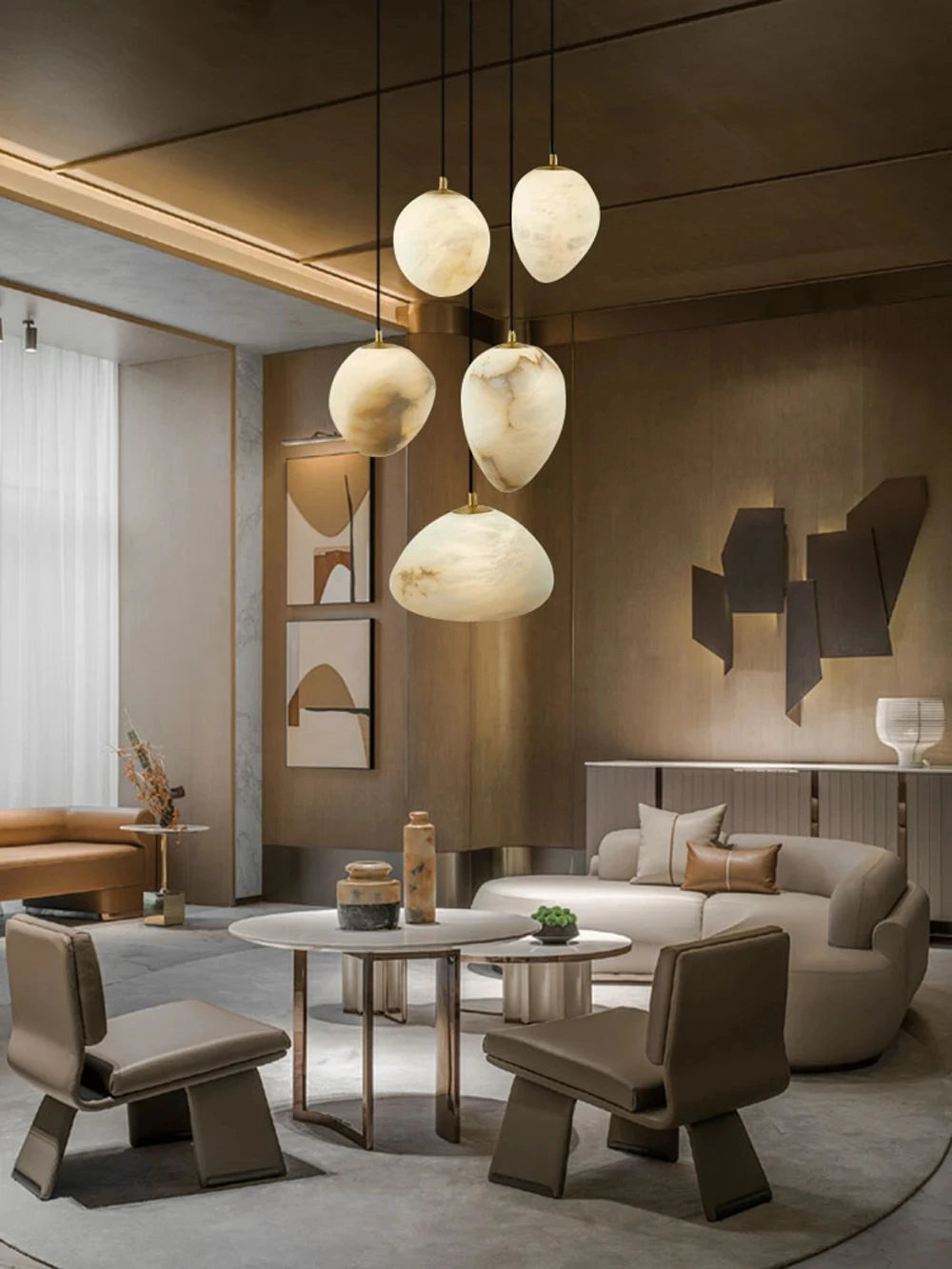
The Sage Marble Chandelier is the large sculptural marble fixture for a great room, a formal dining room, or a two-story living space — a piece chosen for its form as much as its light, sized for rooms of 14 by 16 feet and larger. It belongs on a structural mount and is a two-person installation.
Vertical marble for stairwells
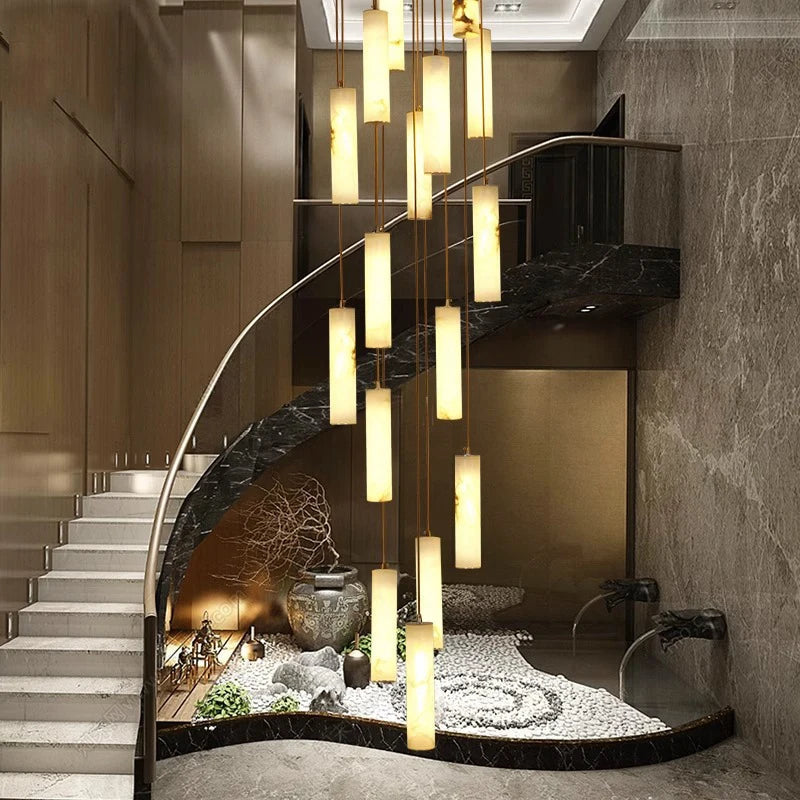
The Darlen Marble Modern Staircase Chandelier carries marble elements on a vertical composition sized for a stairwell or two-story foyer, where the stone is seen from the landing as well as the floor. Set the lowest element at 7 feet of clearance over the treads and mount to structure.
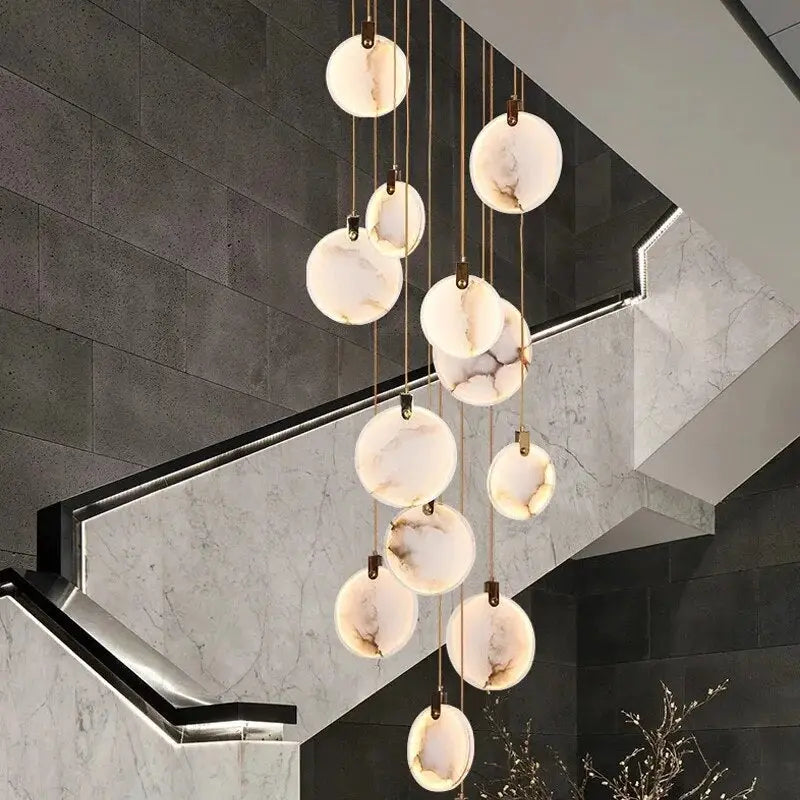
The Tuya Marble Large Hanging Stairwell Lighting Chandelier, in gold, black, or chrome, is the large-scale marble stairwell fixture: multiple marble pieces on long cables for an entry of 16 feet and up. Its size and weight put it firmly in the structural-mount, professional-installation category.
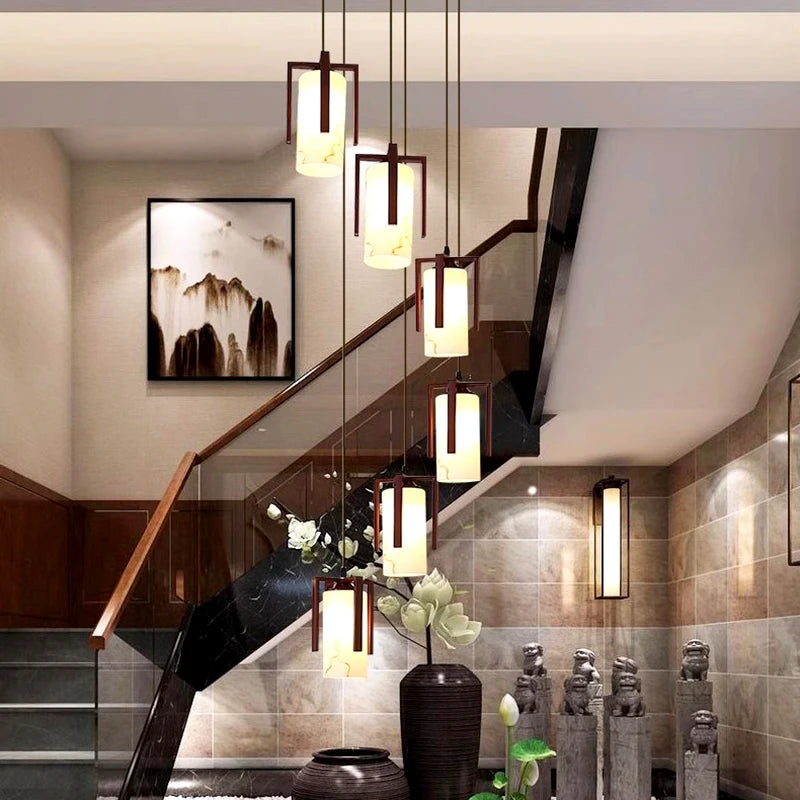
The Polin Modern Faux Marble Stair Chandelier shows the resin side of the category: the marble look on a vertical stairwell fixture at a fraction of natural stone's weight, which lets it hang from a mounting a natural marble piece could not use. It is the practical choice for a stairwell in a house with standard ceiling framing.
Linear alabaster for tables, marble-and-brass rounds, and vertical marble for stairwells.
Rectangular Chandeliers Modern Chandeliers Staircase Chandeliers Dining Room
Caring for Stone Lighting
Alabaster is dusted, never washed. A soft cloth or a clean paintbrush monthly keeps it clear; water, glass cleaner, or any spray will spot or cloud gypsum alabaster, and the mark is permanent. For a stubborn smudge, a barely damp cloth on the outer surface followed at once by a dry one is the limit. Keep it out of direct sun for long periods, which can yellow some stone, and away from heat sources — the LEDs inside a modern fixture run at a low temperature, but an incandescent retrofit does not.
Marble is tougher: a damp cloth and a pH-neutral cleaner handle grease film and fingerprints. What marble cannot take is acid — vinegar, lemon, wine, most bathroom cleaners — which etches a dull spot into the polish in minutes. Dust monthly, deep-clean twice a year, and on a stairwell fixture plan for a lift or scaffold to do it. The chandelier cleaning guide covers the general routine.
Frequently Asked Questions
What is an alabaster chandelier?
An alabaster chandelier uses shades or panels cut from alabaster, a soft, fine-grained stone (usually gypsum, sometimes calcite) that is translucent when sliced thin. Light passing through it picks up the stone's natural veining and comes out warm and diffused, with no visible bulb. Modern alabaster chandeliers mount the stone in a slim brass, black, or copper frame with integrated LEDs, most often in a linear form for dining tables and islands or a round form for living rooms.
What is the difference between alabaster and marble in lighting?
Alabaster is softer, lighter, and far more translucent, so it is used as the shade itself and glows from within. Marble is denser and heavier, transmits light only when cut very thin, and is more often used as a solid element — a disc, a cylinder, a canopy — that the light washes over rather than passes through. Alabaster fixtures give soft ambient light; marble fixtures give sculptural presence with light from a separate source. Alabaster needs to stay dry and away from heat; marble tolerates both better but weighs more.
Are alabaster chandeliers bright enough for a dining table?
Yes, when the fixture is sized to the table and the LED output is chosen for it. Alabaster absorbs part of the light, so a fixture rated 2,500 to 4,000 lumens delivers a comfortable 20 to 30 lumens per square foot over a dining area once the stone has diffused it. Most alabaster linear chandeliers add a downward-facing LED strip below the stone so the table gets direct light as well as the glow.
How do I size a linear alabaster chandelier for my table?
Use the standard linear rule: two-thirds to three-quarters of the table length, hung 30 to 36 inches above the tabletop. A 72-inch table takes a 48- to 54-inch fixture; an 84-inch table takes 56 to 63 inches. Over a kitchen island use 60 to 70 percent of the island length at 28 to 34 inches above the counter. Because stone reads heavier than glass, stay in the middle of the range rather than the top.
Is alabaster real stone or resin?
Both exist. Natural alabaster has irregular veining, slight thickness variation, and no two shades match exactly; it is heavier and costs more. Resin or "faux alabaster" is molded acrylic or polyresin with a printed or cast vein pattern, lighter, uniform, and less expensive. Faux marble is the same idea for marble. Product pages should state the material; a fixture described as "faux" or "resin" is not stone, and the two are fine as long as you know which you are buying.
How heavy is a marble chandelier and what mounting does it need?
Marble elements add weight quickly: a marble-and-brass dining chandelier often runs 30 to 50 pounds, and a large stairwell fixture with several marble pieces can exceed 60. Anything over 50 pounds needs a ceiling box rated for the load and fastened to structure — a fan-rated box or a brace bar between joists — and installation by two people. Alabaster fixtures are lighter, typically 15 to 35 pounds for a linear design, and usually mount to a standard 50-pound box.
What color temperature suits alabaster and marble lighting?
2700K to 3000K. The stone's veining is warm-toned — cream, amber, gray-brown — and warm white brings it out; at 4000K and above alabaster turns flat and greenish and white marble reads cold. Many stone fixtures ship with switchable 3000K/4000K/6000K LEDs set to the highest value, so check the setting on first use. CRI of 90 or higher matters more than usual because the veining is the point of the fixture.
Can alabaster lighting be used in a bathroom or kitchen?
In a kitchen, yes — over an island or table, away from the cooktop and sink, with a damp-rated fixture if the product page allows. Gypsum alabaster is sensitive to moisture and heat, so it should not be used in a steam-prone room or within reach of cooking splatter; marble tolerates humidity better. Keep any stone fixture at least 4 feet from a range hood and wipe grease film off promptly.
How do I clean an alabaster chandelier?
Dry dusting only with a soft cloth or brush, monthly. Never use water, glass cleaner, or any spray on gypsum alabaster: it is slightly water-soluble and will spot or cloud. For a stubborn mark, a barely damp cloth followed immediately by a dry one, on the outside surface only. Marble can be wiped with a damp cloth and pH-neutral cleaner; avoid vinegar, lemon, and anything acidic, which etch the surface.
Which rooms suit alabaster and marble chandeliers?
Dining rooms are the first fit — a linear alabaster fixture over a rectangular table gives even, glare-free light where people sit for hours. Living rooms take a round alabaster or marble chandelier as a low-glare ambient fixture. Kitchen islands and peninsulas take linear alabaster away from the cooktop. Stairwells and two-story foyers take vertical marble or marble-and-glass fixtures whose weight is carried by a structural mount. Bedrooms suit a small round alabaster pendant at 2700K on a dimmer.
Choosing Stone Lighting for Your Home
Decide first whether you want the light or the object: alabaster if the fixture's glow is the point, marble if its form is. Then let the surface below choose the shape — linear over a rectangular table, round over open floor, vertical in a stairwell — and let the weight decide the mounting. A stone fixture chosen that way, set to 3000K and dusted rather than washed, will look the same in ten years as it did on installation day.
Browse linear alabaster designs in the rectangular chandeliers collection, round stone fixtures in modern chandeliers, and vertical marble pieces in staircase chandeliers. For how crystal and glass compare as materials, read crystal vs glass chandeliers.


