

The finish on a crystal chandelier decides more of the final look than the crystal does. The same cascade reads formal in polished gold, cool and sleek in chrome, graphic and current in matte black, and quietly classic in silver — because the metal sets the color of every reflection the crystal throws. This guide compares the main finishes on warmth, style, and room fit, covers white and colored crystal as distinct choices, and gives a simple method for matching the finish to the rest of your home.
Key Takeaways
| Question | Answer |
|---|---|
| Why does the finish matter on a crystal chandelier? | Crystal has no color of its own — it reflects its frame, so the finish sets the color of every reflection the crystal throws. |
| What does gold do to crystal? | Gold and brass warm every reflection to an amber, candle-like sparkle; they suit traditional, transitional, and warm-toned modern rooms. |
| What does chrome do to crystal? | Chrome reflects cool, bright white light so the crystal flashes; it suits contemporary, glam, and glass-and-marble interiors. |
| What does matte black do? | Black outlines the crystal with contrast so it pops; it reads most current and hides dust best. |
| How do I choose the finish? | Match the chandelier to the dominant metal already in the room — door hardware, cabinet pulls, faucets. |
| What about white or colored crystal? | White crystal diffuses light softly for bedrooms and coastal rooms; colored crystal is a statement — one per sightline in a quiet palette. |
Quick Facts
- Crystal reflects the color of its frame: gold gives amber sparkle, chrome gives white flash, black gives contrast.
- Warm white 2700–3000K bulbs flatter every crystal chandelier finish; cool white suits only chrome or silver in cool palettes.
- Matte black is the lowest-maintenance crystal chandelier finish; polished chrome shows fingerprints most.
- Brushed gold and satin nickel are the two most versatile finishes for rooms with no dominant metal.
- Black-and-gold is an established pairing; gold-and-chrome rarely looks intentional.
- Clean crystal with 1 part isopropyl alcohol to 4 parts distilled water on a cloth, never sprayed on the fixture.
Why the Finish Changes How Crystal Looks
Crystal has no color of its own — it refracts and reflects whatever surrounds it. In a gold-framed chandelier, every facet picks up a warm cast and the sparkle reads amber and candle-like. In a chrome frame, the same crystal reflects cool, bright, almost white light. The finish is effectively the color temperature of the fixture's reflections, which is why two chandeliers with identical crystal can feel completely different in a room.
The finish also sets the style register. Warm metals have centuries of association with traditional chandeliers; cool and matte metals read as modern. That association is strong enough that a classic tiered cascade in matte black reads transitional, and a modern ring in polished brass reads warmer and softer than the same ring in chrome. Choosing a finish is choosing both a color and a style signal at once.
Finish-by-Finish Comparison
| Finish | How crystal reads | Style register | Pairs with | Watch for |
|---|---|---|---|---|
| Polished gold / brass | Warm, amber, candle-like sparkle | Traditional, glam, warm modern | Wood floors, cream and warm neutrals, brass hardware | Polished gold shows fingerprints; lacquered finishes resist tarnish |
| Brushed / satin gold | Warm but softer, less reflective | Transitional, contemporary | Most palettes; the most versatile warm finish | Can look flat if the room has no other warm metal |
| Antique bronze / aged brass | Muted, deeper warmth | Classic, rustic, farmhouse | Dark wood, stone, earth tones | Reads heavy in small or low-ceiling rooms |
| Matte black | High contrast; crystal pops against the frame | Modern, industrial, farmhouse-modern | White walls, black hardware, wood accents | Needs warm bulbs to avoid a cold result; dust shows less than on polished metals |
| Silver / satin nickel | Neutral, classic, slightly cool | Traditional through modern | Grey, blue, white, stainless appliances | Can feel generic without a strong crystal design |
| Chrome / polished nickel | Bright, cool, mirror-like flash | Contemporary, glam, Hollywood Regency | Glass, marble, white and grey interiors | Cool bulbs make it clinical; fingerprints and water spots show most |
| White (frame or crystal) | Soft, diffused, airy | Coastal, Scandinavian, romantic | Light rooms, bedrooms, nurseries | Less sparkle than clear crystal; shows dust |
Gold and Brass Crystal Chandeliers
Gold is the finish most people associate with crystal, and for good reason: warm metal and refracted light reinforce each other. A gold frame turns every reflection amber, so the sparkle reads as candlelight even from LED. Polished gold is the most formal and reflective; brushed and satin gold are softer and more forgiving, which is why they've become the default warm finish in contemporary homes.
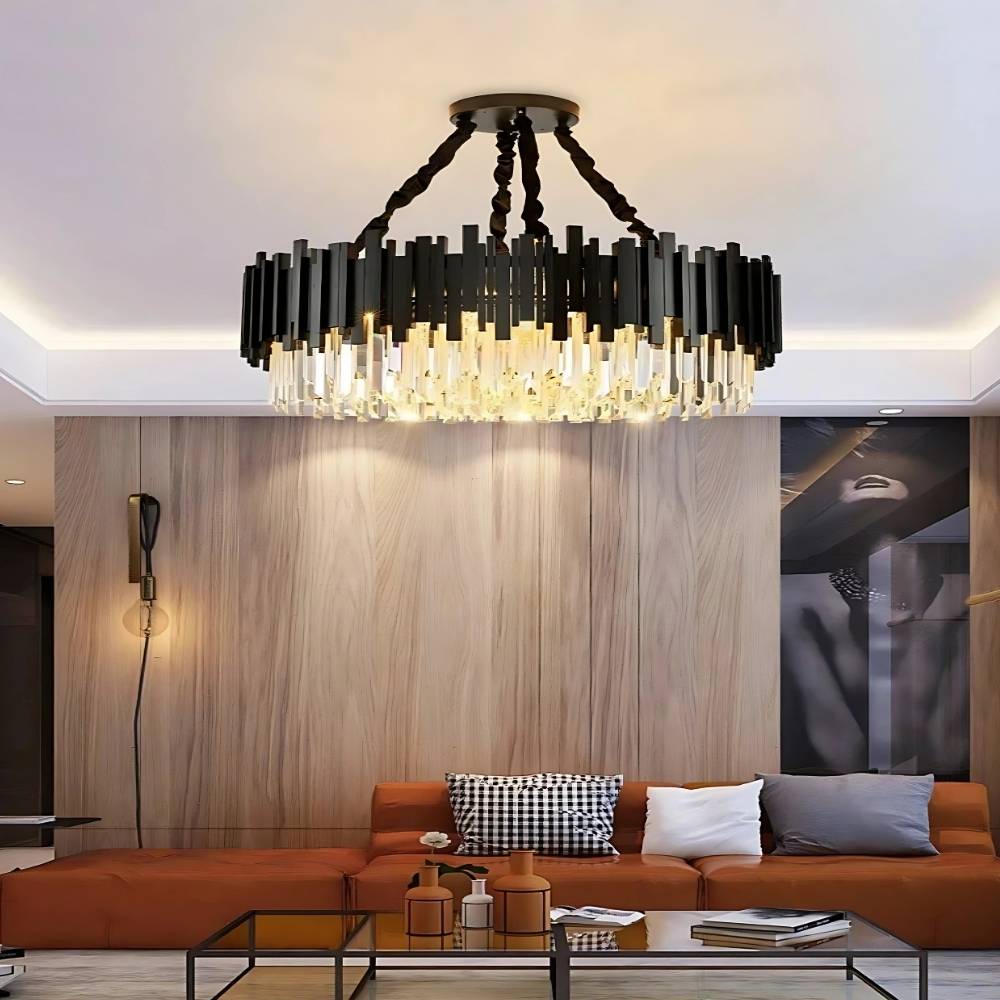
The Zen Modern Gold Crystal Chandelier shows how a warm finish modernises: a clean round form in gold, with a black option for a higher-contrast take on the same design. It suits dining rooms and living rooms that want gold's warmth without a traditional silhouette.
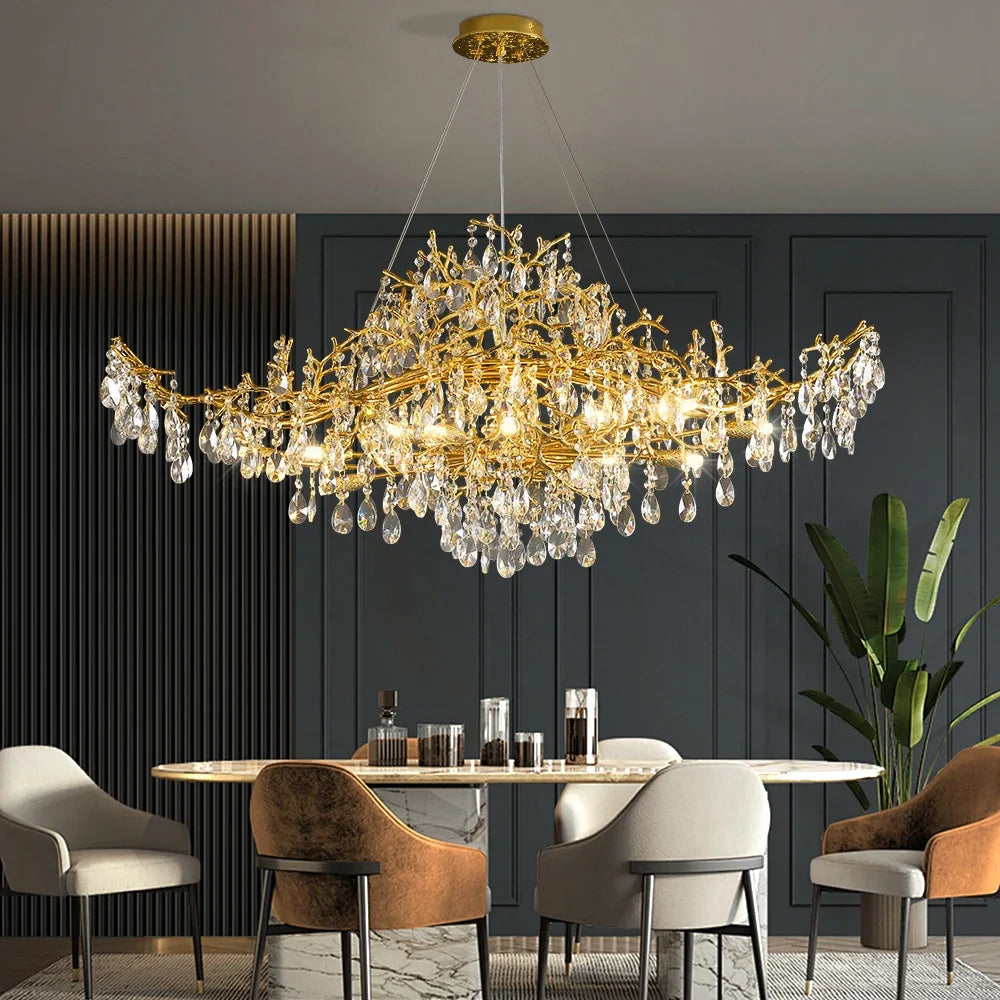
For a larger space, the Bessa Modern Large Gold Crystal Branch Chandelier pairs gold with a branching, organic form — the warmth of the finish keeps the sculptural shape from feeling cold, which makes it a strong choice for open-plan living rooms and high-ceiling dining areas.
Gold and black together
The black-and-gold combination has become a staple of transitional interiors: black gives the graphic outline, gold gives the warmth, and crystal sits between them. It works especially well when the room already mixes black hardware with brass accents. Many fixtures, including the Zen above, offer both finishes so you can match whichever metal dominates your space.
Chrome and Polished Nickel Crystal Chandeliers
Chrome is crystal's coolest partner. The mirror-bright metal reflects white light, so the crystal flashes rather than glows — the sleek, high-glamour effect associated with Hollywood Regency and high-end contemporary interiors. It pairs naturally with glass, marble, white lacquer, and stainless steel, and it looks most at home in rooms with a cool palette.

The Teny Chrome and Crystal Chandelier is chrome at full strength — a bright, reflective frame that amplifies the crystal's flash. It's built for contemporary dining rooms and glam living spaces where the goal is maximum sparkle against a cool background.
Two cautions with chrome. First, bulb temperature: chrome plus cool-white bulbs tips quickly into clinical, so use warm white (2700–3000K) unless the room is deliberately cool-toned. Second, upkeep: polished chrome shows fingerprints, water spots, and dust more than any other finish, so it rewards a regular dry-cloth pass and gloves during cleaning.
Matte Black Crystal Chandeliers
Matte black has moved from an industrial niche to one of the most common chandelier finishes, and it works with crystal for a specific reason: contrast. A black frame reads as a line drawing around the crystal, so the sparkle pops rather than blending into a bright metal. The result is graphic and current, and it suits modern, industrial, and farmhouse-modern rooms — especially those with black window frames, black cabinet hardware, or black-and-white palettes.
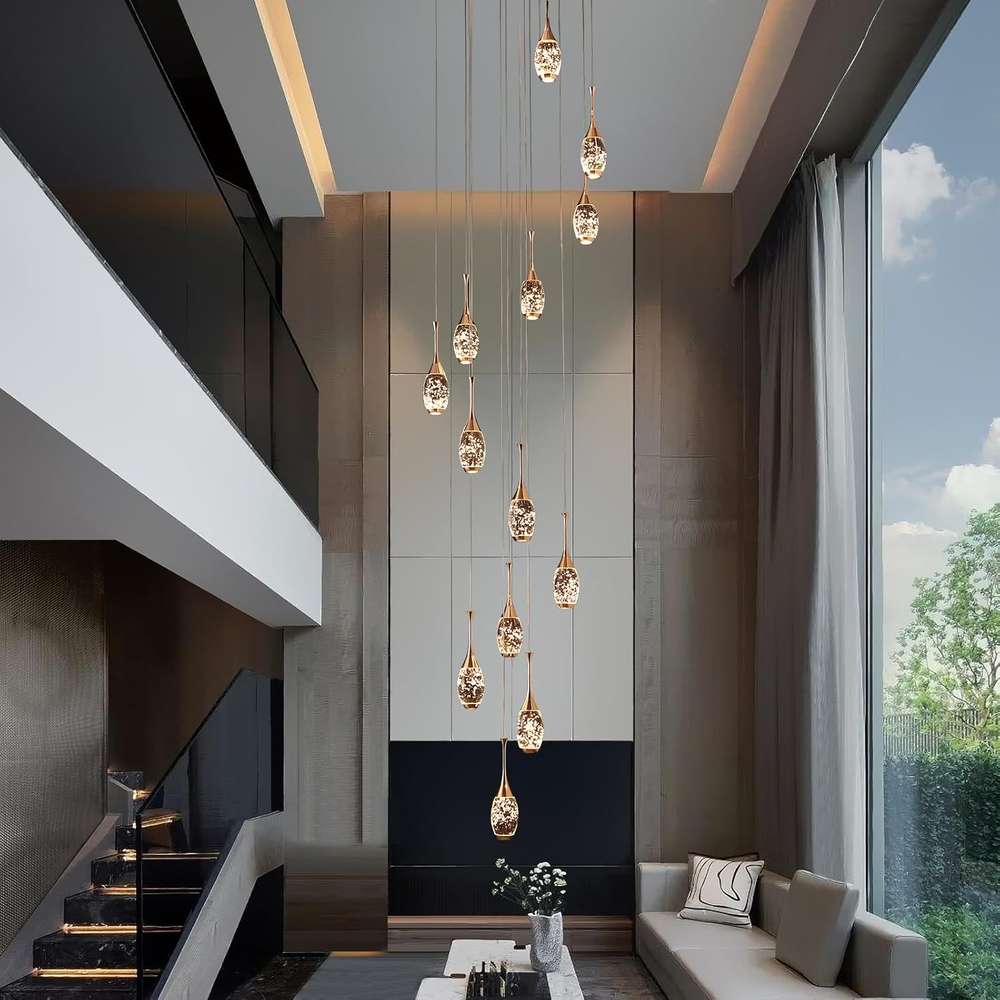
The Setya Long Drop Crystal Chandelier comes in gold, black, and chrome, which makes it a useful comparison piece — the same cascading form reads warm in gold, graphic in black, and glam in chrome. In black, its long crystal drops stand out sharply, which suits a two-story foyer or stairwell with a modern palette.
Black's practical advantage is upkeep: matte surfaces hide dust and fingerprints better than any polished metal. Its one requirement is warm light — pair black with cool bulbs and the room goes cold fast. Warm white brings out the crystal against the frame and keeps the space welcoming. For more on the finish itself, the black crystal chandelier room guide goes room by room.
Silver and Satin Nickel Crystal Chandeliers
Silver is the neutral choice — cooler than gold, softer than chrome, and classic enough to sit in a traditional dining room or a modern one. Satin and brushed nickel are its contemporary cousins, with a low-glare surface that reads clean and understated. Silver suits grey, blue, and white palettes and coordinates with stainless-steel appliances in open-plan kitchens.

The Mia Round Branch Crystal Ceiling Chandelier offers both gold and silver — the silver version gives the branching crystal form a cooler, more restrained character that works in grey and blue rooms, while gold warms the same design for cream and wood-toned spaces.
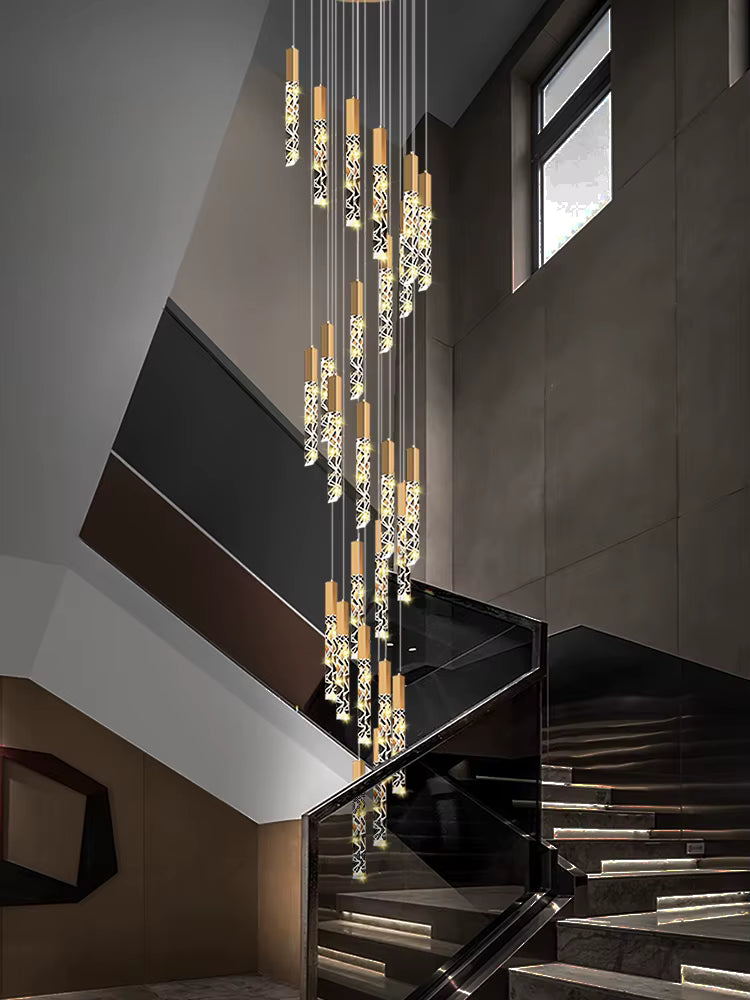
The Large Crystal Chandelier for High Ceilings in silver is the classic cascade at its most neutral — a dense fall of crystal that reads formal without the warmth of gold, also available in gold and black for rooms that lean warmer or more graphic.
White and Colored Crystal: Different Decisions
White crystal and white frames
White changes the character of crystal more than any metal does. Frosted or opal white crystal diffuses light instead of refracting it, so the fixture glows softly rather than sparkling — a look suited to bedrooms, nurseries, coastal and Scandinavian rooms, and anywhere a full crystal flash would feel too formal. A white frame with clear crystal keeps the sparkle but lightens the fixture's visual weight, which helps in small or low-ceiling rooms. The trade-off is less sparkle and, on white surfaces, more visible dust.
Colored and multi-colored crystal
Colored crystal — smoke, amber, blue, black, and multi-colored mixes — is a statement rather than a neutral. Smoke and amber crystal warm a room and pair well with bronze and gold frames; blue and multi-colored crystal read playful and decorative and suit eclectic, glam, and Art Deco-inspired spaces. Because color pulls attention, use it where you want the fixture to be the room's focal point, and keep the rest of the palette quiet. In a room that already has strong color, clear crystal usually serves better.
How to Match the Finish to Your Room
The reliable method is to let the room's existing metals decide. Look at the door hardware, cabinet pulls, faucets, mirror frames, and any other fixtures in the sightline, and identify the dominant metal. Match the chandelier to it — or, if the room deliberately mixes two metals, choose the one you want the chandelier to reinforce. A crystal chandelier is usually the largest metal object in the room, so it sets the tone for everything else.
| Room's dominant metal / palette | Chandelier finish to choose |
|---|---|
| Brass or gold hardware, warm neutrals, wood | Gold or brushed gold |
| Black hardware, black window frames, white walls | Matte black (or black and gold) |
| Stainless appliances, grey or blue palette | Silver or satin nickel |
| Glass, marble, white lacquer, glam styling | Chrome or polished nickel |
| Dark wood, stone, rustic or farmhouse | Antique bronze or aged brass |
| Light, airy, coastal, bedroom | White frame or white/frosted crystal |
| Mixed metals, no clear dominant | Brushed gold or satin nickel — the two most versatile |
Two refinements. Mixing metals is fine as long as it's deliberate — brass and black, or nickel and black, are established pairings; brass and chrome side by side rarely look intentional. And finish should follow style: a traditional tiered cascade wants a warm metal to read classic, while a modern ring or wave can carry any finish and reads most current in black or chrome. If you're still deciding between design languages, modern vs traditional crystal chandeliers covers that choice first.
Bulb Temperature: The Finishing Decision
The bulb is the last variable, and it interacts with the finish directly. Warm white (2700–3000K) is the safe default for every finish: it enriches gold and bronze, warms black enough to keep the room welcoming, and keeps silver and chrome bright without turning them clinical. Cool white (4000K+) suits only chrome or silver fixtures in deliberately cool, modern palettes. For crystal specifically, a high color-rendering bulb — CRI 90 or above — matters more than with other fixtures, because the refractions show the bulb's color accuracy. The lighting color temperature guide goes deeper on the Kelvin scale.
Caring for Each Finish
- Polished gold and chrome: dust weekly with a dry microfiber cloth; wear cotton gloves when handling to avoid fingerprints; never use abrasive polish, which scratches plating.
- Brushed and satin finishes: wipe with a barely damp cloth along the grain; avoid polish, which can create shiny patches on a matte surface.
- Matte black: the lowest-maintenance finish — a dry cloth removes dust; a damp cloth handles marks; avoid solvents that can dull the coating.
- Antique and aged finishes: dust only; harsh cleaners strip the intentional patina.
- The crystal itself, any finish: one part isopropyl alcohol to four parts distilled water, applied to a lint-free cloth (never sprayed on the fixture), each piece buffed dry immediately — the full method is in the crystal chandelier cleaning guide.
Gold, chrome, black, and silver frames — filter the collection by color to compare.
All Crystal Chandeliers Gold Chandeliers Black Chandeliers Modern
Frequently Asked Questions
What is the best finish for a crystal chandelier?
There's no single best — the right finish is the one that matches the dominant metal already in your room. Gold and brushed gold suit warm neutrals, wood, and brass hardware; matte black suits modern rooms with black fixtures and white walls; silver and satin nickel suit grey and blue palettes and stainless appliances; chrome suits glass, marble, and glam interiors. If the room has no clear dominant metal, brushed gold and satin nickel are the two most versatile choices. Whatever the finish, pair it with warm white bulbs so the crystal's reflections stay flattering.
Should I choose gold or silver for a crystal chandelier?
Choose by the warmth of your room. Gold warms every reflection the crystal throws, so it suits rooms with wood, cream, warm neutrals, and brass or gold hardware — and it reads more traditional and formal. Silver keeps the sparkle neutral to cool, so it suits grey, blue, and white palettes and coordinates with stainless steel and nickel hardware — and it reads classic without leaning traditional. If the same fixture comes in both, picture which metal you'd want a dozen reflections of on your walls; that's usually the answer.
Does a black crystal chandelier look modern?
Yes — matte black is the finish that reads most current with crystal, because the dark frame outlines the crystal and makes it pop rather than blending into a bright metal. It suits modern, industrial, and farmhouse-modern rooms, especially those with black window frames or black hardware. The one requirement is warm white bulbs; black plus cool light turns cold quickly. Black is also the lowest-maintenance finish, since matte surfaces hide dust and fingerprints far better than polished gold or chrome.
Is chrome or gold better for a modern crystal chandelier?
Both work with modern forms; they produce different moods. Chrome gives the brightest, coolest sparkle and suits contemporary rooms built around glass, marble, white, and grey — the glam end of modern. Gold, especially brushed gold, gives a warmer result that keeps a modern ring or wave from feeling cold, and it suits the many contemporary rooms that mix clean lines with wood and warm neutrals. If your modern room is cool-toned, choose chrome; if it has any warmth in the palette, brushed gold usually integrates better.
Can I mix a gold crystal chandelier with black hardware?
Yes, and black-and-gold is one of the most established metal pairings in current interiors — black provides the graphic outline, gold provides the warmth. The combination works best when it's clearly intentional: a gold chandelier in a room with black door hardware and black window frames reads as a deliberate two-metal scheme. Many crystal fixtures now come in a black-and-gold finish that does the mixing for you. The pairing to avoid is gold with chrome, which rarely looks planned.
What does white crystal look like on a chandelier?
White or frosted crystal diffuses light instead of refracting it, so the fixture glows softly rather than throwing sharp sparkle and rainbow flashes. The effect is calmer and more romantic, which is why white crystal suits bedrooms, nurseries, and coastal or Scandinavian rooms where a full clear-crystal flash would feel too formal. A white frame with clear crystal is a different choice — it keeps the sparkle but lightens the fixture's visual weight, useful in small or low-ceiling rooms. Both show dust more than darker finishes.
Are colored crystal chandeliers a good idea?
They can be, used deliberately. Smoke and amber crystal behave like warm neutrals and pair naturally with bronze and gold frames, so they're the safest colored options. Blue and multi-colored crystal are genuine statements suited to eclectic, glam, and Art Deco-inspired rooms. Because color draws attention, use one colored fixture per sightline in a room with a quiet palette, and let it be the focal point. In a room that already has strong color, clear crystal usually reads better.
Choosing Your Crystal Chandelier Finish
The finish is where a crystal chandelier's character is decided: gold for warmth, chrome for cool flash, black for contrast, silver for neutral classicism, white for softness, and color for a deliberate statement. Match it to the metal that already dominates the room, pair it with warm white bulbs at CRI 90 or higher, and the crystal will reflect the right light for the space. Get that pairing right and the fixture looks intentional from the first evening it's switched on.
Compare finishes across the full crystal chandelier collection, where you can filter by color, or start from the gold and black chandelier collections if you already know your metal.


