

The best bedside lamps combine 22-27 inch optimal height, 200-400 lumens warm white (2700K-3000K) illumination, dimmable controls for atmospheric flexibility, and styles ranging from modern minimalist sphere lamps to traditional ceramic vase lamps for $30-400 investment range. This complete 2026 guide covers all bedside lamp styles, sizing for any nightstand, brightness and color temperature calculations, the best reading lamps and touch-control lamps, smart bedside lighting, materials comparison, lampshade selection, small bedroom solutions, and the 12 essential buying tips for the perfect bedside lamp.
Why Bedside Lighting Matters
- Creates relaxing bedroom atmosphere. Bedside lamps establish welcoming intimate ambiance distinct from overhead lighting; warm 2700K-3000K illumination promotes evening relaxation.
- Supports reading and bedtime activities. Adjustable bedside task lighting enables reading without disturbing partner or requiring overhead lighting.
- Helps with sleep preparation. Dimmable bedside lamps allow gradual brightness reduction supporting circadian rhythm and melatonin production.
- Provides safe transit illumination. Nighttime bathroom or kitchen trips benefit from soft bedside light without disrupting partner sleep.
- Adds decorative dimension to bedroom. Quality bedside lamps serve as substantial decorative anchors complementing nightstand styling and bedding choices.
- Symmetrical bedside lamp pair creates polished design. Matched lamps flanking the bed deliver designer-quality bedroom presentation.
- Functional task lighting without overhead glare. Bedside lamp focused illumination supports specific tasks without harsh overhead light.
- Atmospheric flexibility through dimming. Bright morning routine + soft evening reading + dim nighttime navigation = dimmer-required application.
For ideas on how different lamps transform a room, browse our lamp collection featuring simple designs and decorative styles that add something special to your bedroom.
Best Bedside Lamps — Top Style Categories for 2026
The best bedside lamps balance functional bedside illumination with substantial decorative dimension. The top style categories work across various bedroom aesthetics.
Modern Sphere & Dome Lamps ★ Best for Contemporary Bedrooms
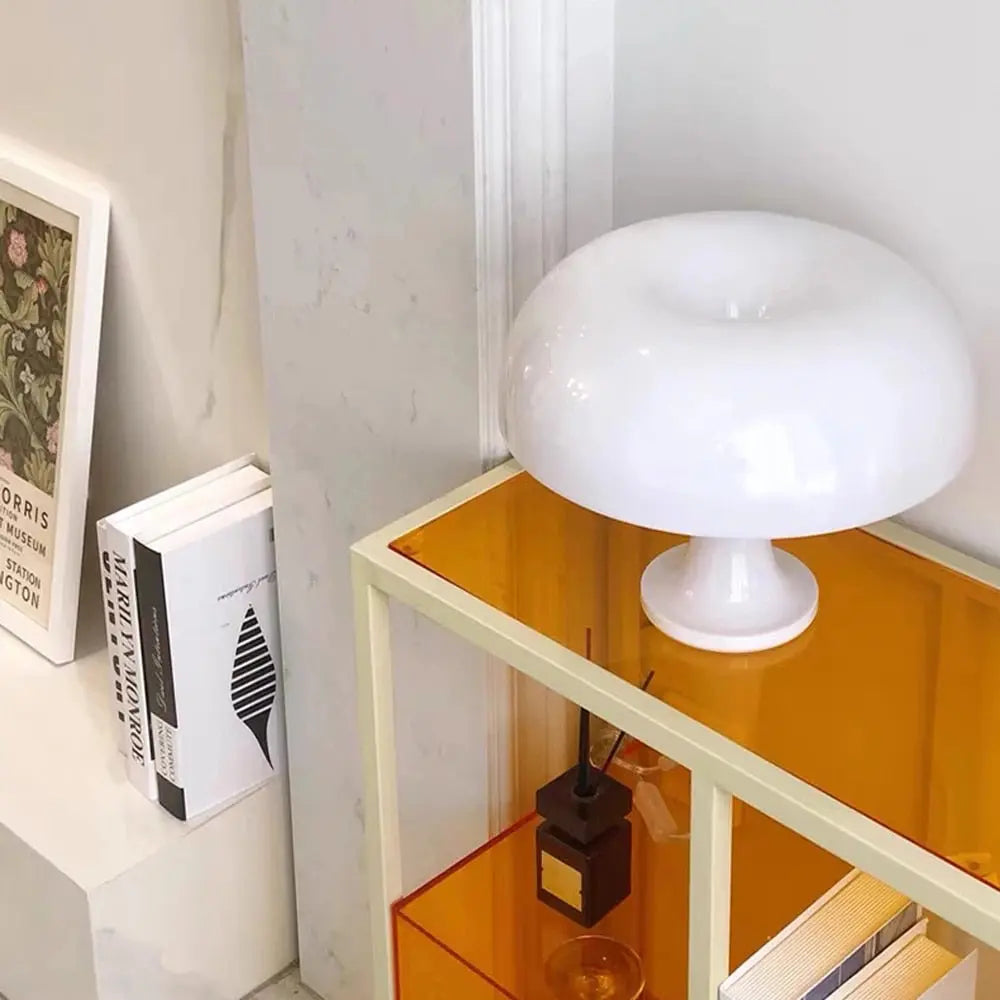
Modern sphere and dome-shaped bedside lamps feature clean geometric forms with minimal ornamentation. Glass mushroom lamps, ceramic globe designs, and metal sphere bases create substantial contemporary aesthetic. Versatile across modern minimalist through transitional bedroom styles. Browse our table lamp collection for modern sphere options.
Traditional Ceramic Vase Lamps ★ Best for Traditional Bedrooms
Traditional ceramic vase bedside lamps feature classic urn and vase silhouettes with fabric drum or empire shades. Hand-painted ceramic, white porcelain, and ginger jar designs create substantial elegant traditional bedroom atmosphere. Brass or bronze base accents add luxury detailing. Most popular in master bedrooms and formal guest rooms.
Industrial Edison-Bulb Lamps ★ Best for Modern Urban Bedrooms
Industrial Edison-bulb bedside lamps feature exposed vintage filament bulbs, raw metal construction, and minimalist forms. Edison LED filament bulbs deliver vintage aesthetic with modern energy efficiency. Particularly suited to loft conversions, urban modern bedrooms, and industrial farmhouse hybrid spaces.
Scandinavian Wood-Base Lamps ★ Best for Minimalist Nordic Bedrooms
Scandinavian bedside lamps emphasize light woods, restrained forms, and functional simplicity. Linen drum shades, oak or ash bases, and clean geometric proportions create substantial cozy Nordic atmosphere. Practical without ostentation; perfect for minimalist bedrooms valuing hygge comfort.
Coastal Natural-Material Lamps ★ Best for Casual Beach Bedrooms
Coastal natural-material bedside lamps feature rattan, jute, driftwood, and natural ceramic bases. Linen or natural fiber shades complement breezy coastal aesthetic. Beach house bedrooms and casual transitional spaces benefit substantially from coastal lamp styling. Most popular finishes: weathered white, natural wood, sea-glass blue accents.
Bedside Lamp Ideas & Inspiration
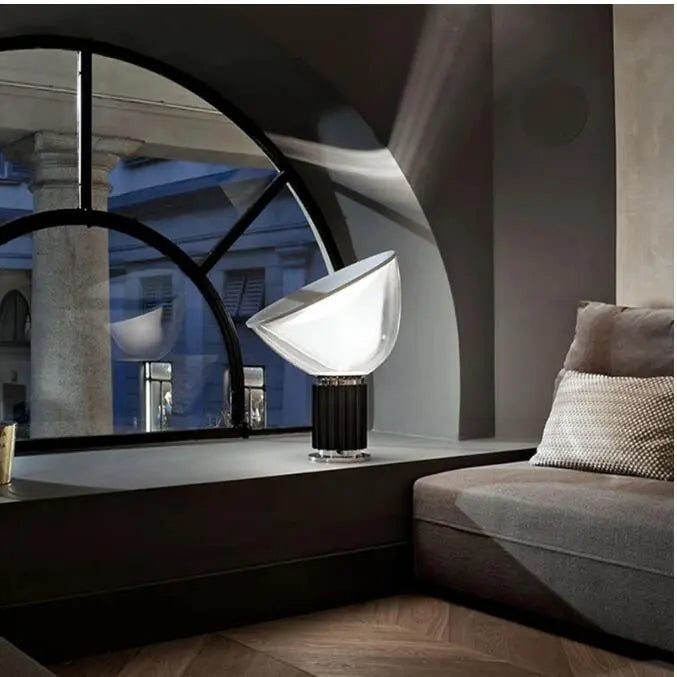
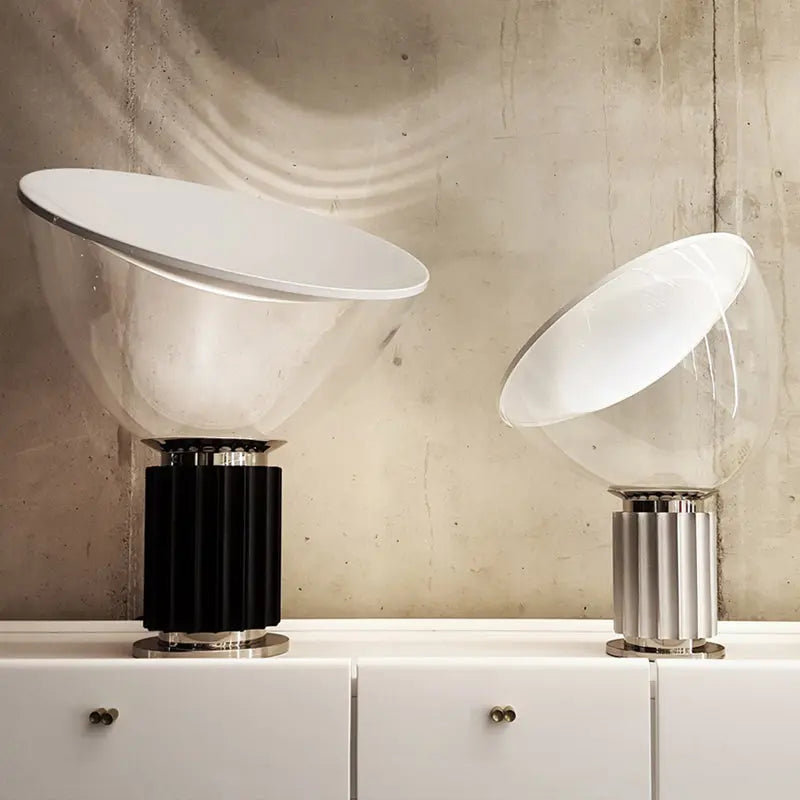
- Matched pair flanking the bed. Designer-quality bedroom presentation. Two identical lamps create symmetric polished aesthetic.
- Mismatched intentional combination. Two lamps sharing one design element (finish, height, or shade) but different specific designs creates curated eclectic look.
- Statement single lamp on one side. Substantial bold single lamp on one nightstand + wall sconce on opposite side; works in asymmetric layouts.
- Mini chandelier as bedside accent. Substantial small crystal or modern chandelier in place of traditional lamp creates substantial luxury bedside statement.
- Color-coordinated with bedding palette. Lamp base or shade picks up accent colors from bedding for cohesive design story.
- Metallic accent integration. Brass lamp bases coordinate with brass drawer pulls, picture frames, mirror frames for cohesive metal accent palette.
- Floor lamp instead of bedside lamp. Substantial floor lamp positioned beside bed eliminates nightstand surface lamp footprint. Browse our floor lamps collection.
- Wall sconce eliminating nightstand lamp. Wall-mounted bedside reading light frees substantial nightstand surface area.
- Pendant light over nightstand. Ceiling-mounted pendant directly above nightstand delivers bedside lighting without nightstand footprint.
- Smart color-changing lamp. RGB smart bulb in standard lamp shade enables mood adjustment + holiday accents.
- Tunable white smart lamp. Adjustable color temperature throughout day — cooler reading; warmer evening relaxation.
- Touch-controlled minimalist lamp. Substantial touch-base lamps eliminate visible switches for clean modern aesthetic.
How to Choose Bedside Lamps
-
Measure your nightstand dimensions.
Width and height of nightstand surface determine appropriate lamp base footprint and height. Lamp should leave substantial surface area free for phone, book, glass of water, alarm clock.
-
Determine optimal lamp height (22-27 inches).
Bottom of lampshade should reach eye level when sitting up in bed. Average bed + nightstand combination places this at 22-27 inches total lamp height.
-
Match style to bedroom aesthetic.
Modern sphere lamps for contemporary; ceramic vase for traditional; Edison industrial for urban; wood base for Scandinavian; rattan for coastal. Match to overall bedroom decor.
-
Specify 200-400 lumens with dimmable capability.
200-400 lumens delivers comfortable bedside illumination; dimmable enables atmospheric flexibility from reading bright to dim relaxation.
-
Choose 2700K-3000K warm white color temperature.
Warm white promotes evening relaxation and sleep preparation. Avoid cool 4000K+ which interferes with melatonin production.
-
Decide on functional features.
Touch controls for sleepy operation; dimmer switches for atmospheric flexibility; USB ports for phone charging; smart capabilities for voice/app control. Choose features matching daily use patterns.
-
Coordinate finish with bedroom accent colors.
Brass lamp + brass drawer pulls + brass picture frames creates cohesive metal palette. Match lamp finish to existing bedroom accents.
-
Consider purchasing matched pair.
Symmetric bedside lamp pair creates polished designer-quality bedroom. Identical or coordinated pairs deliver substantial design impact.
Bedside Lamp Sizing Guide
| Nightstand Height | Optimal Lamp Height | Shade Diameter | Application |
|---|---|---|---|
| 24" nightstand | 24-28" lamp | 10-14" shade | Standard bed height |
| 26" nightstand | 22-26" lamp | 10-14" shade | Mid-height bed |
| 28" nightstand | 20-25" lamp | 10-14" shade | Taller bed |
| 30" nightstand | 18-23" lamp | 10-12" shade | Substantial bed height |
| 32" nightstand | 16-22" lamp | 10-12" shade | High platform beds |
| Substantial bed setup | Total bedside height 50-58" | Proportional | Bottom of shade at eye level when seated |
- Bottom of shade at eye level when sitting up. Universal sizing principle — bottom of lampshade should align with eye level when seated in bed.
- Total nightstand + lamp height 50-58 inches. Combined optimal range for most beds and seated reading positions.
- Shade width approximately 2/3 of lamp height. Visual balance principle — proper proportion between base and shade.
- Lamp base footprint under 1/3 of nightstand surface. Preserves substantial useful space for nightstand essentials (phone, book, glass, alarm clock).
- Scale lamp to bed proportion. Substantial king-size beds support larger lamp scales; smaller beds need restrained lamp scales.
- Match lamp height to nightstand height. Higher nightstand = shorter lamp; lower nightstand = taller lamp for consistent eye-level shade bottom.
Look at your other bedroom furniture when choosing your lamp size. If you have substantial furniture, you might want a taller lamp. If your room is small or your furniture is delicate, a smaller lamp might be better. Our table lamp collection has different sizes for different rooms.
Lumens & Brightness for Bedside Lamp
| Use Case | Lumens Range | LED Wattage | Incandescent Equivalent |
|---|---|---|---|
| Ambient evening | 200-400 lumens | 3-5W LED | 25-40W incandescent |
| Bedside relaxation | 300-500 lumens | 4-6W LED | 40-50W incandescent |
| General reading | 500-800 lumens | 6-9W LED | 40-60W incandescent |
| Detailed reading task | 800-1,200 lumens | 9-13W LED | 60-75W incandescent |
| Reading + work bedside | 1,000-1,500 lumens | 10-15W LED | 75-100W incandescent |
| Dimmable variable | 200-1,200 lumens range | Dimmable LED + LED-rated dimmer | Equivalent variable |
- 200-400 lumens optimal for bedside ambient. Welcoming evening illumination without sleep disruption.
- 800-1,200 lumens for bedside reading. Adequate task brightness for substantial reading sessions.
- Dimmable specification critical. Atmospheric flexibility from bright reading to dim relaxation requires dimmable LED + LED-rated dimmer.
- Two lumens calculation tools: total lumens = bulb count × individual bulb lumens; lumens per square foot helps room-level calculation.
- Lumens not wattage. Modern LED bulbs labeled with both lumens and incandescent wattage equivalent. Focus on lumens output for accurate brightness comparison.
- 40-watt incandescent comparison: 40W incandescent ≈ 450 lumens; bedside lamps typically need less than this for evening ambient.
- Three-way bulb option. Substantial bedside lamps with three-way bulb sockets enable bright/medium/dim selection without separate dimmer.
Color Temperature for Bedside Lamps
| Color Temperature | Appearance | Bedside Application | Recommendation |
|---|---|---|---|
| 2200K-2400K (candlelight) | Very warm amber | Intimate evening accent | Romantic ambiance accent only |
| 2700K (warm white) | Warm yellow-white | Bedroom standard | ★ Best for bedside ambient |
| 3000K (soft warm) | Slightly cooler warm | Modern bedrooms | ★ Acceptable alternative |
| 3500K (neutral warm) | Neutral white | Detailed reading only | Bedside reading task only |
| 4000K (cool white) | Cool white | Avoid in bedroom | ❌ Interferes with sleep |
| 5000K+ (daylight) | Cool blue-white | Never in bedroom | ❌ Disrupts melatonin |
- 2700K is the bedroom standard. Warm white promotes evening relaxation and sleep preparation.
- 3000K acceptable for modern bedrooms. Slightly cooler while maintaining warm residential feel.
- Avoid 3500K+ for bedside ambient. Cooler temperatures interfere with melatonin production and sleep quality.
- Tunable white smart bulbs. Adjust color temperature throughout day — warmer evening (2700K) + cooler reading focus (3000K) when needed.
- CRI 90+ for accurate color rendering. Bedroom artwork, fabric textures, plants all benefit from accurate color appearance.
- Avoid blue light wavelengths before sleep. Cool color temperatures contain blue light wavelengths interfering with sleep onset.
Bedside Lamp Wattage Guide
- LED bulbs preferred for bedside. 3-13W LED delivers 200-1,500 lumens with substantial energy efficiency and minimal heat generation.
- 40W incandescent equivalent (450 lumens) common bedside choice. 4-5W LED achieves equivalent brightness with substantial energy savings.
- 60W incandescent equivalent (800 lumens) for reading. 6-9W LED delivers reading task lighting.
- Don't exceed lamp maximum wattage rating. Each lamp has maximum wattage limit; exceeding creates fire hazard. LED bulbs typically operate well within most ratings.
- Three-way bulbs require three-way socket lamps. Specialty three-way lamps + 50/100/150W three-way bulbs offer bright/medium/dim variation.
- Dimmable LED + LED-rated dimmer switches: substantial atmospheric flexibility across single bulb wattage.
- Avoid halogen for bedside. Halogen heat generation creates safety concerns for bedside contact.
- Edison-style filament LED for vintage aesthetic. Visible filament appearance with LED efficiency; matches industrial and farmhouse bedroom styles.
Best Bedside Reading Lamps
Best bedside reading lamps deliver focused task lighting suitable for extended reading sessions without disturbing partner sleep.
- 800-1,200 lumens task brightness. Adequate illumination for detailed reading without eye strain.
- 2700K-3000K warm white for evening reading. Maintains relaxation while providing reading visibility.
- Adjustable arm or directional shade. Critical feature — directs light to book pages without spilling into partner's eyes.
- Swing-arm wall sconce alternative. Wall-mounted reading lamps with adjustable arms eliminate nightstand surface lamp + provide directional reading control.
- Clip-on book lights for travel-friendly reading. Attach to headboard or book; battery-operated; ideal for shared bedrooms.
- Dimmable specification critical. Bright reading + dim evening relaxation range.
- Reading lamp height: bottom of shade slightly higher than seated eye level for downward light directing.
- Touch controls reduce sleep disruption. Substantial touch-base lamps eliminate fumbling for switch.
- Reading-specific bedside lamp investment: $60-250 typical; designer options $250-500+.
- Bedside reading lamp positioning: 6 inches from edge of nightstand; light directed across reading material at angle reducing glare.
Touch & Smart Bedside Lamps
Touch-controlled and smart bedside lamps deliver substantial convenience for sleepy operation and atmospheric flexibility.
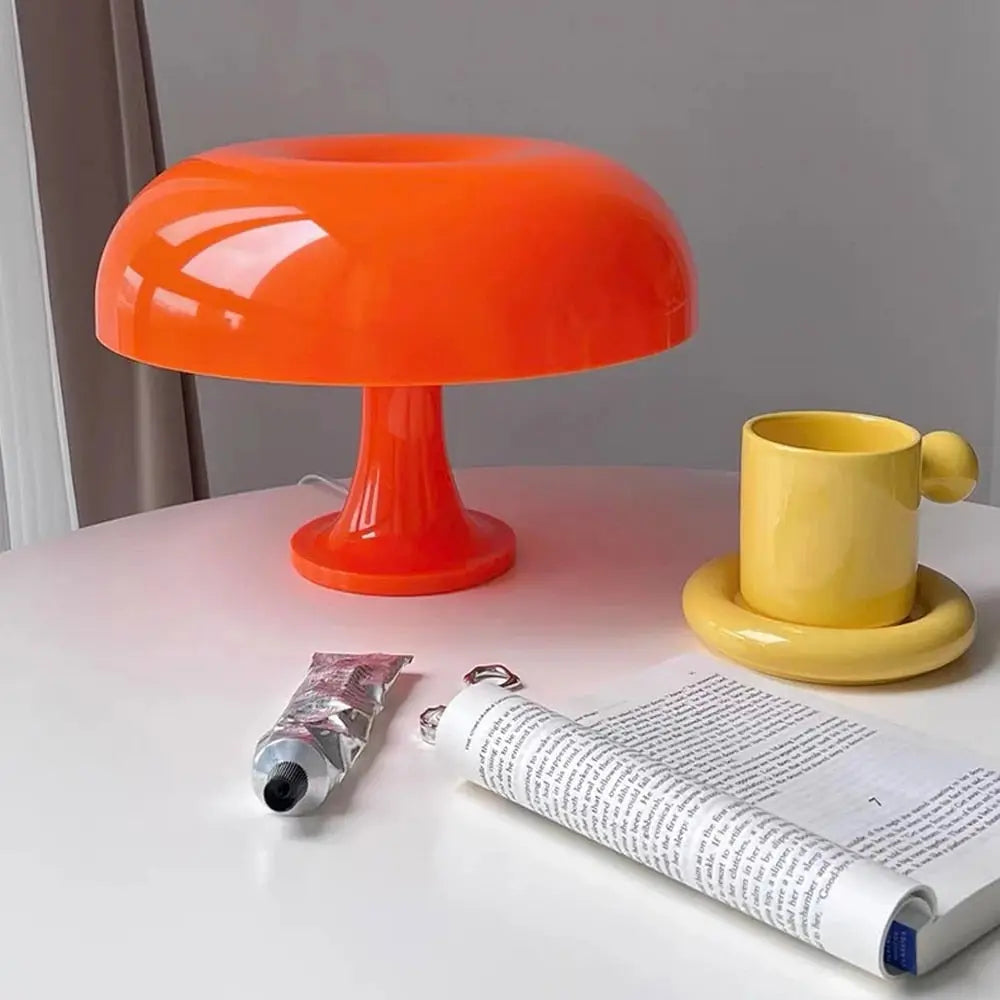
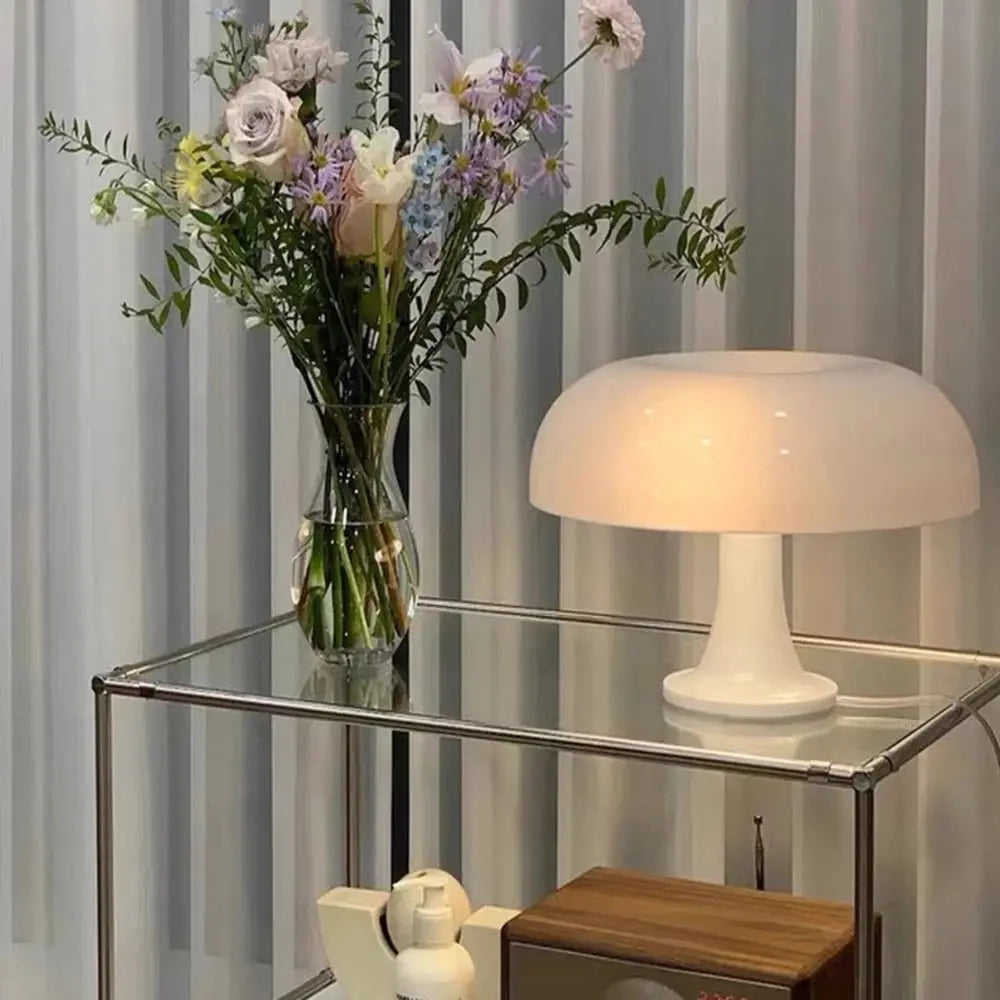
- Touch controls eliminate switch fumbling. Tap base or shade to turn lamp on/off; substantial advantage for sleepy bedside operation.
- Three-level touch dimming. Multiple touches cycle through dim/medium/bright settings; common touch lamp feature.
- Smart bedside lamps: WiFi or Bluetooth connectivity enables app + voice control via Alexa, Google Assistant, Apple HomeKit.
- "Bedtime" voice scene: voice command dims bedside lamp automatically — "Hey Alexa, bedtime" dims to 10% warm white.
- "Wake Up" scene with smart bulbs. Gradually increases brightness over 15-30 minutes simulating sunrise for gentle wake.
- Tunable white smart bulbs. Adjustable color temperature 2200K-6500K throughout day — warmer evening, cooler bedside reading.
- USB charging port lamps. Built-in USB ports eliminate need for separate phone charger; substantial bedside convenience.
- Built-in alarm clock or wireless charging lamps. Integrated functionality reduces bedside device clutter.
- RGB color-changing smart bulbs. Holiday accents, special occasion ambiance, color therapy applications.
- Touch lamp investment: $50-200 typical. Smart bedside lamp investment: $40-300 plus $15-40 per smart bulb.
Picking a Style That Fits Your Room
Choosing a lamp style is like picking clothes — it should match your taste and your room. If your bedroom is modern, you might want a lamp with simple shapes. For a more traditional room, something with more detail could work better.
Here are different styles to consider:
- Modern and simple: sleek designs with materials like glass or metal.
- Classic and traditional: fabric shades and bases made of wood or ceramic.
- Fun and unique: unusual shapes or bright colors for personality.
- Industrial: exposed bulbs, metal parts, raw look.
- Scandinavian: simple, practical, light wood or white colors.

Remember, your bedside lamp is both useful and decorative — it can be a substantial feature in your bedroom. For lots of different styles, look at our table lamp collection.
Bedside Lamp Materials
| Material | Aesthetic | Best Rooms | Care Notes |
|---|---|---|---|
| Metal (brass, chrome, nickel) | Strong, often sleek | Modern rooms | Wipe with damp cloth; metal-specific polish for shine |
| Wood (oak, walnut, painted) | Warm, natural | Traditional, rustic, Scandinavian | Furniture-grade wood cleaner; avoid excess water |
| Ceramic (porcelain, hand-painted) | Simple or decorated | Traditional, transitional, modern | Damp cloth; avoid abrasive cleaners |
| Glass (clear, frosted, colored) | Light, airy | Modern, small spaces, coastal | Glass cleaner on cloth (not directly) |
| Concrete | Industrial, simple | Industrial, modern minimalist | Damp cloth; sealed concrete preferred |
| Marble | Luxurious, dramatic | Traditional luxury, modern luxury | Marble-specific cleaner; avoid acidic products |
| Rattan/Natural fibers | Coastal, boho | Coastal, boho, casual | Vacuum brush attachment; gentle dusting |
| Crystal/Cut glass | Luxury, sparkling | Formal, traditional luxury | 1:3 isopropyl alcohol + distilled water solution |
- Material affects appearance, durability, and care needs. Choose based on bedroom aesthetic and willingness to maintain.
- Weight matters for movable lamps. Lighter materials easier to relocate; heavier materials more stable.
- Fingerprint visibility varies. Polished surfaces show fingerprints; matte and textured surfaces hide them.
- Material durability considerations. Glass and ceramic can break; metal and concrete more durable; wood requires moisture protection.
- Match material to overall bedroom palette. Brass with traditional luxury; chrome with modern; rattan with coastal; ceramic versatile across styles.
All About Lampshades
- Shade shape affects light distribution. Round shades spread light evenly; square shades direct light up and down; cone shades focus light downward.
- Shade material affects atmosphere. Fabric (linen, silk, cotton) creates soft diffused light; glass or metal creates more dramatic directional lighting; paper delivers warm soft glow.
- Shade color affects light tone. Light colors let more light through (white, cream); dark colors focus light directionally (black, dark gray); colored shades cast colored light.
- Shade size relative to base: bottom of shade should be approximately as wide as lamp base is tall. Visual balance principle.
- Shade should cover bulb and switch. Hides electrical components for cleaner aesthetic; reduces glare.
- Drum shade for modern aesthetic. Cylindrical drum shades dominate contemporary bedside lamp styling.
- Empire shade for traditional aesthetic. Sloped traditional shape with wider base than top.
- Bell shade for classic aesthetic. Curved silhouette common in traditional and transitional lamps.
- Coolie shade for vintage aesthetic. Sloped shape similar to coolie hat — common in mid-century designs.
- Easy cleaning consideration. Some shade materials collect dust more than others; smooth materials clean more easily.
Bedside Lamps for Small Rooms
Small bedrooms benefit from space-saving bedside lighting solutions that preserve substantial floor and nightstand surface area.
- Wall-mounted lamps. Eliminate nightstand surface lamp footprint entirely. Browse our wall lights collection.
- Clip-on lamps. Attach to headboard, shelf, or nightstand edge. Substantial space savings + adjustable positioning.
- Slim or adjustable lamps. Narrow profile lamps fit tight spaces; adjustable arms maximize functional flexibility.
- Pendant lights over nightstand. Ceiling-mounted pendant directly above nightstand delivers bedside lighting without surface footprint.
- Corner floor lamps. Substantial corner positioning provides bedside illumination without floor footprint. Browse our floor lamps collection.
- Wall sconce with swing arm. Adjustable wall-mounted reading light + functional flexibility.
- Recessed reading lights. Built into headboard or wall — substantial space-efficient bedside reading solution.
- Multi-function nightstand lamps. Built-in USB ports, wireless charging, alarm clocks reduce bedside device clutter.
- Stacked storage + lamp combinations. Nightstands with built-in lamp integration save substantial surface area.
- Smaller lamp scale. 16-22 inch height lamps work well in small bedrooms vs standard 22-27 inch.
Energy Efficiency & LED Technology
Energy-saving bulbs in your bedside lamp save substantial money over time. LED bulbs deliver substantial benefits across all metrics.
- LED bulbs preferred for bedside. 75-85% less energy than incandescent equivalents; 15,000-25,000+ hour lifespan; minimal heat generation.
- Higher upfront cost, substantial long-term savings. LED bulbs cost more initially ($3-12 vs $1-3 incandescent) but save substantial electricity + last 10-25× longer.
- Cooler operation safer for bedside. LED minimal heat reduces fire risk + safer for skin contact.
- Substantial color temperature range. 2200K-6500K covers all bedroom applications.
- Dimmable LED + LED-rated dimmer switches: substantial atmospheric flexibility.
- Energy Star certification: verified efficiency claims.
- Smart LED options: app + voice control + scene presets.
- Tunable white smart LED: adjustable color temperature for circadian-friendly bedroom transitions.
- 10-year cost comparison: incandescent $80-100; halogen $60-80; CFL $25-40; LED $15-25 ★ best value.
- Many lamps in our lamp collection accept LED bulbs for substantial energy-saving options.
Finding a Good Deal
- Budget tier ($30-100): simple modern lamps, basic touch lamps, value coastal styles. Functional bedside illumination at accessible pricing.
- Mid-range tier ($100-250): substantial style options, smart bulb integration, designer materials. Best value sweet spot for substantial bedrooms.
- Designer tier ($250-400+): substantial materials (marble, hand-painted ceramic), designer brands, integrated smart features.
- Look for sales during holidays. Memorial Day, July 4th, Labor Day, Black Friday deliver substantial bedside lamp savings.
- Think long-term cost. Energy efficiency + bulb replacement frequency over 10 years often favor LED-compatible lamps.
- Simple designs often more affordable. Substantial style at lower price points through restrained ornamentation.
- Check second-hand and vintage stores. Unique substantial deals on quality vintage lamps; modern bulbs convert to LED efficiency.
- Compare online vs in-store prices. Substantial price variation between retailers; verify shipping costs.
- Buy matched pairs together. Pair pricing often substantial savings vs purchasing two lamps separately.
- Multi-fixture bundle discounts. Some retailers offer substantial bundle pricing for full bedroom lighting packages.

Remember, the most expensive lamp isn't always the best. Focus on finding a lamp that works for you and looks substantial in your room. Our table lamp collection often has substantial affordable options that work well as bedside lamps.
Setting Up Your New Lamp
- Position 6 inches from edge of nightstand. Substantial accessibility without overhanging edge.
- Bottom of shade at eye level when seated. Optimal positioning for both ambient illumination and reading task.
- Hide cord behind nightstand or use cord clips. Substantial visual cleanliness; eliminates trip hazard.
- Plug into surge protector. Substantial protection against power surges damaging smart bulbs and electronics.
- Ensure switch easy to reach from bed. Substantial accessibility for sleepy operation.
- Smart lamp app setup. Connect smart lamps to home network; configure scenes and automation.
- Test dimmer compatibility. Install one bulb first; verify smooth dimming without flicker before full installation.
- Position USB port accessible side. If lamp has USB charging, orient USB port toward easy phone access.
Taking Care of Your Lamp
- Dust often with soft cloth. Monthly dusting prevents substantial dust accumulation.
- Glass parts: glass cleaner on cloth. Spray on cloth, not directly on lamp; circular wipe.
- Fabric shades: vacuum brush attachment. Gentle vacuum on low suction removes accumulated dust.
- Change bulbs promptly. LED bulbs last 15,000-25,000+ hours significantly reducing replacement frequency.
- Check cord regularly. Inspect for wear, fraying, or damage; replace lamp if cord shows substantial damage.
- Tighten loose screws or parts. Substantial annual maintenance prevents loose connections.
- Flickering or noise troubleshooting. Unplug; check bulb and cord; if persistent, consult electrician or replace.
- Material-specific cleaning. Match cleaning approach to lamp material (see Materials section).
- For substantial long-lasting options: browse our lamp collection.
Common Bedside Lamp Mistakes
- Wrong lamp height for nightstand and bed. Most common mistake. Bottom of shade should align with eye level when seated in bed (22-27 inch lamp typical).
- Too bright bedside lamp. Lamps over 800 lumens for ambient bedside disrupt evening relaxation. Use 200-400 lumens for ambient; reserve higher lumens for dedicated reading.
- Cool color temperature in bedroom. 3500K+ interferes with melatonin and sleep. Use 2700K-3000K warm white exclusively.
- Non-dimmable bedside lamp. Eliminates atmospheric flexibility. Specify dimmable LED + LED-rated dimmer for substantial control.
- Mismatched lamp pair. Two completely different lamps flanking bed creates visual disorder. Use identical pair OR coordinated pair sharing one design element.
- Wrong shade proportion. Oversized shade overwhelms small base; undersized shade looks awkward. Shade width approximately 2/3 of lamp height.
- Skipping touch or smart features. Substantial convenience for sleepy bedside operation. Even basic touch lamps add substantial daily value.
- Insufficient task lighting for reading. 200-400 lumens ambient inadequate for sustained reading. Add dedicated 800-1,200 lumens reading lamp or adjustable arm.
- Lamp too large for nightstand surface. Lamp base footprint should be under 1/3 of nightstand surface. Preserves space for essentials.
- Ignoring overall bedroom finish coordination. Random lamp finish disrupts bedroom design cohesion. Coordinate with existing brass, chrome, or matte black accents.
Browse Seus Lighting's bedroom-focused collections — table lamps for substantial bedside applications, all lamps across modern through traditional styles, wall lights for space-saving bedside alternatives, floor lamps for layered bedroom illumination, ceiling lights for bedroom ambient layer, and our custom service for unique bedroom lighting requirements.
Table Lamps All Lamps Bedroom Lighting Wall Lights Floor Lamps Ceiling Lights Custom Service
Frequently Asked Questions
What are the best bedside lamps?
The best bedside lamps follow 5 essential rules: (1) Optimal height 22-27 inches — works with most beds and nightstands; bottom of shade at eye level when sitting up. (2) Brightness 200-400 lumens for ambient — comfortable bedside illumination without sleep disruption; 800-1,200 lumens for dedicated reading. (3) Color temperature 2700K-3000K warm white — promotes relaxation and sleep preparation. (4) Style coordination with bedroom decor — modern minimalist sphere lamps for contemporary; traditional ceramic vase for traditional; industrial Edison-bulb for urban; Scandinavian wood-base for minimalist; coastal rattan for casual. (5) Functional features — touch controls, dimmer switches, USB ports, smart bulb compatibility. Top 5 bedside lamp styles 2026: (1) Modern sphere/dome lamps; (2) Traditional ceramic vase lamps; (3) Industrial Edison-bulb lamps; (4) Scandinavian wood-base lamps; (5) Coastal natural-material lamps. Investment range: budget $30-100; mid-range $100-250; designer $250-400+. Critical specifications: dimmable LED + LED-rated dimmer; CRI 90+ for accurate color rendering; appropriate scale for nightstand. Browse our table lamp collection.
What are the best lamps for bedroom?
The best lamps for bedroom combine bedside table lamps + floor lamps + ceiling fixtures for layered bedroom illumination: (1) Bedside table lamps (primary): 22-27 inch height; 200-400 lumens ambient or 800-1,200 lumens reading; 2700K warm white; dimmable; matched pair flanking bed. (2) Floor lamps (accent): corner or reading chair positioning; 1,000-1,500 lumens; tall slim profile preserves floor space. Browse our floor lamps collection. (3) Ceiling fixture (ambient): flush mount or modest chandelier; 1,500-3,000 lumens total ambient; 2700K warm white. (4) Wall sconces (alternative bedside or accent): space-saving bedside alternative; flanking artwork; 400-800 lumens each. (5) Smart bulbs (functional): scene presets — "Wake Up", "Bedtime", "Reading", "Vacation"; voice control via Alexa, Google, HomeKit. Critical bedroom specifications: 2700K warm white (avoid 4000K+); CRI 90+; dimmable across all layers; matched finish family. Total bedroom lumens: 1,500-3,000 lumens for typical 100-150 sq ft bedroom. What to avoid: single overhead fixture without layering; cool color temperature; non-dimmable fixtures; oversized lamps overwhelming smaller bedrooms. Browse our bedroom lighting collection.
How do you choose bedside lamps?
Choose bedside lamps through systematic 8-step process: (1) Measure nightstand dimensions: width and height determine appropriate lamp footprint. Lamp base under 1/3 of nightstand surface preserves essentials space. (2) Determine optimal lamp height 22-27 inches: bottom of shade at eye level when sitting up in bed. (3) Match style to bedroom aesthetic: modern sphere for contemporary; ceramic vase for traditional; Edison industrial for urban; wood base for Scandinavian; rattan for coastal. (4) Specify 200-400 lumens with dimmable capability: comfortable bedside illumination + atmospheric flexibility. (5) Choose 2700K-3000K warm white: promotes relaxation and sleep; avoid cool 4000K+. (6) Decide on functional features: touch controls (sleepy operation); dimmer switches (atmospheric flexibility); USB ports (phone charging); smart capabilities (voice + app control). (7) Coordinate finish with bedroom accents: match brass, chrome, or matte black to existing drawer pulls, frames, mirror finishes. (8) Consider matched pair: symmetric bedside lamp pair creates polished designer-quality bedroom. Critical specifications: dimmable LED + LED-rated dimmer; CRI 90+; appropriate scale for nightstand; comfortable wattage rating within fixture limits. Budget guidelines: $30-100 budget tier; $100-250 mid-range; $250-400+ designer. Browse our table lamp collection.
How many lumens for bedside lamp?
Bedside lamp lumens requirements depend on intended use: (1) Ambient bedside relaxation: 200-400 lumens. Achievable with 3-5W LED bulb (25-40W incandescent equivalent). (2) Bedside reading task: 800-1,200 lumens. Achievable with 9-13W LED bulb (60-75W incandescent equivalent). Adjustable arm or directional shade preferred. (3) Reading + work bedside: 1,000-1,500 lumens. Achievable with 10-15W LED bulb (75-100W incandescent equivalent). (4) Dimmable variable range: 200-1,200 lumens through single dimmable LED bulb + LED-rated dimmer switch. Substantial atmospheric flexibility. Universal bedside guidelines: (1) 200-400 lumens optimal for ambient evening — welcoming without sleep disruption. (2) 800-1,200 lumens for reading — adequate task brightness without eye strain. (3) Dimmable specification critical — atmospheric flexibility essential. (4) 2700K-3000K warm white color temperature — promotes relaxation. 40-watt incandescent comparison: 40W incandescent ≈ 450 lumens. Most bedside lamps need slightly less than this for evening ambient. LED wattage equivalents: 3-5W LED (200-400 lumens); 6-9W LED (500-800 lumens); 9-13W LED (800-1,200 lumens); 13-15W LED (1,200-1,500 lumens). Three-way bulb option: substantial bedside lamps with three-way sockets enable bright/medium/dim selection.
What size lamp for nightstand?
Bedside lamp sizing depends on nightstand height and bed setup: Universal sizing principle: bottom of lampshade should align with eye level when sitting up in bed. Combined nightstand + lamp height typically 50-58 inches. By nightstand height: (1) 24" nightstand: 24-28" lamp height; 10-14" shade diameter. (2) 26" nightstand: 22-26" lamp; 10-14" shade. (3) 28" nightstand: 20-25" lamp; 10-14" shade. (4) 30" nightstand: 18-23" lamp; 10-12" shade. (5) 32" nightstand: 16-22" lamp; 10-12" shade. Optimal bedside lamp height range: 22-27 inches accommodates most beds and nightstand combinations. Sizing principles: (1) Bottom of shade at seated eye level: universal positioning rule. (2) Shade width approximately 2/3 of lamp height: visual balance principle. (3) Lamp base footprint under 1/3 of nightstand surface: preserves substantial useful space. (4) Scale lamp to bed proportion: substantial king beds support larger lamps; smaller beds need restrained scales. (5) Match lamp height inversely to nightstand height: higher nightstand = shorter lamp; lower nightstand = taller lamp. Substantial considerations: substantial platform beds (low + thick mattress) often work with shorter lamps; standard beds work with 22-27 inch range; substantial sleigh beds may need taller lamps. Pairs sizing: matched bedside lamp pair should be identical height + identical shade dimensions for symmetric polished appearance.
What watt light bulb for bedside lamp?
Bedside lamp wattage depends on bulb type and intended brightness: For LED bulbs (preferred): (1) 3-5W LED: ambient bedside relaxation; 200-400 lumens; equivalent to 25-40W incandescent. (2) 6-9W LED: general reading + bedside; 500-800 lumens; equivalent to 40-60W incandescent. (3) 9-13W LED: dedicated reading task; 800-1,200 lumens; equivalent to 60-75W incandescent. (4) 13-15W LED: reading + work bedside; 1,200-1,500 lumens; equivalent to 75-100W incandescent. For traditional incandescent (not recommended): (1) 25-40W: ambient bedside relaxation. (2) 60W: general bedside + reading. (3) 75-100W: substantial reading task. Critical wattage considerations: (1) Don't exceed lamp maximum wattage rating: each lamp has maximum wattage limit; exceeding creates fire hazard. LED bulbs typically operate well within most ratings. (2) LED preferred for bedside: 75-85% less electricity; minimal heat (safer for bedside contact); 15,000-25,000+ hour lifespan. (3) Match wattage to use case: avoid bright bedside lamps disrupting evening relaxation. (4) Dimmable LED specification: dimmable bulb + LED-rated dimmer switch enables atmospheric flexibility across single wattage. Bulb base type: most bedside lamps use E26 medium base; some decorative lamps use E12 candelabra base — verify before purchase. Smart bulb wattage: smart LED bulbs typically 6-9W (800-1,000 lumens) with app + voice control.
What are the best bedside reading lamps?
Best bedside reading lamps deliver focused task lighting without disturbing partner sleep: Critical specifications: (1) 800-1,200 lumens task brightness: adequate illumination for detailed reading without eye strain. (2) 2700K-3000K warm white color temperature: maintains evening relaxation while providing reading visibility. (3) Adjustable arm or directional shade: critical feature — directs light to book pages without spilling into partner's eyes. (4) Dimmable specification: bright reading + dim evening relaxation range. (5) Touch controls: reduce sleep disruption for partner. Top bedside reading lamp categories: (1) Adjustable arm desk-style table lamps: traditional best choice — directional control + adequate brightness. (2) Swing-arm wall sconces: substantial space-saving alternative; wall-mounted with adjustable arm. Browse our wall lights collection. (3) Clip-on book lights: travel-friendly; attach to headboard or book; battery-operated. (4) Touch-base reading lamps: bedside touch operation; multiple brightness settings. (5) Smart reading lamps: voice activation; scheduled scenes; tunable white. Positioning for bedside reading: (1) 6 inches from edge of nightstand: accessibility without overhang. (2) Bottom of shade slightly higher than seated eye level: directs light downward across reading material. (3) Light angled across book pages: reduces glare and shadows. (4) Adjustable arm orientation: away from partner's side of bed. Investment range for dedicated reading lamps: $60-250 typical; designer options $250-500+. Browse our table lamp collection.
What color temperature is best for bedside lamp?
Best color temperature for bedside lamp is 2700K warm white — promotes evening relaxation and sleep preparation without interfering with melatonin production. Specific recommendations: (1) 2700K classic warm white: bedroom standard; matches incandescent traditional warmth; best for ambient bedside relaxation. (2) 3000K soft warm: acceptable alternative for modern bedrooms; slightly cooler while maintaining warm residential feel. (3) 3500K neutral warm: only for dedicated reading task; cooler focus for substantial detail reading. (4) 4000K+ cool white: AVOID in bedroom — interferes with melatonin and sleep quality. Why warm white matters for bedside: (1) Promotes evening relaxation: warm color spectrum supports natural circadian transition to sleep. (2) Doesn't suppress melatonin: cool color temperatures contain blue light wavelengths that suppress melatonin production and interfere with sleep onset. (3) Welcoming atmosphere: warm white creates intimate bedroom feel. (4) Easier eye adjustment: warm white less jarring than cool white for nighttime bathroom transit. Tunable white smart bulbs: premium option — adjusts color temperature throughout day. Cooler (3000K-3500K) for substantial reading sessions; warmer (2700K) for evening relaxation; very warm (2200K) for late-night transition to sleep. CRI 90+ critical: even correct color temperature LEDs at low CRI (75-80) render bedroom textures and fabric colors poorly. Specify CRI 90+ for substantial accurate color rendering. Mixed color temperature warning: maintain consistent Kelvin across all bedroom fixtures — mixed Kelvin creates atmospheric disconnection and visual disorder.
What are the best touch lamps for bedroom?
Best touch lamps for bedroom combine substantial sleepy-operation convenience with bedroom-appropriate aesthetics: Touch lamp categories: (1) Touch-base table lamps: tap base to turn on/off; multiple brightness settings cycle through taps. Most common bedside touch lamp. (2) Touch-anywhere lamps: touch any part of metal lamp body; convenient for sleepy fumbling. (3) Smart touch lamps: combine touch base + WiFi/Bluetooth connectivity; app + voice + touch control. (4) Touch dimmer lamps: hold finger on touch sensor to dim continuously vs cycling through preset levels. Top features for bedroom touch lamps: (1) Three-level dimming (low/medium/high): substantial atmospheric flexibility through tap cycling. (2) Memory function: lamp returns to last-used brightness on next activation. (3) USB charging ports: substantial bedside convenience for phone charging. (4) Smart capabilities: voice activation through Alexa, Google, HomeKit. (5) Tunable white: adjustable color temperature alongside dimming. Investment ranges: (1) Basic touch lamp: $50-100. (2) Touch + USB lamp: $80-150. (3) Smart touch lamp: $100-300. Critical specifications: (1) 2700K-3000K warm white LED bulb. (2) Dimmable LED compatible with touch dimming. (3) 200-1,200 lumens range. (4) Appropriate height 22-27 inches. (5) Style coordination with bedroom decor. Touch lamp advantages: (1) Eliminates fumbling for switch. (2) Substantial reduced sleep disruption for partner. (3) Faster operation than reaching for traditional switch. (4) Smoother gradual dimming through hold-touch dimmers. What to avoid: touch lamps with overly sensitive sensors (false activations); incompatible smart home ecosystems; cool color temperature bulbs; non-dimmable touch lamps.
How tall should a bedside lamp be?
Bedside lamp height should be 22-27 inches for most beds and nightstand combinations. Universal positioning principle: bottom of lampshade should align with eye level when sitting up in bed. Combined nightstand + lamp height typically 50-58 inches. By nightstand height: (1) 24" nightstand: 24-28" lamp height. (2) 26" nightstand: 22-26" lamp. (3) 28" nightstand: 20-25" lamp. (4) 30" nightstand: 18-23" lamp. (5) 32" nightstand: 16-22" lamp. Sizing principles for proper height: (1) Bottom of shade at seated eye level: prevents glare in eyes while reading; provides task illumination on book pages. (2) Total bedside vertical 50-58 inches: optimal range for most American beds and seated reading positions. (3) Inverse relationship with nightstand height: higher nightstand needs shorter lamp; lower nightstand needs taller lamp. (4) Match to bed scale: substantial king beds support larger lamps; smaller beds need restrained scales. Substantial bed considerations: (1) Platform beds (low + thick mattress): often work with shorter lamps (16-22 inch). (2) Standard beds: work with 22-27 inch range. (3) Sleigh beds (tall headboard + thick mattress): may need taller lamps (25-30 inch). (4) Substantial canopy or four-poster beds: substantial taller lamps work proportionally. Shade width consideration: bottom of shade approximately as wide as lamp base is tall — proportional balance. Pairs consideration: matched bedside lamp pair should be identical height for symmetric polished appearance.
Are smart bulbs good for bedside lamps?
Yes — smart bulbs are excellent for bedside lamps in tech-integrated homes, delivering substantial convenience features beyond standard bulbs: Smart bulb advantages for bedside: (1) Voice control: "Hey Alexa, bedroom lamp off" eliminates fumbling for switch — substantial convenience for sleepy operation. (2) Scene presets: "Bedtime" dims to 10% warm white; "Reading" sets 80% at 3000K; "Wake Up" gradually increases brightness simulating sunrise. (3) Tunable white: adjusts color temperature throughout day — warmer evening (2700K) supports sleep; cooler reading (3000K) for substantial detail focus. (4) RGB color-changing: holiday accents, special occasion ambiance, color therapy applications. (5) Scheduled automation: lamp activates sunset; deactivates sunrise; substantial routine support. (6) Geofencing: lamp activates when arrival home detected. (7) Remote control: control bedroom lamps when away from home — vacation simulating occupancy. (8) Internal dimming: no separate dimmer switch required; smart bulb handles dimming via app/voice. Smart bedside bulb investment: $15-40 per smart bulb vs $3-12 standard LED. Two bedside smart bulbs = $30-80 total. Smart bulb categories: (1) WiFi-direct: connects directly to home WiFi; no hub required. (2) Hub-required: needs central smart hub for control; more reliability. (3) Bluetooth-only: simple setup but limited range. Voice assistant compatibility: verify with your existing ecosystem (Alexa, Google Assistant, Apple HomeKit). When smart bulbs are worth it: existing smart home ecosystem; tech-comfortable household members; substantial reading + sleep routine variation; multiple bedroom lighting layers requiring coordinated scene control. When standard dimmable LED sufficient: no smart home integration desired; cost-conscious bedroom upgrade; simple atmospheric flexibility through dimmer.
What are some bedside lamp ideas?
Bedside lamp ideas combine functional design + decorative dimension across various bedroom styles: (1) Matched pair flanking the bed: designer-quality bedroom presentation. Two identical lamps create symmetric polished aesthetic. (2) Mismatched intentional combination: two lamps sharing one design element (finish, height, or shade) but different specific designs creates curated eclectic look. (3) Statement single lamp on one side: substantial bold single lamp on one nightstand + wall sconce on opposite side; works in asymmetric layouts. (4) Mini chandelier as bedside accent: substantial small crystal or modern chandelier creates substantial luxury bedside statement. (5) Color-coordinated with bedding palette: lamp base or shade picks up accent colors from bedding for cohesive design story. (6) Metallic accent integration: brass lamp bases coordinate with brass drawer pulls, picture frames, mirror frames. (7) Floor lamp instead of bedside lamp: substantial floor lamp positioned beside bed eliminates nightstand surface footprint. (8) Wall sconce eliminating nightstand lamp: wall-mounted bedside reading light frees substantial nightstand surface area. (9) Pendant light over nightstand: ceiling-mounted pendant directly above nightstand delivers bedside lighting without nightstand footprint. (10) Smart color-changing lamp: RGB smart bulb in standard lamp shade enables mood adjustment + holiday accents. (11) Tunable white smart lamp: adjustable color temperature throughout day — cooler reading; warmer evening relaxation. (12) Touch-controlled minimalist lamp: substantial touch-base lamps eliminate visible switches for clean modern aesthetic. (13) Modern mushroom lamp: substantial trend 2026 — dome silhouette in glass or ceramic. (14) Rice paper or rattan natural-material lamp: substantial coastal or boho bedroom warmth. Browse our table lamp collection.
Wrapping Up
Choosing the right bedside lamp transforms how your bedroom looks and feels — combining 22-27 inch optimal height, 200-400 lumens warm white (2700K-3000K) ambient illumination, dimmable controls for atmospheric flexibility, and style coordination with your bedroom aesthetic creates the perfect bedside lighting solution. Specify dimmable LED bulbs at CRI 90+ for accurate color rendering, position 6 inches from nightstand edge with bottom of shade at seated eye level, and consider touch controls or smart bulb integration for substantial daily convenience. With careful attention to the 12 essential tips, your bedroom becomes a substantial cozy welcoming space ready for reading, relaxation, and quality sleep.
For complementary bedroom lighting decisions, see our related guides: bedroom lighting collection, table lamps collection, floor lamps collection, wall lights collection, and our how much light does my room need guide for room-specific lumens calculations.


