

Key Takeaways
| Question | Answer |
|---|---|
| Types? | Fandelier (crystal or chandelier fan), modern LED fan, Bluetooth speaker fan, rustic or leaf-blade fan. |
| What size? | 36–44 in up to 100 sq ft; 48–56 in for 100–250 sq ft; 60 in+ for larger rooms and open plans. |
| How high? | Blades ≥ 7 ft above the floor, 8–9 ft ideal; 18 in from walls; downrod on 10 ft+ ceilings. |
| Speaker fans? | Good for background music in bedrooms and offices; not a replacement for dedicated speakers. |
| Light? | Integrated LED kit, 2700–3000K in living spaces, dim from remote or a matched wall dimmer. |
| Box? | Always a fan-rated box fastened to a joist or brace — never a standard light box. |
Quick Facts
- Decorative fandeliers often have smaller or retractable blades and move less air than standard fans of the same span.
- Bluetooth speaker fans pair with phones and play through a speaker in the fan housing, typically controlled by the remote or app.
- Reverse the fan at low speed in winter to push warm air down from the ceiling.
- Fan and light usually run on separate remote channels — the light can be off while the fan runs.
- Damp-rated fans for covered porches and humid rooms; wet-rated where rain reaches them.
- Check each product page for wattage, light output, and color options before choosing.
Types of Ceiling Fans with Lights
Fandeliers: crystal and chandelier fans
A fandelier puts a chandelier and a fan in one fixture — crystal drops, a chandelier frame, or a cage around the light, with blades that are often compact or retractable. It is the right choice where the fixture is seen as much as it is felt: a dining room, a primary bedroom, an entry, a living room that would otherwise have a chandelier. The trade-off is airflow: compact or retractable blades move less air than a standard fan of the same span, so a fandelier is a comfort-and-circulation fixture, not a cooling system.
Modern LED fans
A slim housing with an integrated LED disc and two to five clean blades, often in white, black, or wood. It replaces a flat ceiling light in a contemporary bedroom or living room and keeps a low profile on 8- to 9-foot ceilings. Many include remote or app control for both speed and light.
Bluetooth speaker fans
A fan, an LED light, and a speaker in one housing that pairs with a phone. It puts background music or podcasts in a bedroom, office, or teen room with nothing on the shelves. The speaker sits above the room and fires downward through the housing, so it is best for ambient listening at moderate volume; a dedicated speaker or soundbar still wins for movies and music at volume. Check the product page for how the speaker and light are controlled, and keep the phone within Bluetooth range of the ceiling.
Rustic and leaf-blade fans
Large spans — 52 to 60 inches and more — with wood-look, rattan, or sculpted leaf blades. These move the most air of the four and suit great rooms, farmhouse living rooms, and open plans where cooling matters as much as style. Leaf-blade designs add a tropical or organic note; rustic caged fans pair with beams and iron hardware.
| Type | Typical span | Light | Airflow | Best rooms |
|---|---|---|---|---|
| Crystal fandelier | 36–52 in | Decorative, chandelier-like | Lower | Dining room, primary bedroom, entry |
| Chandelier fan | 48–56 in | Decorative | Moderate | Living room, dining room |
| Modern LED fan | 42–56 in | Even LED disc | Moderate | Bedroom, living room, office |
| Bluetooth speaker fan | 36–48 in | LED disc | Moderate | Bedroom, office, teen room |
| Rustic / leaf-blade fan | 52–60 in+ | Bulbs or LED kit | Highest | Great room, farmhouse living room, open plan |
Sizing a Fan to the Room
| Room | Floor area | Blade span | Mount on 8–9 ft | Mount on 10 ft+ |
|---|---|---|---|---|
| Office, nursery, small bedroom | Up to 100 sq ft | 36–44 in | Flush or 3–6 in downrod | 12 in downrod |
| Primary bedroom, dining room | 100–250 sq ft | 48–56 in | Flush or 6 in downrod | 12–24 in downrod |
| Living room, family room | 150–300 sq ft | 52–60 in | 6 in downrod | 18–36 in downrod |
| Great room, open plan | 250 sq ft and up | 60 in and up | — | 24–72 in downrod by height |
Keep the blade tips at least 7 feet above the floor, with 8 to 9 feet ideal for airflow, and at least 18 inches from walls, cabinets, and sloped ceiling planes. On an 8-foot ceiling, a flush or low-profile fan keeps clearance; on 10 feet and above, a downrod lowers the fan into the room's air rather than leaving it against the ceiling. A fandelier over a dining table also follows the table rule — the light body at about half to two-thirds of the table's width — with blades clearing anyone standing. On a sloped ceiling, use the slope adapter and a downrod long enough that the lowest blade tip clears the slope by 18 inches.
Light Kits, Brightness, and Dimming
In most rooms the fan's light is the main fixture, so judge it as a light. Integrated LED kits on fans with lights commonly deliver enough for a bedroom or dining room on their own; in a large living room, add lamps or wall lights. Keep color at 2700–3000K in bedrooms and living spaces and 3000–3500K in kitchens and offices; many fans switch color from the remote and ship on the coolest setting — set them warm on first use. Fan and light run on separate channels, so the light can be off while the fan turns. Dimming works from the remote on integrated-LED fans; bulb fans dim with dimmable LED bulbs and a compatible wall control. A crystal fandelier's light is decorative first: expect sparkle and a warm glow rather than task-level brightness.
Controls and Smart Features
Every fan in this category ships with a remote; some add an app, wall control, or voice-assistant pairing. Look for a remote that controls fan speed, direction, light on/off and dimming, and — on speaker fans — playback or pairing. Reversible motors run forward (counterclockwise from below) in summer for a cooling breeze and reverse at low speed in winter to bring warm air down. Fan running cost and wattage are covered in do ceiling fans consume significant electricity.
Installation and Ratings
Every ceiling fan needs a fan-rated electrical box fastened to a joist or a brace bar — a standard light box is not designed for a fan's weight and motion. Crystal fandeliers and fans with heavy light kits weigh more than plain fans, so confirm the box rating covers fan plus light. Balance the blades after installation to stop wobble, which also protects speaker sound and crystal. Choose damp-rated fans for covered porches and humid rooms and wet-rated fans where rain or spray reaches them. Replacing an existing ceiling light with a fan usually means upgrading the box; that, and any new switching, is electrician work.
Quick decision: which fan with a light
Dining room or primary bedroom, decorative fixture wanted: crystal fandelier • Living room, chandelier look with airflow: chandelier fan • Contemporary bedroom or living room: modern LED fan • Bedroom or office with background music: Bluetooth speaker fan • Great room or farmhouse: rustic or leaf-blade fan, 52–60 in • Always: span by floor area, blades 7 ft+, fan-rated box, 2700–3000K light.
Ceiling Fans with Lights and Speakers
Six fans from the collection, grouped by type.
Fandeliers and chandelier fans
Decorative fans that serve as the room's chandelier.

The Feriya 42" Crystal Fandelier Ceiling Fan, in gold or silver, is a 42-inch crystal fandelier — the fixture for a dining room, primary bedroom, or entry where the fan should read as a chandelier first.
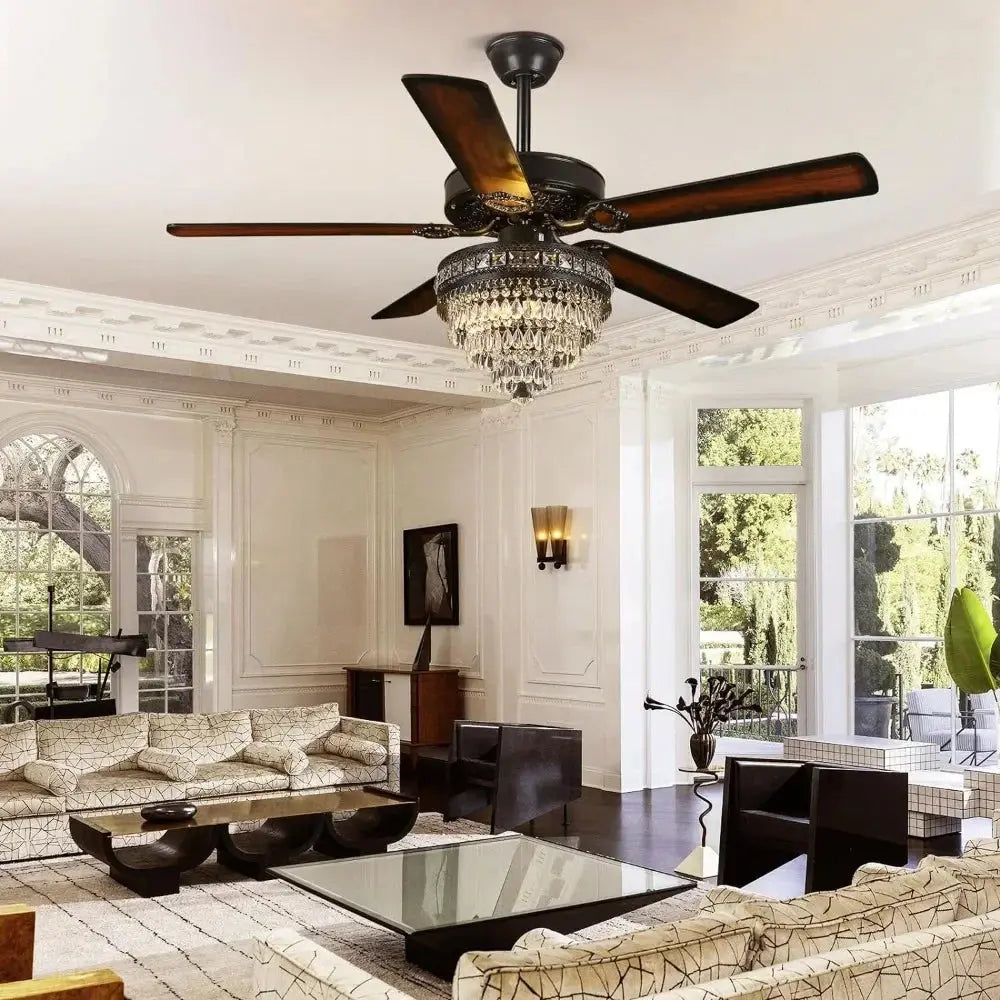
The 5-Blade Remote Control Crystal Ceiling Fan with Lights combines crystal lights with five full blades and remote control — more airflow than a compact fandelier, with the same decorative role in a living or dining room.
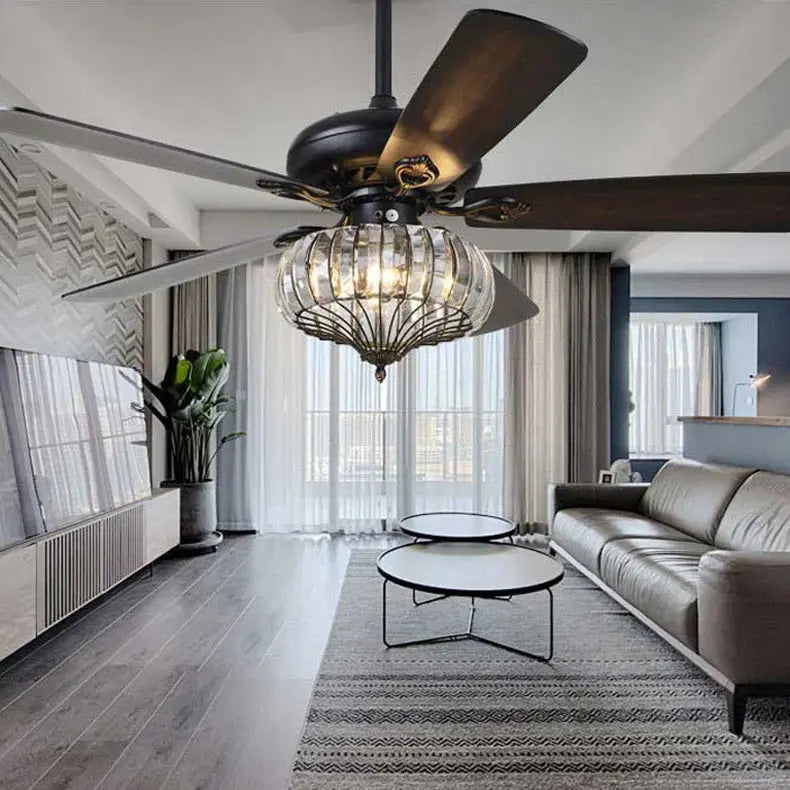
The Tulis 52 Inch Chandelier Ceiling Fan With Light is a 52-inch chandelier fan for a living or dining room of 150 to 250 square feet, where a chandelier's presence and real air movement are both wanted.
Speaker, modern, and leaf-blade fans
Fans that put music, clean lines, or organic blades on the ceiling.
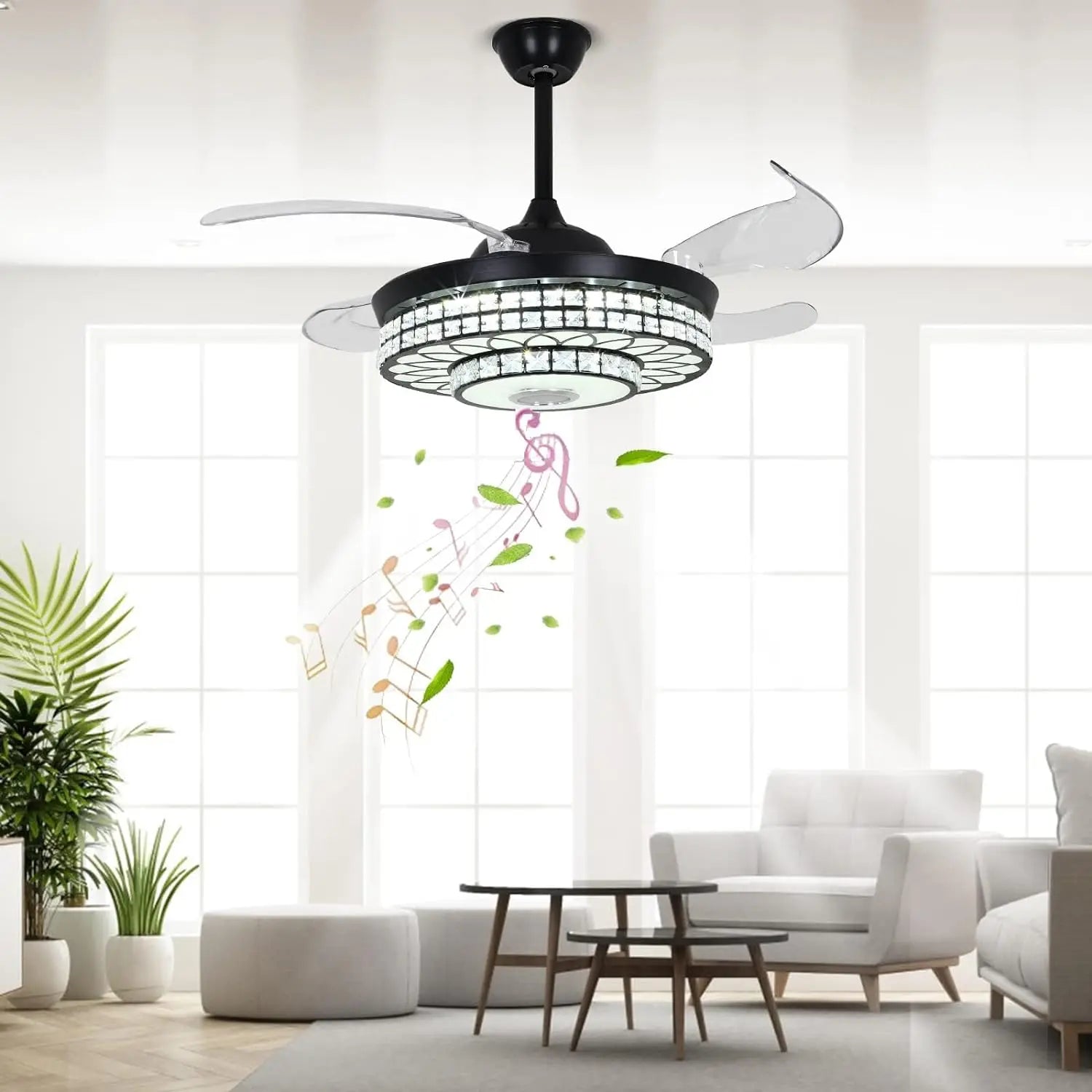
The 42" Ceiling Fan with Light and Bluetooth Speaker pairs a 42-inch fan and LED light with a built-in Bluetooth speaker — background music for a bedroom, office, or teen room from one ceiling fixture.
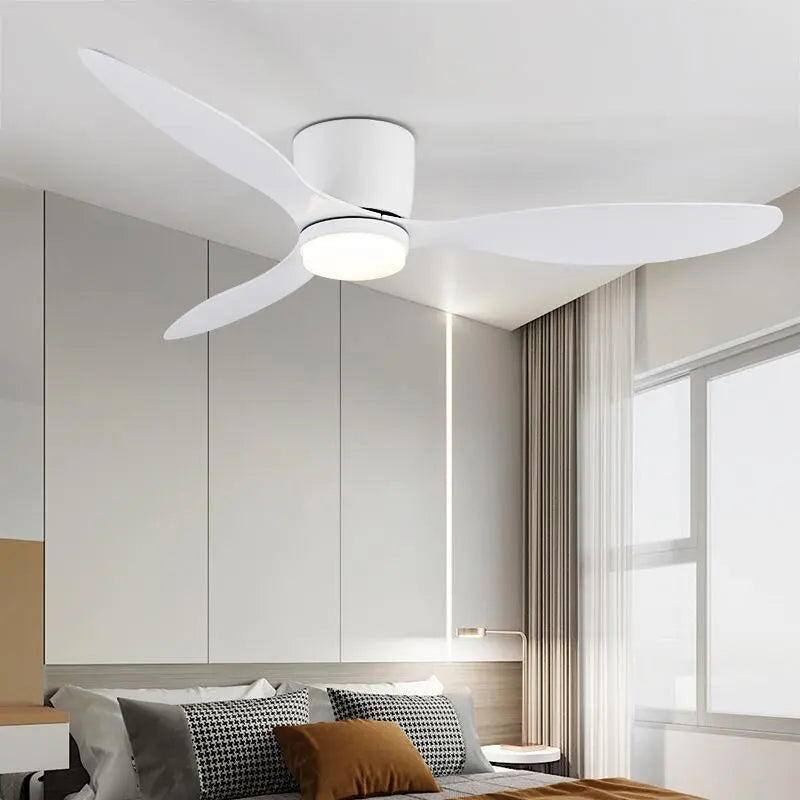
The Muriel Modern White Ceiling Fan, in white or black, is a modern fan with a clean housing and light option — the low-key choice for a contemporary bedroom or living room.
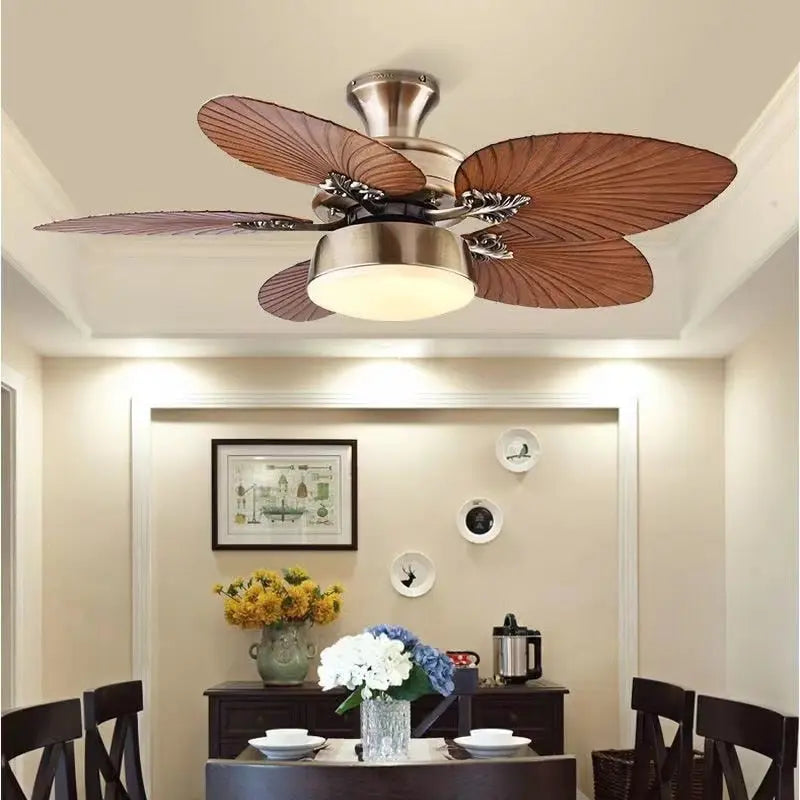
The Noreen Leaf Ceiling Fan has sculpted leaf blades for an organic or tropical room — a statement in a living room, sunroom, or covered porch where its rating allows.
Crystal fandeliers, chandelier fans, Bluetooth speaker fans, modern LED, and leaf-blade fans.
Ceiling Fans Ceiling Lights Bedroom Dining Room
For a farmhouse great room, the 52/60 Inch 5 Blades Rustic Ceiling Fan With Lights offers the largest span in the collection (check availability).
Frequently Asked Questions
What is a fandelier?
A fandelier is a ceiling fan built into a chandelier-style fixture — crystal drops, a chandelier frame, or a decorative cage — often with compact or retractable blades. It gives a dining room, bedroom, or entry a fixture that looks like a chandelier and moves air when needed.
Are ceiling fans with Bluetooth speakers any good?
They work well for background music and podcasts in bedrooms, offices, and teen rooms, controlled from a phone. For movies or music at volume, a dedicated speaker or soundbar still sounds better.
Do fandeliers move enough air?
Less than a standard fan of the same span, because their blades are often compact or retractable. They provide comfort and circulation; for cooling a large room, choose a full-blade fan.
What size ceiling fan do I need?
36 to 44 inches for rooms up to 100 square feet, 48 to 56 inches for 100 to 250 square feet, and 60 inches or more for larger rooms and open plans.
How high should a ceiling fan with a light hang?
Keep the blades at least 7 feet above the floor, ideally 8 to 9 feet, and 18 inches from walls. Use a flush mount on 8-foot ceilings and a downrod on 10-foot ceilings and higher.
Can a ceiling fan light be the only light in a room?
In a bedroom or dining room, often yes, if the integrated LED kit is bright enough. Larger living rooms usually need lamps or wall lights as well; crystal fandeliers are more decorative than bright.
Can I dim the light on a ceiling fan?
Integrated-LED fans usually dim from the remote or app. Bulb fans dim with dimmable LED bulbs and a compatible wall control; check the product page.
What color light should a ceiling fan have?
2700–3000K warm white in bedrooms and living rooms, 3000–3500K in kitchens and offices. Many fans switch color from the remote — set them warm on first use.
Do I need a special box for a ceiling fan?
Yes — a fan-rated box fastened to a joist or brace bar, rated for the fan plus the light kit. A standard light box is not designed for a fan's weight and motion.
How much does it cost to run a ceiling fan?
Very little compared with air conditioning; each product page lists the fan's wattage. Our guide on ceiling fan electricity use works through the numbers.
Choosing a Ceiling Fan with a Light
Decide what matters most in the room — the look, the airflow, or the music — then size the span to the floor and the drop to the ceiling. A fan chosen that way earns its place on the ceiling all year, not just in July.
Compare fandeliers, speaker fans, and modern fans in the ceiling fans collection; if you would rather have light without a fan, browse ceiling lights. For running costs, read do ceiling fans consume significant electricity.


