

The best LED lights for movie nights combine three layers — bias lighting behind the TV (6500K neutral white, 10% screen brightness, reduces eye strain), warm ambient room lighting (2700K-3000K dimmable), and accent lighting (color-changing LED strips for genre-matched atmosphere). This complete 2026 guide covers the 3-layer movie night setup, best LED color by film genre, Kelvin color temperature standards, bias lighting installation, home theater design, and the smart lighting scenes that turn any living room into a private cinema.
The 3-Layer Movie Night Lighting Setup

| Layer | Position | Brightness | Color Temperature | Purpose |
|---|---|---|---|---|
| Bias Lighting | Behind TV / monitor | 10% of screen brightness | 6500K neutral white | Reduce eye strain + improve perceived contrast |
| Ambient Lighting | Room ceiling + wall sconces | 5-10% dimmed during viewing | 2700K-3000K warm white | Safe movement + minimal screen glare |
| Accent Lighting | Architectural details + LED strips | 10-30% colored LEDs | Variable color (RGB) | Genre atmosphere + immersive experience |
| Task Lighting (optional) | Pathway + side tables | Low warm | 2200K-2700K very warm | Find snacks/remote without screen disruption |
- The 3-layer principle. Single overhead light during movies fails — too bright OR creates harsh glare on screen. Layered approach delivers cinema atmosphere with practical functionality.
- Never watch in complete darkness. Pitch-black room causes severe eye strain over 90+ minute movie. Some background lighting at 5-10% screen brightness is essential.
- Never let lamp face the TV. Direct light on screen causes glare reducing picture contrast and visibility. Lamps positioned beside or behind viewer; never aimed at screen.
- Match Kelvin to purpose. 6500K for bias lighting (matches TV calibration); 2700K-3000K warm white for ambient room (relaxing); 2200K very warm for late-night pathway.
- Dimmable LEDs are essential. Different scenes/genres benefit from different brightness levels. Non-dimmable fixtures lock single brightness — limiting movie night flexibility.
- Smart bulb scene presets. "Movie night" scene activates bias lighting + dims ambient to 10% + warm color temperature + activates accent — single voice command.
Bias Lighting Behind TV — The Most Critical Upgrade
What is bias lighting?
Bias lighting is a soft LED light source placed behind the TV or monitor, illuminating the wall behind the screen. The wall reflection appears in your peripheral vision while watching, reducing the contrast between bright screen and dark surroundings.
The science: high contrast between bright screen and dark room forces eyes to constantly adjust, causing eye strain and headaches during long viewing. Bias lighting reduces this contrast — your eyes relax + perceived screen contrast actually improves (blacks look deeper, colors more vivid).
- Brightness rule. Bias lighting should be approximately 10% of TV screen brightness (calibrated for dark environment). Too bright distracts; too dim provides no benefit.
- Color temperature 6500K standard. 6500K (D65) is the video industry's standard "reference white"; matches TV calibration exactly. Non-6500K bias lighting shifts perceived screen colors (warm bias makes screen blues; cool bias makes screen yellows).
- Position behind TV center, not edges. LED strip mounted on back of TV cabinet pointing at wall behind; OR substantial floor lamp positioned 18-24" behind TV. Lamp should NOT be directly visible.
- Reflected illumination, not direct. Wall behind TV reflects light into peripheral vision. Direct visible lamp creates competing light source — defeats the purpose.
- Wall color matters. Neutral gray-to-white wall behind TV reflects bias light without color distortion. Dark walls absorb light; colored walls shift bias lighting color cast.
- LED strip installation. 10-minute installation: USB-powered LED strip with adhesive backing; cut to length matching TV width; attach to back of TV cabinet pointing at wall; power via USB from TV (turns on/off automatically with TV).
- Premium bias lighting systems. Philips Hue Sync, Nanoleaf 4D, MediaLight, Luminoodle offer camera-equipped systems that match LED strip colors to on-screen content in real time — creates "Ambilight" effect.
- Single highest-impact movie night upgrade. $20-60 LED strip + 10 minutes installation = dramatically reduced eye strain + improved perceived picture quality. Browse our LED strip lights collection.
Kelvin Color Temperature for Movie Nights
| Kelvin Range | Color Description | Best Application | Movie Night Use |
|---|---|---|---|
| 2200K-2400K | Candlelight, very warm | Pathway and step lights | Late-night low-disruption navigation |
| 2700K-3000K | Warm white (incandescent equivalent) | Ambient room lighting | Standard movie night ambient (dim 5-10%) |
| 3000K-3500K | Soft white | Living room general | Acceptable but slightly cooler than ideal |
| 4000K-5000K | Cool white | Kitchen / office | Avoid for movie night — institutional feel |
| 5000K-6000K | Daylight white | Bathroom / workshop | Avoid for movie night — too cool |
| 6500K (D65) | Neutral reference white | Video calibration standard | Bias lighting ONLY — matches TV calibration |
Best LED Color by Film Genre

Sci-Fi & Space Films
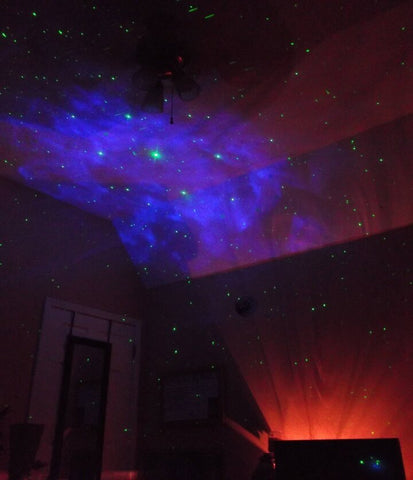
Cool cyan or deep blue LED accent lighting transforms your living room into a starship command deck or alien landscape. The cool blue spectrum mimics distant cold space and futuristic technology aesthetic. Application: color-changing LED strip behind couch or along ceiling edge set to deep cyan (color code 0,200,255) or electric blue at 20-30% brightness. Compatible films: Interstellar, Blade Runner 2049, Dune, The Martian, Arrival, Star Wars, Tron Legacy.
Horror & Thriller Films
Deep red LED accent lighting amplifies tension and creates ominous atmosphere matching horror and thriller narratives. Red activates fight-or-flight psychology creating heightened alertness ideal for suspense. Application: red LED strip set to deep crimson (color code 200,0,0) at low 10-20% brightness. CAUTION: bright red causes eye fatigue; keep brightness low. Compatible films: The Shining, Get Out, Hereditary, Psycho, Halloween, A Quiet Place, Silence of the Lambs.
Romance & Drama Films
Warm amber or soft pink LED accent lighting creates intimate atmosphere for romance and emotional drama films. The warm color spectrum activates relaxation and emotional connection psychology. Application: amber LED strip (color code 255,150,50) at 20-30% brightness; OR very warm 2200K traditional bulbs in floor lamps. Compatible films: La La Land, Casablanca, The Notebook, Before Sunrise, Pride & Prejudice, Atonement, Eternal Sunshine of the Spotless Mind.
Action & Adventure Films
Dynamic blue + red LED accent lighting (or smart-sync mode following screen colors) creates immersive energy matching action sequences. Color-changing LEDs in "sync to screen" mode (Philips Hue Sync, Nanoleaf 4D) amplify visual impact during fight scenes and chase sequences. Application: smart bias lighting with screen sync feature; OR manual switching between blue and red during quiet/action scenes. Compatible films: John Wick series, Mission Impossible, Mad Max Fury Road, Top Gun Maverick, Marvel Cinematic Universe, Fast & Furious.
Comedy & Animated Films
Warm yellow or brighter ambient lighting creates cheerful welcoming atmosphere for comedy and family animated films. Higher brightness (30-50% vs 10-15% for other genres) reflects the lighter mood and family-friendly viewing. Application: warm 2700K ambient at 30-50% brightness; supplemental yellow accent LED strip; OR multi-color smart bulbs in warm yellow setting. Compatible films: Toy Story series, Inside Out, Up, Bridesmaids, Anchorman, Mean Girls, family animated films.
Documentary & Nature Films
Neutral white LED at moderate brightness (15-25%) supports focused contemplative viewing of documentary and nature content. Color accuracy matters most for nature footage — neutral lighting prevents color casts shifting screen colors. Application: 3000K-3500K warm-neutral white at moderate brightness; bias lighting at standard 6500K. Compatible content: Planet Earth, Blue Planet, Cosmos, Our Planet, history documentaries, scientific content.
Movie Night Lighting Setup by Room Size
| Room Size | Layers Needed | Specific Fixtures | Total LED Strip Length |
|---|---|---|---|
| Small living room (under 200 sq ft) | Bias + 1 ambient lamp | USB LED bias strip + dimmable floor lamp | 40-65" (TV back) |
| Medium living room (200-350 sq ft) | Bias + 2-3 ambient + 1 accent | USB bias strip + floor lamps + LED accent strip | 40-65" bias + 10-20 ft accent |
| Large living room (350-500 sq ft) | Bias + 4-5 ambient + 2 accent | Bias + multiple floor/table lamps + 2 accent strips | 40-65" bias + 20-40 ft accent |
| Dedicated home theater (any size) | Bias + ceiling + wall sconces + step lights + accent | Professional bias + dimmable downlights + sconces + floor LEDs | 40-65" bias + custom accent |
| Open-concept great room (500+ sq ft) | Bias + zone lighting + accent + pathway | Substantial bias + multi-zone smart lighting + LED accent | 40-65" bias + 30-60 ft accent |
Cinema Room & Home Theater Lighting

- Dedicated theater lighting principles. Cinema rooms require controlled lighting for cinematic experience — no windows or blackout curtains; lighting strictly controlled via smart switches/dimmers.
- Bias lighting essential. 6500K bias strip behind screen reduces eye strain over 90-180 minute viewing sessions. Critical for dedicated theaters where viewing is extended.
- Dimmable downlights for entry/exit. Recessed downlights along walls dimmable to 10-15% for movement during film; 50-80% for entry/exit and intermissions.
- Wall sconces for ambient. Substantial wall sconces along side walls provide soft indirect ambient lighting. Position to wash walls (not point at screen).
- LED step/floor lighting. Step lights along aisle and floor LED strips along baseboards provide safe pathway illumination without affecting screen viewing.
- Color-changing accent for atmosphere. RGB LED strips along architectural details (crown molding, ceiling soffit, wall panel borders) for genre-matched atmosphere.
- Smart lighting scenes critical. Pre-programmed scenes: "Movie Start" (dims to 5-10% over 30 seconds); "Intermission" (rises to 30%); "Movie End" (rises to 70% over 30 seconds).
- Wall and ceiling colors. Dark gray or charcoal walls/ceiling absorb stray light improving picture contrast. Avoid white or light-colored walls (reflect screen light back creating ambient haze).
- No light fixtures visible from seating. All fixtures positioned to direct light away from viewer line of sight. Recessed fixtures hidden from direct view.
LED Strip Lights for Movie Nights

- USB-powered TV bias strips. Plug into TV USB port; auto-on/off with TV. 40-65" lengths matching common TV sizes. Self-adhesive backing for tool-free installation.
- RGB color-changing strips. Switch colors via remote or app for genre-matched atmosphere. 16+ static colors plus dynamic modes (fade, smooth, strobe).
- Smart Wi-Fi LED strips. Voice control (Alexa, Google, Apple HomeKit); scene presets; scheduling; sync to music or screen.
- Camera-equipped sync strips. Premium systems (Philips Hue Sync, Nanoleaf 4D) include camera reading screen content and matching LED colors in real time — creates "Ambilight" immersive effect.
- Architectural LED strips. Substantial 16-32 ft strips installed along crown molding, ceiling soffit, behind couch, or wall accent lines for dramatic architectural lighting.
- Cabinet and shelf accent strips. Subtle LED strips inside built-in entertainment cabinets, behind glass shelves, under floating shelves — add depth and dimension to home entertainment space.
- Step and floor strips. Low-profile LED strips along baseboards or step edges provide safe pathway illumination without screen disruption.
- Browse our LED strip lights collection for bias lighting, accent lighting, and architectural movie night applications.
Movie Theater Floor & Stair Lighting
- Step lights for tiered theaters. Tiered home theaters with multiple seating levels require dedicated step lights along each step edge. Critical safety lighting + cinematic aesthetic.
- Floor LED strips along baseboards. Continuous low-brightness LED strip along baseboard creates "runway" effect visible in dark theater. Use 2200K very warm white at 5-10% brightness.
- Recessed floor lights. Floor-recessed downlights along aisle creating subtle navigation guidance. Mini LED downlights ideal for this application.
- Path lights to seating. Soft path lights from entry to seating area; activate during arrival, dim during film, brighten during intermission and exit.
- Color temperature for floor/step lighting. Very warm 2200K-2700K minimizes peripheral vision impact while providing essential pathway safety lighting.
- Brightness restraint critical. Floor and step lighting should be barely visible — just enough for safety, not enough to compete with screen.
- Motion-activated options. Motion sensors activate floor lights only during movement; off during static viewing. Maximum cinema atmosphere with maximum safety.
Smart Lighting Scenes for Movies
| Scene Name | Trigger | Light Configuration | Duration |
|---|---|---|---|
| Movie Start | Voice / app / TV remote | Bias on full, ambient dim to 10%, accent off | 30-second transition |
| Sci-Fi Movie | Voice command | Bias 6500K, ambient 2700K 10%, accent cyan 25% | Instant |
| Horror Movie | Voice command | Bias 6500K, ambient 2700K 5%, accent red 15% | Instant |
| Romance Movie | Voice command | Bias 6500K, ambient 2700K 15%, accent amber 25% | Instant |
| Comedy / Family | Voice command | Bias 6500K, ambient 3000K 40%, accent yellow 30% | Instant |
| Intermission / Pause | TV pause / voice | Ambient rises to 40%, accent off | 5-second transition |
| Movie End | TV stop / voice | Ambient rises to 70%, bias off, accent off | 30-second transition |
| Late Night Pathway | Motion sensor | Step/floor lights only at 5-10% | Auto-off 5 min |
Color-Changing LED Setups
- RGB strip basics. Standard RGB (Red, Green, Blue) LED strips mix 3 primary colors to produce 16+ million colors via app or remote control.
- RGBW upgrade. RGBW adds dedicated White LED chip for accurate pure white (impossible with RGB only). Critical for bias lighting + color-changing applications.
- RGBIC (individually controllable) strips. Each LED chip individually addressable — multiple colors simultaneously along single strip (gradient effects, rainbow patterns, music sync).
- Music sync feature. Smart LED strips with built-in microphones or app integration sync color changes to music beat — adds dynamic visual element to movie soundtrack moments.
- Screen sync (Ambilight). Premium systems with camera attachment read screen content and match LED colors in real time. Creates immersive "wraparound" visual experience.
- Pre-programmed dynamic modes. Standard color-changing modes: flash (rapid alternation), strobe (action effect), fade (smooth gradient), smooth (transitions through spectrum).
- Voice control integration. "Hey Alexa, sci-fi movie mode" instantly activates pre-programmed sci-fi atmosphere across all bias + ambient + accent lighting.
- Smart bulb brands for movie nights. Philips Hue (premium ecosystem with Sync Box); LIFX (best color quality); Govee (budget RGBIC); Nanoleaf (artistic panels and 4D bias).
Wall Sconces for Home Theater
- Why wall sconces work. Wall sconces direct light up walls or down baseboards rather than at screen — perfect for ambient theater lighting without picture interference.
- Sconce position. Side walls (not behind viewer or facing TV); 60-66" above floor (standard); spaced 6-10 ft apart.
- Sconce style for home theater. Modern downlights (light directed at floor) work best; uplights create dramatic ceiling wash. Avoid open-shade sconces that emit light in all directions.
- Dimmable sconces essential. Smart dimmable sconces enable scene-specific brightness — 5-10% during film, 30-50% during intermission, 70% during cleanup.
- Color temperature. 2700K-3000K warm white for relaxing ambient theater atmosphere; matches typical home theater color palette.
- Wall sconce vs ceiling fixture for theaters. Wall sconces preferred over ceiling fixtures because ceiling fixtures can cast light directly on TV screen creating glare. Sconces direct light away from viewing.
- Browse our wall lights collection for home theater wall sconce applications.
Dimmer Switches & Brightness Control
- Dimmer required for all movie night fixtures. Non-dimmable LEDs lock single brightness. Movie nights require dramatic brightness flexibility (5% during film, 70% during cleanup).
- Smart dimmer integration. Replace traditional dimmer switches with smart dimmers (Lutron Caséta, Leviton Decora Smart) for app/voice control plus scene integration.
- LED dimmer compatibility critical. Not all LEDs dim properly with all dimmers. Specify "dimmable LED" bulbs + LED-compatible dimmer switches. Mismatched combinations cause flicker, buzz, or limited dim range.
- Dim range specifications. Quality LED + compatible dimmer: 1-100% smooth dimming. Budget combinations: 20-100% range only (can't dim below 20%).
- Multiple zones for theater. Dedicated home theaters benefit from 4-6 separate dimmer zones (bias, ambient, accent, step lighting, pathway, optional). Each independently controllable.
- Programmable scene presets. Smart dimmer systems pre-program brightness combinations across all zones. Single button activates entire "Movie Night" scene across all lighting.
- 0-10V vs phase-dimming. Commercial theaters use 0-10V dimming for smoother transitions; residential typically uses phase-cut dimming. Both work; 0-10V smoother but more expensive.
Common Movie Night Lighting Mistakes
- Watching in complete darkness. Most common mistake. Pitch-black room causes severe eye strain over 90+ minute movie. Always maintain 5-10% screen brightness ambient lighting.
- Skipping bias lighting. The single highest-impact movie night upgrade — most homeowners overlook it. $20-60 LED strip installed in 10 minutes dramatically reduces eye strain and improves perceived contrast.
- Wrong Kelvin for bias lighting. Using 2700K warm white bias lighting (or unspecified color temperature) shifts screen color rendering. Must be 6500K (D65) for accurate color reproduction.
- Lamp facing the TV. Direct light hitting screen causes glare reducing contrast and visibility. Lamps positioned beside or behind viewer; never aimed at screen.
- Bias lighting too bright. Bias lighting brighter than 10% of screen brightness becomes distracting. Should be subtle peripheral illumination, not direct visible light source.
- Non-dimmable fixtures. Movie nights require brightness flexibility. Single-brightness fixtures fail to support film start, intermission, and end scenes.
- White or light wall behind TV. Light walls reflect screen light back as ambient haze reducing perceived contrast. Dark gray or charcoal walls behind TV optimize picture quality.
- Cool color temperature in theater. 4000K+ creates institutional clinical feel incompatible with cinema atmosphere. Stick to 2700K-3000K warm white for ambient theater lighting.
- Forgetting accent lighting for genre. Plain bias + ambient provides functional lighting but misses immersive experience. Color-changing accent LEDs add genre-matched atmosphere transforming any room into cinema.
- Skipping smart automation. Manual lighting adjustment during movies disrupts immersion. Pre-programmed smart scenes activate complete movie night atmosphere via single voice command.
Browse Seus Lighting's movie night essentials — LED strip lights for bias lighting and accent applications (the single highest-impact movie night upgrade), wall lights for home theater wall sconces, ceiling lights for dimmable theater downlights, floor lamps for ambient room lighting, table lamps for side-table reading and snack visibility, lamps for general living room ambient, and our custom service for unique home theater requirements.
LED Strip Lights Wall Lights Ceiling Lights Floor Lamps Table Lamps Lamps Custom Service
Frequently Asked Questions
What are the best LED lights for movie nights?
The best LED lights for movie nights combine three layers: (1) Bias lighting behind TV — 6500K neutral white LED strip, brightness at 10% of screen, reduces eye strain dramatically. USB-powered LED strips ($20-60) cut to TV width are most popular. (2) Ambient room lighting — 2700K-3000K warm white dimmable LEDs in floor lamps, table lamps, or wall sconces. Dimmed to 5-10% during viewing. (3) Accent color lighting — color-changing RGB LED strips for genre-matched atmosphere (red thriller, blue sci-fi, amber romance). Premium upgrade: camera-equipped bias lighting systems (Philips Hue Sync, Nanoleaf 4D) match LED colors to on-screen content in real time creating "Ambilight" effect. Smart bulb integration: voice-controlled scene presets activate complete movie night atmosphere via single command. Browse our LED strip lights collection for bias and accent applications. Total investment for substantial movie night upgrade: $100-300 for living room application; $500-2,000 for dedicated home theater.
What is the best LED light color for watching movies?
The best LED light color for watching movies depends on application: (1) Bias lighting behind TV: 6500K neutral white (video industry D65 standard). Matches TV calibration exactly; any other color shifts perceived screen colors. (2) Ambient room lighting: 2700K-3000K warm white. Relaxing residential atmosphere; doesn't compete with screen. (3) Accent color lighting by genre: Sci-fi/space films = cool cyan or deep blue (Interstellar, Blade Runner). Horror/thriller films = deep red or crimson (The Shining, Get Out). Romance/drama films = warm amber or soft pink (La La Land, Casablanca). Action/adventure films = dynamic blue + red mix or smart screen sync (John Wick). Comedy/animated films = warm yellow or bright white (Toy Story, family films). Documentary/nature = neutral white at moderate brightness (Planet Earth). The critical rules: never use bright colored lighting facing screen (causes glare); always keep accent colors at 10-30% brightness (subtle, not dominant); use color-changing smart LEDs for genre flexibility within single movie night session.
What color light is best for watching movies?
For pure picture quality, the best color light for watching movies is 6500K neutral white bias lighting behind the TV combined with 2700K-3000K warm white ambient room lighting dimmed to 5-10%. This combination delivers accurate screen color reproduction + relaxing residential atmosphere. Why 6500K bias matters: the video industry uses 6500K (D65) as reference white for TV calibration. Any other bias lighting color temperature shifts perceived screen colors (warm bias = screen appears yellow/orange; cool bias = screen appears blue). Why 2700K ambient matters: warm 2700K creates relaxing residential atmosphere matching evening leisure activity. Cool 4000K+ in residential creates institutional clinical feel incompatible with cinema. For atmosphere/genre matching: add color-changing accent LED strips (Philips Hue, LIFX, Govee) for genre-matched mood — red horror, blue sci-fi, amber romance — at 10-30% brightness as accent only (not primary lighting). Common mistake: using 2700K bias lighting (too warm — shifts screen yellow) OR using bright primary-color accent lighting (overwhelms screen colors). Treat color as accent layer; keep bias and ambient layers consistent with proper Kelvin values.
What is bias lighting and do I need it?
Bias lighting is a soft LED light source placed behind the TV or monitor, illuminating the wall behind the screen. How it works: the wall reflection appears in your peripheral vision while watching, reducing the contrast between bright screen and dark surroundings. Why you need it: (1) Reduces eye strain — pitch-black room forces eyes to constantly adjust between bright screen and dark surroundings causing eye fatigue and headaches over 90+ minute viewing. (2) Improves perceived picture quality — blacks appear deeper and colors more vivid due to optimized contrast perception. (3) Reduces neck strain — eyes don't need to compensate for extreme contrast. How to install: 10-minute installation — USB-powered LED strip with adhesive backing; cut to length matching TV width; attach to back of TV cabinet pointing at wall; power via USB from TV (auto-on/off with TV). Critical specifications: 6500K color temperature (D65 video standard); brightness at 10% of TV screen; positioned behind TV center, not edges; wall behind TV neutral gray or white. Premium options: camera-equipped systems (Philips Hue Sync, Nanoleaf 4D) match LED colors to on-screen content in real time. Investment: $20-60 basic; $100-200 premium systems. The single highest-impact movie night upgrade available — most homeowners don't know it exists.
What is the best lighting setup for watching a movie?
The best lighting setup for watching a movie uses 3 coordinated layers: Layer 1 — Bias lighting: 6500K neutral white LED strip behind TV at 10% screen brightness. Reduces eye strain dramatically. Layer 2 — Ambient lighting: 2700K-3000K warm white dimmable LEDs in floor lamps, table lamps, or wall sconces. Dimmed to 5-10% during viewing. Provides safe room navigation without screen interference. Layer 3 — Accent lighting: color-changing RGB LED strips for genre-matched atmosphere. Red thriller, blue sci-fi, amber romance — at 10-30% brightness. Critical setup principles: (1) Never watch in complete darkness — causes severe eye strain. (2) Never let lamps face TV screen — causes glare. (3) Use dimmable LEDs throughout — enables scene-specific brightness. (4) 6500K bias lighting only (not warmer Kelvin). (5) 2700K-3000K ambient only (not cooler Kelvin). (6) Smart bulb scene presets — voice activate complete movie atmosphere via single command. Setup by room size: small living room = bias + 1 ambient lamp; medium = bias + 2-3 ambient + 1 accent; large = bias + 4-5 ambient + 2 accent; dedicated theater = bias + ceiling + wall sconces + step lights + accent. Total investment: $100-300 living room; $500-2,000 dedicated theater.
What is the best lighting for watching TV?
The best lighting for watching TV combines bias lighting behind the screen with soft ambient room lighting. Optimal TV viewing setup: (1) Bias lighting behind TV — 6500K neutral white LED strip, brightness at 10% of screen, reduces eye strain over extended viewing sessions. Single highest-impact TV viewing upgrade. (2) Soft ambient lighting — 2700K-3000K warm white dimmable LEDs at 10-30% brightness depending on content (lower for movies, higher for casual TV). (3) Avoid direct lamp facing TV — causes glare reducing picture contrast. (4) Avoid complete darkness — causes severe eye strain over time. For different TV viewing scenarios: Daytime news/casual = bias lighting + ambient at 50-70%. Evening movie viewing = bias lighting + ambient at 5-15%. Sports watching = bias lighting + ambient at 30-50% (brighter for social viewing). Late-night viewing = bias lighting + ambient at 5-10% + 2200K very warm task lighting only. What to avoid: cool 4000K+ lighting (institutional feel); bright overhead ceiling fixture (creates screen glare); incandescent bulbs (consume 6× more energy than equivalent LED); non-dimmable fixtures (locks single brightness eliminating scene flexibility). Smart upgrade: smart bulbs with voice control enable complete lighting adjustment without leaving couch.
What color LED is best for home theater?
The best LED colors for home theater work in coordinated layers: (1) Bias lighting: 6500K neutral white (D65 standard) behind screen. Mandatory for accurate screen color reproduction. (2) Ambient lighting: 2700K-3000K warm white. Relaxing cinematic atmosphere. (3) Accent lighting: color-changing RGB LEDs for genre/mood. Specific home theater LED color recommendations: Wall sconces: 2700K warm white dimmable. Recessed downlights: 2700K-3000K dimmable to 5% minimum. Step/floor lighting: 2200K very warm (minimal peripheral vision impact). Bias lighting: 6500K neutral white exclusively. Architectural accent (crown molding LED): RGB color-changing for scene atmosphere. What to avoid: cool 4000K+ lighting throughout (institutional feel incompatible with cinema). Bright colored primary lighting (overwhelms screen). White or light-colored walls behind screen (reflect screen light reducing contrast). Non-dimmable LEDs (locks single brightness). Wall color coordination: dark gray or charcoal walls/ceiling absorb stray light improving picture contrast. Combine with warm 2700K ambient LEDs and 6500K bias for cinema-quality viewing atmosphere. Browse our LED-compatible LED strip lights and wall sconces.
Should I watch movies in the dark?
No — complete darkness during movie watching causes severe eye strain over 90+ minute viewing sessions. The science: high contrast between bright screen and dark surroundings forces eyes to constantly adjust. Over extended viewing, this causes eye fatigue, headaches, and reduced focus. The solution: maintain approximately 5-10% screen brightness ambient lighting through bias lighting + dimmed warm ambient. This reduces contrast between screen and surroundings while preserving cinematic atmosphere. How to maintain proper movie night brightness: (1) Bias lighting behind TV at 10% screen brightness (single most important factor). (2) Dimmable ambient lamps at 5-15% brightness, positioned beside or behind viewer (never facing screen). (3) Wall sconces directing light up walls (not at screen) at 10-20% brightness. (4) Step/floor lighting for navigation safety. The bias lighting reality: most homeowners watching in complete darkness don't know bias lighting exists. $20-60 LED strip installed in 10 minutes dramatically reduces eye strain AND improves perceived picture quality (blacks appear deeper, colors more vivid). Movie theater darkness: commercial theaters maintain bias lighting around screen and aisle floor lighting — true complete darkness is never used even in dedicated theaters.
What is cinema room lighting?
Cinema room lighting is a controlled multi-layered LED system designed for dedicated home theater spaces. Standard cinema room lighting includes 5 components: (1) Bias lighting behind screen — 6500K neutral white LED strip; reduces eye strain over extended viewing. (2) Ceiling recessed downlights — 2700K-3000K dimmable LEDs along walls; dimmable to 5-10% during film. (3) Wall sconces along side walls — soft indirect ambient lighting; 2700K warm white dimmable. (4) Step and floor lighting — 2200K very warm low-brightness LED strips along baseboards and step edges; safe pathway navigation. (5) RGB accent lighting — color-changing LED strips along architectural details for genre-matched atmosphere. Cinema room design principles: (1) Dark gray or charcoal walls/ceiling (absorb stray light). (2) Blackout curtains over any windows (control ambient light). (3) Smart lighting hub controlling all zones via pre-programmed scenes. (4) No fixtures visible from seating positions. (5) Dimmer control for every fixture. (6) Multiple lighting zones (4-6 typical) for scene flexibility. Investment: $300-3,000 depending on room size and fixture quality. Single highest-impact home theater upgrade after audio/video equipment. Pre-programmed scenes: Movie Start (30-sec fade to 5%), Intermission (fade to 40%), Movie End (fade to 70%) — voice-activated via Alexa, Google, or Apple HomeKit.
How many lumens for movie night lighting?
Movie night lighting requires substantially fewer lumens than typical residential lighting due to dimming requirements. Movie night lumens by application: (1) Bias lighting: 80-200 lumens total (USB LED strip behind TV); approximately 10% of screen brightness. (2) Ambient room lighting during movies: 200-500 lumens total (5-10% dimmed from full 2,000-5,000 lumens normal residential). (3) Wall sconces during movies: 50-150 lumens each (dimmed from full 300-600 lumens). (4) Step/floor lighting: 30-100 lumens per fixture (low warm). (5) Accent RGB lighting: 100-500 lumens (color-changing; brightness perception varies by color). Total movie night lumens: 400-1,200 lumens across all fixtures (vs typical 3,000-5,000 lumens normal living room). Critical brightness ratio: ambient should be approximately 5-10% of typical brightness during movies; rise to 30-50% during intermissions; rise to 70-100% for cleanup. Dimmer requirements: all fixtures must be dimmable LED with compatible dimmer switches to achieve this dramatic brightness range. Smart bulb advantage: smart bulbs enable precise brightness control via app or voice with scene-specific presets. Common mistake: using non-dimmable LED bulbs locks single brightness — eliminates ability to adjust for film vs intermission vs cleanup.
Are LED strip lights good for movie nights?
Yes — LED strip lights are arguably the best lighting solution for movie nights due to versatility, easy installation, and dimmable smart features. LED strip applications for movie nights: (1) Bias lighting behind TV: USB-powered RGB LED strip cut to TV width; 6500K white mode reduces eye strain. (2) Architectural accent: substantial strips along crown molding, ceiling soffit, behind couch for dramatic theater atmosphere. (3) Floor/baseboard pathway: low-brightness 2200K warm strips along baseboards for safe navigation. (4) Step lighting: tiered home theaters with step strips. (5) Color-changing genre atmosphere: RGB strips set to film genre colors (red horror, blue sci-fi, amber romance). (6) Behind couch accent: indirect ambient glow without competing with screen. LED strip advantages for movie nights: (1) Easy installation — adhesive backing, no electrical work; 10-minute installation. (2) Dimmable — full 1-100% brightness range. (3) Color-changing — 16+ million colors via app or remote. (4) Smart integration — voice control, scene presets, music sync. (5) Affordable — $20-100 for substantial installations. (6) Cut to length — customize for exact application. (7) Long lifespan — 25,000+ hours LED longevity. Browse our LED strip lights collection for movie night applications.
What's the difference between bias lighting and ambient lighting?
Bias lighting and ambient lighting serve different functions in movie night setups: Bias lighting: Position: behind TV or monitor pointing at wall behind screen. Purpose: reduce eye strain by softening contrast between bright screen and dark surroundings; improve perceived picture quality (deeper blacks, more vivid colors). Color temperature: 6500K neutral white (D65 video standard). Brightness: 10% of TV screen brightness. Visibility: not directly visible from viewing position — only the wall reflection visible in peripheral vision. Installation: USB-powered LED strip on back of TV cabinet. Investment: $20-200. Ambient lighting: Position: throughout room (floor lamps, table lamps, wall sconces, ceiling fixtures). Purpose: general room illumination for safe movement, snack visibility, comfortable atmosphere. Color temperature: 2700K-3000K warm white. Brightness: 5-15% during movies; 50-100% for non-viewing times. Visibility: directly visible (lamps, fixtures); positioned beside or behind viewer (never facing TV). Installation: standard residential lighting throughout space. Investment: $100-1,000 for substantial residential. How they work together: bias lighting (6500K) optimizes screen viewing; ambient lighting (2700K) provides comfortable room atmosphere; together they deliver cinema-quality viewing with practical functionality. Most homeowners have ambient lighting; most lack bias lighting. Adding bias lighting is the single highest-impact movie night upgrade available.
Closing Notes on Movie Night LED Lighting
The best movie night lighting combines bias lighting (6500K behind TV at 10% screen brightness — single highest-impact upgrade), warm ambient room lighting (2700K-3000K dimmed to 5-10% during viewing), and optional color-changing accent LEDs for genre-matched atmosphere. Never watch in complete darkness (severe eye strain), never let lamps face the TV screen (glare), and always use dimmable LEDs for scene flexibility. A $20-60 LED strip installed behind the TV in 10 minutes dramatically reduces eye strain and improves perceived picture quality — making it the most impactful inexpensive home entertainment upgrade available.
For complementary home entertainment lighting decisions, see our related resources: color temperature guide, how much light does my room need, light bulb types guide, types of light fixtures, welcoming living room lighting, floor lamp placement, energy-efficient lighting, light fixture cost calculator, sustainable eco-friendly lighting, and lighting design mistakes.


